Now Reading: Hyunje Joo: Building new spatial systems from urban waste
- 01
Hyunje Joo: Building new spatial systems from urban waste

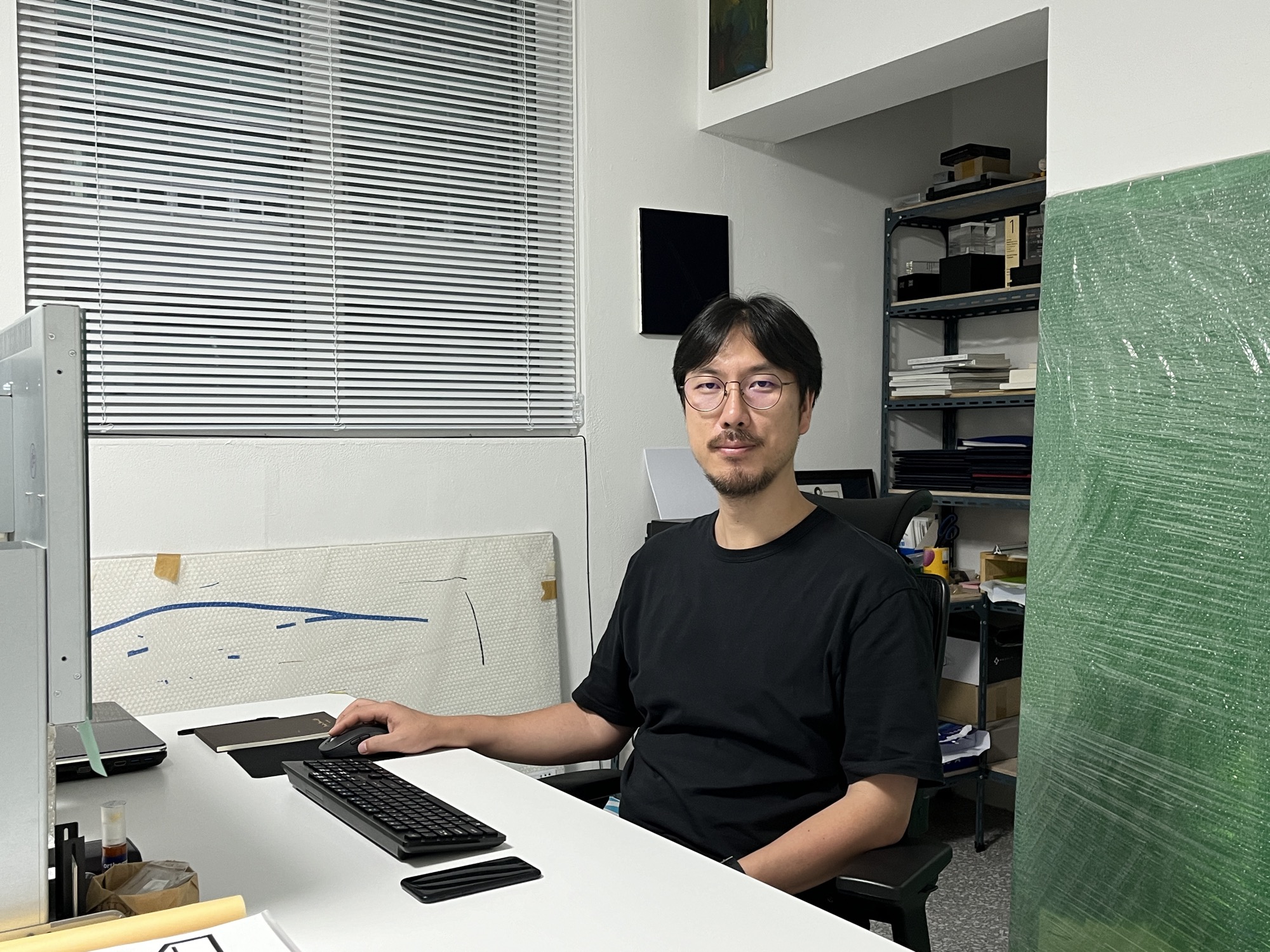

In recent years, the work of Hyunje Joo has emerged as a distinctive voice within the discourse on urban materiality and temporary architecture. Operating at the intersection of architecture, public art, and spatial experimentation, his projects often take the form of pavilions and installations that challenge conventional notions of permanence, authorship, and function. Rather than producing autonomous objects, Joo’s work engages directly with the city, drawing from its overlooked materials and latent spatial conditions.
From projects such as Concrete Utopia in Busan to the Suseong Recycling Pavilion in Daegu, his practice explores how discarded infrastructural elements can be reassembled into new architectural systems. This interview examines the role of competitions in shaping his approach, the conceptual and technical challenges of working with industrial remnants, and his broader reflections on reuse, temporality, and the future of urban environments in rapidly developing contexts like South Korea.
You have won several competitions, including the Taebaek Village Art Project, the Suseong Light Art Festival, and the Urban Playground public design competition. What motivates you to participate in architectural and public art competitions?
Hyunje Joo: For me, competitions are not simply a means of producing a design outcome, but a platform for raising questions about the role architecture can play within the city. While commissioned projects are inevitably shaped by practical constraints such as programme, budget, and timeline, competitions allow for a more open exploration of architectural possibilities.
I am particularly interested in reinterpreting materials, transforming structures, and constructing open spatial systems. Competitions provide a context in which these ideas can be tested more directly and speculatively.
What does winning these competitions mean to you, both personally and in the development of your design practice?
HJ: Winning a competition carries meaning beyond the result itself. It signals that the architectural language and questions I propose resonate within a contemporary context. On a personal level, it reinforces confidence in my approach, while also instilling a sense of responsibility for the work that follows. In terms of practice, these moments help clarify a direction, allowing ideas to evolve into a more consistent and coherent body of work.
How do competitions serve as a platform for you to explore experimental ideas that may differ from typical commissioned projects?
HJ: Competitions offer an opportunity to step away from predefined programmes and client-driven requirements, and instead focus on the fundamental elements of architecture—space, structure, and material. Within this framework, I am able to pursue experimental approaches, particularly in the reinterpretation of matter and the construction of unconventional spatial configurations. Projects such as Concrete Utopia explore how existing infrastructural elements can be reassembled in new ways, transforming familiar objects into entirely different spatial experiences.

Many of your works are temporary pavilions or installations, such as the Art Dome Pavilion, Suseong Recycling Pavilion, Dreamy Playground, and Concrete Utopia. What draws you to the pavilion typology?
HJ: I see the pavilion as a condensed form of architecture, and at the same time its most distilled expression. Because it operates within a limited timeframe and scale, it demands clarity of concept while allowing structure, material, and spatial experience to emerge in a concentrated way. Pavilions also function as interventions within the city. They have the capacity to disrupt everyday flows, generate new relationships, and introduce alternative ways of engaging with space.
In projects like Concrete Utopia and the Suseong Recycling Pavilion, you actively reuse discarded materials. What interests you most about working with waste or leftover industrial elements?
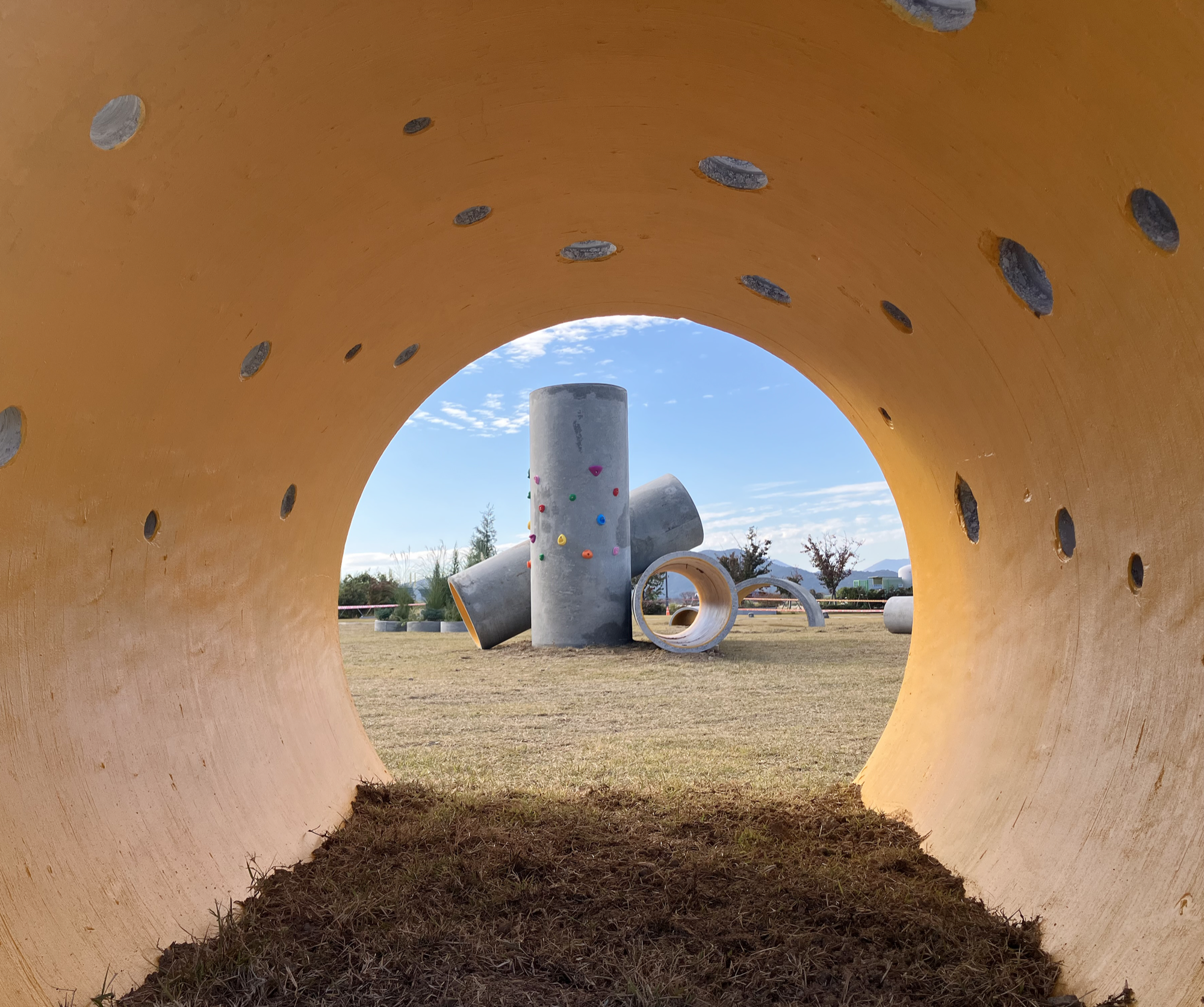
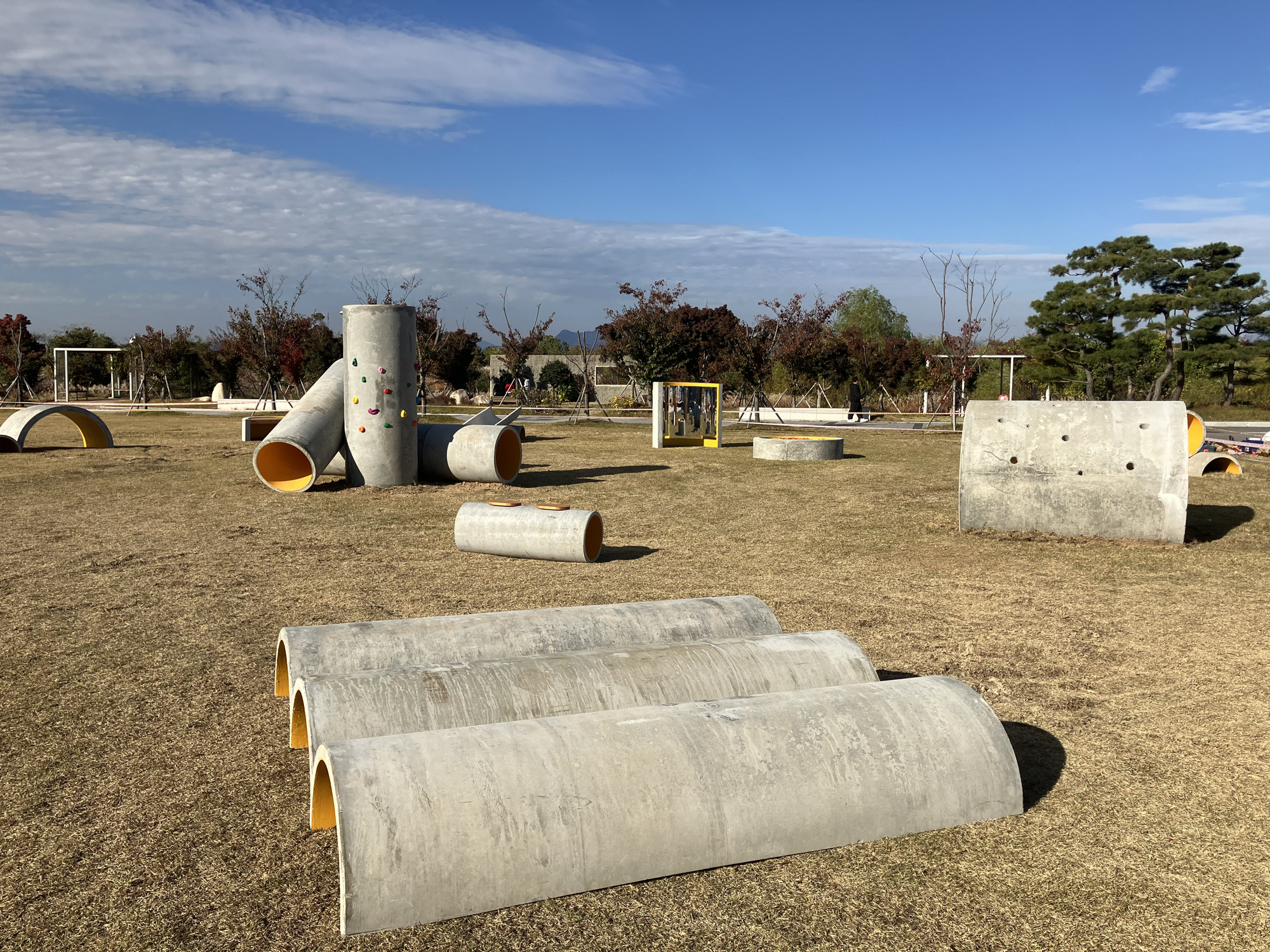
HJ: In Concrete Utopia, the concrete pipes were once part of the city’s infrastructure but had lost their original function. Rather than treating them simply as recyclable matter, I am interested in relocating them into a new context while preserving their physical and temporal qualities. Discarded materials are, in a sense, accumulated fragments of the city.
Working with them is not only an environmental strategy, but also a way of critically engaging with the cycles of material production and obsolescence in urban environments.
How do these pavilion projects respond to their specific urban contexts in cities such as Busan and Daegu?
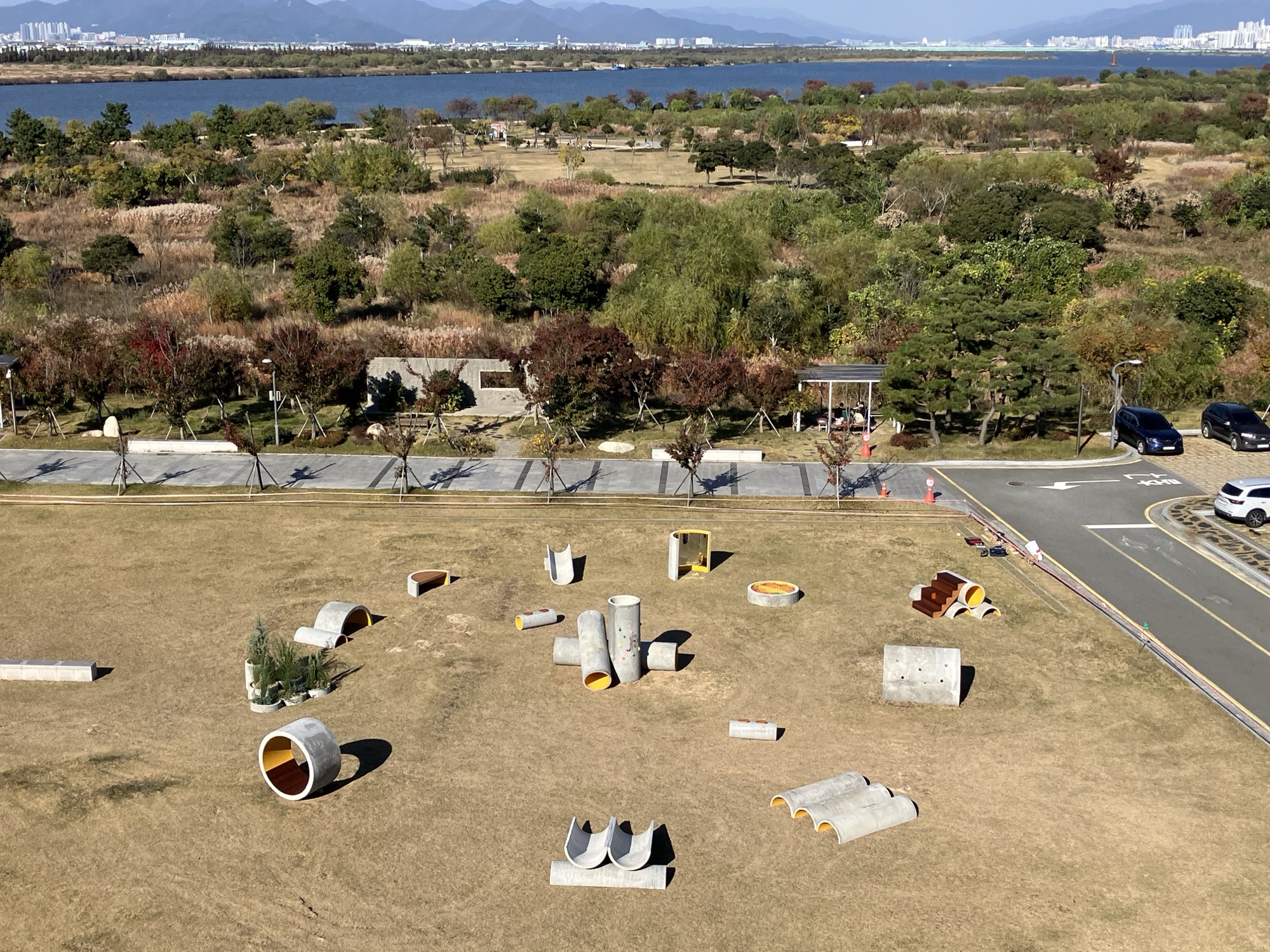
HJ: My work does not aim to exist as an isolated object, but rather as a structure that actively engages with its surroundings. In Busan, Concrete Utopia was conceived as an open configuration rather than a closed form, allowing people to pass through, inhabit, and reinterpret the space freely. The arrangement of pipes generates multiple paths and visual relationships, drawing the flow of the city into the project itself. More broadly, each project responds not only to its physical context but also to environmental conditions such as light, wind, and patterns of movement.


When transforming heavy or inert materials (like concrete pipes or recycled elements) into flexible architectural space, what are the biggest conceptual and technical challenges you face?
HJ: Industrial materials such as concrete pipes are inherently fixed in both form and function. The challenge lies in maintaining their physical integrity while opening up new spatial possibilities. Structurally, stability must be ensured, yet at the same time the space should allow for flexibility in use and occupation. At its core, the question becomes how a rigid material can be translated into an open and dynamic spatial experience.
What kind of experiences and interactions do you hope visitors will have in your pavilion installations?
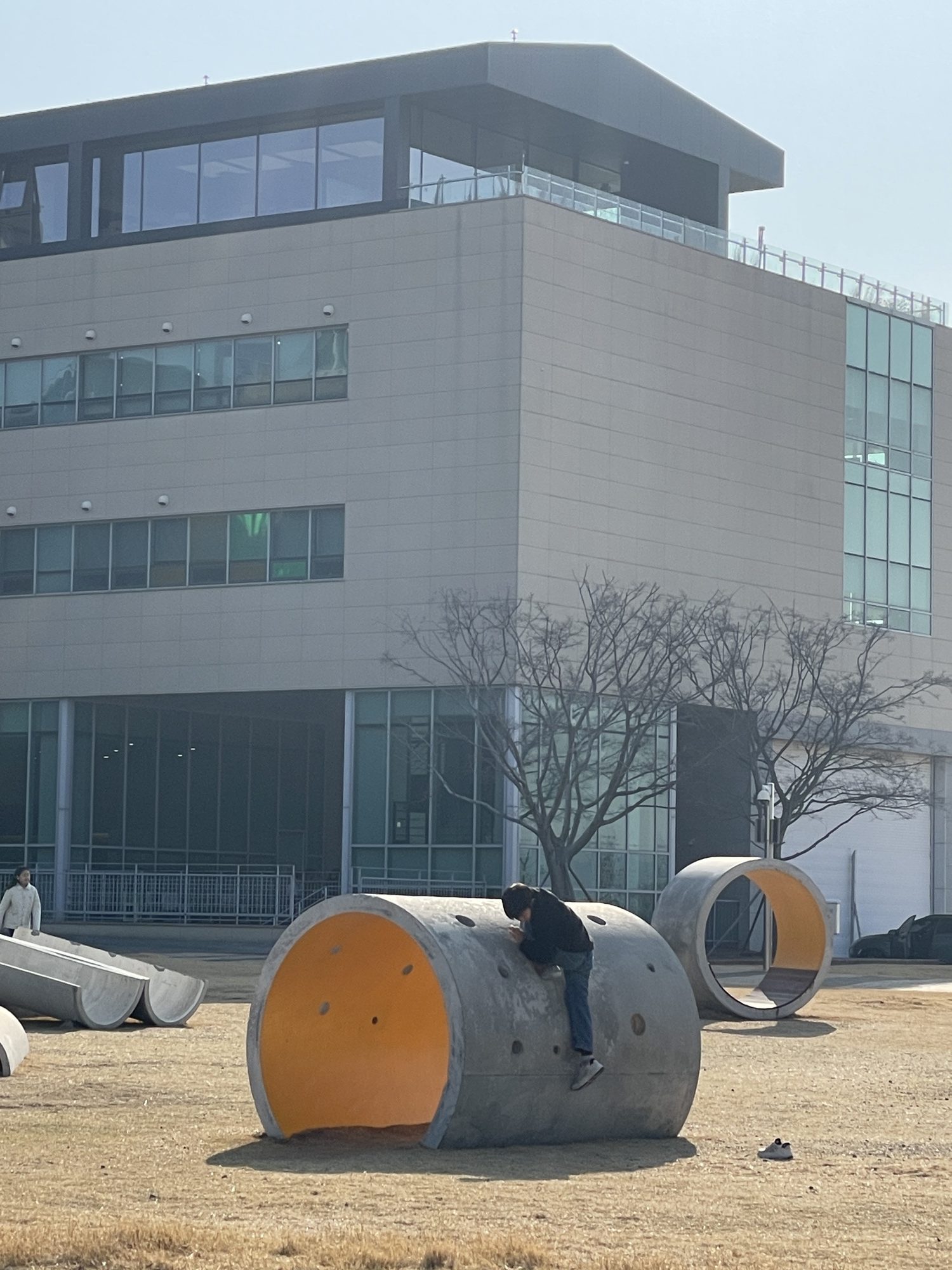
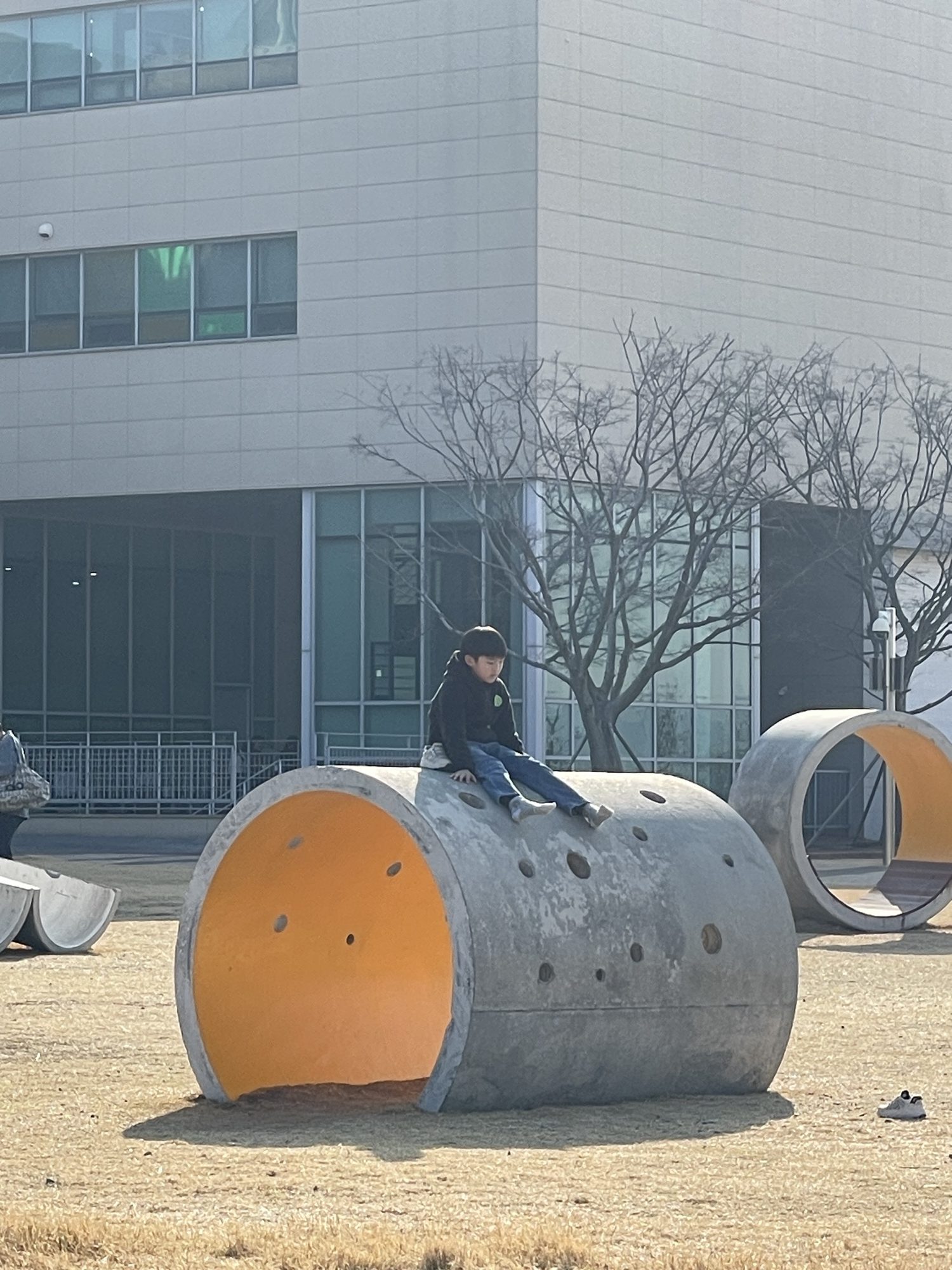
HJ: I aim to create spaces that do not prescribe a single mode of use, but instead invite multiple interpretations and forms of engagement. In Concrete Utopia, visitors climb, pass through, sit, and inhabit the structure in unexpected ways. This open-ended condition allows architecture to be completed through the actions of its users, rather than remaining a fixed and predetermined object. Ultimately, I hope visitors can actively construct their own spatial experience.
How do you balance the temporary nature of these pavilions with a deeper critique or commentary on urban materiality and public space?
HJ: The temporary nature of pavilions can, in fact, sharpen their critical capacity. Because they exist for a limited time, they allow for more direct and experimental propositions. Concrete Utopia reflects on the dominance of concrete in contemporary urban production and the environmental implications of its lifecycle, while proposing reuse as an alternative approach. Although temporary, the project aims to leave a lasting question about how cities consume materials and produce space.
In the context of Korea’s rapid urbanization, how do your pavilion and reuse projects reflect your thoughts on the future development of cities?
HJ: Korean cities have developed at an extraordinary pace, often prioritising efficiency and standardisation. This has resulted not only in homogenised urban environments, but also in the accumulation of surplus materials. My work seeks to re-examine these conditions by reconfiguring existing elements, exploring alternative ways of constructing urban space. In this sense, it is less about proposing new forms, and more about questioning how cities are made.

How do these works address environmental concerns and the climate crisis through the lens of material reuse and circular design?
HJ: Material reuse is not only an environmental strategy, but also a way of rethinking architectural production itself. By working with existing resources, I aim to position architecture within a more circular system of use and transformation. This approach extends beyond conservation, engaging with the idea of prolonging the life and meaning of materials through spatial reconfiguration.

Looking ahead, how have these pavilion and reuse projects influenced your overall vision for the role of architecture in shaping more resilient and imaginative urban environments?
HJ: These projects suggest that architecture can move beyond the act of producing the new, toward reinterpreting and reassembling what already exists. Going forward, I am interested in integrating material, structure, environment, and user experience into more adaptive and resilient spatial systems. At the same time, I see architecture as a medium for proposing new forms of imagination within the city, opening up possibilities that extend beyond conventional modes of building.


Article Credit
Text: Rafael Cunha
Time: 04.2026