
Now Reading: Villa VICUS arranges family living along a glazed southern facade
- 01
Villa VICUS arranges family living along a glazed southern facade

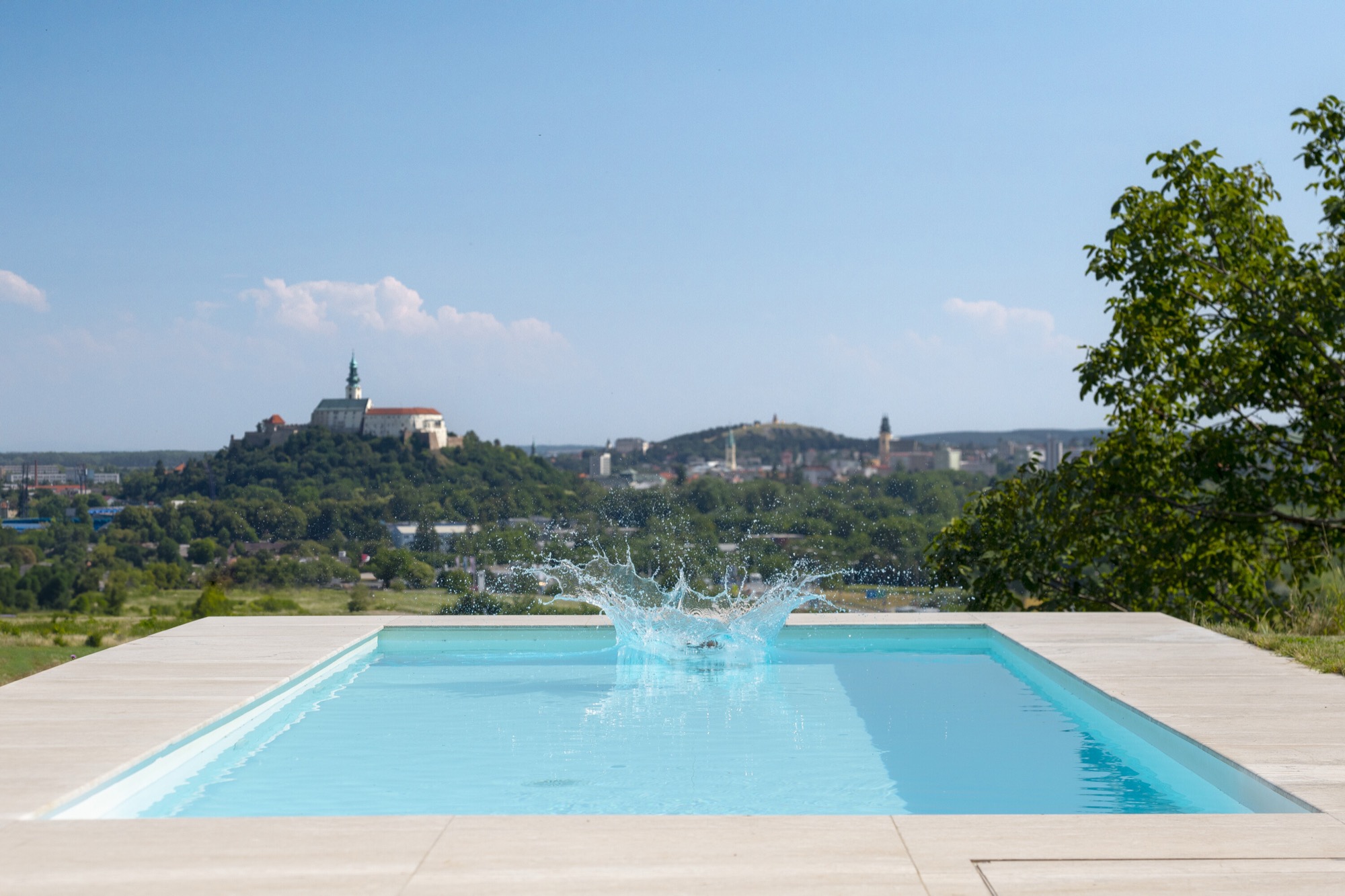

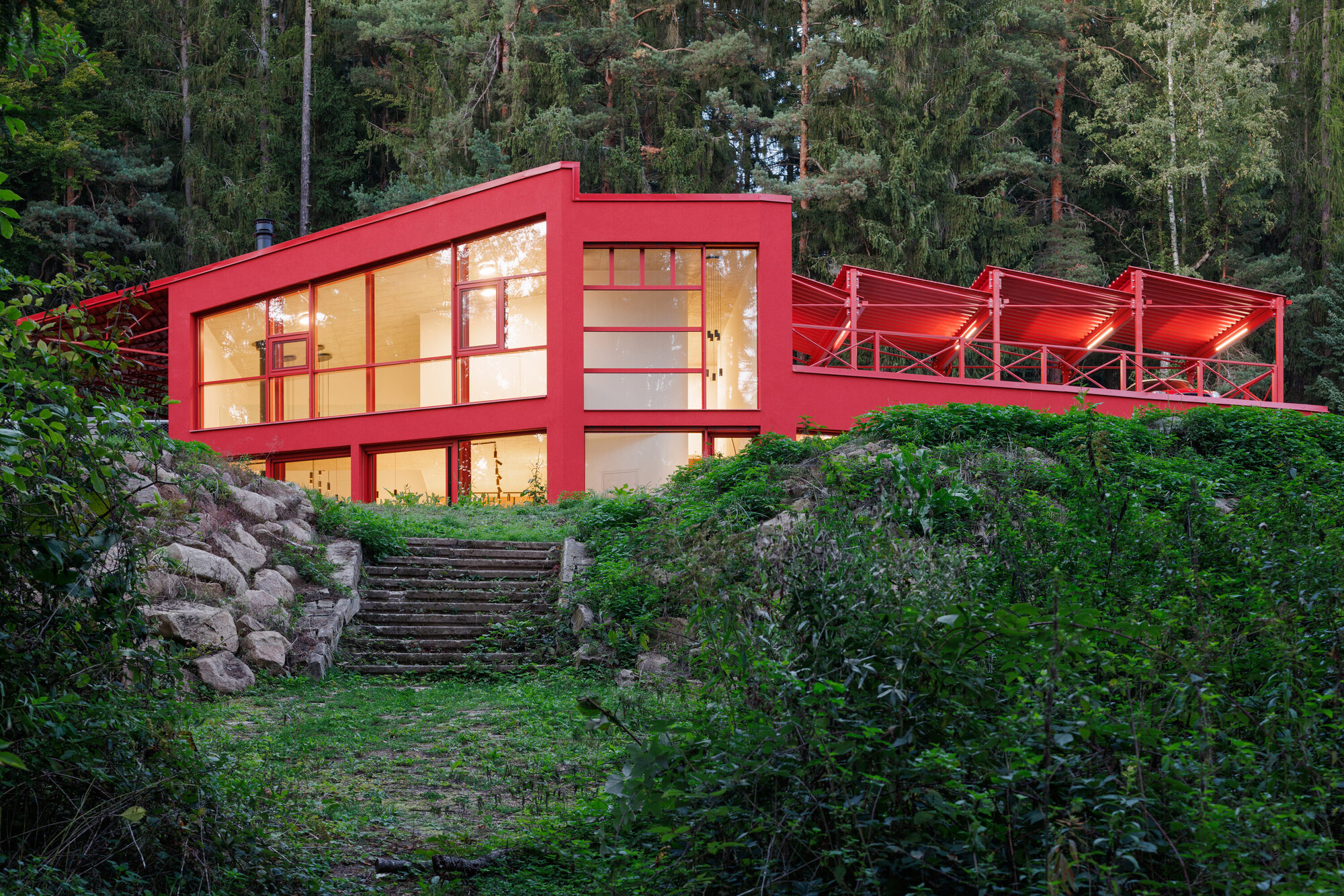
Set below Zobor Hill in Nitra, Villa VICUS is a single storey family house shaped by slope, sunlight and an uninterrupted view towards the city. Located at the end of a quiet street, where the forest rises behind the plot and the terrain opens southwards towards Calvary Hill and Nitra Castle, the house responds to its setting with a clear architectural gesture: a long, low plan that allows every living space to face the landscape.

The brief was direct but demanding. The clients asked for a home that would remain closely connected to the view while supporting the everyday rhythm of family life. Rather than treating the panorama as a scenic backdrop, the design organises the house around it. Rooms are arranged along the southern façade, creating a sequence of interior spaces that open to light, terraces and the distant city below.

The architectural concept is based on a single storey linear layout, unified by a continuous timber pergola running along the southern elevation. This element gives Villa VICUS both its spatial identity and its environmental logic. It is not conceived as a decorative addition, but as the main compositional and climatic device of the project.
The pergola frames the terraces, creates sheltered outdoor living areas and extends the domestic interior into the garden. At the same time, it shades the glazed façade during warmer months, reducing direct solar exposure while preserving the visual openness of the house. Its rhythm gives order to the elevation, allowing the building to appear calm, horizontal and closely anchored to the slope.

With a usable floor area of 158 square metres, the house contains an elevated living room with kitchen and dining area, a main bedroom, two children’s rooms, two bathrooms and technical facilities. Service spaces are concentrated along the northern edge of the plan, while the living areas open towards the south. This arrangement creates a simple but effective hierarchy between protected, functional rooms and open, view oriented spaces.


A summer kitchen on the northern side adds another layer to the daily use of the house, allowing outdoor life to extend beyond the main terrace. Long visual connections running through the plan further reinforce the sense of continuity, linking the forested slope behind the house with the open landscape in front.


Villa VICUS is designed around a passive climatic principle. In winter, the house benefits from solar gain through the southern glazing. In summer, the continuous pergola provides natural shading, allowing the interior to remain protected without compromising the openness of the façade. Architecture and climate are therefore resolved through the same gesture, giving the house an efficiency that remains visually integrated rather than technically exposed.


This quiet environmental strategy is supported by a restrained material palette. Travertine flooring extends from the interior onto the terrace, softening the threshold between inside and outside. Clay plaster gives the walls a tactile depth, while exposed timber beams bring warmth and structural clarity to the living spaces.
The materials are chosen for their naturalness, durability and ability to age with dignity. Nothing appears excessive. The atmosphere is calm and tactile, shaped by surfaces that register light gently and contribute to the long term character of the house.


Villa VICUS does not rely on expressive form or spectacular gestures. Its strength lies in proportion, orientation and the precise organisation of domestic life. The linear plan, shaded façade, continuous terrace and natural materials work together as one coherent system.
The result is a house that feels both open and protected. It looks outward towards Nitra while remaining grounded in the intimacy of family life. By aligning view, layout, shading and material into a single architectural language, Villa VICUS offers a cultivated model of contemporary living on a sloping site.

Project Credit
Architecture Studio: sebastian nagy / @sebastian_nagy_architects
Location: Nitra, Slovakia
Completion year 2024
Built-up area 195 m²
Usable floor area 158 m²
Photo: Tomáš Manina / @tomas.manina
More Photos