Now Reading: The Quiet Needle: Xu Tiantian and the Architecture of Acupuncture
- 01
The Quiet Needle: Xu Tiantian and the Architecture of Acupuncture

The Quiet Needle: Xu Tiantian and the Architecture of Acupuncture
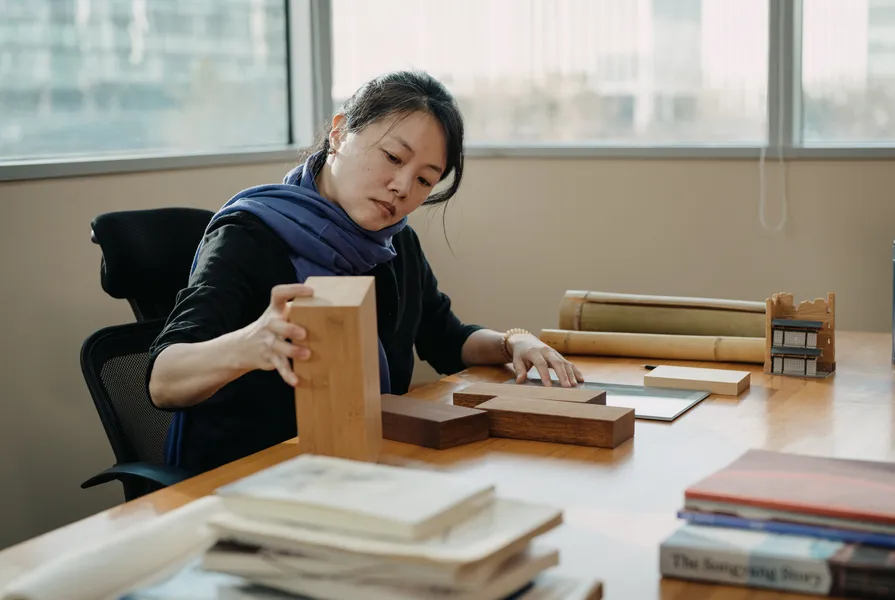
In a bright room at the Louisiana Museum of Modern Art in Humlebæk, recorded in early 2026, Xu Tiantian speaks with unusual directness. “Beauty in itself is dangerous,” she says. A little later comes the sharper line: “Architecture is for people, right? It’s not for the architects.” Then, almost as an afterthought: “It’s not about the area of starchitecture anymore.” The remarks are delivered without emphasis, yet they frame her work with remarkable precision.
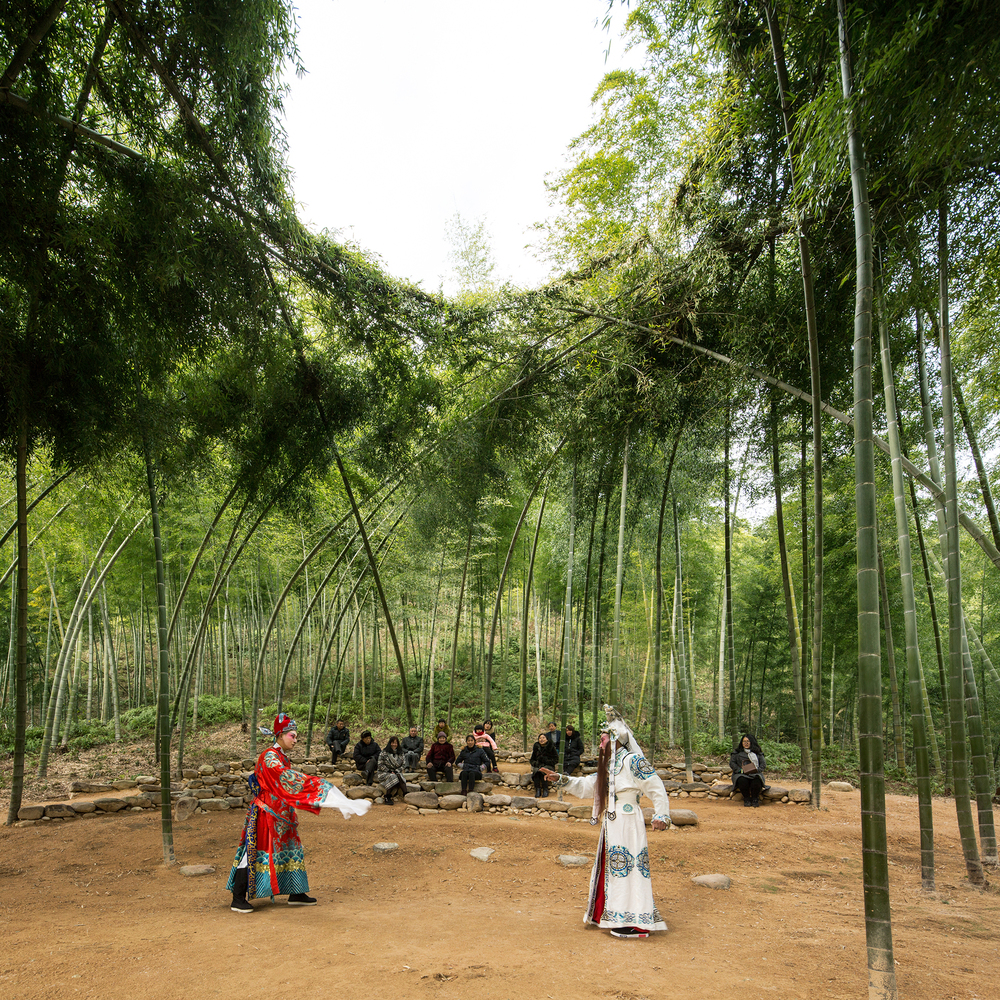
Credit: Photo by Ziling Wang © DnA_Design and Architecture.


For more than a decade, Xu, founding principal of Beijing based DnA_Design and Architecture, has pursued a form of practice she calls architectural acupuncture. The phrase is not metaphor for its own sake. It describes a method. Each project begins by identifying where a rural settlement has lost continuity, confidence, or economic viability, and then intervenes with the smallest possible architectural act capable of restoring movement. The ambition is not to overwrite a place with a new image of development, but to reactivate what is already there.
Xu was born in Fujian in 1975, studied architecture at Tsinghua University, and completed a Master of Architecture in Urban Design at Harvard GSD. She later worked briefly at OMA before establishing her own practice in Beijing. That trajectory matters, not because it sets up a simple opposition between city and countryside, but because it clarifies the terms of her refusal. Xu understands the culture of scale from within. What distinguishes her mature work is not a rejection of growth, but a deliberate shift away from architecture as spectacle toward architecture as social infrastructure.
Her rural projects are often framed as a moral alternative to urban China, yet the more important point is methodological. Xu does not treat the countryside as a static repository of authenticity, nor as raw material for tourism. She works through diagnosis. In Songyang County, a region of roughly four hundred villages in southwest Zhejiang, her collaboration with local authorities and village communities has produced a sustained sequence of built interventions since 2014. These projects are small in footprint but strategic in effect. They reactivate dormant industries, restore public use, strengthen local identity, and generate new economic circulation without erasing everyday life.
The language of healing associated with Xu’s work can appear soft, but the buildings themselves are exacting. Their forms are restrained. Materials are typically local or regionally familiar. Construction methods align with what can be built, maintained, and understood by local labour. This does not reduce the work to vernacular imitation. Xu’s architecture is contemporary in its spatial clarity and in its capacity to reorganise programme with precision. What it avoids is the autonomy of the signature object. The buildings do not demand to be read first as images. They operate within existing systems of agriculture, craft, ritual, and memory.

The Brown Sugar Factory in Xing Village illustrates this approach with particular clarity. Completed in 2016, it consolidates dispersed family workshops whose poor conditions had weakened production. Fire intensive processes are relocated away from the domestic core of the village, while the building itself frames the making of sugar as a visible collective activity. Production becomes legible. Visitors encounter the process directly, not as spectacle but as labour. Outside the production season, the space supports community gatherings, extending its role beyond industry. The architecture does not invent a new economy. It stabilises and amplifies one that already exists.


In Shicang, the Hakka Indenture Museum operates on a different register. Here the task is not production but memory. Drawing on the village’s Hakka history and a locally preserved archive of indenture documents, the project uses heavy stone construction to give institutional weight to a rural narrative. The building does not isolate that narrative. Its programme extends into adjacent village houses, allowing preservation to function as a distributed condition. The museum becomes less a single object than a catalyst for a wider cultural field.


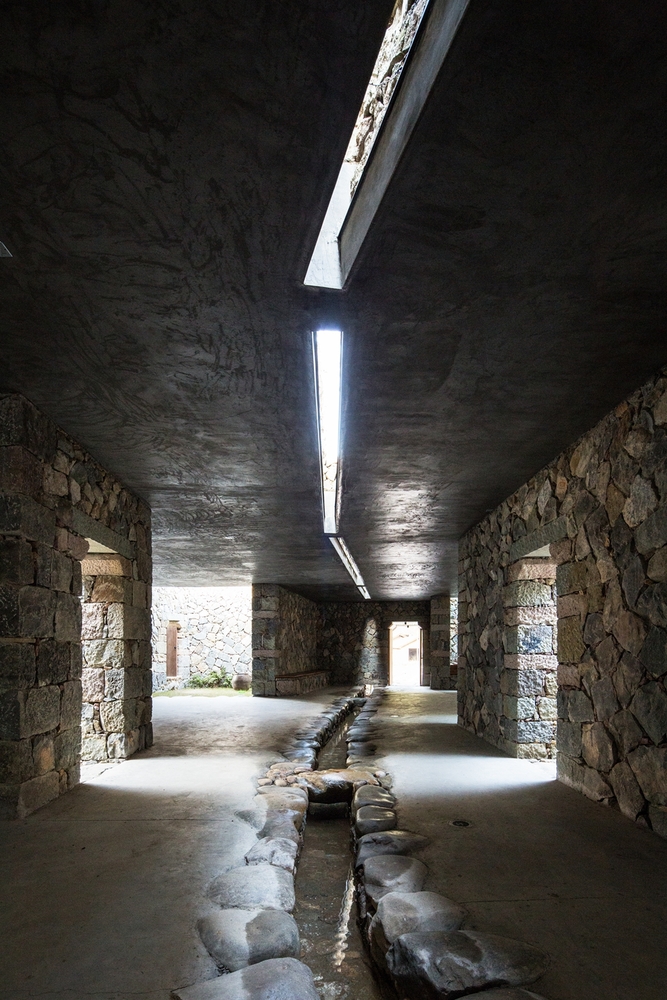
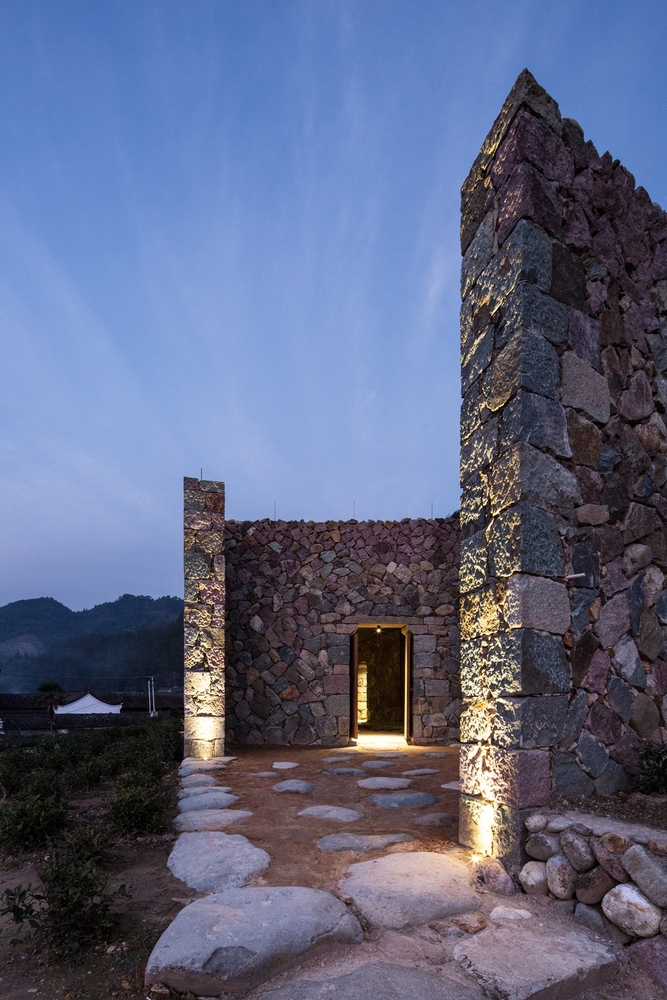
The Tofu Factory in Caizhai Village demonstrates Xu’s ability to intervene in systems of production without eroding their social basis. The building follows the sequence of tofu making along a rising sectional route, aligning architecture with process. More significantly, it supports a cooperative structure that improves hygiene standards and product quality while retaining local ownership. Here architecture is inseparable from economic organisation. The drawing of space and the design of a production network become part of the same operation.


Seen individually, these projects are modest. Seen together, they form a territorial strategy. Each intervention addresses a specific blockage. One reorganises production. Another anchors memory. Another restores a place of assembly. Architecture does not resolve structural inequalities on its own, but it can alter the conditions in which they are negotiated. Xu’s work is catalytic rather than redemptive, and its effectiveness lies precisely in that distinction.
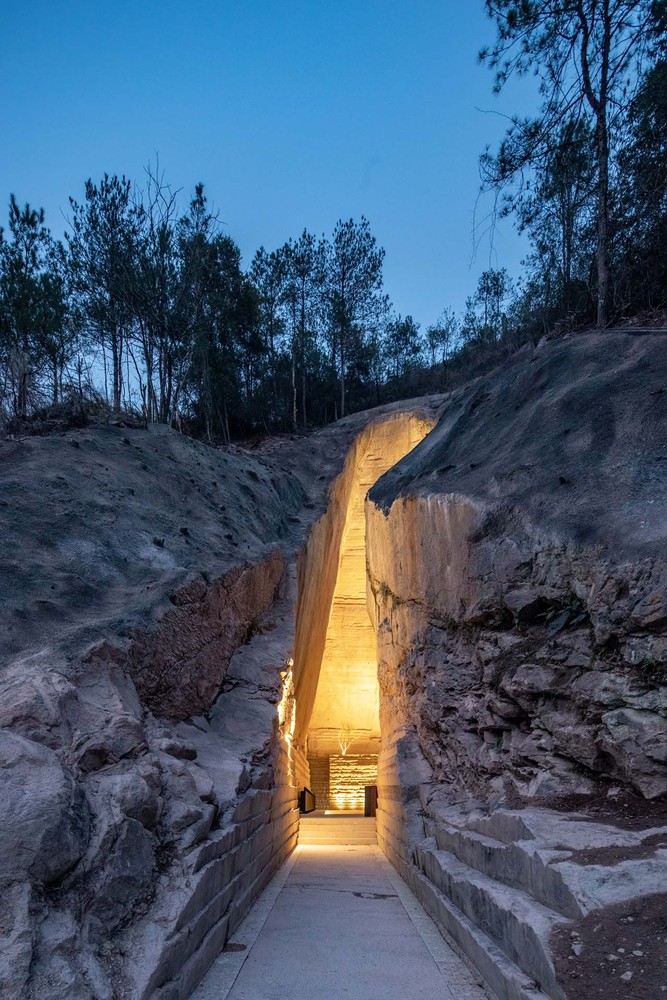
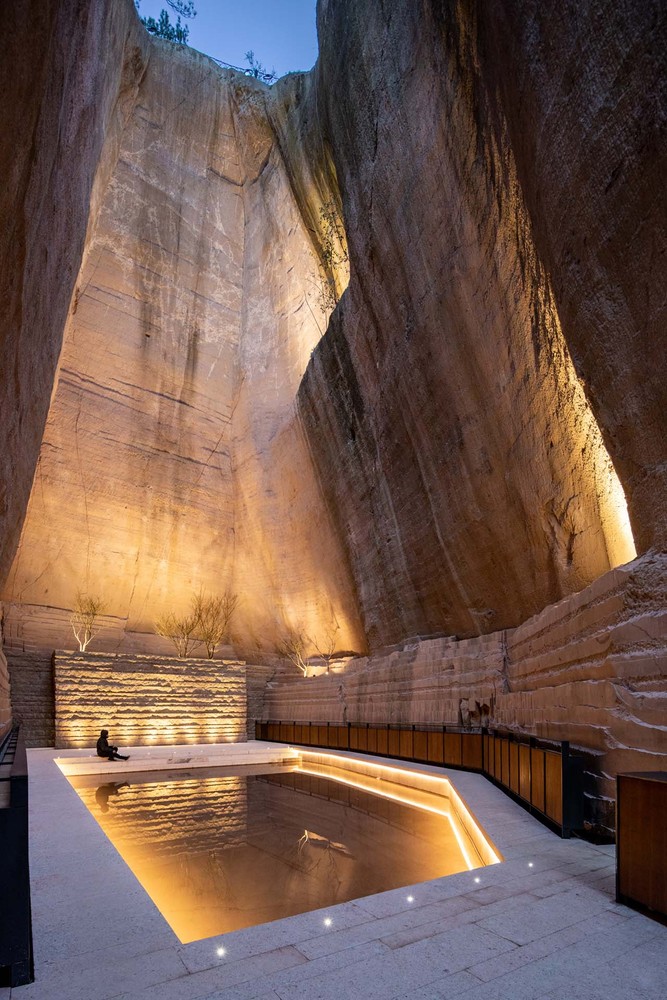
This logic extends beyond Songyang. In Jinyun County, Xu and her team have begun transforming abandoned stone quarries into public cultural spaces. Thousands of these quarries, once manually excavated, remain scattered across the landscape. Rather than erase them, the project works through their existing spatial conditions. Selected sites are adapted with minimal intervention. Quarry No. 9, for instance, becomes a performance space. Its vertical enclosure and raw stone surfaces create an atmosphere that architecture does not seek to dominate. The intervention is slight, yet the shift in meaning is profound. A site of extraction becomes a site of gathering.


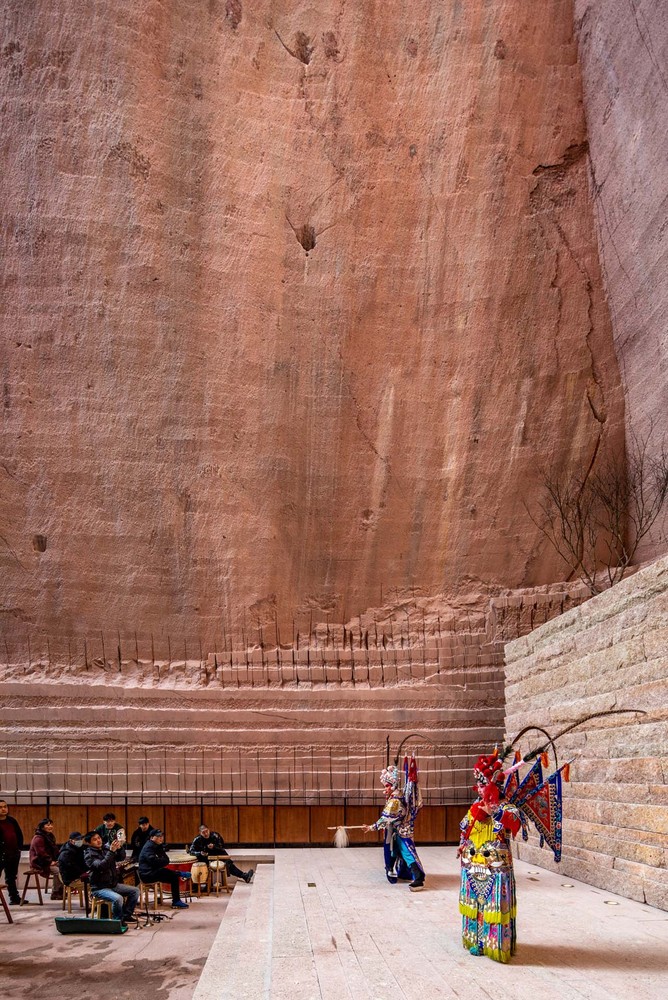
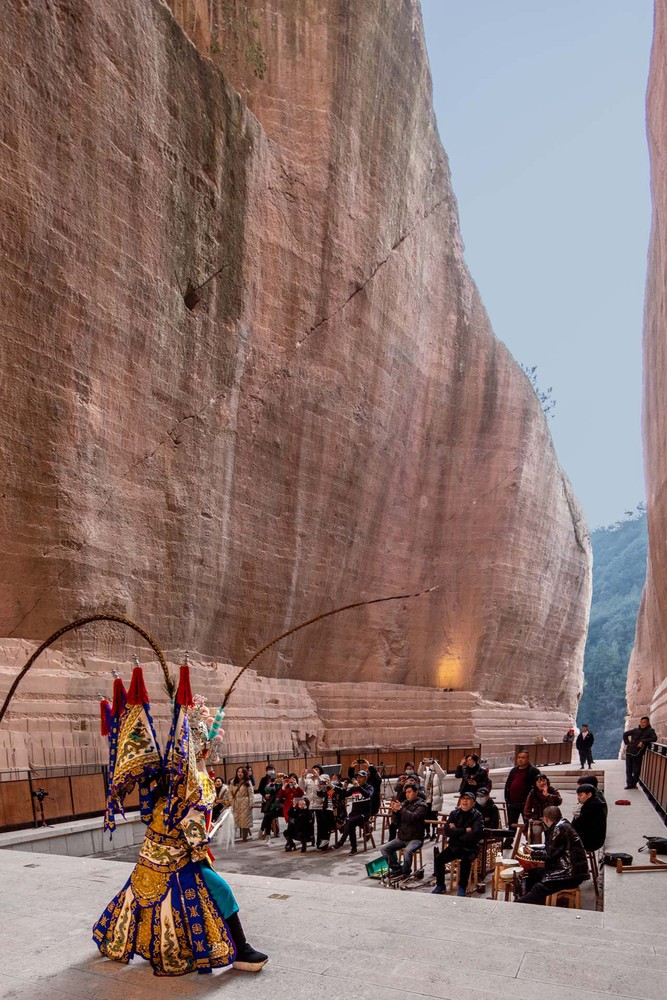


Credit: Photo by Ziling Wang © DnA_Design and Architecture.
In Fujian, Xu’s work on tulou adaptation confronts a different condition. These fortified communal dwellings, widely recognised as symbols of collective life, face abandonment as younger generations migrate to cities. Xu does not treat them as static heritage. She approaches each structure as an active social question. Adaptive reuse introduces new programmes while respecting the spatial logic and material integrity of the original construction. The aim is not preservation as image, but continuity as use. Heritage survives not by remaining unchanged, but by remaining inhabited.


What unites these projects is not a consistent formal language, but a consistent position. Xu’s buildings are measured, often severe in their refusal of excess. They do not perform humility. They operate through it. When she speaks against starchitecture, the critique is not stylistic. It is structural. Architecture, in this view, must justify itself through what it enables rather than what it represents.


It would be easy to romanticise this work as a return to human scale. Xu resists that simplification. Her projects are not anti urban or anti modern. They are ambitious in another register. They assume that architecture can participate in governance, in local economies, in cultural policy, and in the reconstruction of trust between institutions and communities. This is slow work. It depends on long term engagement, repeated presence, and a willingness to build credibility before authority.
Recognition has followed, yet the significance of Xu’s work lies less in awards than in the consistency of its argument. Across projects, contexts, and scales, the same question persists. What can architecture do once it relinquishes the desire to dominate its surroundings? In Xu’s practice, the answer is neither decorative nor abstract. It is precise, situated, and cumulative.

The most direct statement remains the simplest. Architecture is for people. In lesser hands, the phrase would collapse into sentiment. Here it becomes a standard against which each project is measured. Can a building help a village continue working, gathering, remembering, and imagining a future without being forced into an external image of progress? Xu’s work suggests that it can. Not through grand gestures, but through a sequence of small, exact interventions. Each one placed carefully. Each one capable of setting something in motion.
Photo Cover
Portrait of Xu Tiantian, Beijing, 2026. The architect whose “architectural acupuncture” has redefined rural revitalisation in China. Credit: Photo by Li Chaoyu. Courtesy of Mecca x NGV Women in Design Commission.
Previous Post
Next Post
- The timeless elegance of domestic appliances: From the Iconic Braun KF 20 aromaster to the German design ethos

- Emilio Ferro on the light, sound and memory of a place
- At Maniwa, an architect’s family home opens to the neighbourhood
- What bronze remembers of the hand

- Caught in light: Moradavaga’s suspended shoal

- The making of Alex Chinneck’s impossible Dior windows