Now Reading: Space House: Reimagining a brutalist icon in central London
- 01
Space House: Reimagining a brutalist icon in central London

Space House: Reimagining a brutalist icon in central London
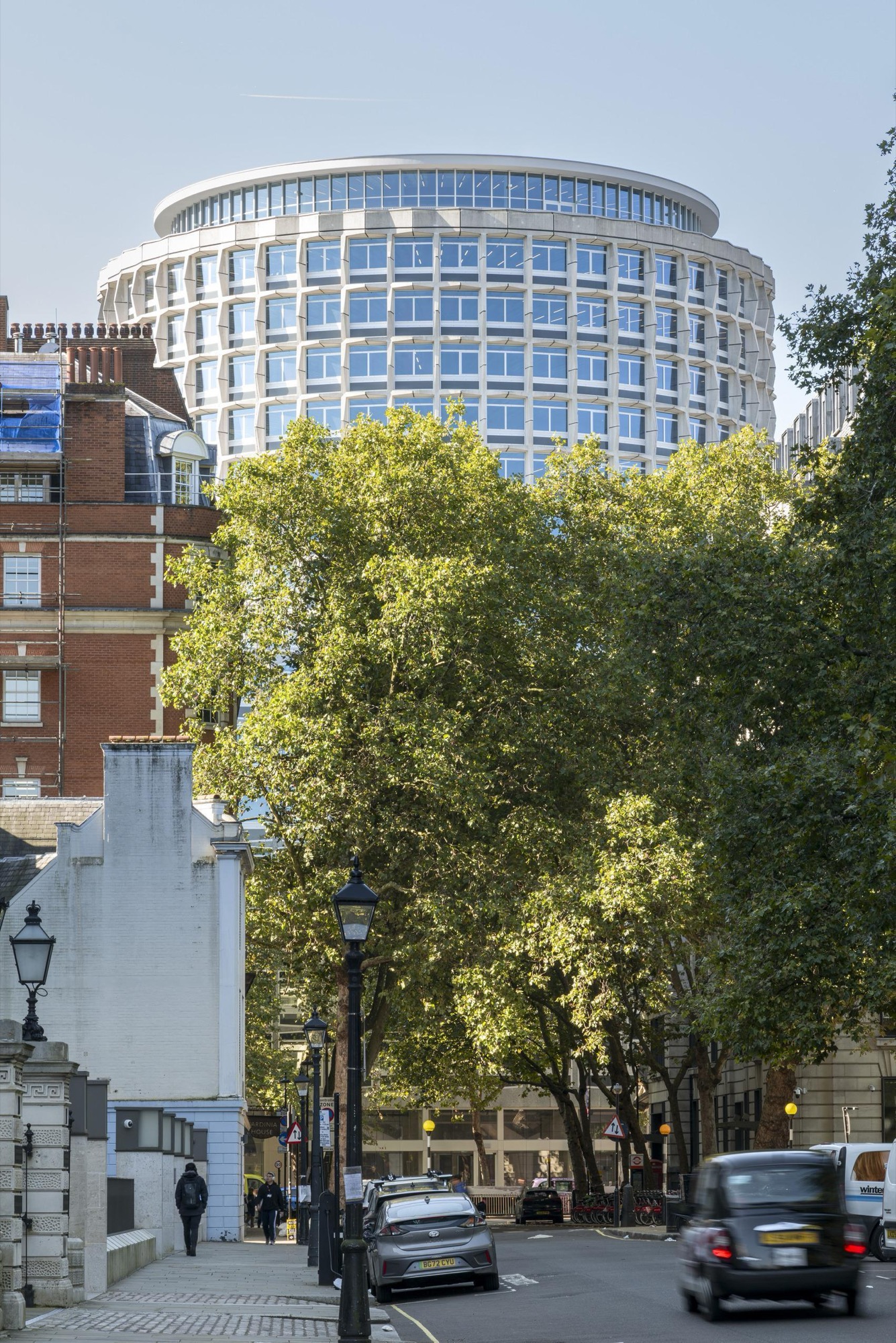
In the heart of Covent Garden, Space House has re-emerged as one of London’s most ambitious heritage-led workplace transformations. Sensitively refurbished and extended by Squire & Partners for Seaforth Land and QuadReal, the Grade II-listed landmark has been reimagined as a contemporary, socially engaged destination for work, retail, and public life, while remaining faithful to its powerful 20th-century architectural identity.

Completed in 1968, Space House is a defining product of the post-war commercial boom. Designed by Richard Seifert and Partners, the building is instantly recognisable for its cylindrical concrete tower articulated by a precast cruciform façade, raised on expressive Y-shaped columns, alongside a rectilinear block and a connecting bridge. Together, these elements form a carefully calibrated response to the surrounding urban grain, asserting monumentality without severing ties to the street.


Occupied exclusively by the Civil Aviation Authority until 2019, the building had undergone multiple refurbishments that gradually obscured its original architectural clarity. The current transformation reverses this process. Later interventions have been stripped away to reveal and celebrate the logic of Seifert’s design, allowing the building’s structural expression, proportions, and material character to come back into focus.
At the same time, the project introduces carefully judged additions to support contemporary patterns of work. Two new floors have been added to the tower, while a single-storey extension enlarges the block. The tower now rises to seventeen storeys, with rooftop plant consolidated and set back to restore the original silhouette, creating a 3,600-square-foot roof terrace with panoramic views across London. The block gains a new eighth floor, housing shared meeting spaces and a clubhouse with bar and a generous 5,000-square-foot terrace accessible to all tenants.

Inside the tower, a double-height lobby establishes a sense of arrival that is both civic and generous. Circular, column-free floorplates of approximately 10,000 square feet are washed with daylight, while the upper levels enjoy uninterrupted 360-degree views of the city. The block offers a more intimate scale, with eight floors of 8,000-square-foot workspaces connected by a sky bridge that enables continuous office environments across the first and second floors, and a landscaped terrace on the third.
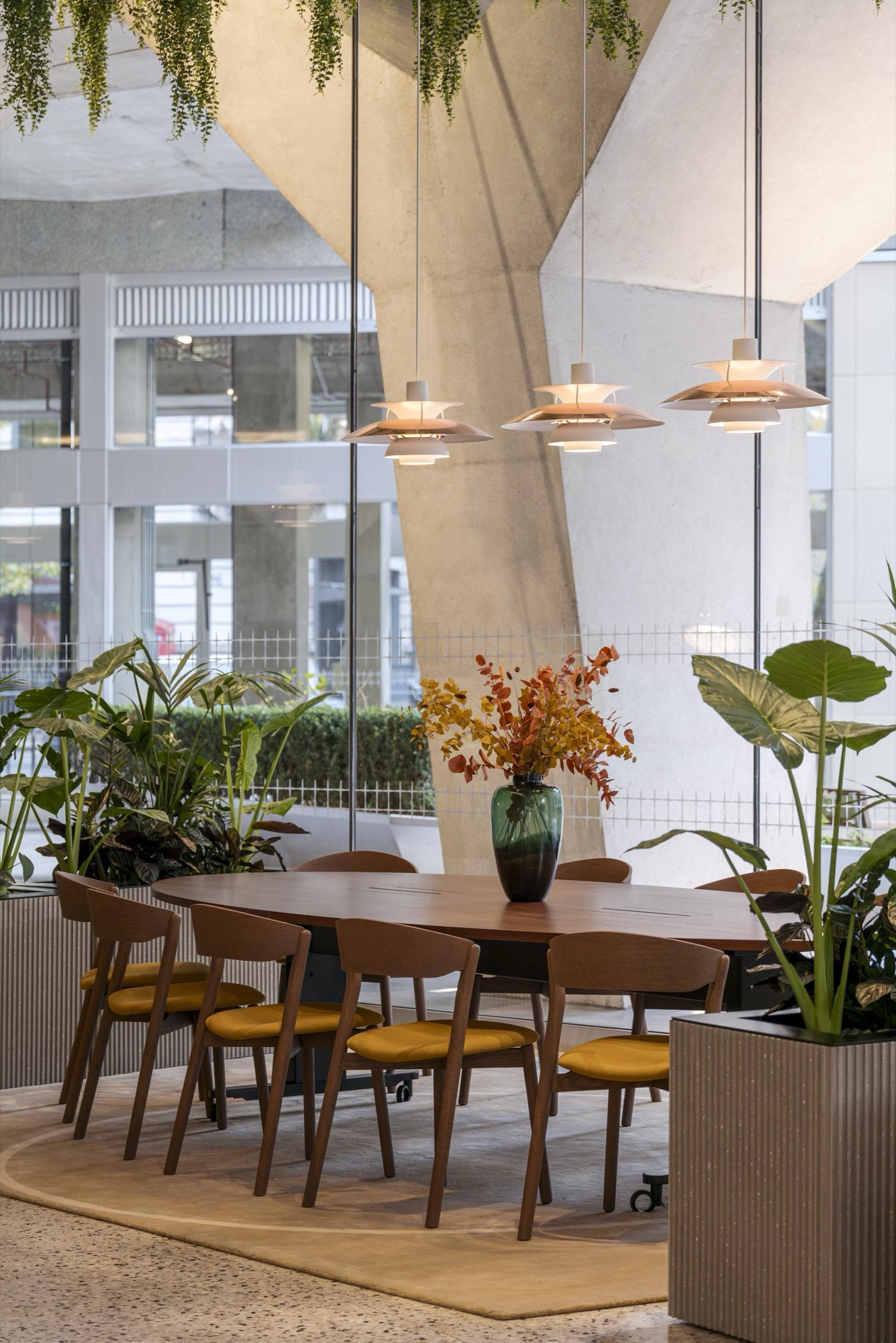
Workspaces are conceived as egalitarian and visually connected environments. Long sightlines encourage collaboration and openness, while a loft-like material palette anchors the interiors. Polished concrete floors define the office spaces, terrazzo surfaces unify the shared areas, and original mosaic tiles have been carefully retained within the stair cores, reinforcing a tangible link to the building’s history.

Originally conceived in an era dominated by the private car, Space House has been decisively reoriented towards sustainable urban life. One of the original vehicle ramps has been retained and repurposed as a dedicated cycle entrance, leading to extensive end-of-journey facilities. The former car park now accommodates storage for 600 bicycles, supported by showers, lockers, drying rooms, and changing spaces.
Below ground, the two-storey basement has been transformed through the insertion of a large void, creating 16,500 square feet of flexible double-height event space. This move reframes previously utilitarian areas as active social infrastructure, extending the building’s role beyond conventional office use.
Space House has achieved a milestone as the largest Grade II-listed building in the UK to receive BREEAM Outstanding certification. The deeply modelled façade provides inherent passive shading, while degraded envelope elements have been replaced to meet contemporary performance standards. A new building services strategy centres on air source heat pumps, with bespoke chilled beams integrated seamlessly into the original radial ceiling coffers.


Digital connectivity and occupant wellbeing have been equally prioritised. The project has secured Fitwel 2-star and WiredScore Platinum certifications, positioning the building at the forefront of sustainable and technologically advanced workplace design.
At ground level, the transformation extends into the surrounding public realm. What was once a private car park has been reshaped into a pedestrian-focused environment that links the retail spaces within the tower and block. A former petrol station canopy at the base of the tower has been enclosed and reimagined as The Filling Station café, activating the street edge and opening the site to everyday public use.
Through careful restoration and considered adaptation, Space House demonstrates how robust modernist architecture can be renewed for contemporary life without dilution. Its purposeful massing and expressive concrete façade have not only endured, but have been recalibrated to support new ways of working, meeting, and inhabiting the city. The project sets a compelling benchmark for the future of heritage-led sustainable development, proving that the democratic ambitions embedded in mid-century architecture can be meaningfully extended into the decades ahead.
Project Credit
Project name: Space House
Location: London, United Kingdom
Design firm: Squire & Partners / @squirepartners
Photo: Gareth Gardner / @gardnergareth
Related Posts

Previous Post
Next Post
- The timeless elegance of domestic appliances: From the Iconic Braun KF 20 aromaster to the German design ethos

- Emilio Ferro on the light, sound and memory of a place
- At Maniwa, an architect’s family home opens to the neighbourhood
- What bronze remembers of the hand

- Caught in light: Moradavaga’s suspended shoal

- The making of Alex Chinneck’s impossible Dior windows