
Now Reading: Pilsworth Lake: A landscape shaped by ice, water, and industry
- 01
Pilsworth Lake: A landscape shaped by ice, water, and industry


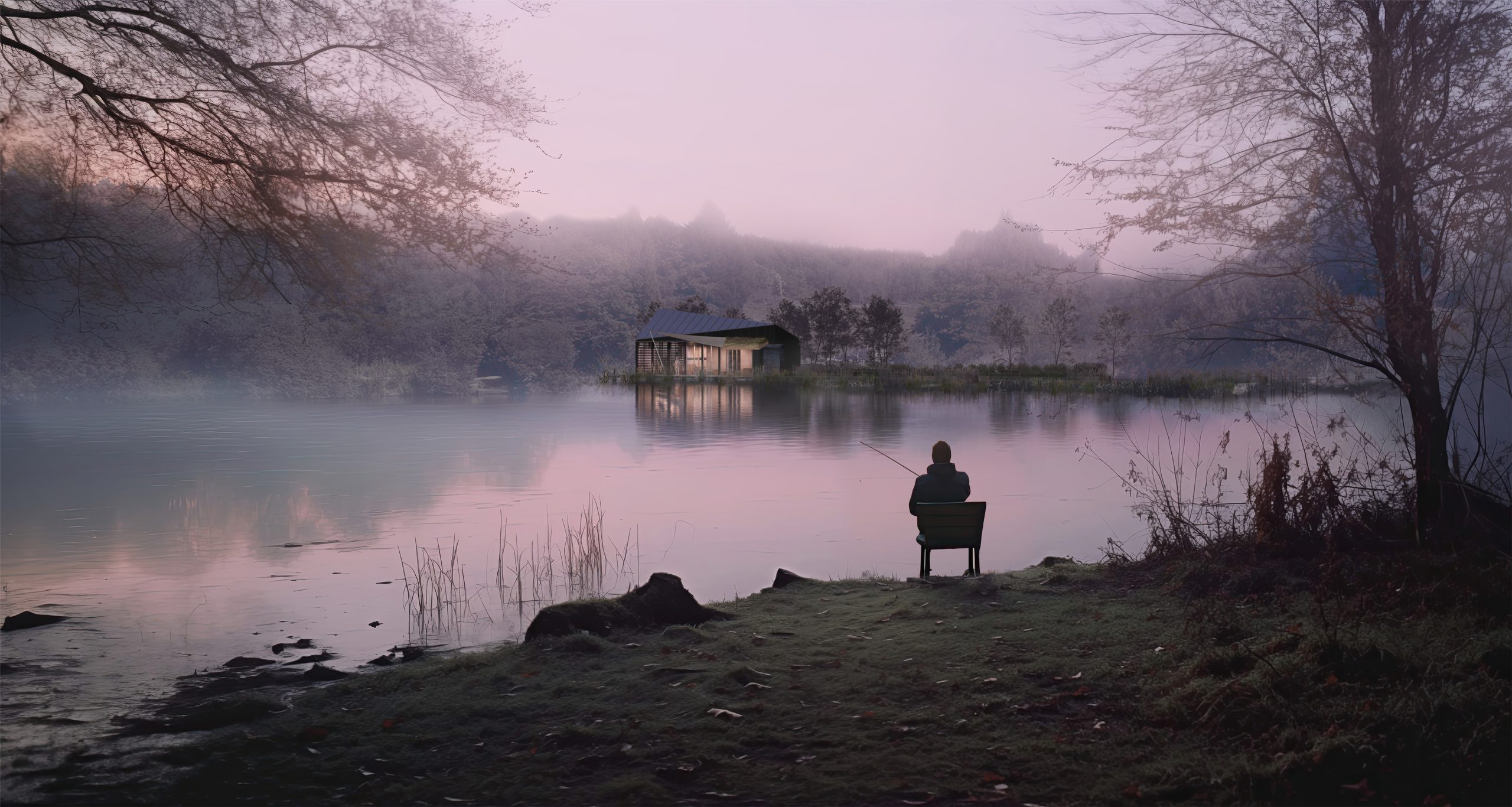
Pilsworth Lake lies on the edge of the Pennine moorland in South Lancashire, within a landscape first shaped by glacial melt at the end of the last ice age. Long before industrialisation, retreating ice carved valleys and channels that carried soft water across the land. Centuries later, these same watercourses would power the machinery of the early cotton mills that defined the region’s industrial identity.

The lake itself was excavated in the early nineteenth century to serve Pilsworth Clough Mill, located just north of what would become the expanding city of Manchester. As the industrial economy replaced rural life, the site shifted from agricultural landscape to productive infrastructure. When the mill fell into disuse, the pit was gradually infilled and abandoned. Over time, nature quietly returned, reclaiming the valley with a slow moving stream, grasses, and woodland, even as contemporary industrial buildings continued to spread around its perimeter.


This layered condition, where geological time, industrial history, and ecological recovery coexist, forms the foundation of the current proposal.

DESIGNING WITH RECOVERY RATHER THAN REPLACEMENT
The project approaches Pilsworth Lake not as a blank site for redevelopment, but as a recovering landscape that already holds memory, structure, and ecological potential. The design builds upon existing uses such as angling, while carefully introducing new forms of public access including walking routes, nature observation, and informal gathering. Rather than concentrating activity into singular destinations, the proposal distributes it across the landscape through a network of modest architectural and landscape interventions.


Walkways, viewing balconies, outdoor classrooms, and small performance spaces are positioned to frame views, slow movement, and encourage prolonged engagement with the site. These elements are conceived as lightweight additions that sit within the valley rather than dominate it, allowing visitors to read the terrain, water systems, and vegetation as the primary spatial experience.
Rain garden habitats play a critical role in this strategy, managing surface water runoff while enhancing biodiversity. Integrated into the topography, these systems soften the boundary between designed form and natural process, allowing infrastructure to operate as part of the landscape rather than in opposition to it.


ARCHITECTURE AS STEWARDSHIP
To support public use, a series of small buildings including a café, shop, visitor centre, and boathouse are introduced. Their placement and material choices are guided by a desire to minimise environmental impact while maintaining a clear architectural presence. Low carbon construction methods and materials are prioritised, reinforcing the project’s broader ecological ambitions.

Beyond built form, the proposal commits to increasing biodiversity across the site by more than ten percent, supporting natural regeneration and the reintroduction of native species. This ecological uplift is not treated as a technical add on, but as a central design driver, shaping circulation, water management, and spatial sequencing.

By foregrounding the story of the site, from glacial formation to industrial use and eventual decline, the project frames Pilsworth Lake as a living landscape rather than a static amenity. The design encourages a renewed relationship between local communities and their environment, one grounded in understanding, care, and long term stewardship.
In transforming a former brownfield site into a shared landscape asset, the proposal demonstrates how landscape architecture can operate across time scales, supporting ecological recovery while offering meaningful public space for the wider Greater Manchester region.
Project Credit
Location: Lancaster, United Kingdom
Architecture Firm: Atelier Architecture + Design / @atelierarchitectureanddesign
Photo: AA+D
More Photos