
Now Reading: Reading Le Corbusier through Brazil at Maison La Roche
- 01
Reading Le Corbusier through Brazil at Maison La Roche


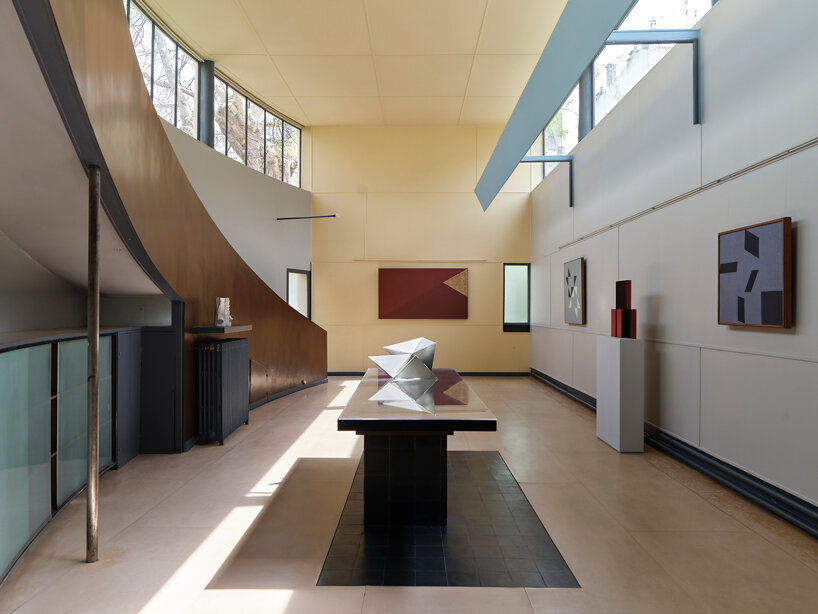
Maison La Roche, completed in 1925 in Paris’s 16th arrondissement, remains one of the clearest articulations of early modernist architecture. Designed by Le Corbusier for the Swiss banker and collector Raoul La Roche, the house was conceived as both residence and gallery. In later years, Le Corbusier Brazil modernism would profoundly shape architectural thinking in other parts of the world. Its calibrated polychrome walls, ribbon windows and orchestrated promenade architecturale construct a spatial sequence in which architecture and art operate as a unified system. The building does not simply contain paintings. It structures perception.

From 14 May to 8 June 2025, Maison La Roche hosted Brazil After Le Corbusier, the fourth edition of the ABERTO platform. Founded in São Paulo in 2022 by Filipe Assis, ABERTO has consistently activated significant architectural sites through contemporary Brazilian art. Its Paris presentation, part of the France Brazil Season 2025, marked the initiative’s first international expansion and positioned Brazilian contemporary practice within one of modernism’s canonical interiors.
The choice of venue was not symbolic alone. Maison La Roche forms part of the UNESCO World Heritage inscription The Architectural Work of Le Corbusier, a designation that frames the building as both historical artifact and intellectual milestone. Presenting Brazilian artists within this space reopened a century long architectural dialogue.
MODERNISM IN TRANSIT
Le Corbusier first visited Rio de Janeiro in 1929 and returned in 1936. These visits coincided with Brazil’s search for a modern architectural language capable of expressing national ambition without reliance on academic historicism. His advisory role during the development of the Ministry of Education and Health building in Rio de Janeiro, completed in 1943 under the leadership of Lúcio Costa with participation from the young Oscar Niemeyer, marked a decisive moment. The project incorporated pilotis, free façades, horizontal windows and climate responsive shading systems that adapted modernist principles to tropical conditions.

Yet Brazilian modernism was never a simple transplantation of European ideas. Niemeyer’s later work gradually displaced Corbusian orthogonality with structural curvature and spatial fluidity. Brasília, inaugurated in 1960 under Costa’s urban plan and Niemeyer’s civic architecture, represents a transformation rather than a continuation of Le Corbusier’s model. Monumentality became sculptural and landscape assumed a central compositional role.

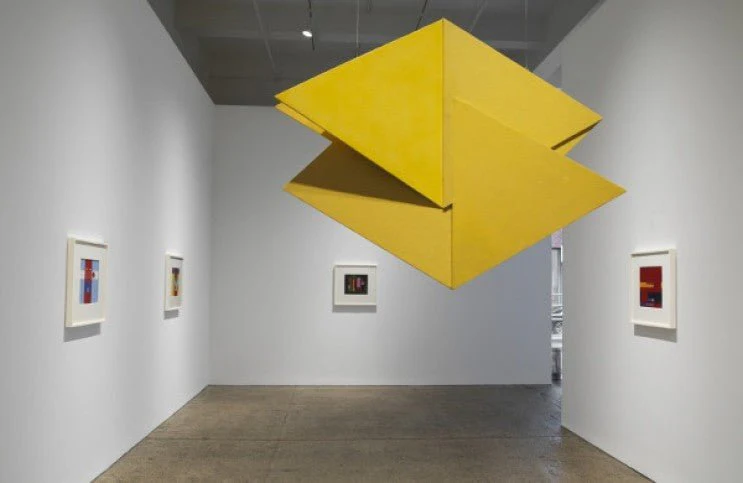
Parallel developments in art further expanded this reinterpretation. Neo Concretist figures such as Hélio Oiticica and Lygia Pape shifted attention from formal composition to embodied spatial experience, extending architectural questions into participatory practice. Modernism in Brazil became less a style than an atmosphere.
This reciprocal exchange forms the intellectual framework within which ABERTO4 operates.
ACTIVATING A CANONICAL SPACE
Today Maison La Roche functions as both museum and research site. Preservation has stabilised its material integrity, but such stability can risk neutralising its experimental spirit. ABERTO4 sought to reintroduce friction.
Approximately twenty five artists were invited to create close to forty site specific works in direct dialogue with the architecture. The curatorial approach, developed by Claudia Moreira Salles, Kiki Mazzucchelli and Lauro Cavalcanti, structured the exhibition across historical reference and contemporary intervention.
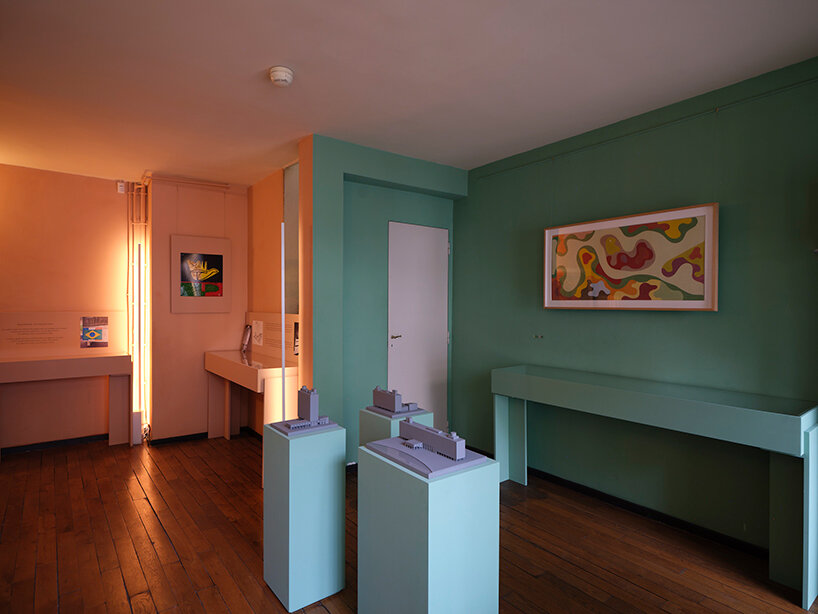
Archival materials referencing Le Corbusier’s unbuilt urban schemes for Rio and São Paulo provided context. These speculative proposals, which explored elevated infrastructural systems and radical density strategies, reveal the scale of his ambitions in Brazil even when unrealised.

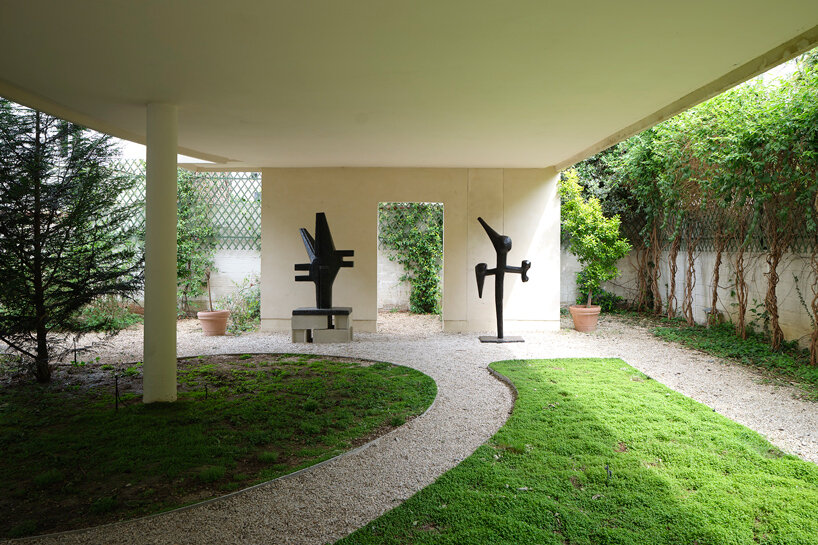
Contemporary works introduced a distinct register. Beatriz Milhazes engaged the villa’s chromatic calibration through layered abstraction that oscillated between geometry and ornament. Luiz Zerbini presented imagery of architectural erosion and vegetal encroachment, subtly destabilising the clarity of the modernist envelope. Marina Perez Simão and Liuba Wolf explored scale and material density, allowing the building’s volumes to register as spatially active rather than static.


Works were installed using the original hanging system designed by Le Corbusier, reinforcing the building’s foundational premise that architecture and art are inseparable. Rather than transforming the villa into a neutral exhibition container, the show reactivated its original logic.
FRANCO BRAZILIAN CONTINUITIES
Cultural exchange between France and Brazil predates the twentieth century. The French Artistic Mission of 1816 introduced academic Neoclassicism into Brazilian institutions, establishing an early framework for dialogue. By the early twentieth century, Paris functioned as a key reference point for Brazilian artists and architects seeking international exchange.

Le Corbusier’s later involvement in the Maison du Brésil at the Cité Internationale Universitaire de Paris further materialised this relationship. Despite collaborative tensions and evolving authorship, the building stands as a physical testament to shared ambition across national boundaries.

Within the broader France Brazil Season 2025, ABERTO4 aligned with renewed institutional attention to this historical entanglement. Its significance, however, lies not in diplomacy but in its critical engagement with modernism as a mutable framework.
BEYOND TRIBUTE
The exhibition neither sanctified Le Corbusier nor positioned Brazilian modernism as derivative. Instead, it framed modernism as a structure capable of translation and transformation.
By introducing Brazilian contemporary art into Maison La Roche, the exhibition effectively returned a reinterpreted modernism to its European point of origin. The building, often treated as a preserved artifact of early twentieth century ideology, demonstrated elasticity under contemporary pressure.
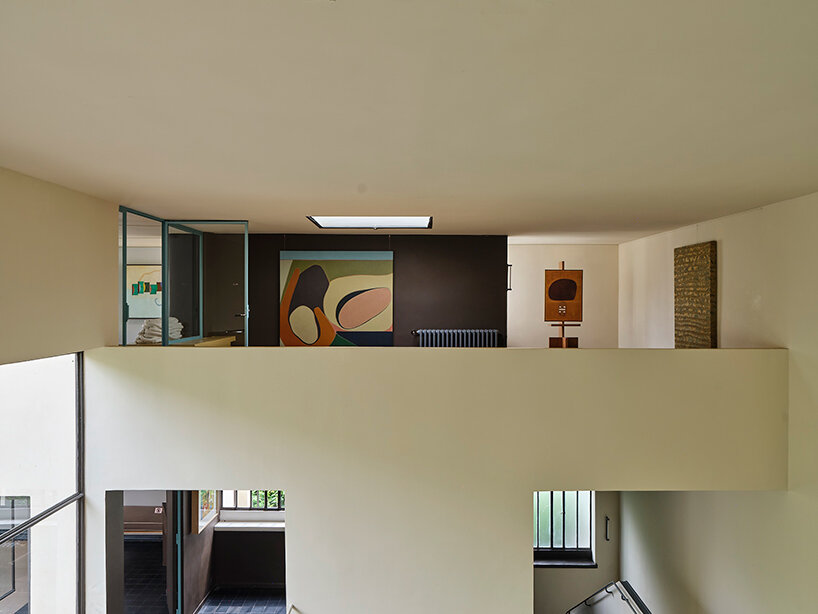
This raises broader questions about preservation. Modernist architecture risks reduction either to heritage branding or to abstract theoretical reference. ABERTO4 suggests another path. When approached critically, historic buildings can operate as active sites of reinterpretation rather than static monuments.
ARCHITECTURE AS ONGOING DIALOGUE
Nearly a century after Le Corbusier’s first encounter with Brazil, the exchange continues to evolve. What began as advisory influence became reciprocal reinvention.
Maison La Roche, temporarily reconfigured by Brazilian art, revealed the adaptability embedded within modernist space. The exhibition did not dilute the building’s identity. It clarified its capacity for renewal.
Modernity emerges here not as doctrine but as ongoing dialogue shaped by geography, climate and cultural negotiation. In that sense, Brazil After Le Corbusier stands as a contemporary re reading of architectural history rather than a commemorative gesture.
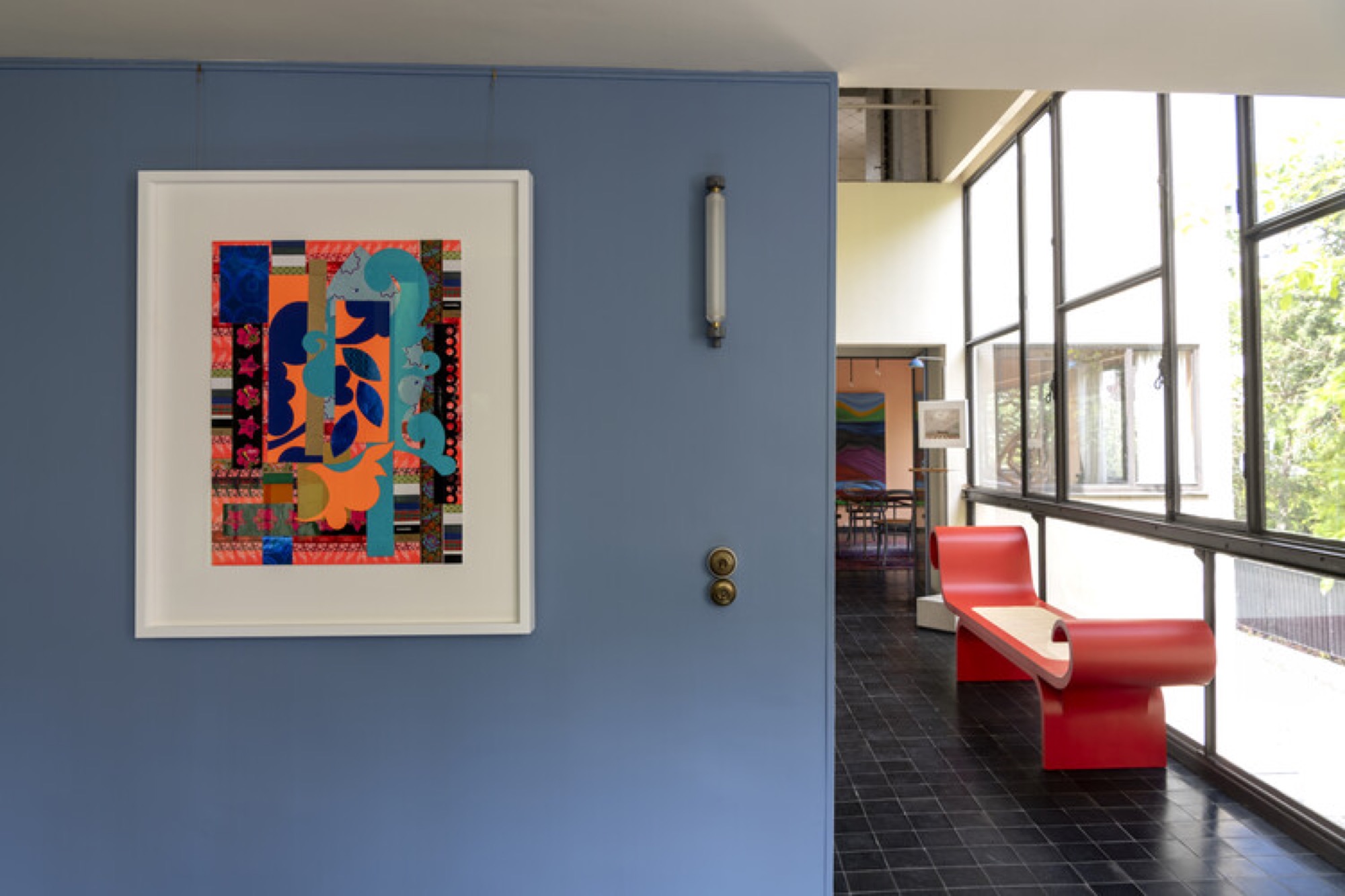
Photo Cover
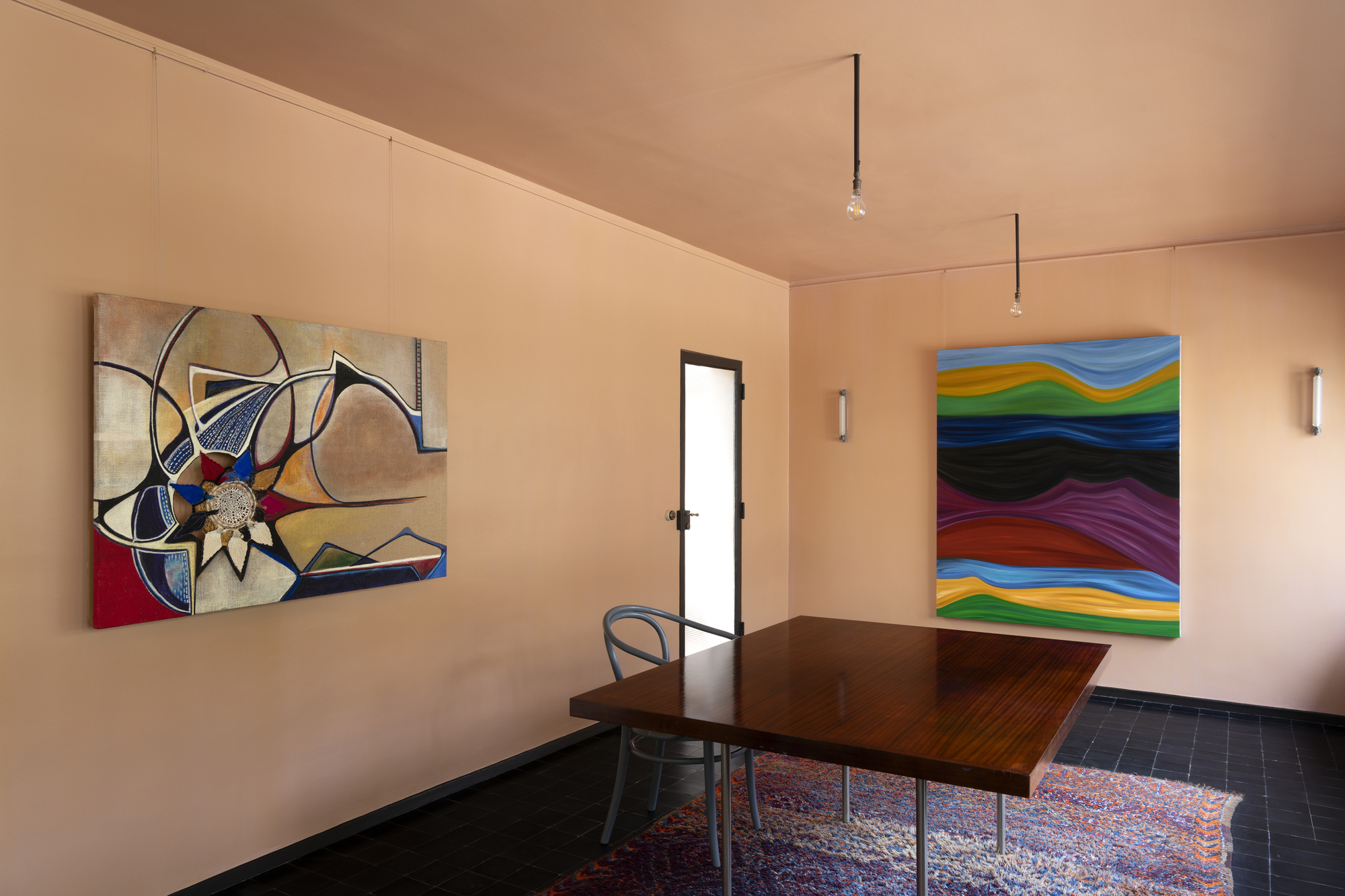
Marina Perez Simão’s abstract painting installed in a polychrome room at ABERTO4, symbolizing the fusion of Brazilian art and modernist space. Credit: ArchDaily / Thomas Lannes.