Now Reading: “The whole space behaves like a risograph composition”
- 01
“The whole space behaves like a risograph composition”

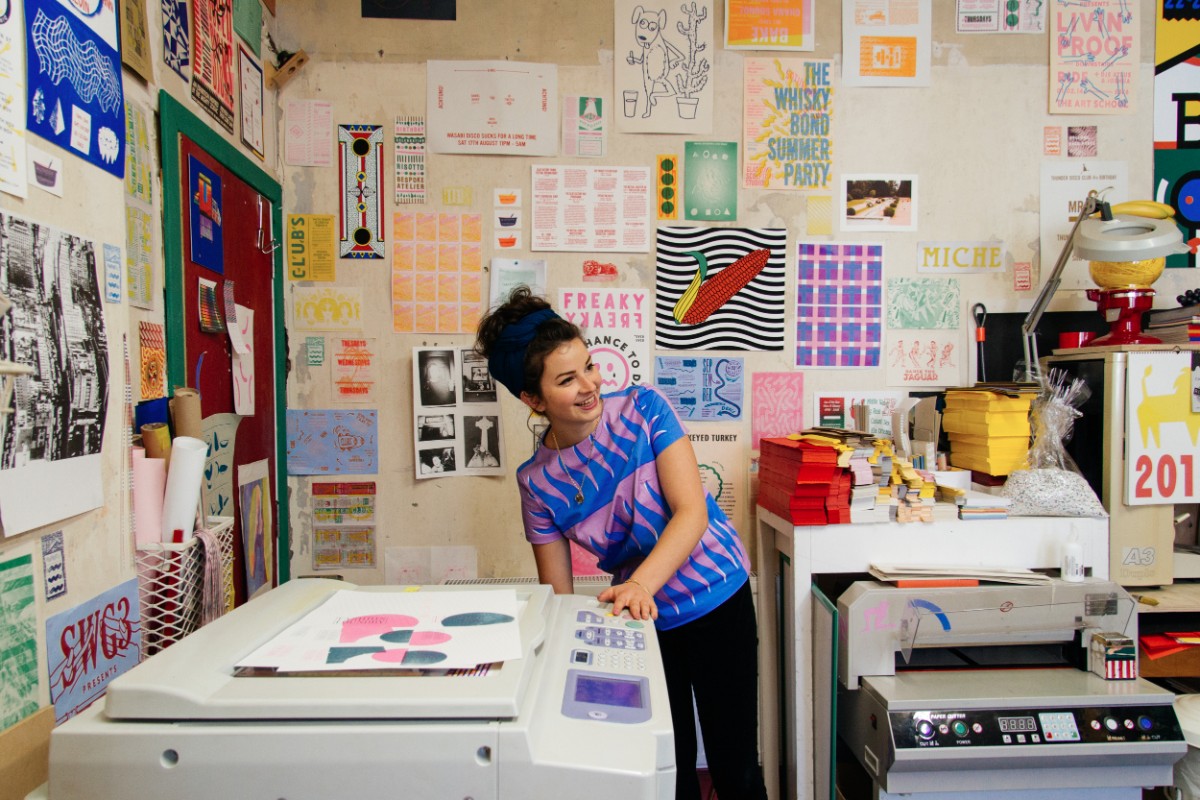

For Gabriella Marcella, founder of RISOTTO Studio, print is not simply a method of reproduction. It is a way of thinking through colour, process, rhythm and accident. Since launching RISOTTO in Glasgow in 2012, the artist and designer has built a practice around risograph printing, transforming its layered textures, luminous palettes and productive imperfections into a distinct visual language. Her new headquarters extends that language beyond paper, turning the studio itself into a working composition of storage, display, production and social exchange.
In this interview, Marcella reflects on how RISOTTO’s new Glasgow headquarters became a spatial expression of the studio’s identity. More than a conventional office, the project operates as a living workshop, where machines, materials, prints, costumes and people remain visibly in motion. Through colour, flexibility and a deliberately open attitude to making, the space reveals how analogue production can still offer a powerful counterpoint to an increasingly digital creative culture.
RISOTTO’s new headquarters feels less like a conventional office and more like a spatial extension of the studio’s graphic identity. How did you translate the language of risograph printing, colour layering, texture and playfulness into architectural space?
I think the space naturally became an extension of how I already think through print.
Risograph printing is all about layered systems, visible process, repetition, colour relationships, accidental magic and, sometimes, complete inky chaos. So it made sense for the studio to evolve with that same energy.
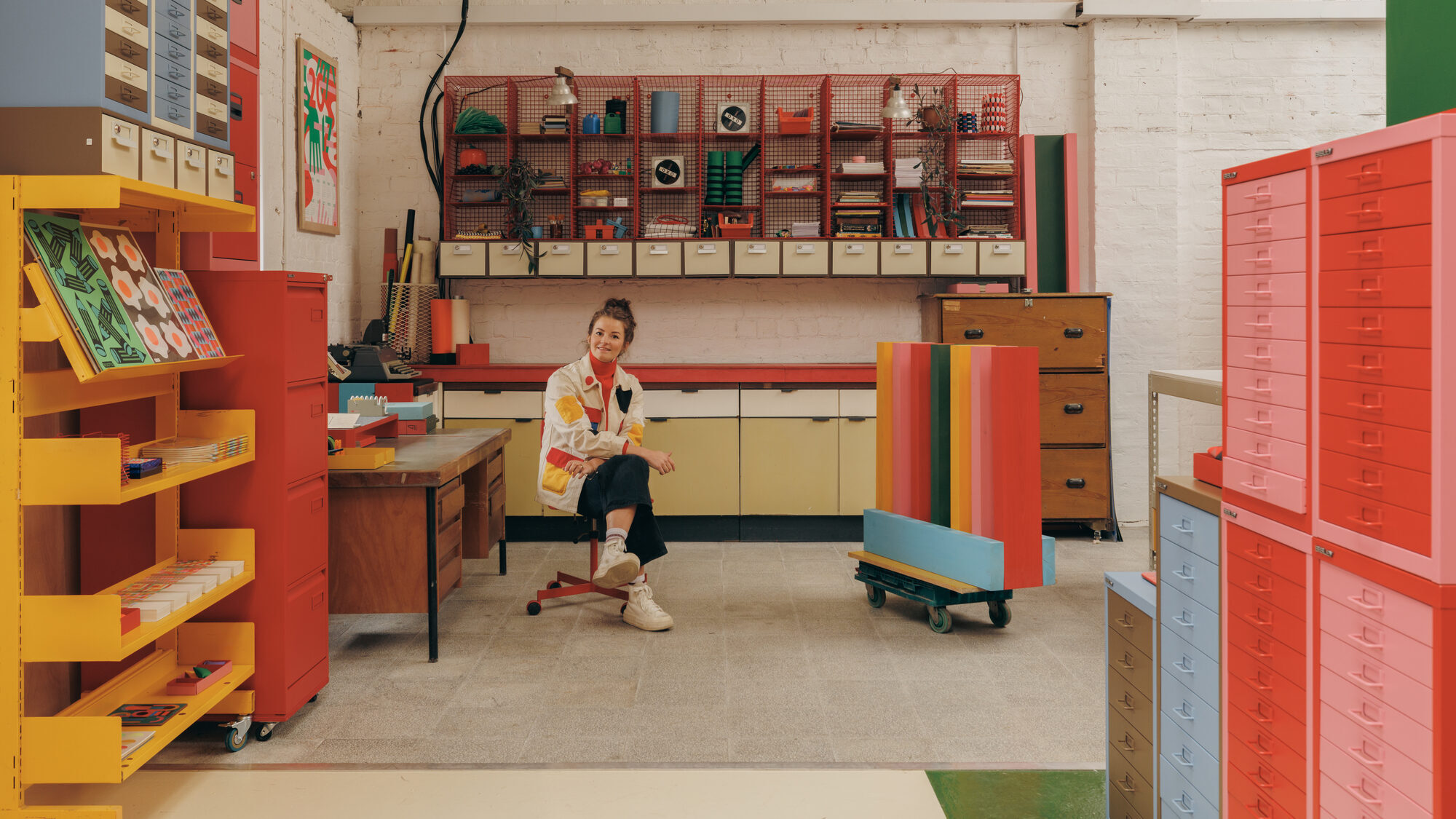
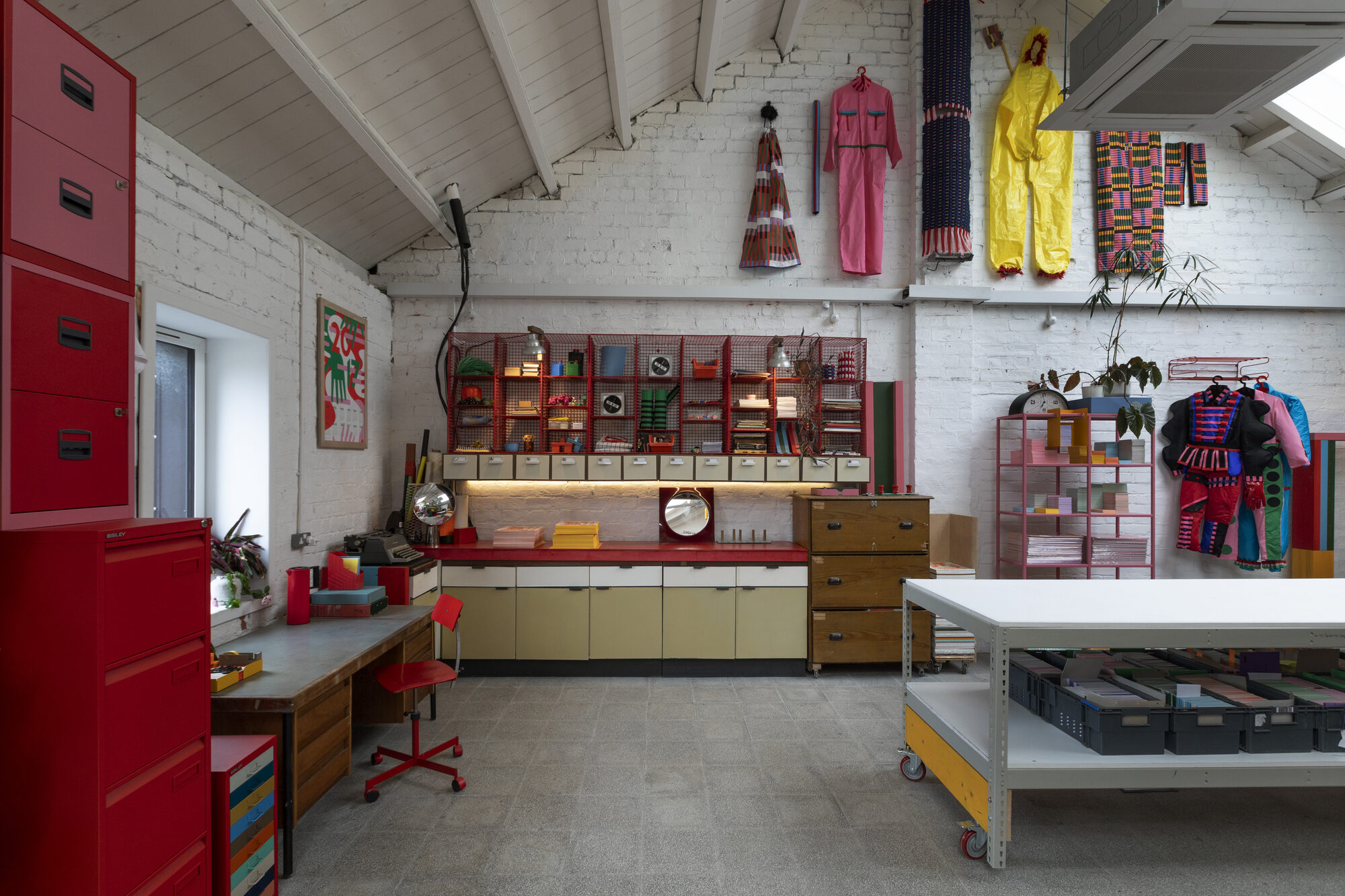
I never wanted the headquarters to feel overly polished or hidden away. I wanted it to feel active. You can see the machines, the stacks of paper, prints drying, costumes half made, tools everywhere and strange materials waiting to be used.
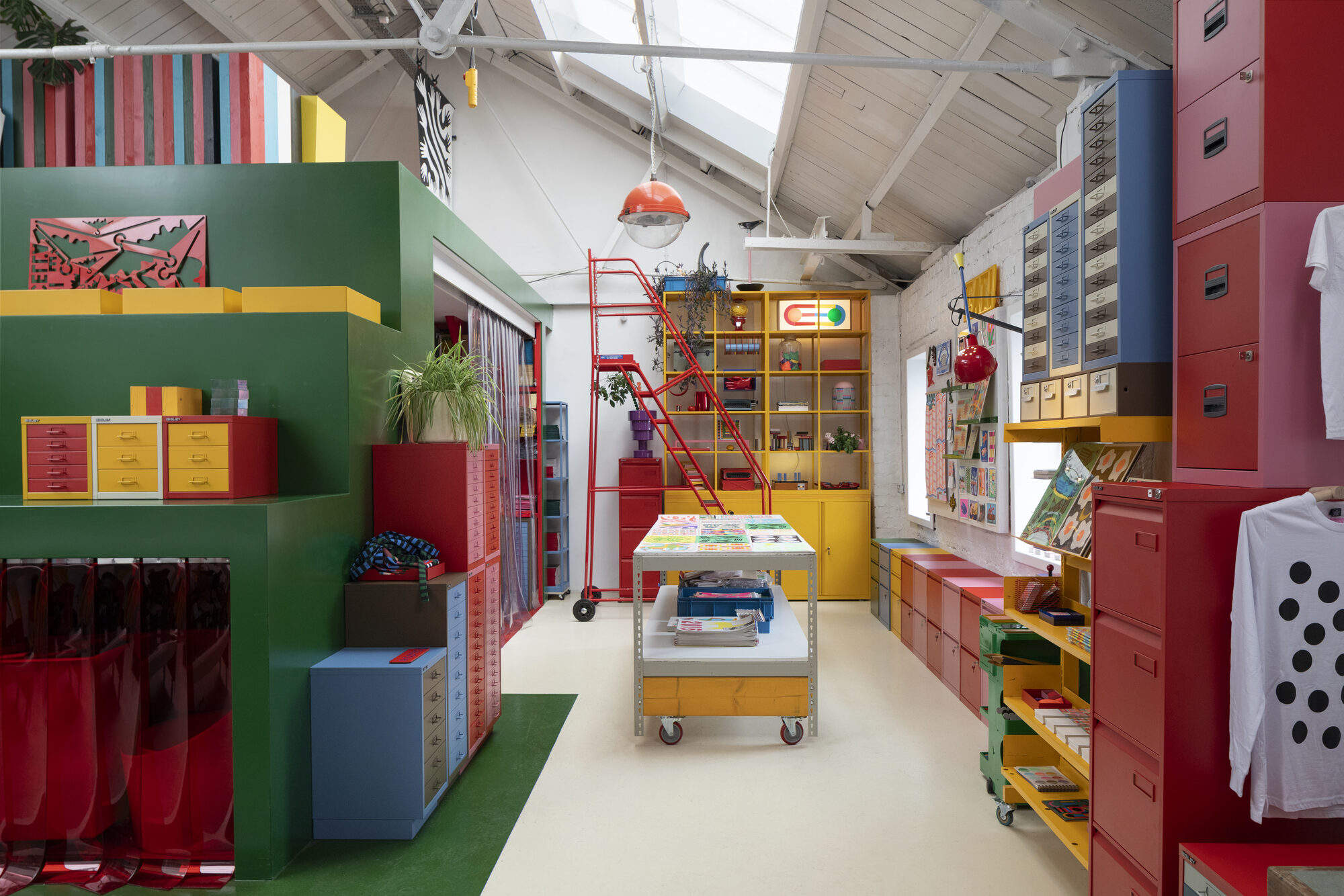
The whole space behaves a bit like a risograph composition. Layers build up. Colours overlap. Storage becomes display. Structures take on multiple roles.
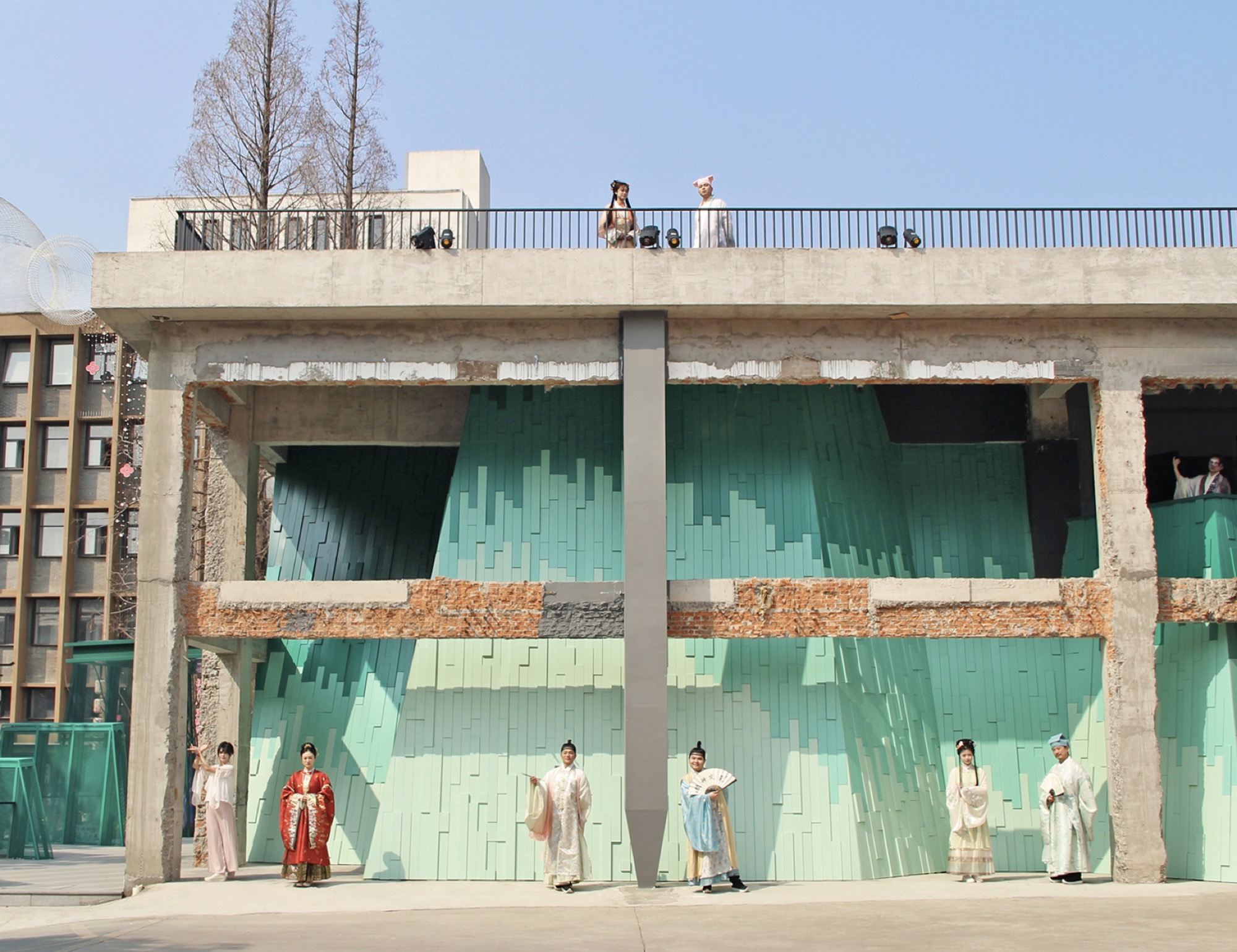
Even the Green Room became a giant piece of functional graphic design. Internally, it stores paper and ink drums. Externally, it becomes a stepped display and social structure, almost like turning the inner mechanics of the studio outward.
The project seems to blur the boundaries between workspace, workshop, archive and social environment. Was the intention to create a living studio rather than a traditional headquarters, and how did that idea shape the spatial organisation?
Definitely.
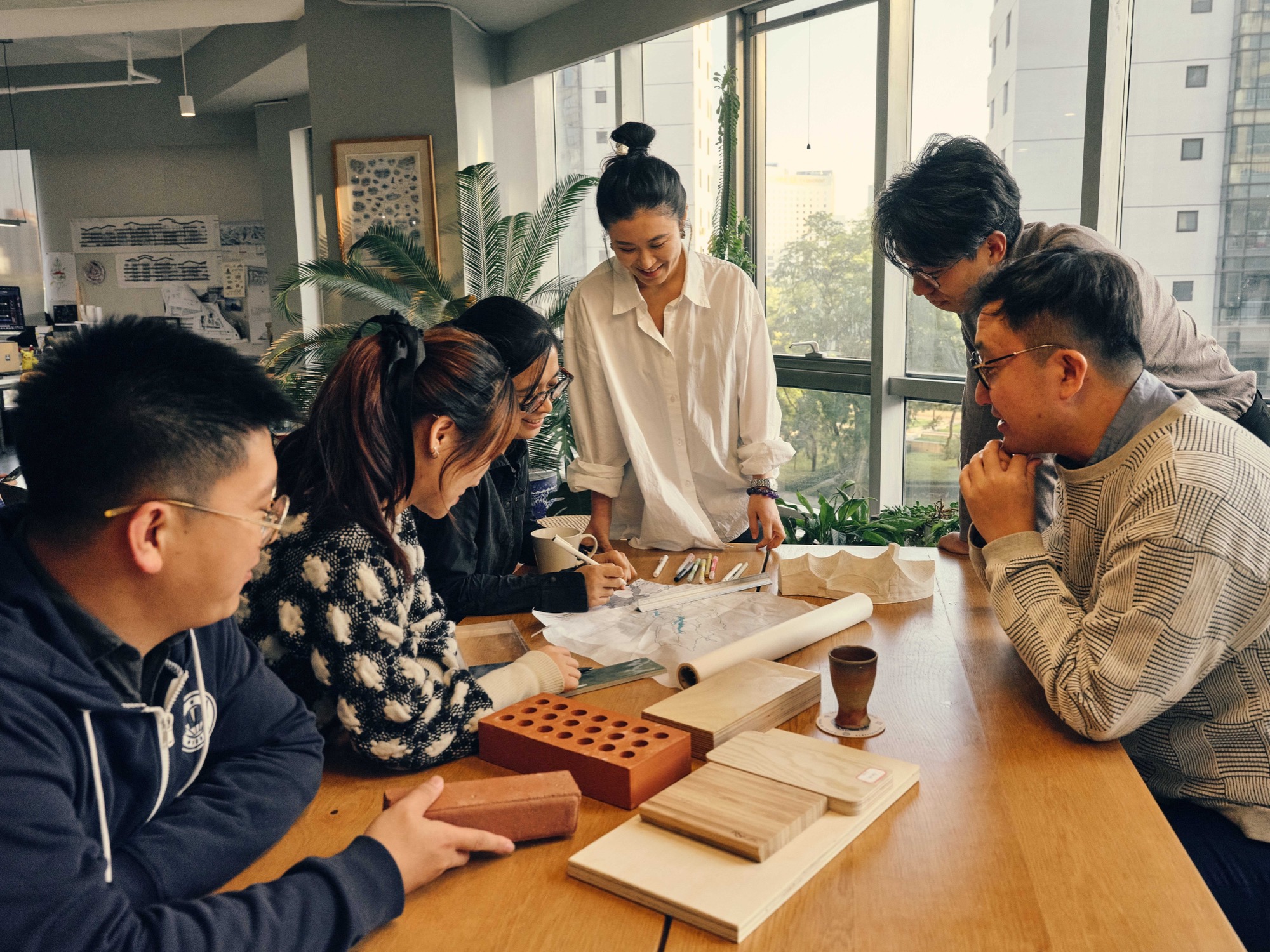
I never wanted a clean office disconnected from the reality of making things. RISOTTO has always been a bit of an ecosystem. We design, print, pack orders, host workshops, archive projects, make costumes and welcome people into the process, often all at once. The workshop is really the heart of everything. The brief became about creating our ultimate production environment. Part print studio, part dispatch zone, part workshop, part costume department.
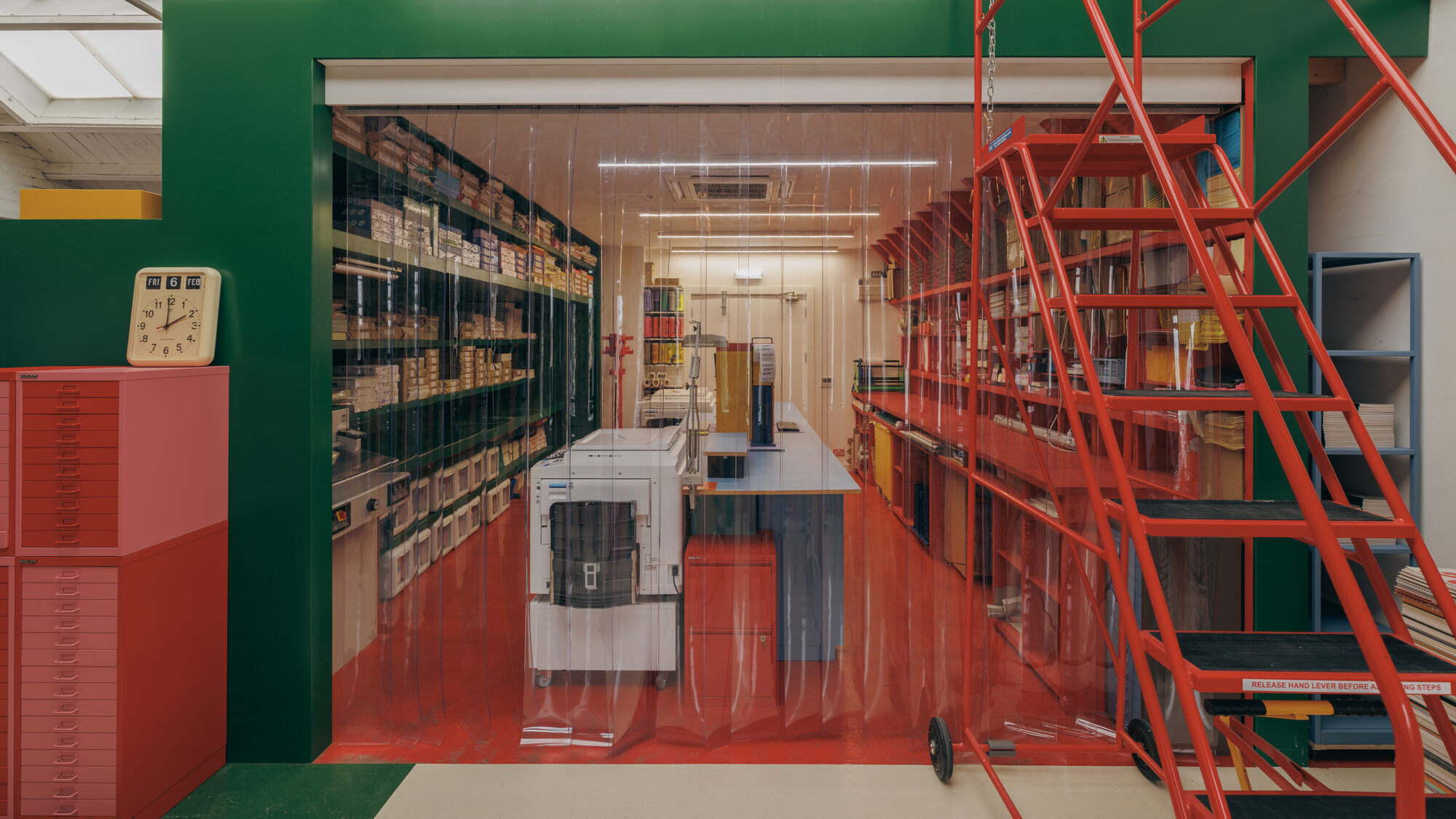
Flexibility became very important because the work constantly shifts. One week we are printing calendars. The next, we are hosting an artists’ dinner or building props for a brand activation.
So almost everything moves. Curtains open and close spaces. Tables move. Sculptures move. Furniture rolls around. The whole space is designed to morph depending on what is happening.
Glasgow has long been part of RISOTTO’s identity and creative culture. In what ways did the city itself influence the architectural atmosphere, material choices or character of the project?
I honestly do not think RISOTTO would exist in the same way anywhere else. One of the biggest things Glasgow gave me was affordable space. I started in 2012 with a tiny studio at The Glue Factory, with no heating and no internet, but with £50 rent and enough freedom to experiment constantly. There is also a really generous creative culture here. When I started out, there were people only a few steps ahead of me, making their own paths work. That gave me the confidence to try building something independently too.
I think Glasgow also encourages practicality and resourcefulness. A lot of RISOTTO grew through making do, repurposing things, learning on the fly and figuring things out ourselves. So the headquarters still needed to feel grounded in that spirit. Not overly corporate or too pristine. Just hardworking, adaptable and full of energy.
RISOTTO’s work is deeply rooted in analogue processes and tactile production at a time when most creative industries are increasingly digital. How did the architecture respond to this tension between physical making and digital culture?
I think the studio acts as a bit of an antidote to screen based life.
So much creative work now happens invisibly. With riso, everything is physical. You hear the machine, smell the ink, carry stacks of paper around, wait for layers to dry, deal with jams and troubleshoot problems. That physicality shapes the architecture too. Things like airflow, light, paper storage and workflow genuinely matter because they directly affect production.
At the same time, RISOTTO absolutely relies on digital systems behind the scenes. I love systems thinking. Our online calculator, automations and internal structures are a huge part of what allows us to stay small. So I think the studio sits somewhere between both worlds, with digital systems supporting very physical making.

Colour appears to play an essential role in the project, not merely as decoration but as part of the spatial experience. How did you approach colour architecturally, and what emotional or psychological effects were you hoping to create for the people using the space?
Colour is probably the thing that ties every part of RISOTTO together. It affects energy, mood, confidence and atmosphere.
Especially in Scotland, where winters can feel very dark, I have always wanted RISOTTO to feel optimistic and alive.
I also wanted the studio to feel approachable. Creative spaces can sometimes feel intimidating or overly serious. Colour softens that a bit. It signals openness, experimentation and play.

Many contemporary creative offices aim for flexibility, yet they often become generic. How did you balance adaptability with the need to give the headquarters a strong and unmistakable identity?
I think the identity comes from how specific the space is to us.
Nothing was designed to resemble a generic studio. Every decision came from our actual workflows, habits, frustrations and ambitions after years of running RISOTTO. The shelving dimensions relate to paper sizes. The storage relates to ink drums. The workshop layout relates to how we physically move through the space during production. So even though the studio is flexible, it still feels very particular.
I was not interested in minimal flexibility. I wanted maximum personality alongside functionality.


The headquarters appears to celebrate visibility: machines, materials, prints and creative processes are openly present within the space. Was transparency and exposure of the making process an important architectural concept for the project?
Yes, definitely.
RISOTTO has always grown through sharing its process openly. Workshops are a big part of that, but so is our online presence. I have always liked showing colour separations, experiments, machine quirks and how things are actually made.
The studio reflects that physically.
You can see the systems. You can see the labour. You can see the process unfolding in real time.
I think people connect more deeply to creative work when they understand the mechanics behind it, rather than only seeing polished outcomes.

RISOTTO’s work often embraces imperfection, misregistration and the unexpected qualities of printmaking. Did this philosophy influence the architectural design process or the way materials and details were handled within the project?
Absolutely.
One of the biggest things riso taught me is to work with limitations rather than waiting for ideal conditions.
The headquarters evolved in a similar way. Some parts were carefully planned, while others emerged through problem solving, budget constraints, experimentation and collaboration.
There were definitely moments when the reality of building forced new ideas or compromises, but often those became the most interesting parts. I have realised over the years that I actually like systems that leave room for adjustment and unpredictability. It keeps things alive.


Beyond functionality, the project seems to construct a very specific atmosphere: playful, energetic and communal, yet also intimate. What kind of emotional experience did you hope visitors and collaborators would have when entering the space?
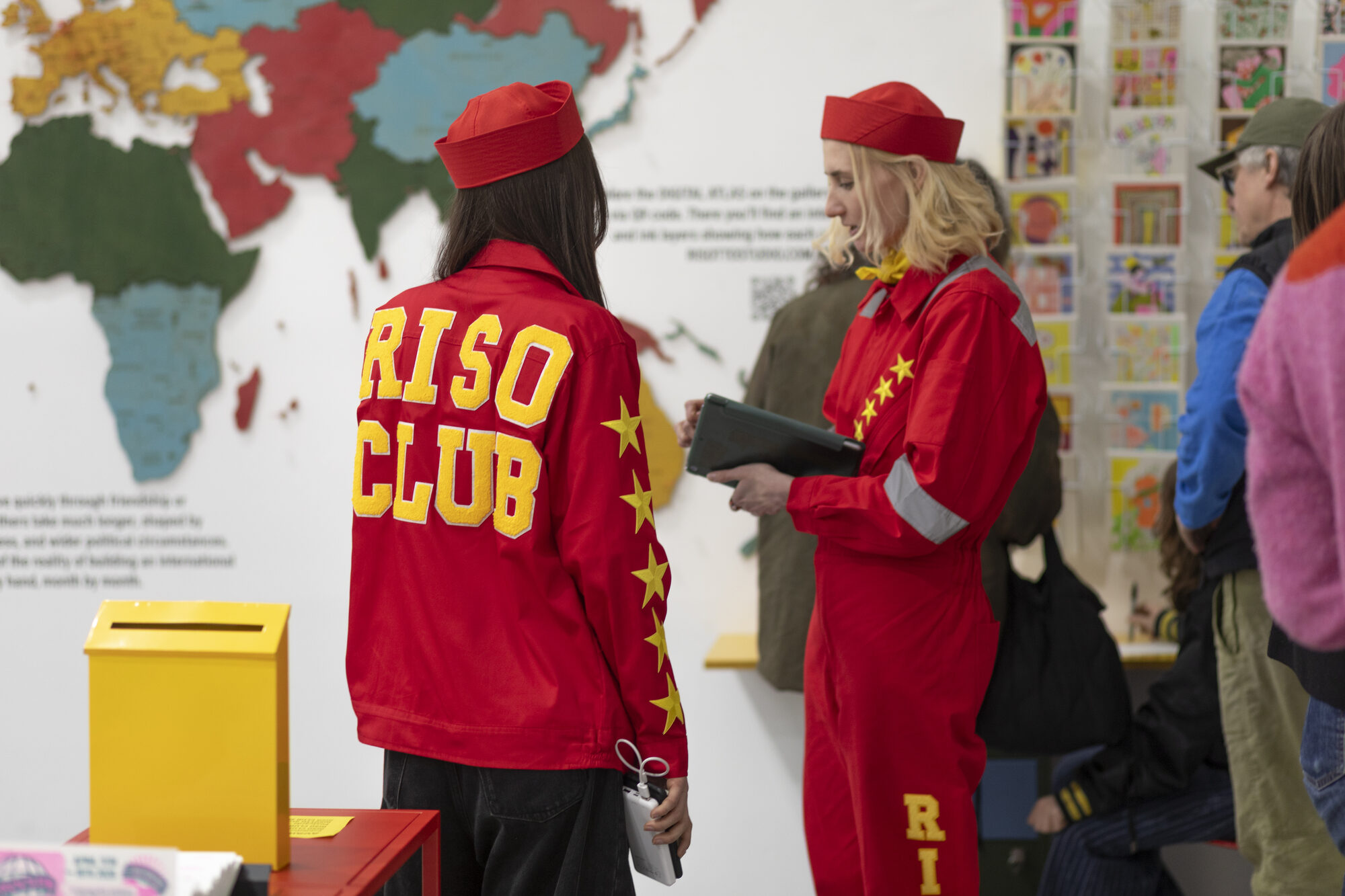
I wanted people to feel welcomed, energised and curious. Hopefully, it feels less like entering an office and more like stepping into an active world where things are constantly being tested, made and rearranged.
RISOTTO has always tried to make creativity feel accessible rather than exclusive, and I wanted the studio to carry that same energy. There is also something emotional for me about finally building a space that properly supports the way we work after years of improvising in a tiny space.
For a long time, RISOTTO existed behind a very neat digital exterior while physically operating in chaos behind the scenes. So this headquarters became the first time I could properly give the studio the full design treatment.
Looking back at the completed project, what aspect of the headquarters do you think most clearly expresses your architectural position or design philosophy, and why?
Probably the Green Room.
It captures most of the things I care about in one structure: systems, play, flexibility, functionality, colour and visibility.
It works incredibly hard practically, storing huge amounts of production material and housing the print room. But it also creates atmosphere, display, seating and spatial identity at the same time.
I like spaces and objects that do multiple jobs at once. Things that feel joyful but are deeply functional underneath. I think that balance probably sums up my approach best.
Text by Rafael Cunha
Time 05.2026