Now Reading: y.ad studio wraps Ink Wash Pool around ancient tree in China
- 01
y.ad studio wraps Ink Wash Pool around ancient tree in China


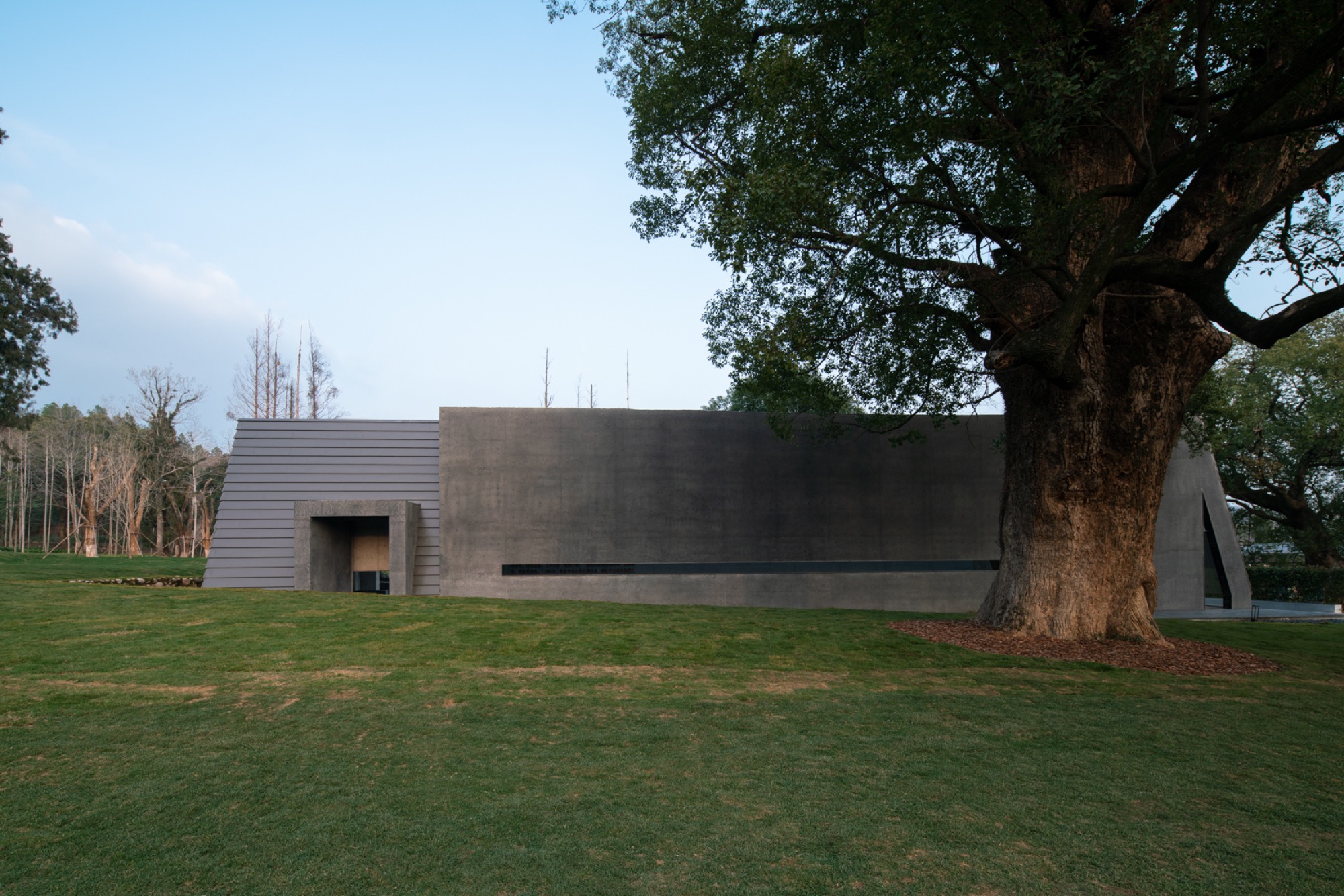
Set within a site long associated with the legendary calligrapher Wang Xizhi, Ink Wash Pool by y.ad studio approaches cultural preservation not as reconstruction, but as a quiet act of spatial reinterpretation. Rather than replicating historical forms or dissolving the past beneath an assertive contemporary gesture, the project positions architecture as a mediator between memory, landscape, and everyday public life.

The site itself carries no monumental architectural remains. Its significance survives through cultural imagination and literary symbolism. According to local folklore, this was the place where Wang Xizhi washed his brushes and inkstone after practicing calligraphy. Whether historically verifiable or not, the narrative has endured as part of the region’s collective memory, embedding the site with associations of contemplation, scholarship, and self cultivation.

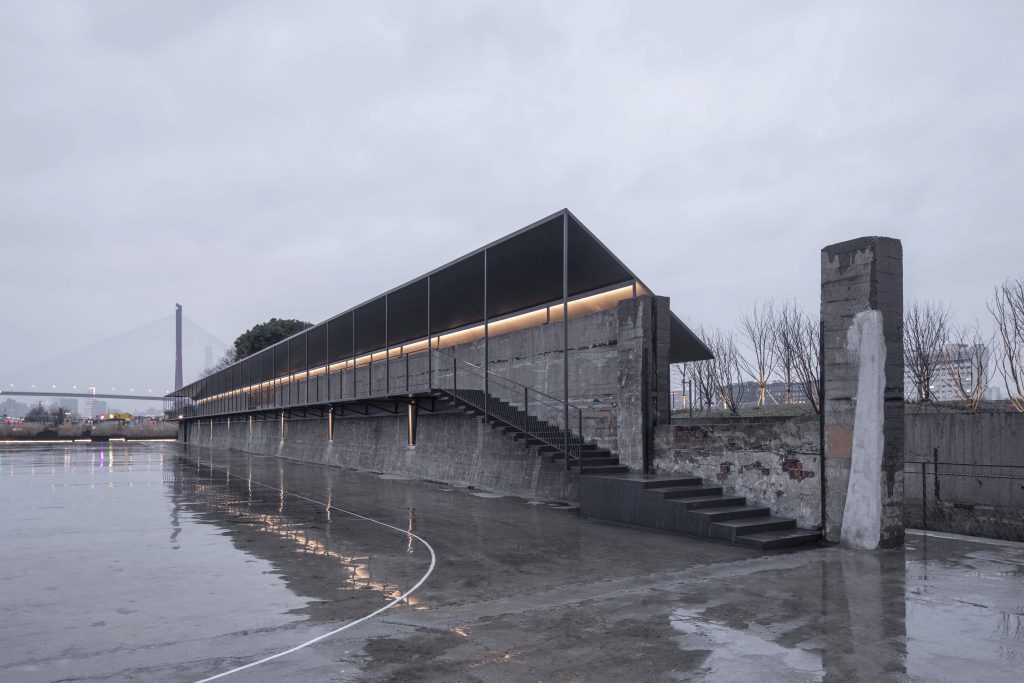
Instead of turning this mythology into decorative symbolism, the architects work through atmosphere and spatial order. The project transforms the former Ink Wash Pool site into a public cultural complex containing exhibition spaces, gathering areas, and visitor circulation paths arranged around the historic pool and a millennium old camphor tree. The architecture unfolds as a sequence of corridors, transitional zones, and framed perspectives that encourage slow movement and gradual immersion.


What distinguishes the intervention is its refusal to dominate the site visually. The building withdraws rather than announces itself. Circulation loops around the pool and tree, allowing these existing elements to remain the emotional center of the experience. As visitors move through the project, sightlines continuously shift between enclosure and openness, shadow and light, proximity and distance. The result is less a conventional exhibition building than a spatial choreography of attention and pause.


Below ground, the project adopts a denser and more introspective atmosphere. A multifunctional hall and exhibition space accommodate lectures, cultural programs, and temporary events. This vertical organization establishes two complementary forms of public life within a compact footprint. The upper level privileges wandering and quiet observation, while the underground spaces support collective gathering and exchange.


Materiality plays a critical role in articulating the project’s temporal sensibility. Exposed concrete is used throughout, avoiding nostalgic imitation or decorative references to historic architecture. The exterior surfaces employ bush hammered dark gray concrete whose roughness resonates with the surrounding landscape and ancient vegetation. Inside, lighter board formed concrete retains the grain of timber formwork, introducing warmth and tactile subtlety into an otherwise austere palette. Rather than simulating age, the materials are allowed to weather naturally over time, reinforcing the idea that authenticity emerges through duration rather than stylistic reproduction.


In many contemporary cultural projects, architecture often seeks visibility through spectacle. Ink Wash Pool chooses the opposite direction. Its restraint becomes its defining quality. The building softens beneath the canopy of the ancient tree, allowing landscape, memory, and movement to take precedence over form. In doing so, the project proposes another possibility for historic intervention today: architecture not as object, but as a quiet framework through which time and culture continue to unfold.


Project Credit
Project name: Ink Wash Pool
Architecture studio: y.ad studio
Building area: 790.57 sqm
Design phase: November 2025 to December 2025
Construction phase: December 2025 to January 2026
Photo: Alice
More Photos