
Now Reading: Half Courtyard House: Using Vertical Space and Light in a Compact Urban Residence
- 01
Half Courtyard House: Using Vertical Space and Light in a Compact Urban Residence

Half Courtyard House: Using Vertical Space and Light in a Compact Urban Residence

Half Courtyard House is a minimalist residence in South Yarra, Australia, designed by Telha Clarke. Set against the verdant backdrop of a local reserve on the traditional lands of the Boon Wurrung and Wurundjeri Peoples, the modest double storey home explores how contemporary domestic architecture can balance restraint with warmth. Through a careful layering of stone, metal, and timber, the project presents a robust yet understated presence that responds closely to its urban and landscape context.
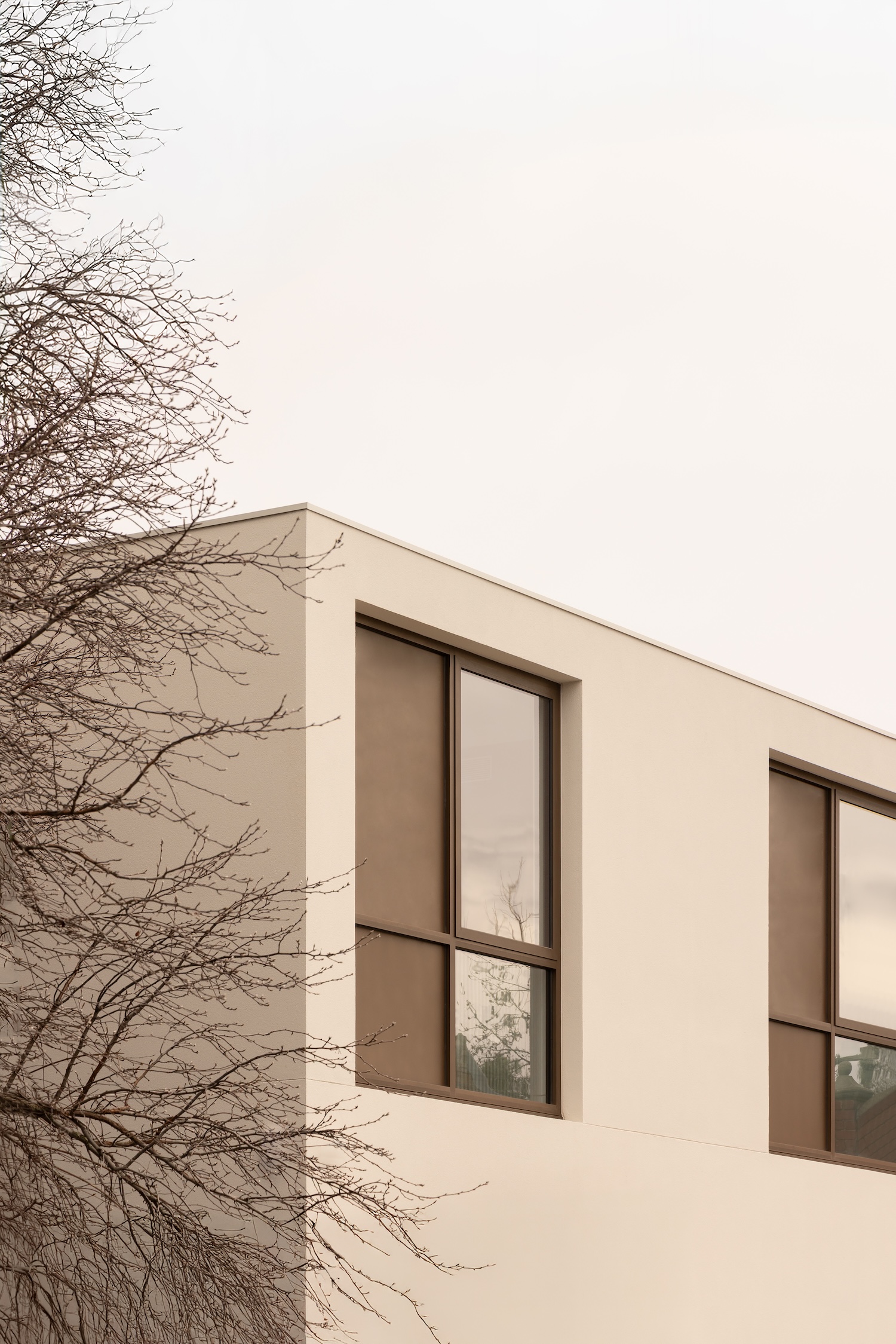
From the street, the architecture reads as discreetly rugged. Its solidity and metal detailing draw cues from the surrounding neighbourhood while remaining resolutely contemporary. Openings and bronzed elements are oriented to capture warm daylight, pulling the half courtyard deep into the interior and establishing a strong relationship between built form and natural light.
LIGHT AS SPATIAL GENERATOR
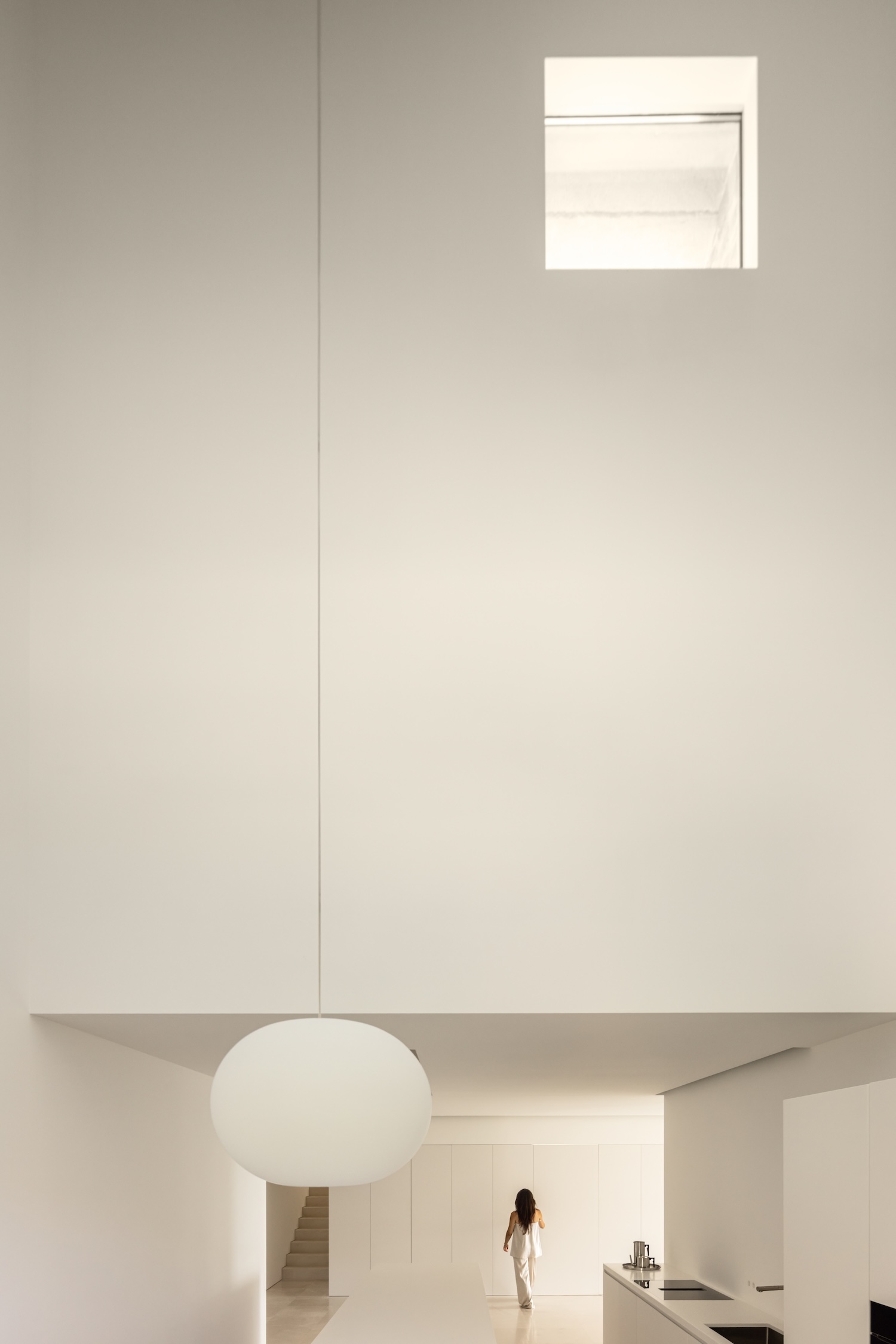
Entry unfolds as a measured spatial sequence. Visitors are drawn through a gallery-like threshold toward a sunlit ground floor living and entertaining zone, animated by a centrally positioned double height void. In a dense urban setting where neighbouring buildings often limit access to daylight, this vertical volume becomes the project’s primary spatial and environmental device, distributing light deep into the plan rather than confining it to perimeter rooms.
The void performs both a functional and experiential role. It introduces a moment of spatial drama within an otherwise compact program, allowing light to filter downward and shift throughout the day. The result is an interior that feels open and animated despite its modest footprint.

MATERIALITY AND ATMOSPHERE
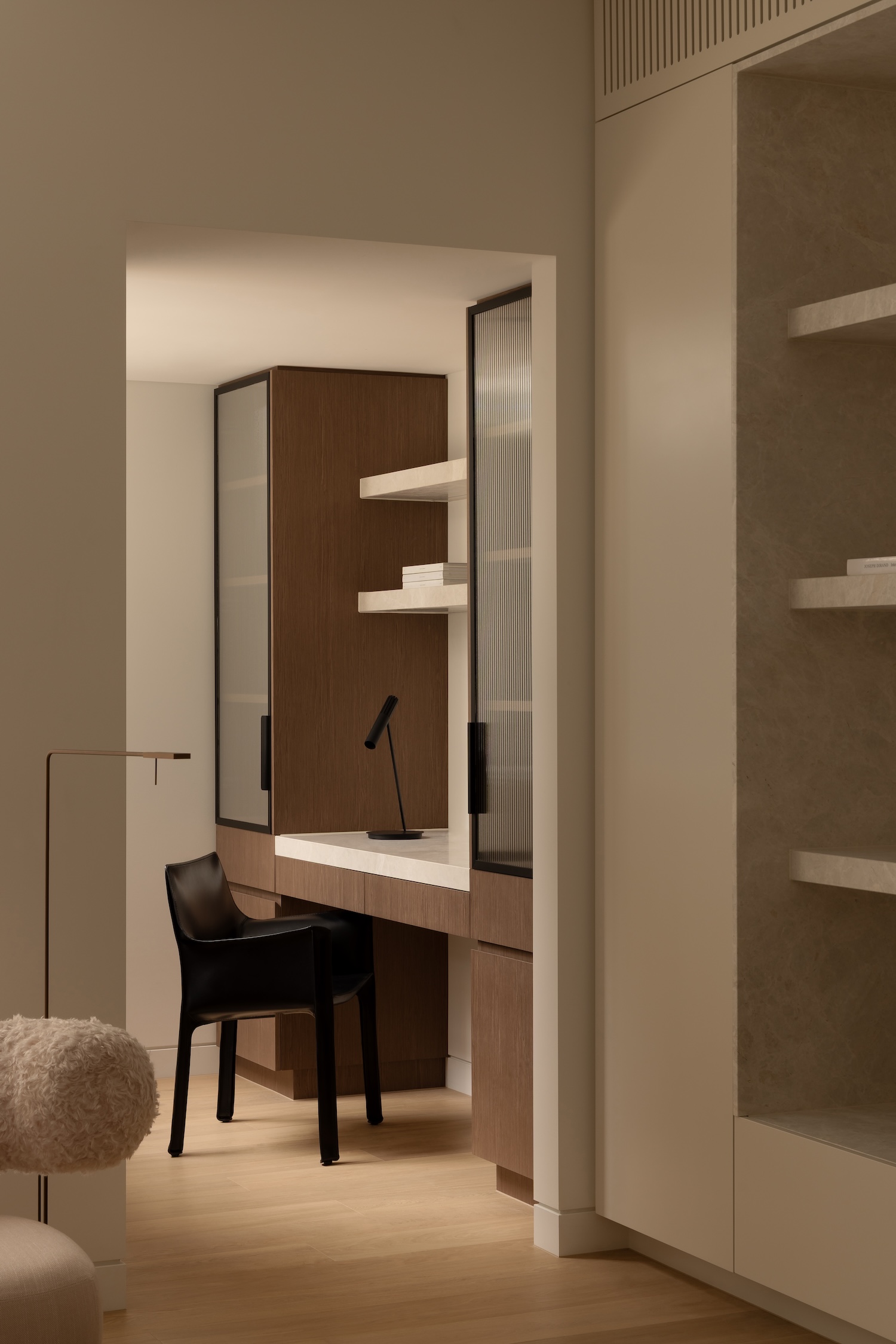
The interior is defined by material tactility. Stone, metal, and warm timber are composed with restraint, forming robust surfaces that feel grounded yet refined. This palette softens the minimalist architecture, introducing warmth without resorting to decorative excess. The careful balance between solidity and softness gives the house a calm, lived-in quality that evolves with daily use.


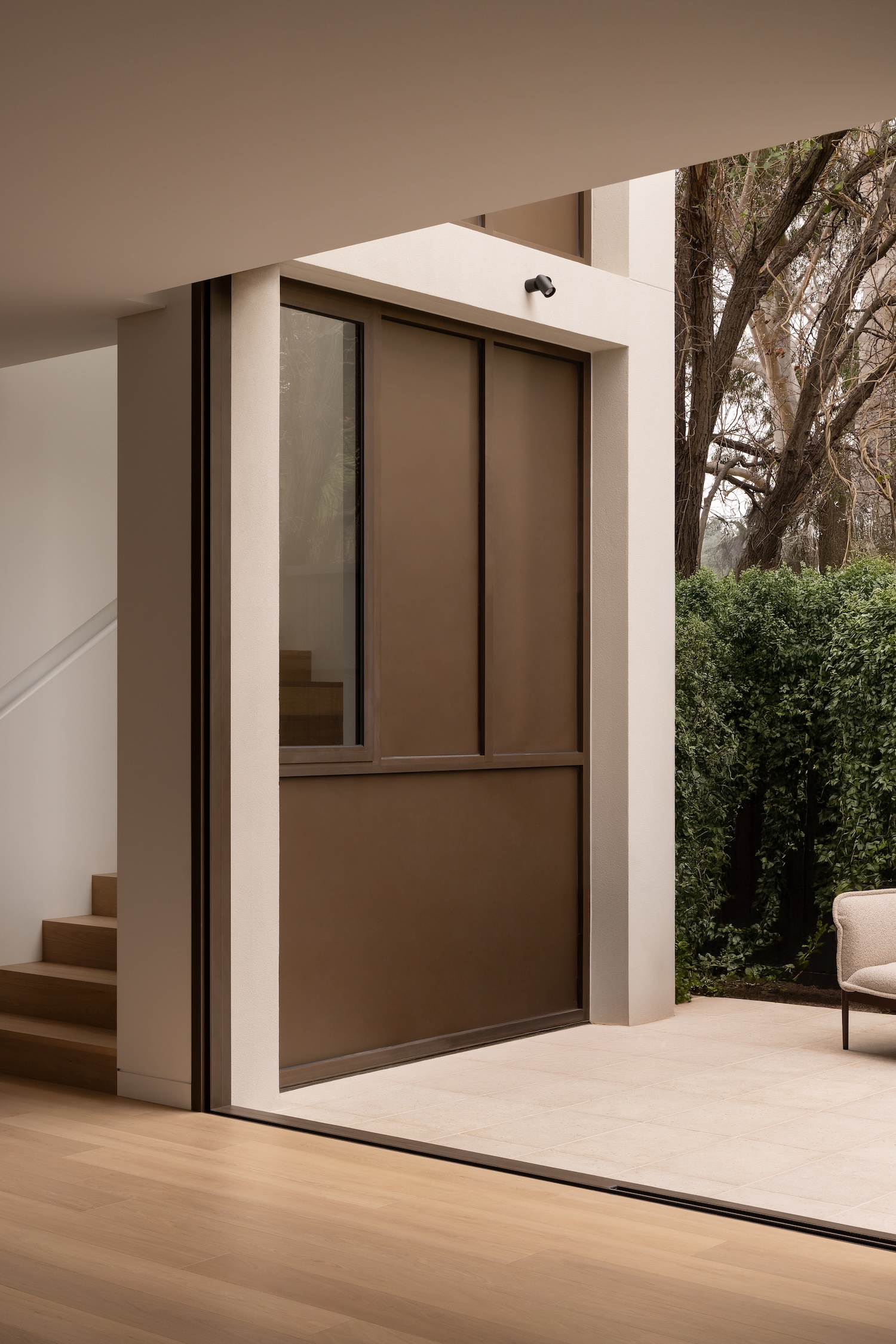
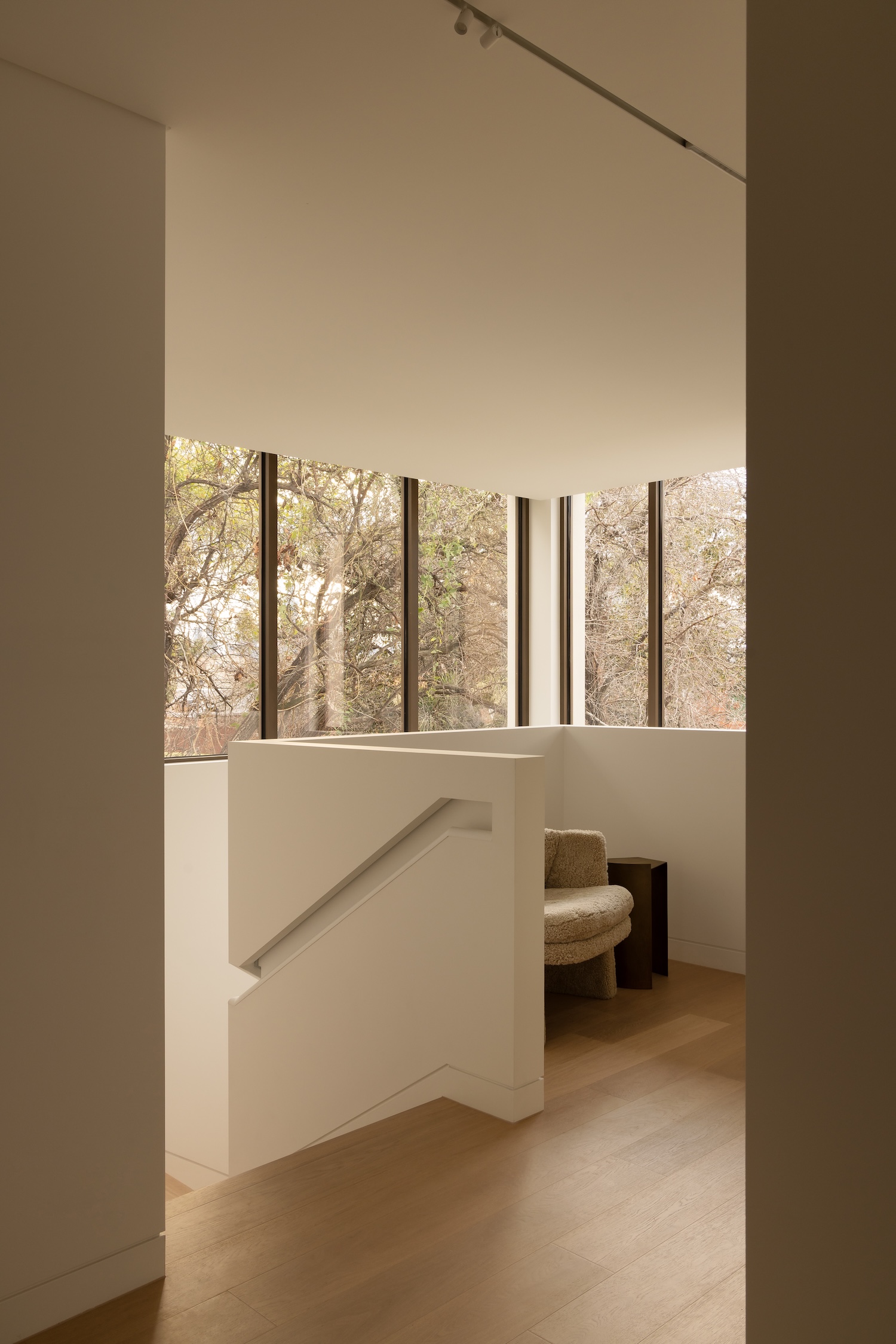
As afternoon light enters the void, it washes across the stairwell and adjacent walls, casting shadows shaped by the surrounding parkland. These shifting patterns reveal a sophisticated understanding of time and light, allowing the architecture to change character throughout the day while remaining materially constant.


CONTEXTUAL ABSTRACTION, BORROWED LANDSCAPE
Rather than literal imitation, the project responds to its context through abstraction. The geometric clarity of the façade references the area’s traditional ironwork balconies, reinterpreted as bronzed framing elements that add subtle warmth to the clean lines. This approach acknowledges neighbourhood character without compromising architectural clarity, demonstrating how contemporary residential design can engage its surroundings through material memory rather than stylistic repetition.


Internally, the house unfolds as a series of gallery spaces and framed views. Movement through the home culminates in a light-filled entertaining area where interior space spills into the courtyard, visually extending into the dense reserve beyond. This relationship with the adjacent landscape allows the compact site to feel unexpectedly generous, borrowing greenery and depth from its surroundings.
Half Courtyard House demonstrates how thoughtful spatial planning, material restraint, and careful engagement with context can transform a modest urban residence into a rich architectural experience. It is a project where light, landscape, and material work together to create a home that feels both grounded and expansive, intimate yet open to its environment.

PROJECT CREDIT
Name: Half Courtyard House
Location: South Yarra, Australia
Designer: Telha Clarke
Photo: Timothy Kaye