
Now Reading: Designed to unsettle, built to calm: Harrierfall near Beijing’s great wall.
- 01
Designed to unsettle, built to calm: Harrierfall near Beijing’s great wall.

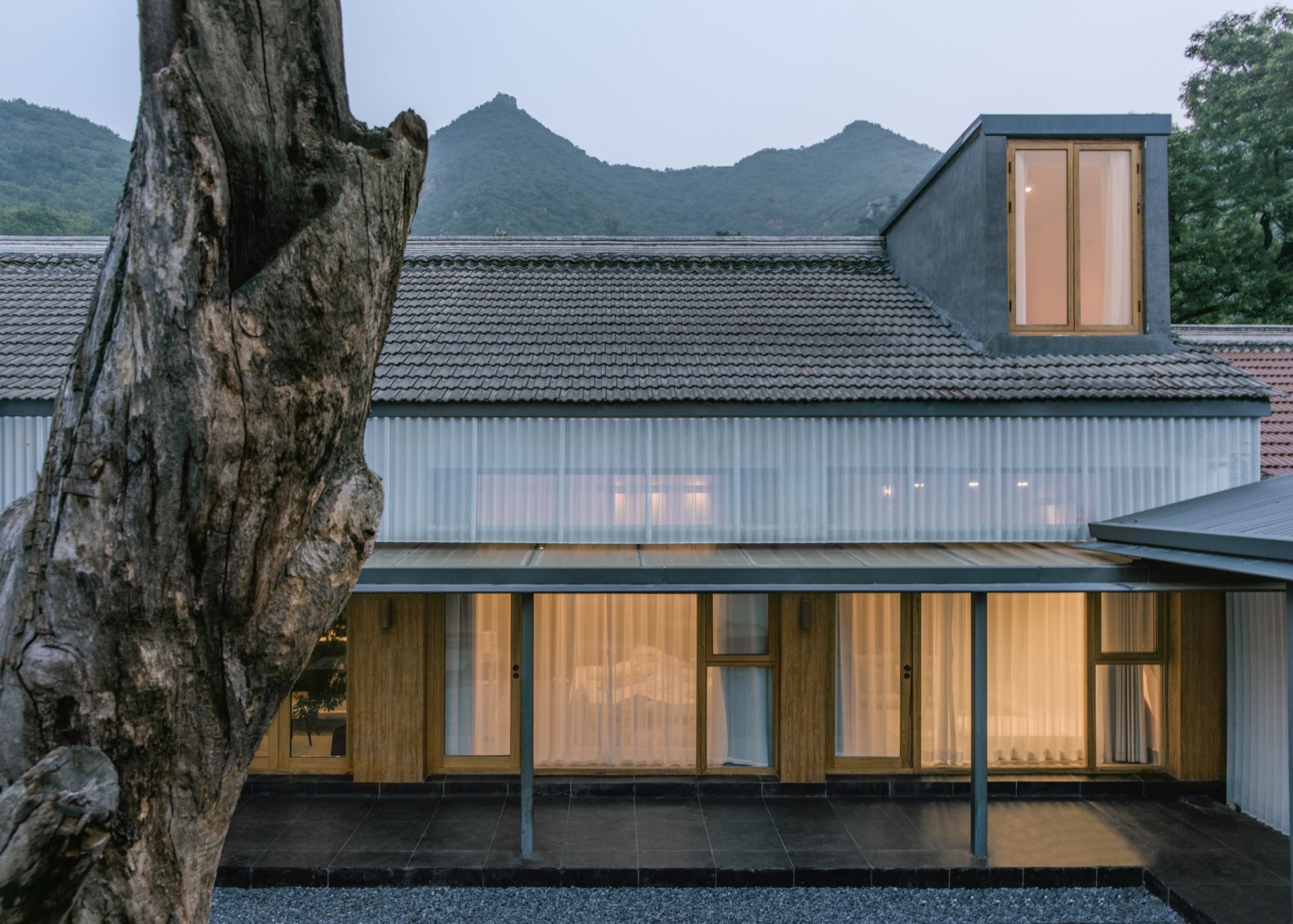

Completed at the close of 2020, Xiaoxi B&B sits near Shuiguan in Huairou, on the northern edge of Beijing, where the Great Wall cuts through rugged topography with equal parts grandeur and threat. Conceived as a rural hotel that offers more than comfort, the project pursues a sharper promise: an experience of stepping outside daily life, where the real world briefly overlaps with imagination.

The Great Wall is not simply a scenic backdrop here. It is a monument built on risk, an architecture of endurance that translates steep terrain into a narrative of courage. In response, the design asks an unusual question for hospitality: can a calibrated sense of “danger” be introduced, not as spectacle, but as a subtle spatial device that heightens awareness and makes the familiar feel newly charged?
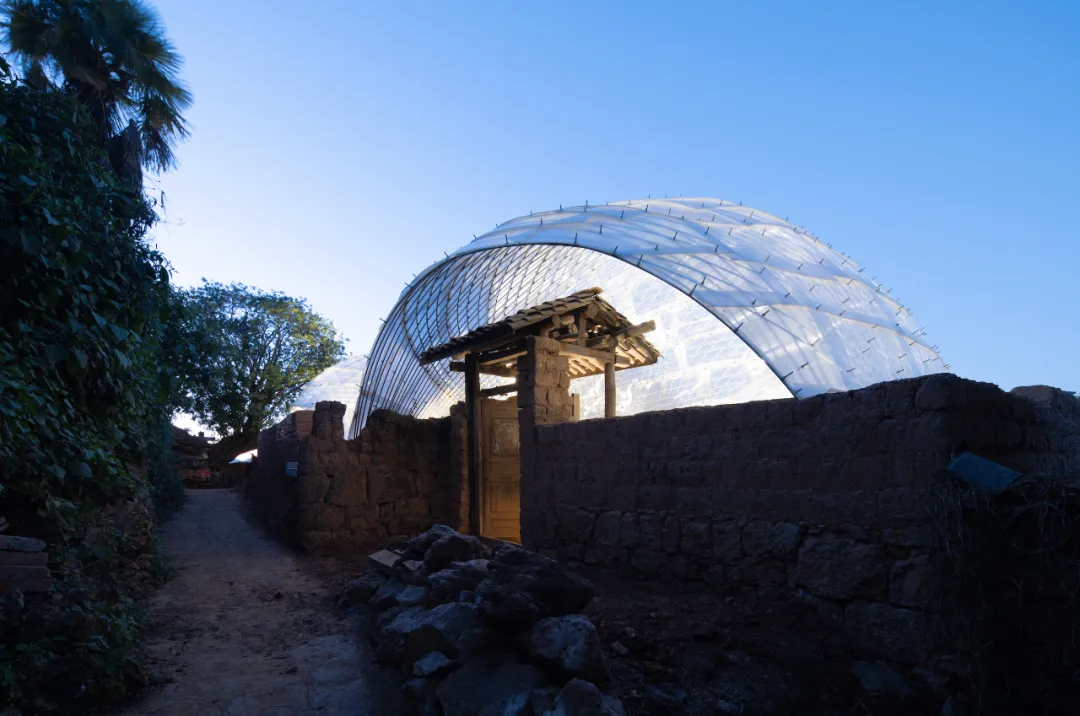
The site is anchored by the Harrier Castle, a Ming Dynasty extension of the Great Wall. Its stone enclosure and an ancient locust tree hold the kind of presence that collapses time, reminding visitors that landscape and history are inseparable. Approached via a narrow lane, the castle wall rises abruptly into view, both invitation and warning. The dwelling, by contrast, stays partially withheld, allowing the first encounter to feel like discovery. This choreography builds a quiet tension: what looks stable can still be unpredictable; what appears serene may conceal edges. The project treats that ambivalence as a theme, translating the Great Wall’s psychological charge into the scale of the courtyard.


At the courtyard gate, a small attic glows as evening falls, operating like a modest beacon. The gesture is immediate and legible: a sign of presence, a signal that someone is waiting. Without resorting to nostalgia, it echoes the deeply rooted imagery of homecoming, where a single lamp left on stands in for welcome, warmth, and recognition. In a hospitality setting, this becomes more than decoration. It frames arrival as a moment of transition, a shift from road to refuge, from public to intimate.


Inside, extended eaves stretch into a generous covered corridor that activates the courtyard as the project’s social and climatic core. This is where the architecture shifts from narrative to choreography. The seating is deliberately low, encouraging guests to recline rather than sit upright. That small adjustment changes the body’s relationship to the environment, lowering the horizon line, lengthening pauses, and making sky, branches, and stone feel closer and more immersive. The result is a courtyard designed not for circulation alone, but for lingering. It is a space where time expands, and where the hotel’s promise of “breaking away” becomes tangible.
The ancient locust tree functions as the project’s emotional anchor. The design protects its primacy through careful edits: adjusted eaves frame the canopy while also screening nearby visual noise, allowing the tree to read as a central figure rather than an incidental remnant. Around it, the building exteriors are wrapped in reflective metal plates. The effect is atmospheric rather than flashy. Reflections soften edges, dissolve clutter into light and movement, and amplify the locust tree’s green as the courtyard’s living centre. The tree remains grounded and tactile, while the architecture becomes slightly elusive, like a backdrop that refuses to stay still.


If the courtyard is where the project calms the visitor, the staircase is where it reintroduces tension. Treated as a key architectural element, it becomes a designed encounter with “danger” in its mildest, most productive form: not fear, but attention. Its craft references tradition, yet the detailing pushes toward a more experimental spatial experience. The steps ask for careful navigation. They slow the body down and sharpen perception, turning vertical movement into a ritual of awareness. In a building devoted to rest, the staircase resists total passivity, proposing that relaxation can coexist with alertness.


Harrierfall’s most compelling idea is its paradox: the deliberate introduction of “danger” produces stability. By staging minor moments of uncertainty, the project heightens presence, making comfort feel earned rather than automatic. This is hospitality as narrative architecture, rooted in the specificities of place, history, and terrain.


Set against the Great Wall’s immense, uncompromising landscape, the B&B becomes a reflective refuge. It does not compete with the monument. Instead, it borrows its psychological intensity and translates it into intimate gestures: a glowing attic, a corridor that invites stillness, a tree framed like an heirloom, a staircase that awakens the senses. Here, danger and sanctuary are not opposites, but co-authors of a quietly memorable stay.
Project Credit
Name: Harrierfall
Location: China, Beijing
Design Firm: DL Atelier / @dlatelier_china
Completed: 2021
Photo: Zhu Yumeng