Now Reading: Christ & Gantenbein selected for new museum building at Kistefos, Norway
-
01
Christ & Gantenbein selected for new museum building at Kistefos, Norway


Basel studio Christ & Gantenbein has been selected to design a new museum building for Kistefos, the forest based art destination an hour north of Oslo, with an opening targeted for 2031.

A NEW ICON FOR KISTEFOS, SET AMONG RIVER AND PINES
Kistefos Museum has announced Swiss practice Christ & Gantenbein as the winner of its invited international design competition for a major new museum building, envisioned as the long term home of founder Christen Sveaas’ art collection through the Christen Sveaas Art Foundation. The decision was made public on 16 December 2025, following a tightly curated shortlist of eight teams operating at the top tier of museum architecture.
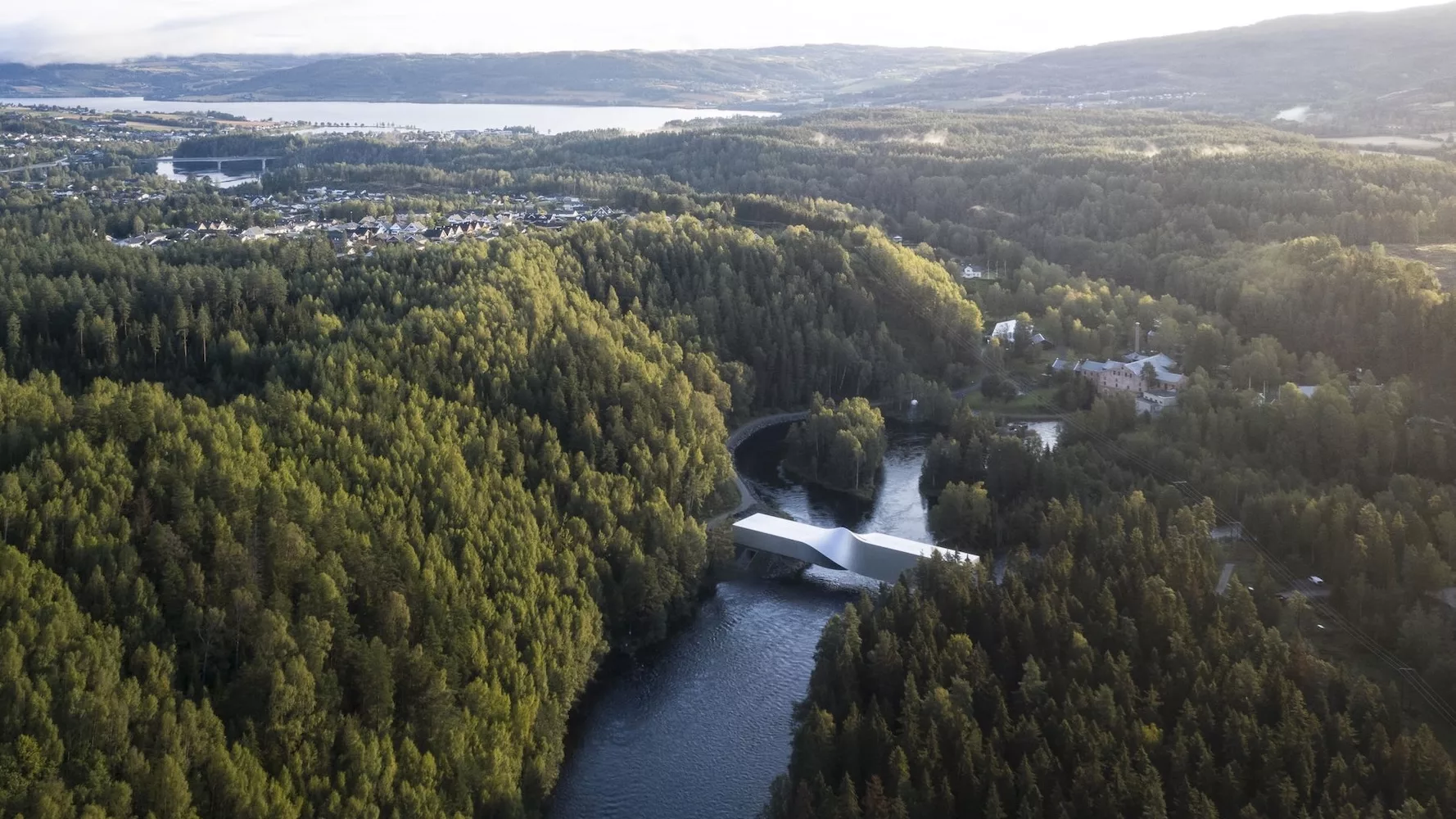
If BIG’s Twist, completed in 2019, gave Kistefos a headline making gallery bridge, the next chapter aims for something quieter and stranger: a building described by the winning team as an enigmatic presence in the landscape, poised between what is visible and what is sensed.
A “PEBBLE” AS ARCHITECTURE
Christ & Gantenbein’s concept is organised around a radial geometry and a compact, rounded silhouette, a form the architects liken to a pebble shaped by natural forces. It is designed to be instantly legible from afar, yet hard to fully grasp at once, an object that reads as both artefact and terrain.
That idea of controlled simplicity carries into the building’s structure and planning. The proposal prioritises a clear structural logic, generous spans, and a gallery floor conceived as a flexible field rather than a fixed sequence. Circulation is intended to feel intuitive, with a steady rhythm that can be adjusted as the collection evolves and exhibitions change.

ZERO ENERGY AND ZERO EMISSIONS, WITHOUT THE MORALISING AESTHETIC
The competition brief called for a leading zero energy and zero emissions building that could function as an exemplar of sustainable design and practice. Christ & Gantenbein answered with an approach grounded in elemental decisions: a compact envelope, restrained building services, daylight as a primary architectural driver, and regional timber as both structure and atmosphere.
The roof becomes the project’s most recognisable technical and spatial device. Photovoltaic shingles are integrated into its surface, conceived to mirror the sky and surrounding terrain, while a central circular opening draws Nordic daylight deep into the interior, turning illumination into a civic event rather than a hidden performance metric.
Inside, wooden columns sourced from the region are positioned to echo the surrounding forest, while also nodding to the Sveaas family’s historic ties to the timber industry. In the architects’ own framing, the ambition is to make “the beauty of the whole” inseparable from responsible material use.
GALLERIES AS COSMOS
Rather than treating the museum as a set of signature rooms, the winning scheme imagines the collection as a kind of cosmos, with gallery spaces capable of shifting between intimacy and spectacle. The primary exhibition level is described as spacious and highly adaptable, with secondary walls designed for reconfiguration so that the museum can host varied curatorial formats over decades.
This is a familiar Christ & Gantenbein instinct: architecture that looks calm, even elementary, while allowing complexity to appear through use, light, and material depth.
A SELECTION PANEL THAT READS LIKE A GLOBAL ROLL CALL
The selection panel combined Kistefos leadership with international voices, including Christen Sveaas and senior representatives of the Christen Sveaas Art Foundation and Kistefos AS, alongside prominent figures such as Max Hollein, Director and CEO of the Metropolitan Museum of Art in New York City, and Mark Lee of Johnston Marklee, who also chairs the Architecture Department at Harvard Graduate School of Design.
In a statement on behalf of the panel, Hollein emphasised the project’s rare alignment of site, collection, and architectural opportunity, highlighting the winning proposal’s elegant design, flexibility, environmental connectivity, material intelligence, and symbolism. Sveaas framed the choice in more visceral terms, calling for a sculptural building that would reward travel, surprise on entry, and continue to resonate after the visit ends.
A SHORTLIST OF HEAVYWEIGHTS
The invited finalists underscored the scale of Kistefos’ ambition. The runners up included BIG, Ensamble Studio, Jensen & Skodvin with Hølmebakk Øymo, Kengo Kuma and Associates, Lina Ghotmeh Architecture, Snøhetta, and SO IL. In other words, a cross section of practices that have shaped contemporary museum culture through built work, not just renderings.
That Christ & Gantenbein emerged from this field signals a preference for architectural character expressed through form, structure, and material consistency, rather than a singular gesture alone.
WHY CHRIST & GANTENBEIN, WHY NOW
The Basel studio is widely recognised for an architecture of weight and precision, where new interventions negotiate with context without becoming timid. Their renovation and expansion projects for the Swiss National Museum in Zurich and Kunstmuseum Basel are frequently cited as benchmarks for how contemporary museum architecture can extend institutional life while deepening spatial experience.
Kistefos’ new building offers a different type of test: not an urban insertion, but a landscape presence, not an extension of an existing museum, but a new anchor within a hybrid campus of art, nature, and industrial memory.

KISTEFOS AS A HYBRID DESTINATION, NOT A SINGLE MUSEUM
Kistefos’ identity has been shaped over decades through a rare convergence of sculpture park, contemporary art, and heritage industry. Set in a wooded, riverine environment, the site combines outdoor works by major artists with architectural destinations and an industrial heritage museum preserving what is described as Scandinavia’s last intact wood pulp mill, originally established by the Sveaas family in 1890.
The new museum building is positioned as a transformation of the visitor experience, intended to draw wider international audiences while giving a permanent framework to a significant private collection. Managed by Malcolm Reading Consultants, the competition follows a lineage of high visibility global selection processes that have increasingly become cultural events in their own right.
Christ & Gantenbein will now develop the concept with Kistefos Museum toward the planned 2031 opening, adding another architectural episode to a site that has already proven how powerfully art, landscape, and building can reinforce one another.
Photo Cover
Aerial view of Kistefos, a museum and sculpture park outside of Oslo established by Norwegian businessman and art collector Christen Sveaas. Visible is The Twist, a river-spanning building dedicated to contemporary art. It was designed by BIG and completed in 2019. Photo © Laurian Ghinitoiu, courtesy Kistefos