
Now Reading: Constructing Systems: ASET’s Modular Language
- 01
Constructing Systems: ASET’s Modular Language

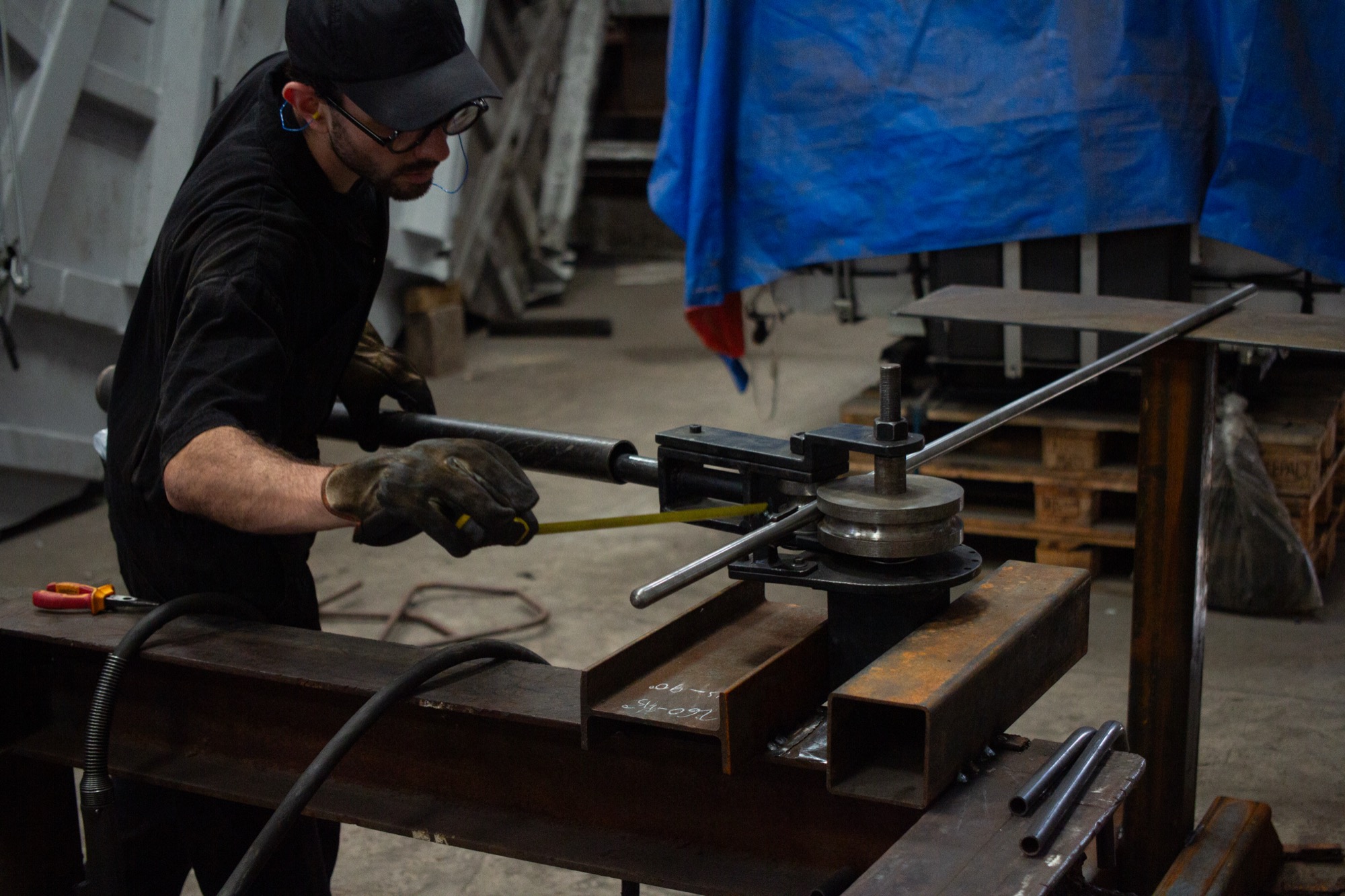

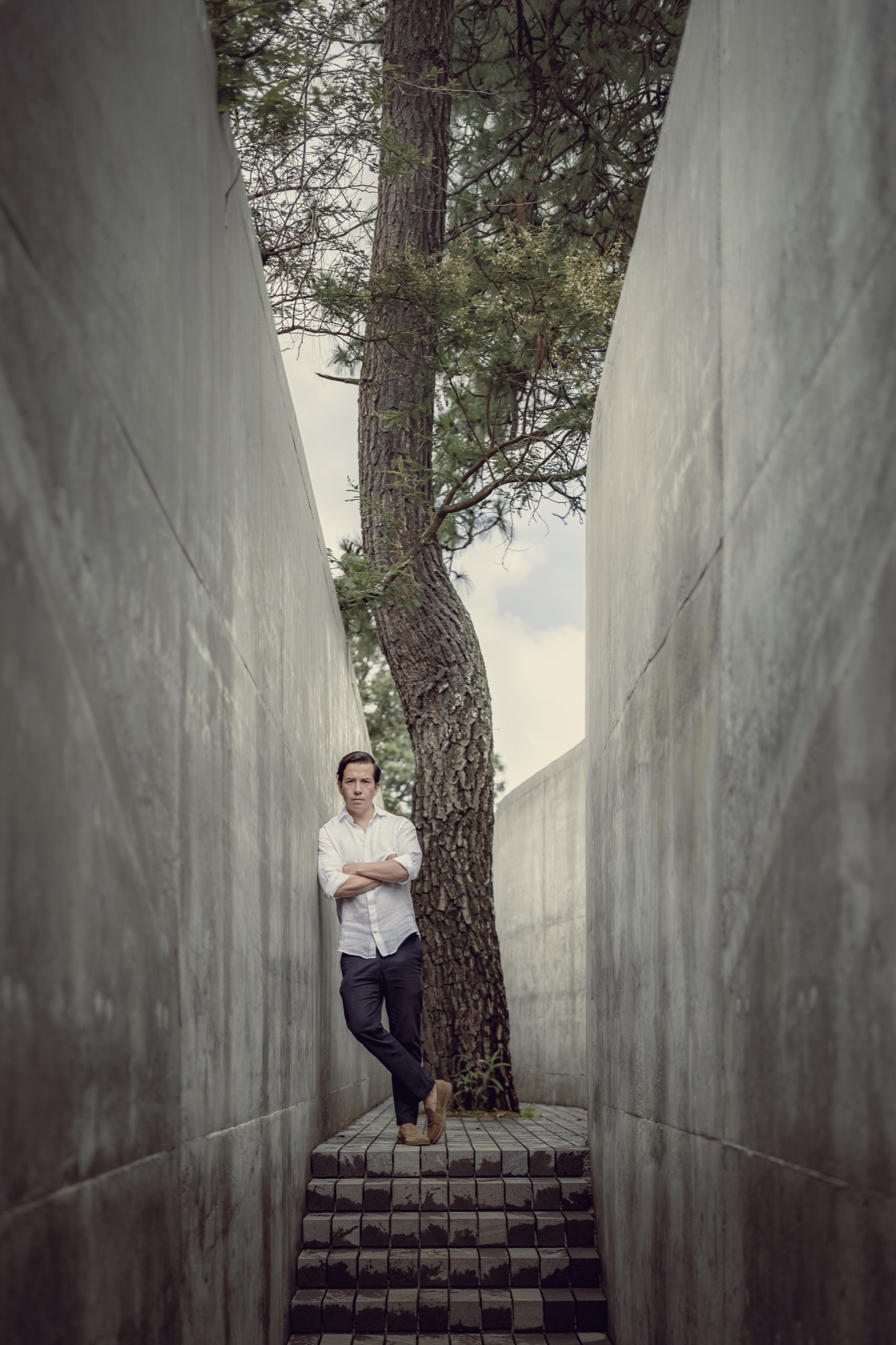
In an era where design is often reduced to image, ASET. repositions the discipline around construction, logic, and material clarity. Founded by Sebastián Alarcón, the Quito based studio approaches furniture not as isolated artefacts but as interconnected systems shaped through fabrication. Its work unfolds as a continuous dialogue between industrial processes and hands on making, where each object becomes both a product and a test of method.

Trained as an industrial designer in Barcelona, Alarcón returned to Ecuador to establish a practice grounded in the realities of making. His work extends beyond conventional design into the field of mechanical engineering, engaging directly with the metal industry to understand structural behaviour, tooling, and fabrication constraints.
This proximity to production defines the studio’s position. Rather than beginning with formal intention, each project emerges from technical conditions. Standard steel profiles, sheets, and tubes are treated as generative elements, their limitations shaping proportion, connection, and assembly. The result is a language of reduction, where form is not imposed but revealed through process.
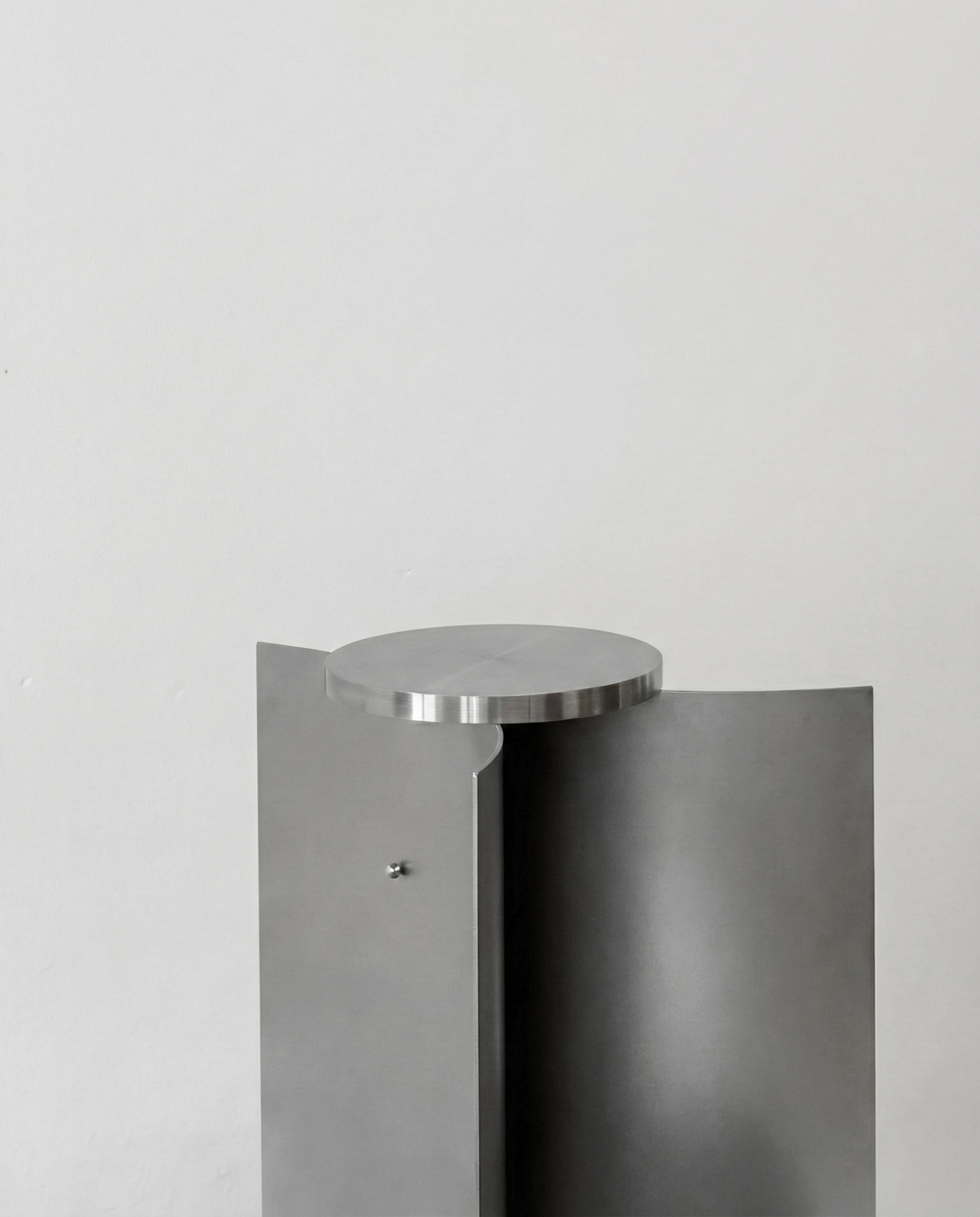
ASET. does not separate concept from execution. Welding, bending, and machining remain visible, allowing the logic of construction to become the primary aesthetic. Objects are conceived as monomaterial systems with reversible connections, reflecting a commitment to durability, adaptability, and material continuity.
Central to the studio’s work is the idea of modularity, not as a stylistic device but as an operational framework. Each piece is designed to evolve over time, enabling users to reorganise, expand, or reinterpret it according to changing spatial and functional needs.
This approach shifts authorship away from the designer toward a shared condition, where objects remain open rather than fixed. The system becomes the project, and individual pieces act as components within a larger, adaptable structure.


STANDARD SHELF AND THE LOGIC OF EXPANSION
Standard Shelf articulates this thinking with clarity. Developed as a stainless steel storage system, it is composed of three module sizes that share a consistent square footprint. This geometric continuity allows the system to expand horizontally, vertically, or in depth, adapting to different spatial configurations without losing coherence.


The structure balances lightness and strength, remaining stable even as it grows in height. Its assembly relies on precision rather than hardware, eliminating the need for screws or tools and reinforcing a friction based logic that keeps connections legible and reversible. Fabricated through laser cutting, sheet metal bending, and MIG TIG welding, each unit retains the marks of its production while maintaining a refined presence.


Standard Shelf is conceived as an open system, where growth and transformation are integral to its use. It reflects a broader investigation into how furniture can respond to evolving conditions rather than remain static.


STRAW RACK AND THE DYNAMICS OF CONFIGURATION
With Straw, ASET. extends modular thinking into a more vertical and spatially active form. The piece functions simultaneously as organiser and stand, defined by a network of tubular elements that can be reconfigured through an internal, screwless system.


Eight connection points allow for the insertion of tubes at different angles, combining 45 degree large elements with 90 degree smaller ones. This dual geometry generates a wide range of possible arrangements, enabling the object to adapt to different uses and environments. The absence of visible fixings preserves the continuity of the steel surface, while spherical ends introduce a subtle ergonomic dimension, protecting both garments and surrounding surfaces.
Produced through TIG welding, CNC machining, and manual bending, Straw occupies space with a light yet assertive presence. Its openness invites interpretation, reinforcing the studio’s interest in objects that remain in flux.

WEIGHT BOOKEND AND THE PRECISION OF BALANCE
At a smaller scale, Weight Bookend distils the studio’s approach into a study of equilibrium. Machined from stainless steel, the object is engineered to rest at a precise 45 degree angle, creating a controlled visual tension grounded in structural accuracy.

Its form results from repeated iterations to refine the centre of gravity, ensuring both stability and safety. The inclined posture is not decorative but intrinsic to its function, revealing how balance can become a defining spatial gesture. Produced through a combination of manual lathe work, CNC machining, and TIG welding, the piece reflects a meticulous engagement with material behaviour.


Though compact, Weight Bookend extends the same systemic thinking found in larger pieces. It demonstrates how even the smallest object can operate as a site for experimentation, where precision and material logic converge.