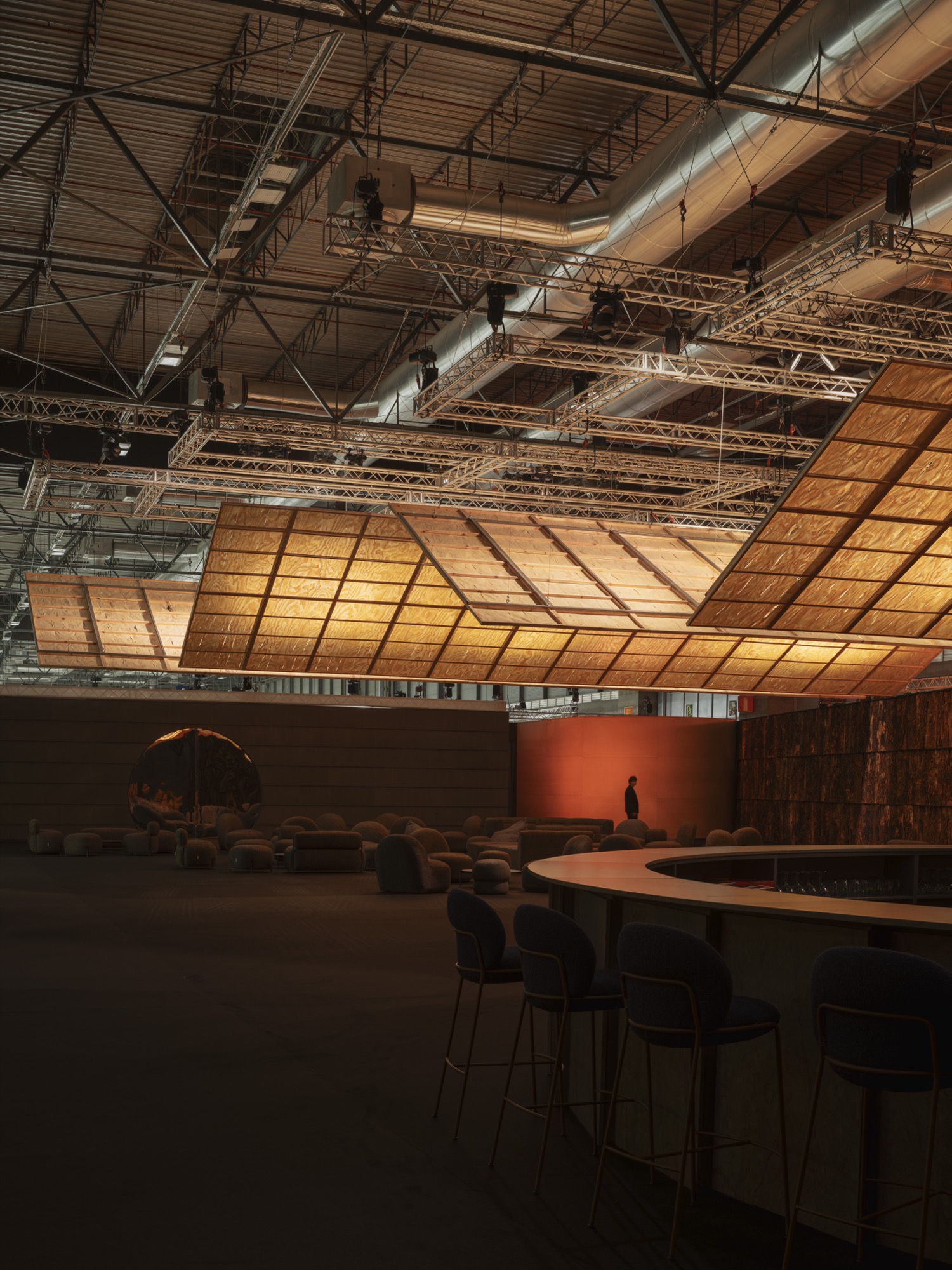

Now Reading: John Pawson and the legacy of minimalism in modern architecture
- 01
John Pawson and the legacy of minimalism in modern architecture

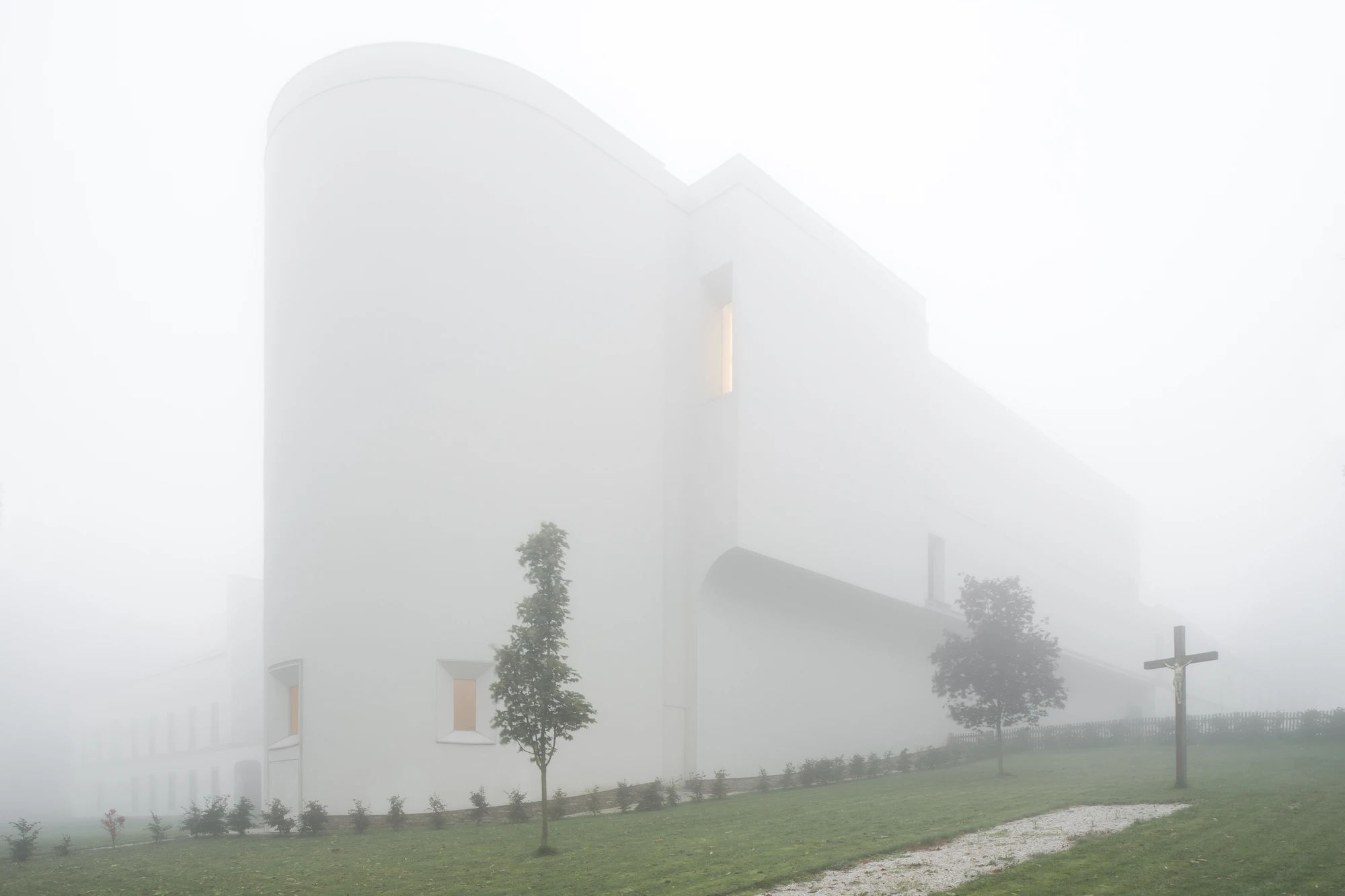

In the forests of western Bohemia, about 30 miles northwest of Plzeň, the Abbey of Our Lady of Nový Dvůr stands in deliberate quiet. White stone walls, polished concrete floors that catch shifting daylight, and dark oak panels establish a realm shaped by restraint. The subtle interplay of light and materials reveals the influence of John Pawson minimalism throughout the space. Light filters through narrow openings in the cloister and church, changing minute by minute, so that time itself becomes perceptible. Completed between 1999 and 2004, the project marked the establishment of a new Cistercian community in the Czech Republic after the fall of communism. Rather than reconstructing a lost past, the scheme transformed an 18th century Baroque farmstead into a contemporary monastic complex comprising church, cloister, refectory, workshops and agricultural land. It is both restoration and reinvention, an architecture of continuity rather than nostalgia.

Behind this work stands John Pawson, born in 1949 in Halifax, Yorkshire. Raised in an industrial landscape edged by open moorland, he has often described how the contrast between vast horizons and factory interiors shaped his sensitivity to scale and silence. Pawson did not follow a conventional architectural education. In his twenties he travelled widely, spent time in Japan teaching English, and encountered figures who profoundly influenced his thinking, among them the designer Shiro Kuramata and the architecture of Tadao Ando. He has acknowledged the importance of historical precedents as well, from Cistercian abbeys such as Le Thoronet to modern artists and architects including Donald Judd and Le Corbusier.

Although frequently described as a minimalist, Pawson has consistently resisted turning the term into doctrine. For him, simplicity is not an aesthetic formula but a discipline of attention. It is a process of reduction that seeks clarity without sterility. His work suggests that restraint can heighten perception rather than diminish it. Spaces stripped of excess become charged with proportion, texture and light. In this sense, minimalism is less a style than a method, an ethics of making grounded in care and precision.

At Nový Dvůr this attitude finds a particularly resonant context. The Cistercian order follows the Rule of St Benedict, structured around prayer, work and communal life. Pawson’s architecture supports this rhythm without theatrical gesture. Surfaces are smooth but not ostentatious. Materials are limited yet tactile. The church interior is defined by measured proportions and the careful modulation of daylight, creating an atmosphere that many visitors describe as contemplative rather than austere. The building does not seek attention. It frames stillness.

Light is central to Pawson’s language. He has often cited Louis Kahn’s conviction that architecture begins with the meeting of light and silence. In his own projects, natural illumination is shaped through apertures, courtyards and careful orientation. Walls become instruments that filter brightness. Floors and ceilings act as planes that receive it. The result is rarely dramatic in the conventional sense. Instead, there is a steady calibration of glow and shadow that renders space perceptible as a sequence of subtle transitions.
Proportion is equally fundamental. Pawson’s rooms are frequently rectilinear, defined by exacting alignments and flush junctions. Ornament is absent, yet the geometry itself carries expressive weight. The discipline required to achieve such clarity is considerable. Joints must be precise. Materials must meet without distraction. What appears effortless is in fact the product of sustained refinement.

This approach first drew international attention in commercial interiors, notably the Calvin Klein flagship store in New York in the mid 1990s. There, pale stone surfaces, controlled lighting and pared down detailing redefined the visual language of luxury retail. The project demonstrated that minimalism could operate at the scale of global branding without losing intensity. It also confirmed Pawson’s ability to translate his sensibility across contexts.
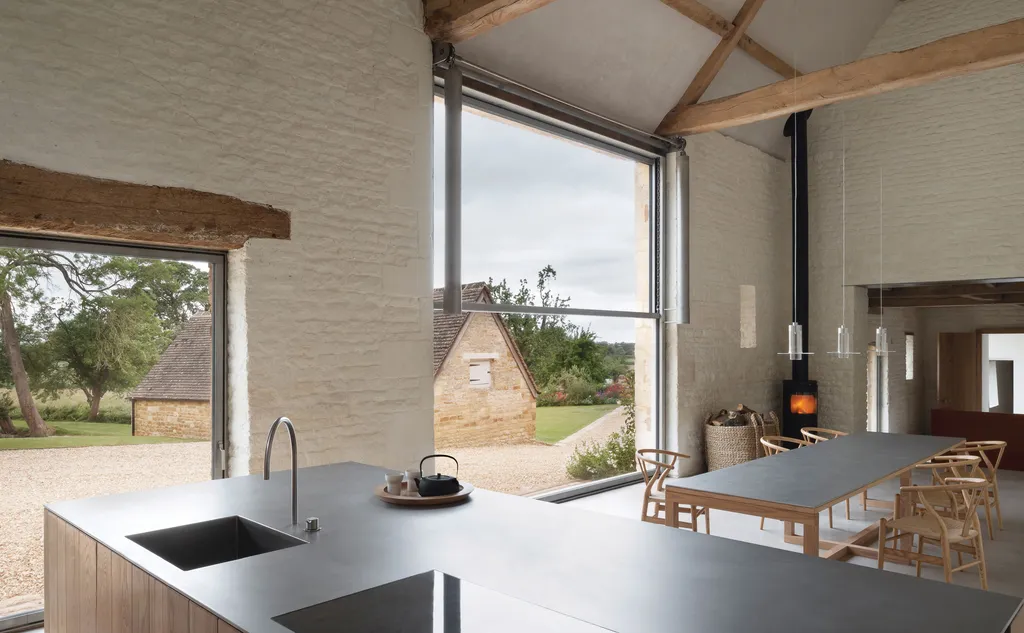

Subsequent works expanded this trajectory. The Neuendorf House in Mallorca, completed in 1989, explored the dialogue between monolithic geometry and Mediterranean light. The Design Museum in London, opened in 2016 within a reworked modernist shell, showed how an existing structure could be retuned through the recalibration of surfaces and circulation. Sacred commissions, including interventions at monasteries and churches in continental Europe, further developed the relationship between simplicity and ritual.

Credit: Photography by Max Gleeson / Courtesy John Pawson.

Across these diverse projects, Pawson has articulated a consistent ambition: to create spaces that allow occupants to breathe. Visitors often describe a physical sensation on entering his interiors, a slowing of pace, a sharpening of awareness. Emptiness in this context is not void but invitation. It offers room for thought and movement, for use and interpretation.

Critics have occasionally questioned whether such refined restraint risks exclusivity, arguing that the resources required to achieve this level of finish limit its accessibility. Yet Pawson’s work also engages with themes of sustainability and longevity. By reducing formal excess and focusing on durable materials, his buildings aspire to endure beyond fashion. The clarity of their construction is intended to resist obsolescence.
From the abbey at Nový Dvůr to urban museums, private houses and product design, Pawson’s career traces a sustained exploration of how little is enough. His own reflections often return to the idea that architecture is not about accumulation but about discernment. To know when to stop is as important as knowing how to begin.
In an era marked by visual saturation and constant distraction, his work proposes another tempo. It does not reject modernity, nor does it retreat into nostalgia. Instead, it suggests that simplicity can be a contemporary form of generosity. By clearing space, architecture can make room for presence.

At Nový Dvůr, the white surfaces and measured light continue their quiet dialogue each day. Monks move through the cloister according to an ancient rhythm, yet the architecture remains unmistakably of its time. In that balance between continuity and renewal lies the enduring significance of Pawson’s contribution. His minimalism is not an end in itself. It is a means of sharpening perception, a reminder that silence, carefully framed, can speak with remarkable force.

Photo Cover
The Abbey of Our Lady of Nový Dvůr: deliberate quiet amid Bohemian mist.
Credit: Photography by Hisao Suzuki / Courtesy John Pawson.