Now Reading: Architecture in thin air: Altihut cottages merge with the caucasus landscape
- 01
Architecture in thin air: Altihut cottages merge with the caucasus landscape

Architecture in thin air: Altihut cottages merge with the caucasus landscape
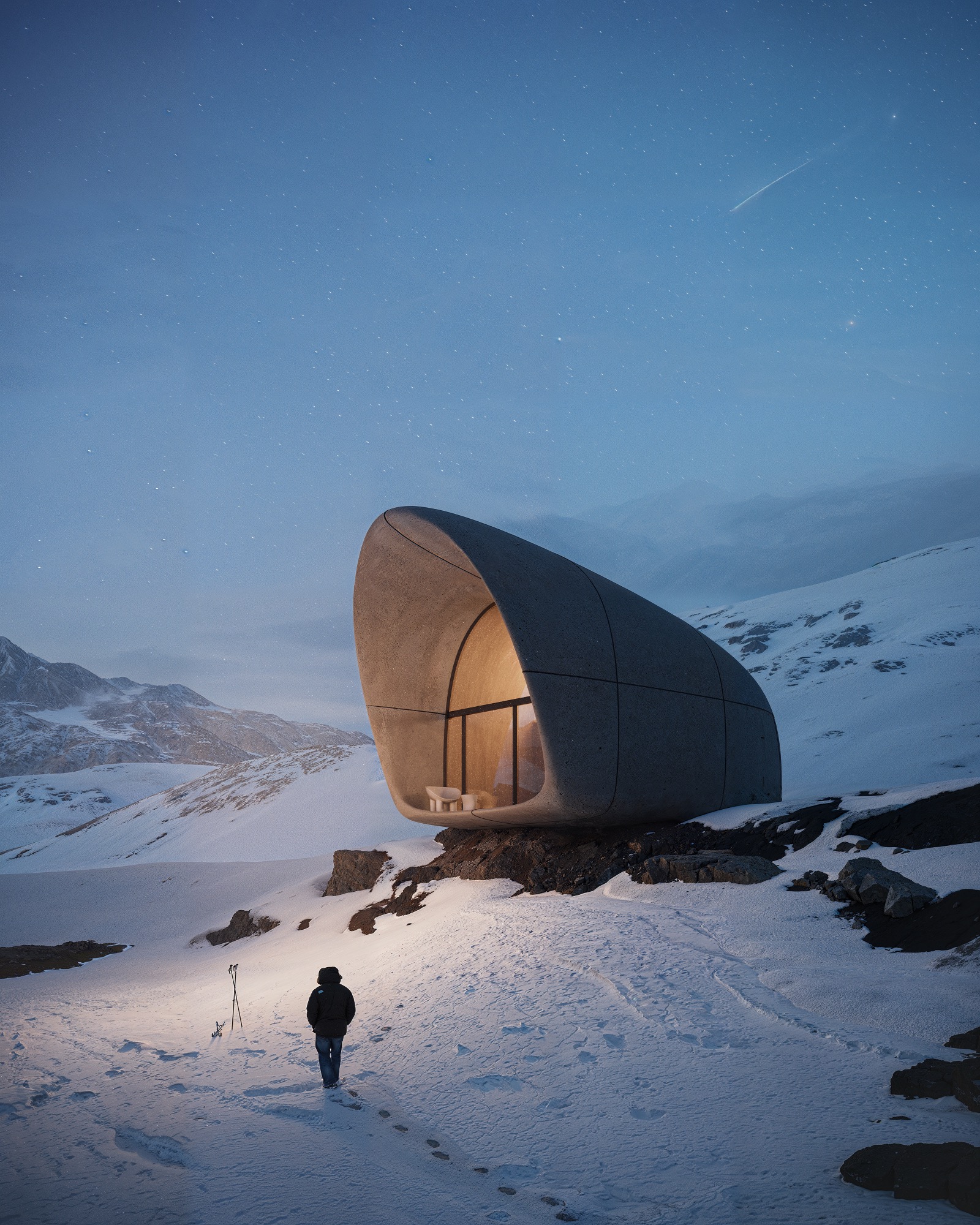
At 3,014 metres above sea level, AltiHut is conceived not simply as a refuge but as a proposition. Set high in the mountains of Georgia, the project positions itself as the country’s first sustainable high altitude destination, reframing adventure tourism through a lens of responsibility and environmental awareness. Every component of the original hut was transported by helicopter and powered entirely by solar energy, embedding ecological thinking into both logistics and daily operation. Here, hospitality is not detached from context but negotiated carefully with altitude, climate and terrain.

With the introduction of the AltiHut Cottages, STIPFOLD deepens this philosophy through a more intimate scale of dwelling. Designed for families and small groups, the new units expand the existing ecosystem of the main hut while preserving its environmental ethics. Rather than competing with the dramatic topography, the cottages remain compact and measured, conceived as quiet extensions of the mountain rather than standalone icons.
The spatial organisation is deliberately simple. A small children’s room anchors one end of the plan, while a central living area forms the heart of the interior. Above, an open mezzanine bedroom faces outward, directing attention to the horizon. This vertical layering allows the modest footprint to feel generous without excess, turning constraint into clarity. The architecture withdraws, allowing light, air and landscape to define the experience of inhabitation.
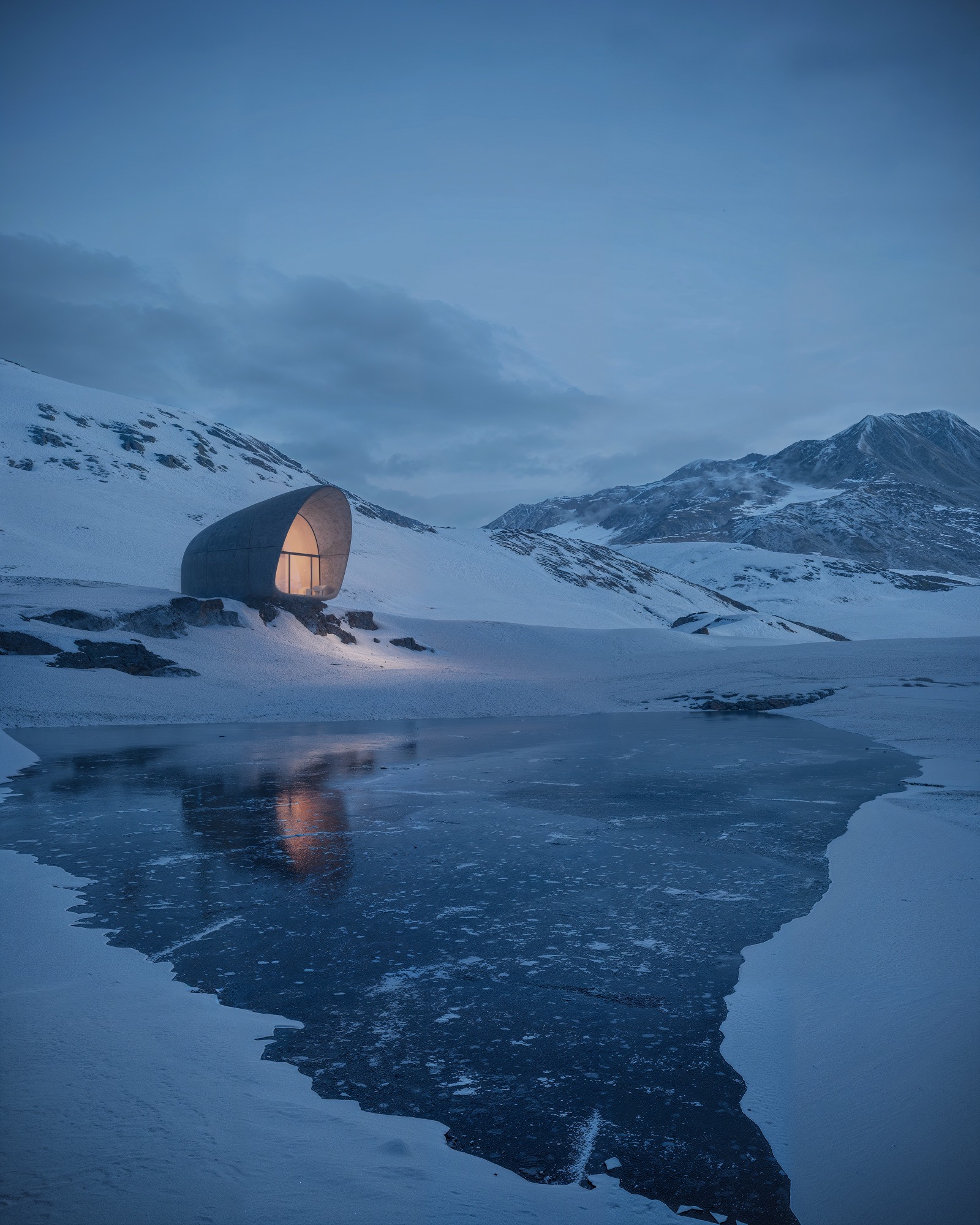
Formally, the cottages follow STIPFOLD’s language of restraint and material honesty. A continuous fiber concrete shell wraps the exterior, shaped to appear as though it has emerged from the terrain itself. Its monolithic presence avoids overt gesture, relying instead on proportion and silhouette to establish identity against the vast Caucasus backdrop. Over time, the surface is intended to weather and merge visually with the surrounding rock and soil, reinforcing the idea of architecture as a temporary trace rather than a permanent imposition.


Inside, natural wood introduces warmth and tactility, offsetting the mineral weight of the exterior. The atmosphere is calm and elemental, defined by material contrast rather than decorative intervention. A large glazed opening frames the landscape with precision, transforming the panoramic view into the primary interior feature. In this way, the mountain becomes both backdrop and protagonist, while the building operates as a quiet instrument that heightens perception.


AltiHut Cottages articulate a vision of high altitude living that resists spectacle. Their presence is subtle yet deliberate, proposing that comfort and ecological awareness are not opposing forces but complementary ones. By reducing form to its essentials and allowing materials to age in dialogue with climate, STIPFOLD offers a model of sustainable mountain architecture that is as much about attitude as construction. In the rarefied air of the Caucasus, the project suggests that architecture’s most powerful gesture may be its willingness to recede.
Project Credit
Previous Post
Next Post
- The timeless elegance of domestic appliances: From the Iconic Braun KF 20 aromaster to the German design ethos

- Emilio Ferro on the light, sound and memory of a place
- At Maniwa, an architect’s family home opens to the neighbourhood
- What bronze remembers of the hand

- Caught in light: Moradavaga’s suspended shoal

- The making of Alex Chinneck’s impossible Dior windows