Now Reading: Visiting Château La Banquière
- 01
Visiting Château La Banquière

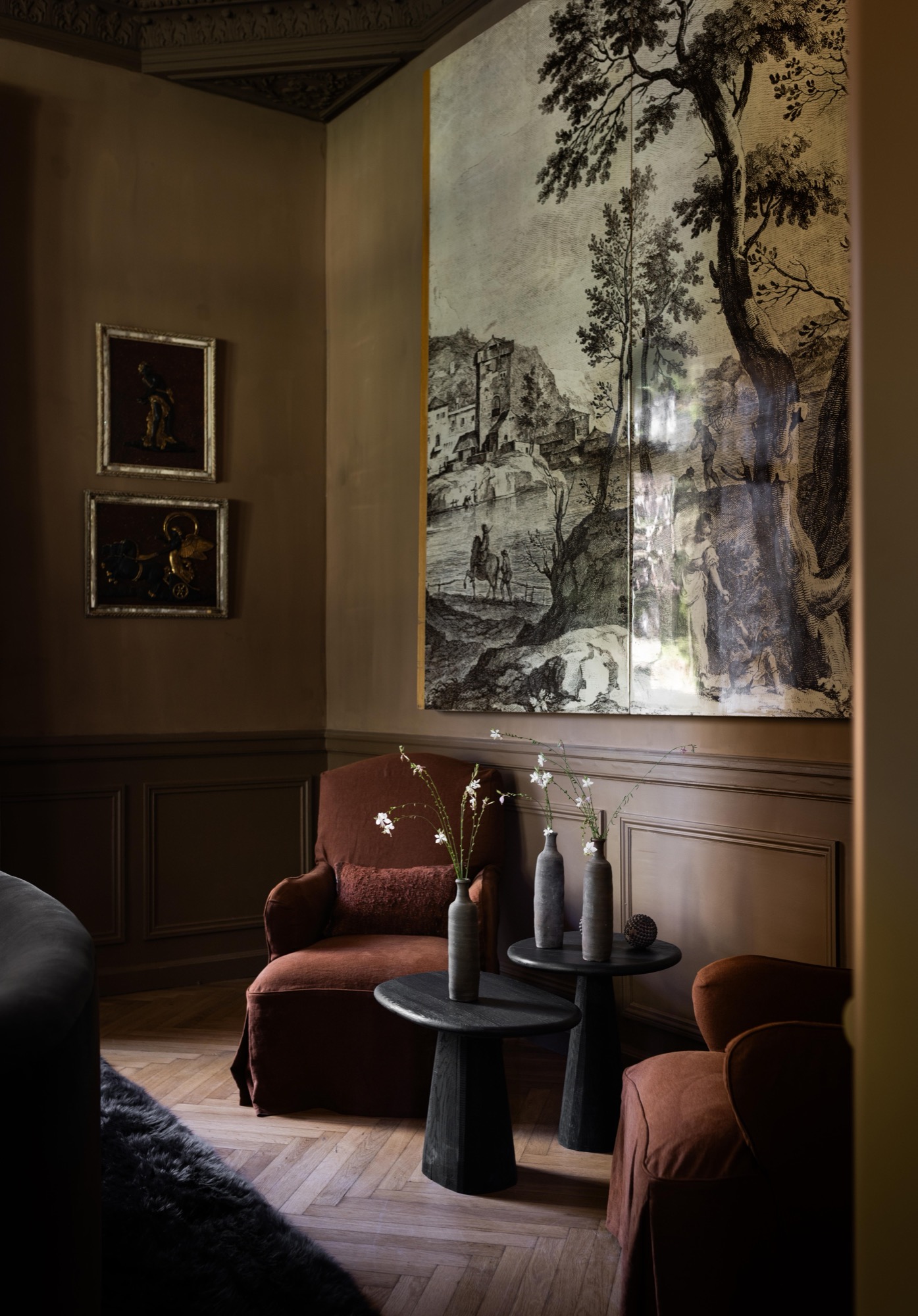

Heritage renovations don’t always need a headline gesture to read as contemporary. At Château La Banquière, an 18th-century estate near Montpellier, Marianne Tiegen Interiors works through calibration. Light is carefully shaped, existing surfaces are kept legible, and textiles are introduced as a functional layer built for care, maintenance, and longevity.Fabric is not an afterthought here. It operates as a removable, serviceable system that supports privacy, comfort, and acoustic softness without masking the historic shell.

ARRIVAL: LIGHT SETS THE TONE
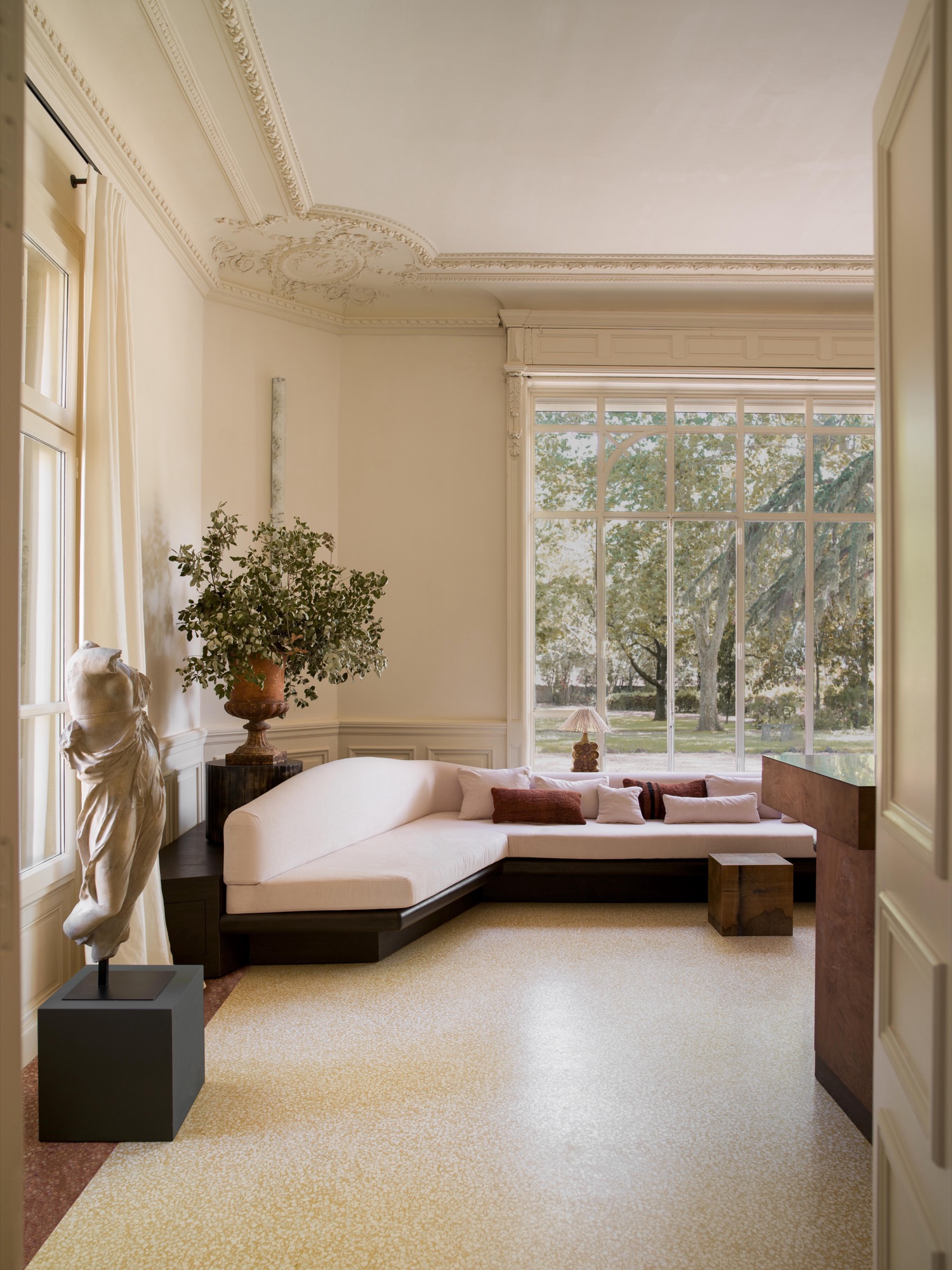
The estate sits in a quiet park between vineyards and mature oaks, and the interior is organised around daylight. Stone holds shadow, timber lends it warmth, and textiles soften it into a gentler light. As you move through the château, the rooms unfold in a controlled sequence. Views open and narrow again, brightness shifts, and surfaces change underfoot, so the interior feels continuous with the surrounding landscape rather than set apart from it.

Passing a textile screen can narrow the view into a more deliberate frame, helping the room feel calmer without adding new partitions. The effect is subtle and repeatable: softness becomes a tool for adjusting distance.
TEXTILE AS A SECOND ARCHITECTURE
The project’s central move is to treat textile as an organising system. Bed canopies create rooms within rooms. Screens define thresholds and create pockets of visual shelter. Wall panels and throws add tactile warmth and help reduce reverberation, which matters in hospitality interiors where hard, durable finishes often dominate.
The placement is disciplined. Rather than covering every surface, textiles are concentrated at key anchors such as canopies, screens, bed throws, and wall panels. This gives the rooms intimacy while keeping the château’s classical proportions legible.


COLOUR FROM BOTANICALS, NOT TRENDS
The palette is developed through botanical dyeing tied to the site and region. Blush tones come from grape seeds harvested on the estate; warmer coral-apricot shades derive from garance (madder root); muted blues and greys come from pastel/woad. Plant-based pigments bring slight variations in tone and density that shift with daylight.
Linen, hemp, and cotton are chosen for touch and longevity. Creasing, drape, and colour settling are treated as qualities that can deepen with use rather than flaws to hide.


ANTIQUE TEXTILES AND A REPAIR-FIRST ETHIC
Several rooms start with antique fabrics sourced through established collector networks, including Provençal damasks, Venetian block-prints, and couture-surplus textiles. Their patina and pattern set the direction for each space, shaping its palette and material rhythm.
Fragile pieces are restored or lightly backed for strength; in other cases, wear is left visible. Repair does not erase time. It extends a material’s life while keeping its history legible.


CRAFT, ENGINEERED FOR HOSPITALITY
The project draws on European craft traditions associated with couture ateliers: Belgian woven linens, serigraphy from historic Lyon workshops, Venetian block-printing, and embroidered panels. A small bee motif, stitched in Pont de Beauvais, acts as a discreet marker linking biodiversity to the project’s circular logic.
Credibility comes from the maintenance strategy. Canopies, screens, and throws are built on metal frames or removable structures so they can be unfastened, cleaned, repaired, and re-dyed. Upholstery uses removable covers. Panels and joinery are conceived for partial restoration rather than full replacement. Circularity becomes operational: the interiors are designed to be serviced, not discarded.

SLOW TEXTILES, LASTING LUXURY
For Marianne Tiegen, the project is also a position statement. “Luxury today faces an identity crisis,” she says. “Its renewal lies in craftsmanship, authenticity, and rarity. With La Banquière, we show that sustainability can be a form of true luxury, rooted in nature, in history, and in care.”
Set against the project’s practical logic, the claim reads as method: longevity is pursued through materials that can be maintained, repaired, and re-coloured over time rather than replaced on a cycle of wear and fashion.


Château La Banquière is not designed to look permanently new. It is designed to evolve. Removable covers, serviceable canopy frames, restorable panels, and re-dyeable textiles turn sustainability into routine practice. In twenty or thirty years, success will not be measured by pristine preservation but by accumulated evidence. Tones will settle, mends will appear, and surfaces will deepen, showing how care and time can become a contemporary form of luxury.
Hotel name: Chateau La Banquiere / @chateaulabanquiere
Location: Montpellier, France
Design: Marianne Tiegen Interiors / @mariannetiegen
Photography: Jeremy Wilson