
Now Reading: Africa’s Megacities Are Rewriting the Urban Future
- 01
Africa’s Megacities Are Rewriting the Urban Future


With 40,000 people moving into cities every day and nine new megacities on the horizon, Africa is becoming the decisive stage for housing, climate adaptation, and infrastructure design—forcing architects and planners to rethink what “the future city” really means.
THE URBAN FUTURE HAS MOVED SOUTH
For years, the global imagination of “the future city” has been dominated by familiar geographies: European pilot districts, North American smart city visions, and the hyper-accelerated urbanism of China and parts of Southeast Asia. Yet the most consequential urban story of this century is shifting decisively elsewhere. By the end of the century, Africa is projected to host 13 of the world’s 20 largest cities, including the top three, a demographic realignment that forces architecture and urban planning to rethink where innovation, risk, and responsibility truly sit.

THE NEXT GREAT URBAN MIGRATION
The World Bank frames urbanization as the single most important transformation the African continent will undergo this century, with more than half the population expected to live in cities by 2040. That shift is not gradual. It is a daily, cumulative movement of roughly 40,000 people into urban areas over the next two decades, a migration that will concentrate population at a scale few planning systems are prepared to absorb.

In that same window, the continent is set to add nine megacities of more than 10 million people each, with Kinshasa, Lagos, and Cairo forecast at 35 million, 32 million, and 24 million respectively. These are not just bigger cities. They are cities becoming global climate actors, infrastructure stress tests, and cultural producers all at once.
MEGACITIES UNDER PRESSURE
Rapid growth can read like momentum, but the realities beneath the numbers are harsher. As African cities expand and eclipse many global rivals, architects, urban designers, and planners will confront overlapping crises: urban sprawl, climate impacts, and infrastructure deficits that are already visible in water, energy, mobility, and public health systems.

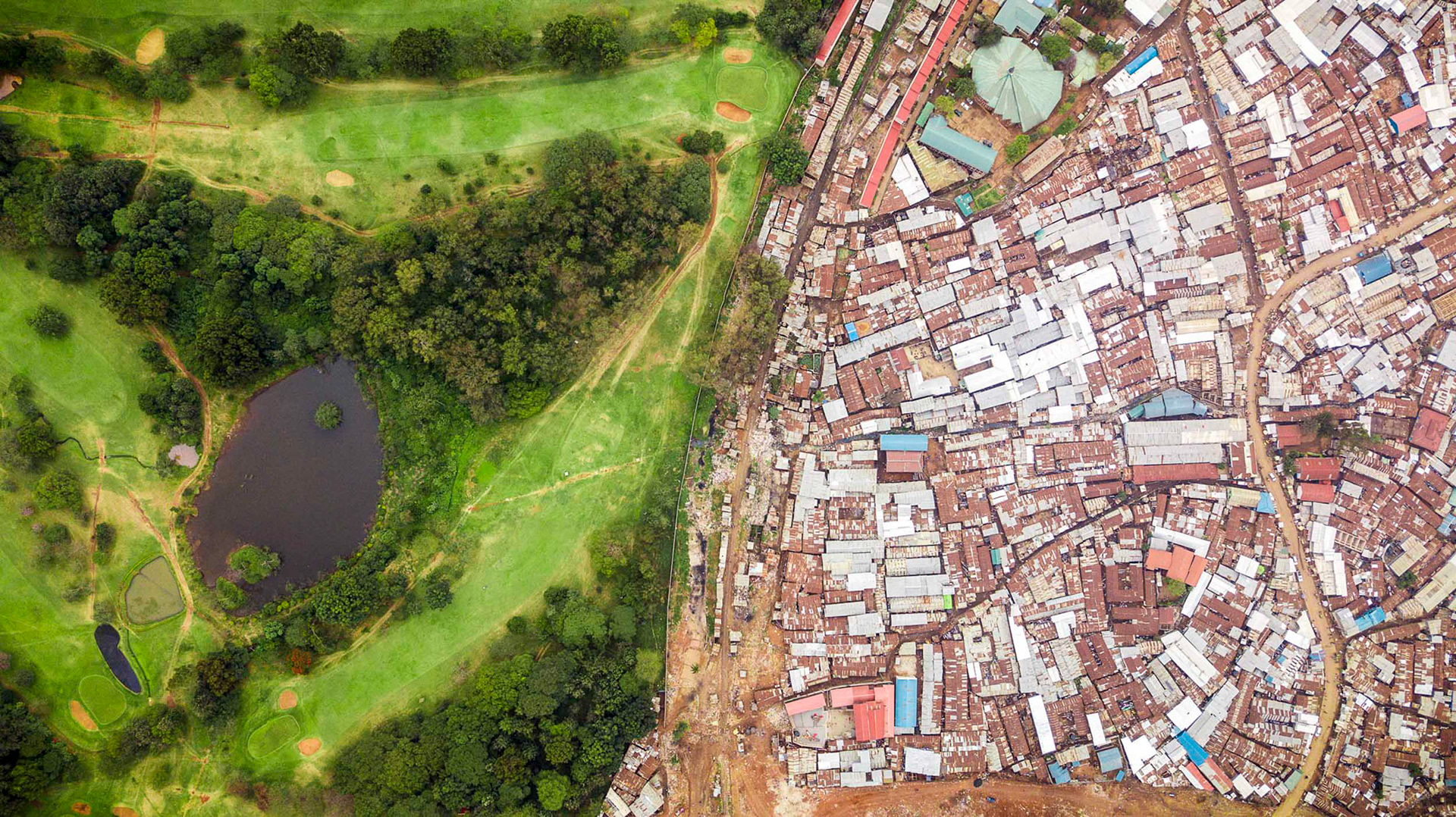
Housing is the clearest fault line. Sixty percent of Africa’s urban residents are living in slums, a figure that reframes “density” from a design preference into an equity emergency. In this context, megacity growth is not simply a question of skylines and transit. It is a question of how urban form either multiplies vulnerability or expands dignity.

PLANNING AT THE SCALE OF SYSTEMS
One response is emerging through strategic planning research such as Arup’s Future Proofing City studies, spanning nine cities across Ethiopia, Ghana, Mozambique, and Uganda. The point is not a single universal model, but managed growth calibrated to local realities, governance capacity, and regional economies.
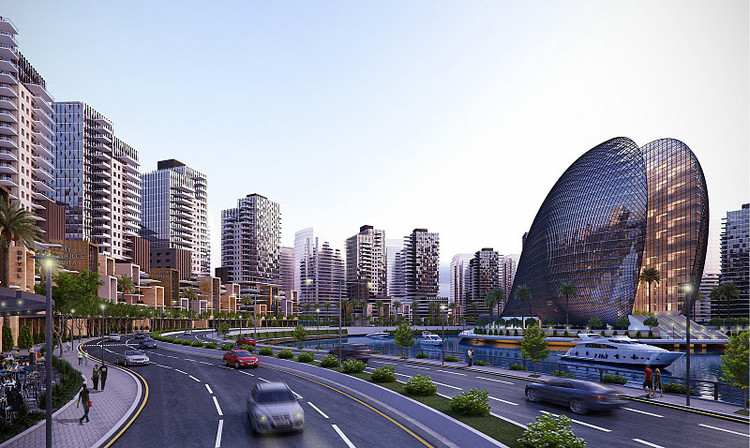
Two examples show how different “future proofing” can look. Uganda Vision 2040 aims to activate five secondary cities as a decentralization strategy, redistributing opportunity rather than concentrating it into a single primate metropolis. Mozambique’s model, meanwhile, centers on growth corridors that braid transport, logistics, trade, economic development, and human development into a single territorial framework. In megacity discourse, these approaches matter because they suggest the most effective way to shape megacities may be to strengthen what surrounds them: secondary urban networks, connective infrastructure, and regional mobility.
ARCHITECTURE AFTER THE GLOBAL NORTH TEMPLATE
If planning operates at the scale of policy and networks, architecture can test what “adequate housing” means in everyday life. A built experiment points to that shift: Bauhaus University Weimar’s Institute for Experimental Architecture, in collaboration with the Ethiopian Institute of Architecture Building Construction and City Development, constructed three full-scale residential prototypes for Addis Ababa in response to hyper-urbanization.
The key move is ideological as much as technical. Rather than importing outdated housing models from the Global North, the prototypes draw on indigenous building methods, local materials, and on-the-ground construction technologies to produce spatial structures that are socially robust, open, and flexible. The context is stark: 80 percent of Addis Ababa’s urban population is described as living in slums, making the “prototype” less a speculative object and more a proposal for survivable urban normality.
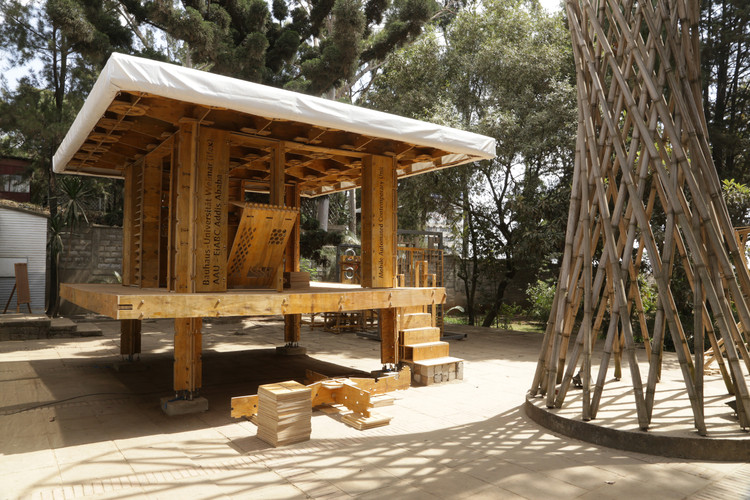
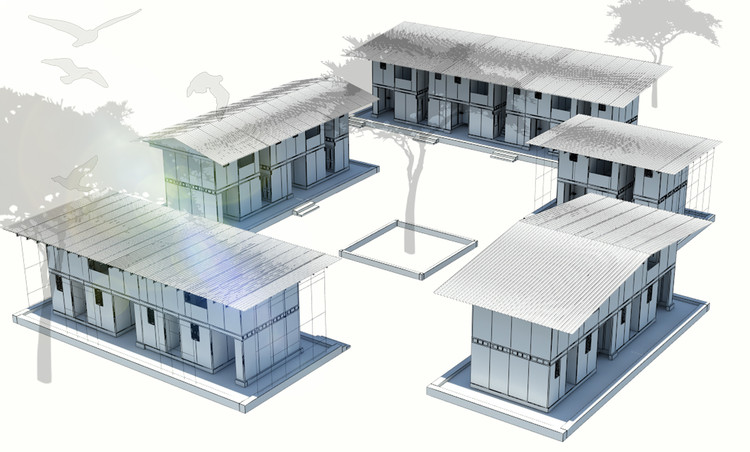
What begins to emerge is not nostalgia for tradition, but a contemporary urban vernacular: an architectural intelligence capable of scaling under pressure, adapting to informal economies, and evolving with climate constraints. The next iconic African architecture may not be a singular monument, but a repeatable system embedded in housing, streets, thresholds, and shared infrastructure.
THE MOBILE CITY AND THE RISE OF PLATFORM URBANISM
Megacities are built from concrete and governance, but they increasingly operate through software. Technology, particularly mobile-phone-driven services, is becoming a decisive layer in how African cities function – especially where conventional infrastructure is limited. App-based models that facilitate everyday mobility and logistics are already reshaping urban rhythms, linking informal labor, access, and service provision at scale.

In practice, platform urbanism changes how streets are used, how ground floors perform, how logistics reshape neighborhoods, and how public space negotiates mobility. Designing Africa’s megacities means designing with, not around, these operational systems.

THE INFRASTRUCTURE COUNTDOWN
Forecasts can feel distant until they are measured in budgets. The message is urgent: plan and invest now, or inherit a larger crisis later. Meeting basic infrastructure needs requires an estimated 130 to 170 billion US dollars annually, while two thirds of the urban infrastructure investment required by 2050 is still not in place.

By 2050, 1.3 billion Africans are expected to live in cities. The task is not merely to accommodate them, but to ensure urban life can offer dignity, opportunity, and security. That ambition demands innovation from politicians, planners, and architects alike—and it reframes design culture as civic capacity: the ability to build systems that do not collapse under growth, and environments that do not treat the majority as temporary.