Now Reading: Emilio Ferro on the light, sound and memory of a place
- 01
Emilio Ferro on the light, sound and memory of a place

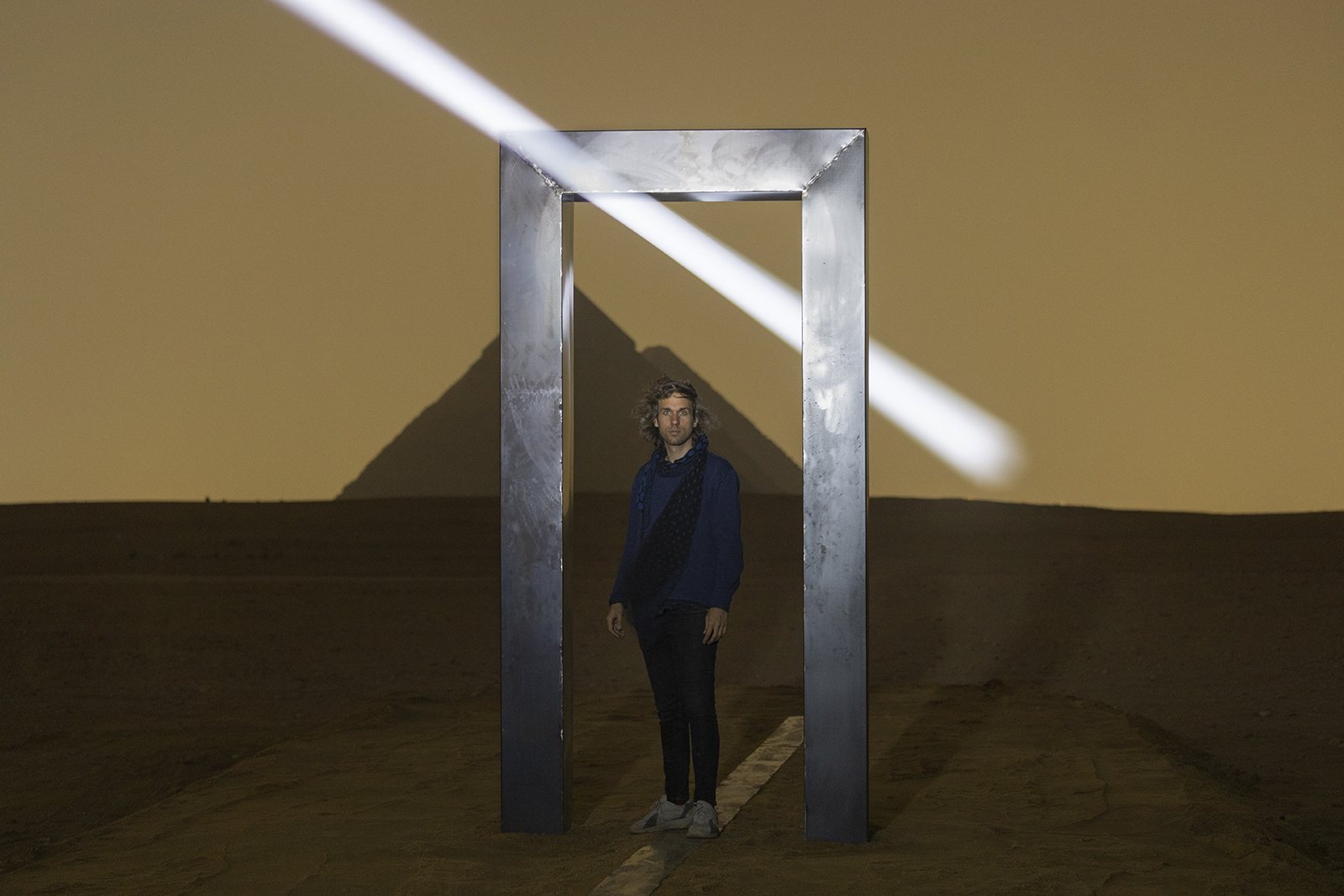

Italian artist Emilio Ferro works with light and sound to change how a place is encountered. His installations grow from the architecture, landscape and histories already present, bringing the visitor’s movement and attention into the work. A beam can connect a chapel to its garden, trace a passage across the Giza plateau or draw a tree into a new relationship with a building. Across these settings, listening is as important to his process as looking.
In this conversation with Designarcus, Ferro discusses how those encounters become artworks. Beginning with Threshold at the Chapelle Expiatoire in Paris, we explore the decisions behind its geometry, sound and response to the building’s daily life, before turning to Portal of Light, Miracle, Liminal Journey and Terlo Night Harvest. Together, these projects open a discussion about memory, the freedom to change an initial idea, and what an experience of light might leave with us after we return to everyday life.
THRESHOLD: LIGHT IN DIALOGUE WITH ARCHITECTURE
1. When you first entered the Chapelle Expiatoire, what caught your attention, and how did that initial encounter become the starting point for Threshold?
During my first site visit with Studio Artera, what first caught my attention was the light descending through the dome’s oculus and connecting the enclosed space to the sky. Then the silence, in such contrast to Paris just outside. The Chapelle Expiatoire is a place built to preserve a memory, and you immediately sense that it is also a passage: between the street and the garden, between the garden and the interior, between those who were here before and those entering today.
Threshold, commissioned by the City of Paris, grew out of that intuition. My work begins with listening: I look for the passage between the material and the immaterial that a place already holds, and try to open it up. In the chapel, that passage was suggested by the architecture, the light from the oculus and the axis between the door and the garden. I wanted to make it visible and allow people to move through it.
2. The chapel carries a strong historical and commemorative identity. How did that context shape your intervention, and where did you feel it was important to leave room for a more personal reading of the place?
The chapel stands on the site of the former Madeleine cemetery, where Louis XVI, Marie Antoinette and many victims of the Revolution were buried. It is a monument to memory, and that memory had to be respected. This is why I chose a simple, direct gesture: white light, a single structure, no added images or narrative. The sculptures, columns and inscriptions remain central; light moves through them and reveals them.
One of the central themes of my research is reactivating the memory of places. For me, reactivation means allowing those who enter to sense what a place holds and experience it in a new way. In Threshold, this happens through light, an immaterial element that appears almost tangible, and sound, a composition developed from magnetic field frequencies that I recorded and then reworked. These are invisible forces, present everywhere, made audible.
3. Could you walk us through the placement and geometry of the installation? How did the chapel’s proportions, openings and sightlines inform the position of the metal structure and the trajectory of the light?
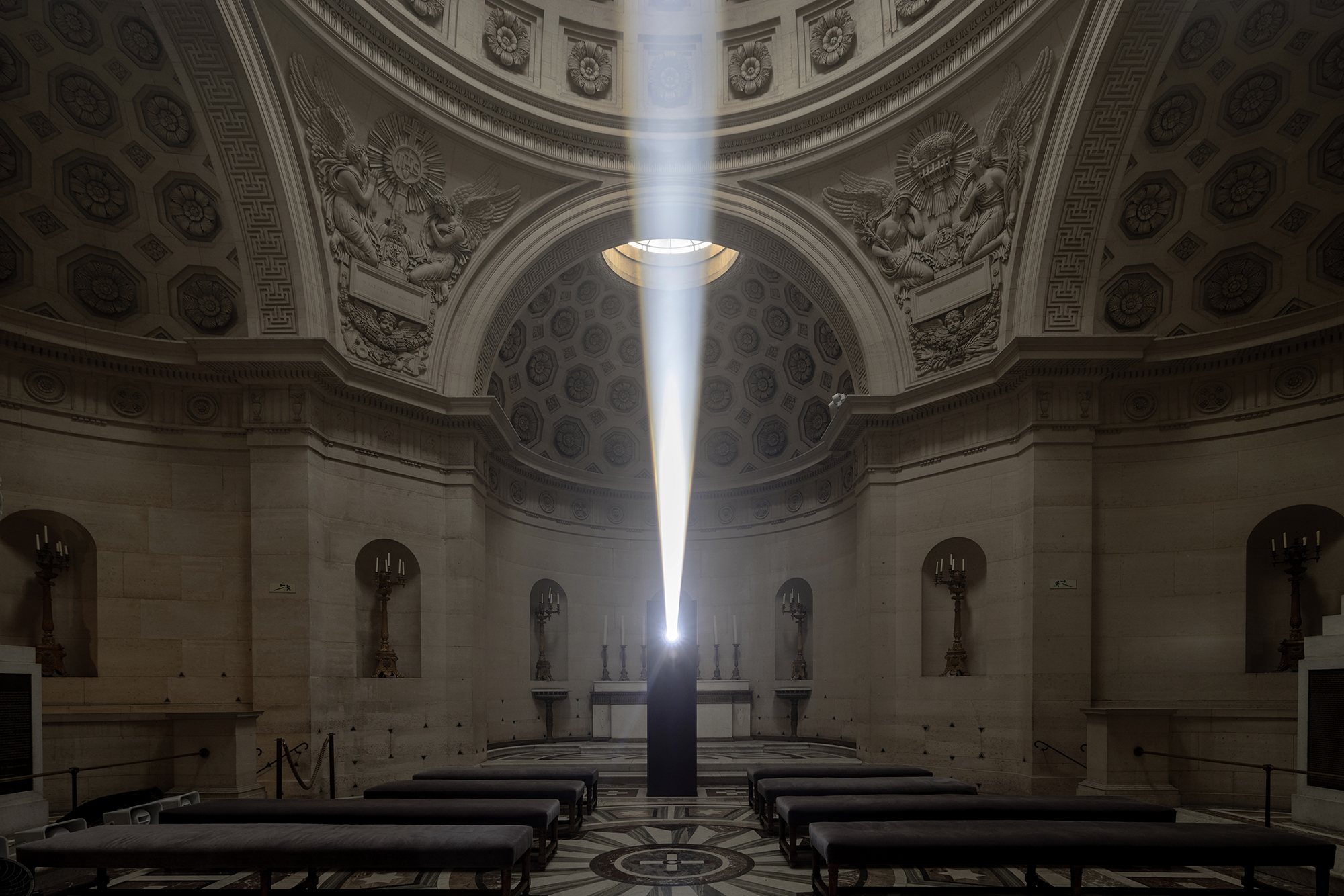
The Chapelle Expiatoire is organised around a pronounced axis of symmetry, running from the garden to the heart of the chapel, beneath the dome. I took that axis as my starting point. The metal structure, positioned near the altar, is aligned with the entrance, so that the beam follows the direction already established by the architecture.
The oculus defines the other axis, the vertical one, connecting earth and sky. The entire volume of light takes shape between these two axes, one extending horizontally towards the garden and the other vertically upwards. I studied the beam’s trajectory from every position a visitor might occupy: from the garden, on the threshold, inside the chapel and beside the sculptures.
For me, making an artwork means shaping light and sound to create the conditions for a sensation to arise. Every distance and angle is calculated with precision, and it is this precision that makes them invisible: only the experience of the place remains.
Every place is, in fact, inhabited by atmospheres: objective emotional qualities that belong to the space before they belong to those who move through it, and that anyone entering can sense. Light and sound bring them out. I have been reflecting a lot on this concept recently, and I am writing the manifesto of Atmospherologism.
4. In Threshold, opening a door changes the relationship between the beam, the interior and the garden. What interested you about making this ordinary architectural action part of the work?
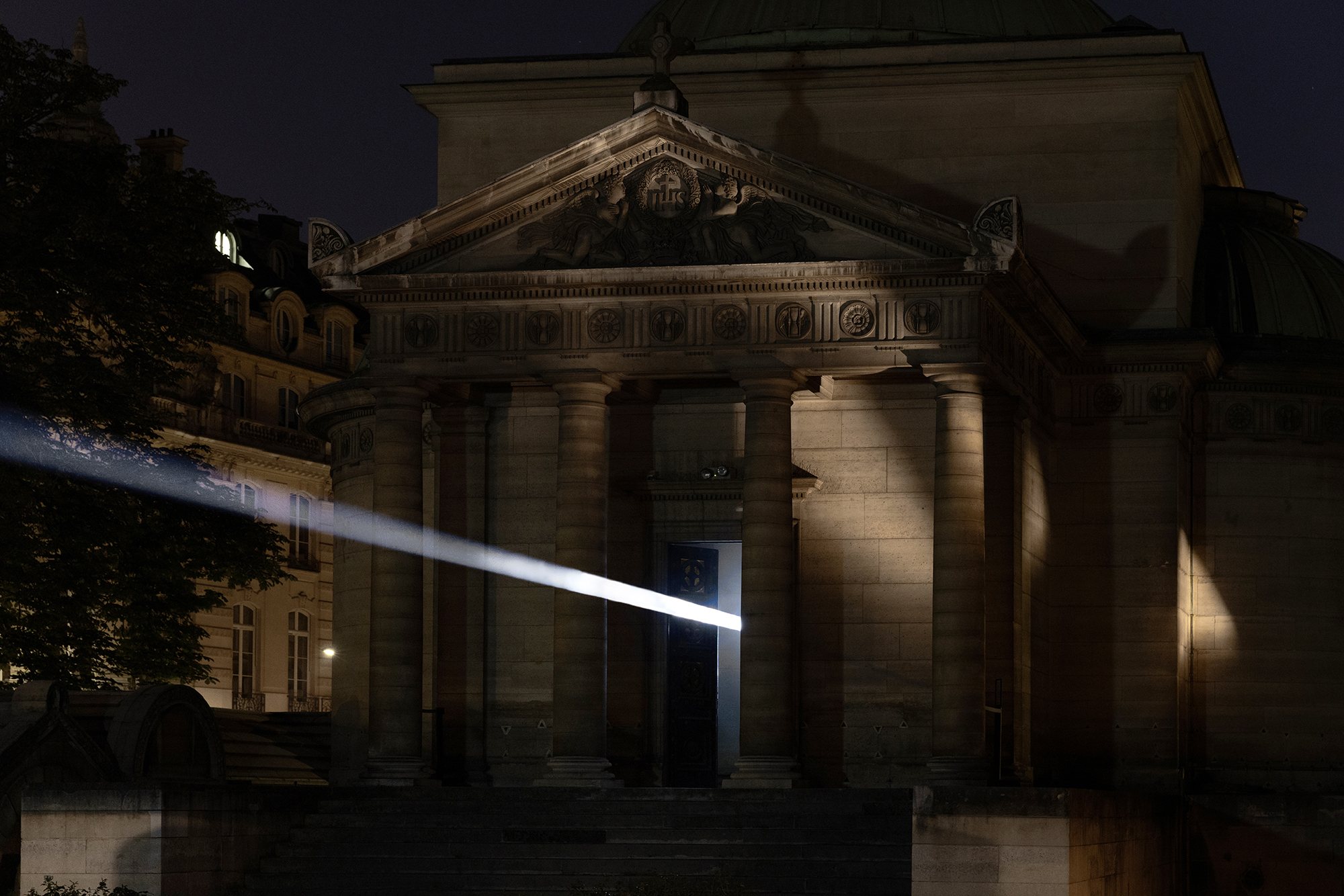
I was interested in how this gesture could change the extent of the work. When the door opens, the beam continues into the garden and the luminous matter expands along with the space. When it closes, the light draws back and becomes concentrated inside again. The work breathes with the life of the building.
This movement also affects the viewer: the gaze reaches further, and the boundaries of the space shift. Architecture acts on light and, through light, on us.
5. Light appears almost tangible here. How did you work with its intensity, the surrounding darkness and the material surfaces of the chapel to achieve that presence? Did any practical or conservation constraint lead to an unexpected design decision?
The presence of light depends on a combination of conditions: technical and technological choices, intensity, the surrounding darkness, the surfaces it encounters and the moment at which the work is seen. All these elements contribute to the perception of an almost tangible volume. The time it takes the eyes to adapt also affects the experience.
The Chapelle Expiatoire is the fourth religious building I have worked in. My previous experiences, together with work in other protected historic settings, have taught me to incorporate conservation requirements from the earliest stages of a project. Each place calls for fresh attention and a dialogue with those who care for it. In this sense, the constraints of the site become part of the creative process.
6. If you were to guide us through Threshold, where would you ask us to pause, look or listen? What might those moments reveal about the chapel’s architecture that a conventional visit would leave unnoticed?
I would give everyone the freedom to find their own path and their own pace. My installations can be experienced from multiple viewpoints: moving closer, stepping back, pausing or moving through the space produces different experiences. Above all, I would encourage people to notice how what they see, what they hear and their awareness of their own body change together.
During an encounter with the work, a distance, an opening or a surface can acquire a new prominence. The architecture is experienced through a temporary condition that transforms it. What matters to me is that people can be fully present in that moment and later retain the memory of having experienced that place differently.
BEYOND THRESHOLD: LIGHT, PLACE AND ARTISTIC INTENT
1. In Portal of Light at Giza, the geometry of the pyramids and the passage of the sun inform the work. How did you find a scale and language for your intervention within such an overwhelming setting, without allowing the monument to become merely a backdrop?
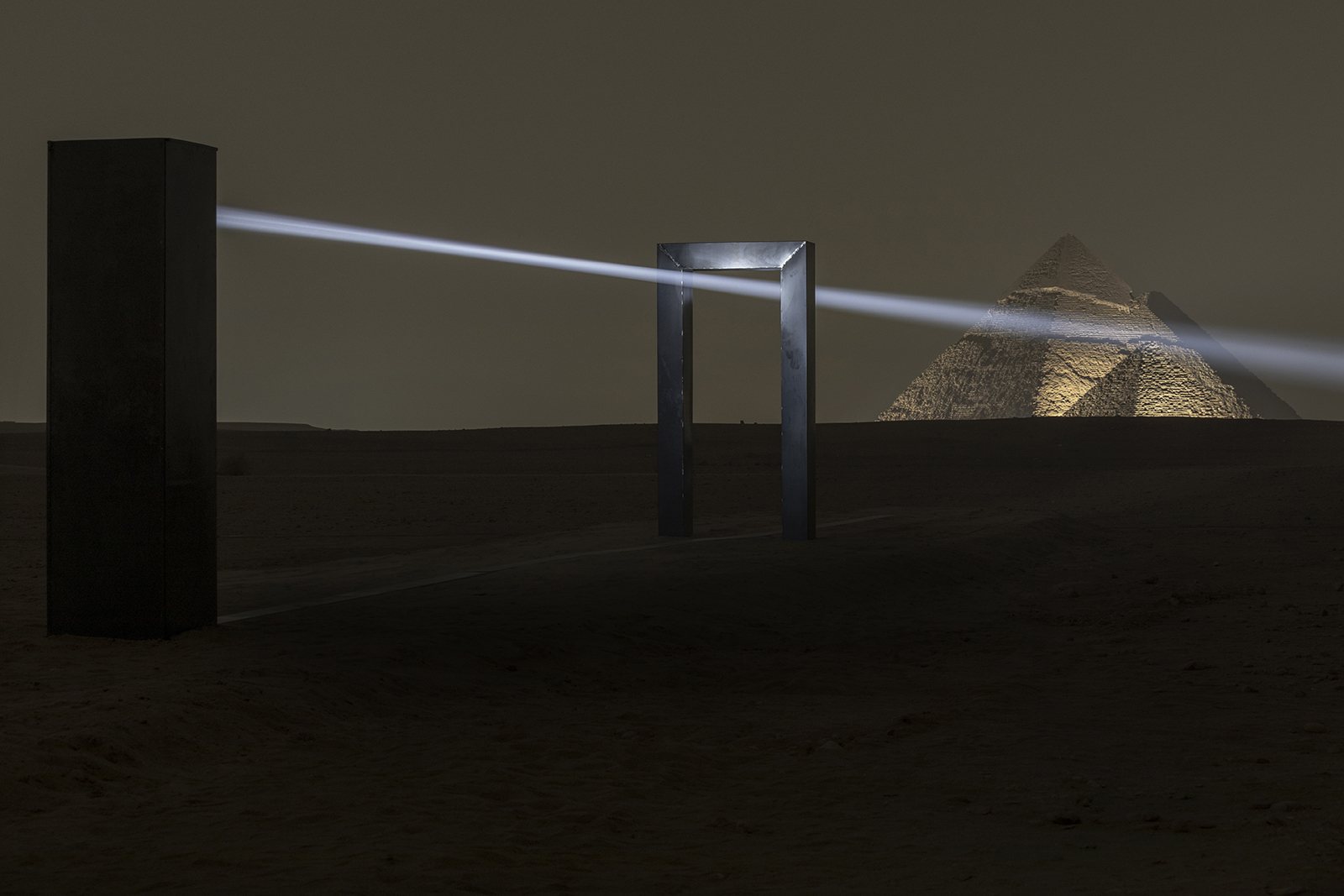
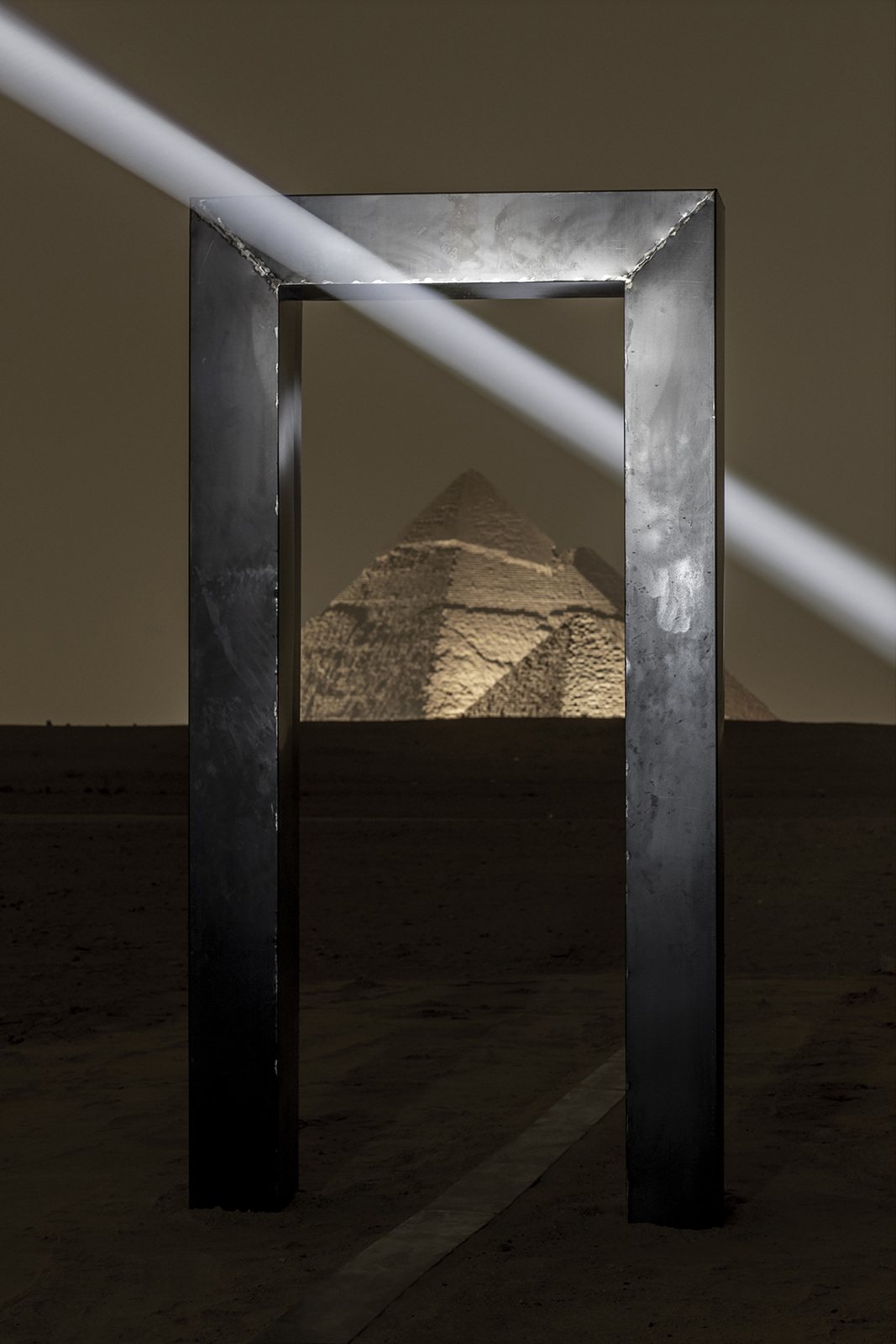
Portal of Light grew entirely out of Giza: its history, the geometry of the pyramids and Egyptian culture’s relationship with the sun and the idea of passage. Ra’s solar journey, recounted in the Book of the Dead and the Book of the Amduat, informed the work’s theme; the inclination of the pyramids, the cardinal directions and the path of the sun guided its form.
I looked for a scale that would bring the presence of the body into a relationship with the monumental landscape. The two metal structures echo the slope of the pyramids and form a route that people can move through, experienced differently by day and by night.
I made the sculptures in Egypt and composed the soundtrack using recordings of the wind that I made in the area around the pyramids. The sonic material, too, comes from the place itself. The relationship with Giza is present at every level of the work, from its making to the experience of those who encounter it.
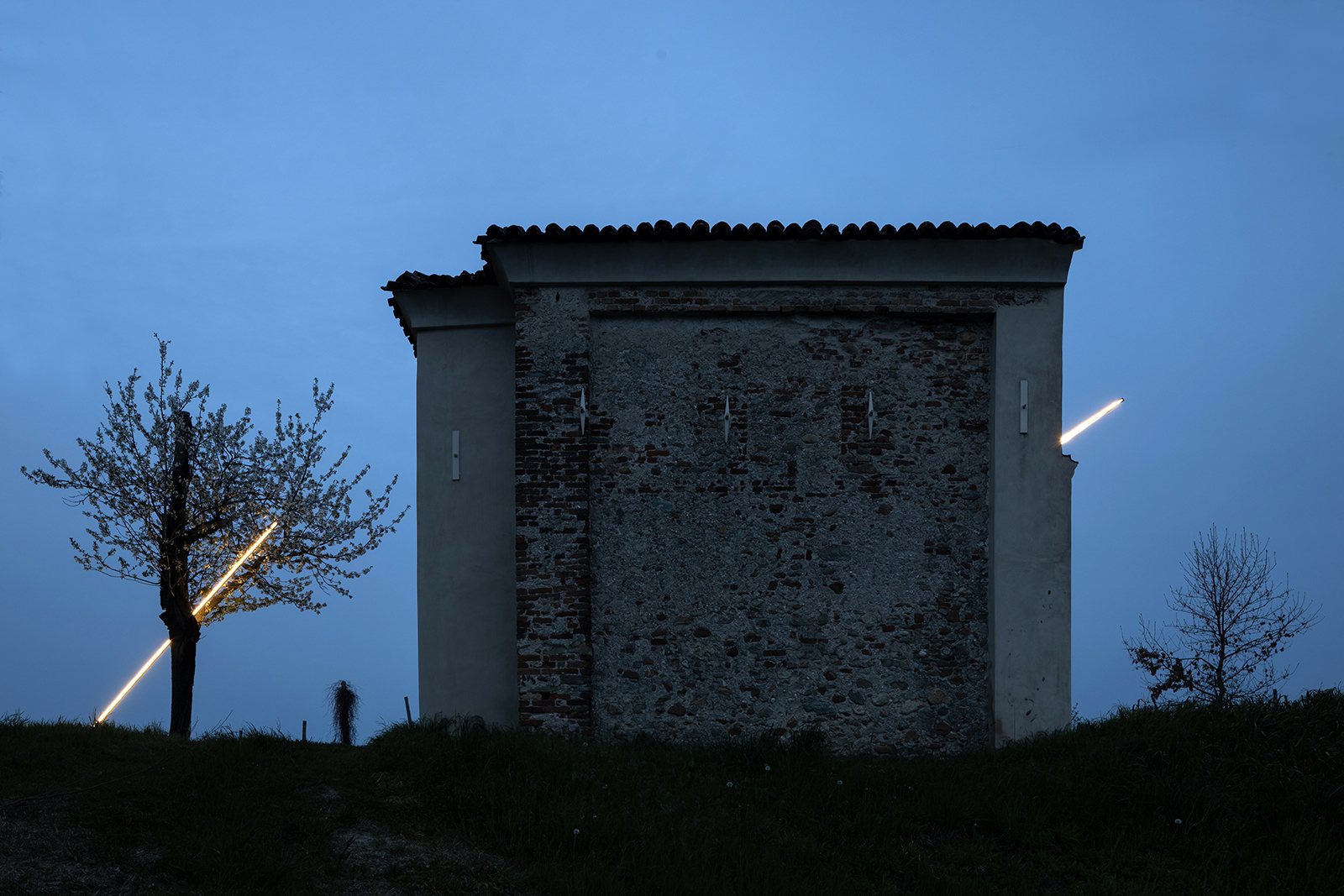
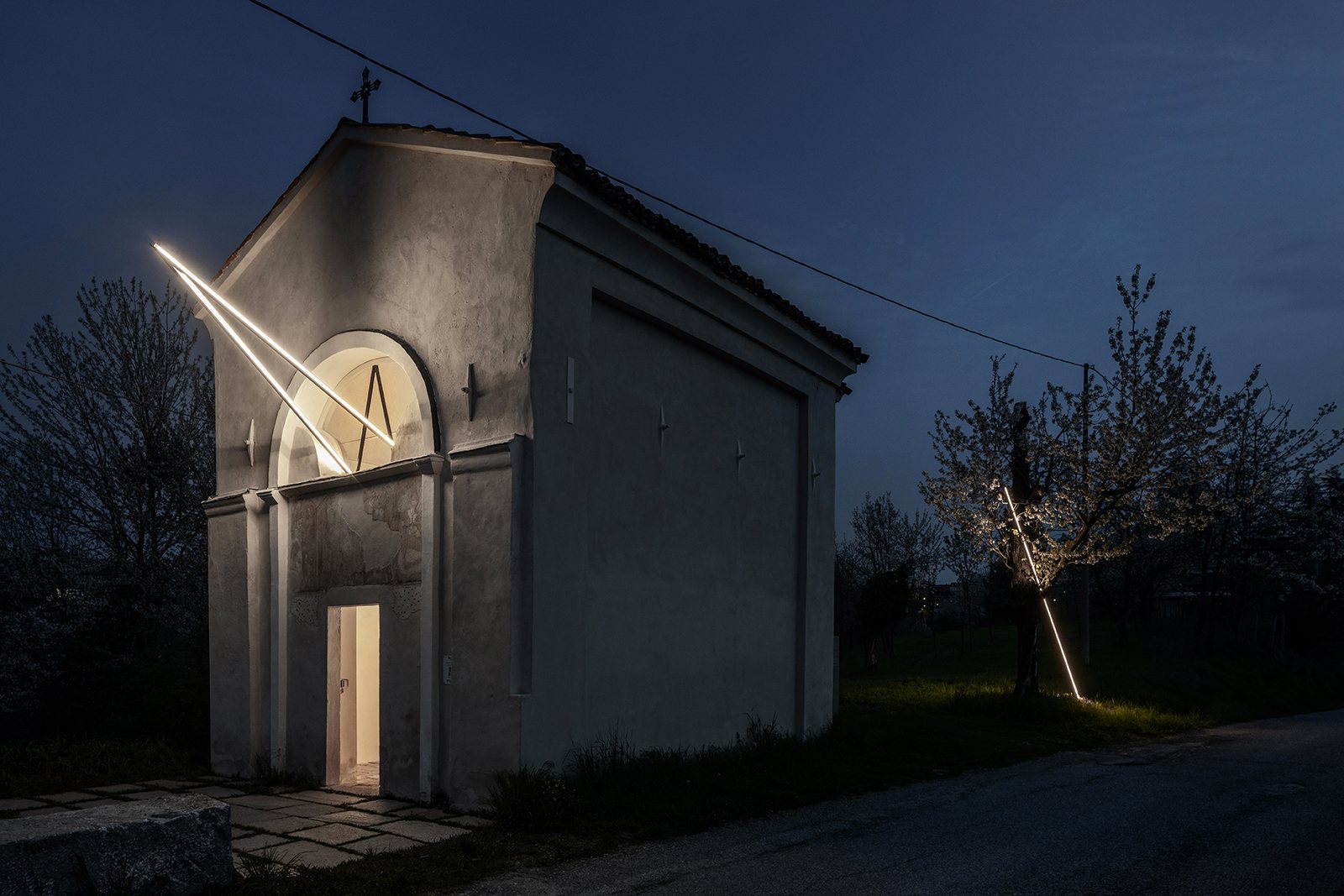
2. Miracle connects a chapel, a tree and the route towards the Sanctuary of Vicoforte. Your account of the project also describes the unexpected flowering of a fire-damaged cherry tree. How did that event affect your understanding of the work, and how much room does your process allow for a place to change your original idea?
Encountering a place in person almost always changes the idea I had formed before visiting it. Images and information allow the research to begin; being there, moving around and listening can introduce elements that profoundly change the project.
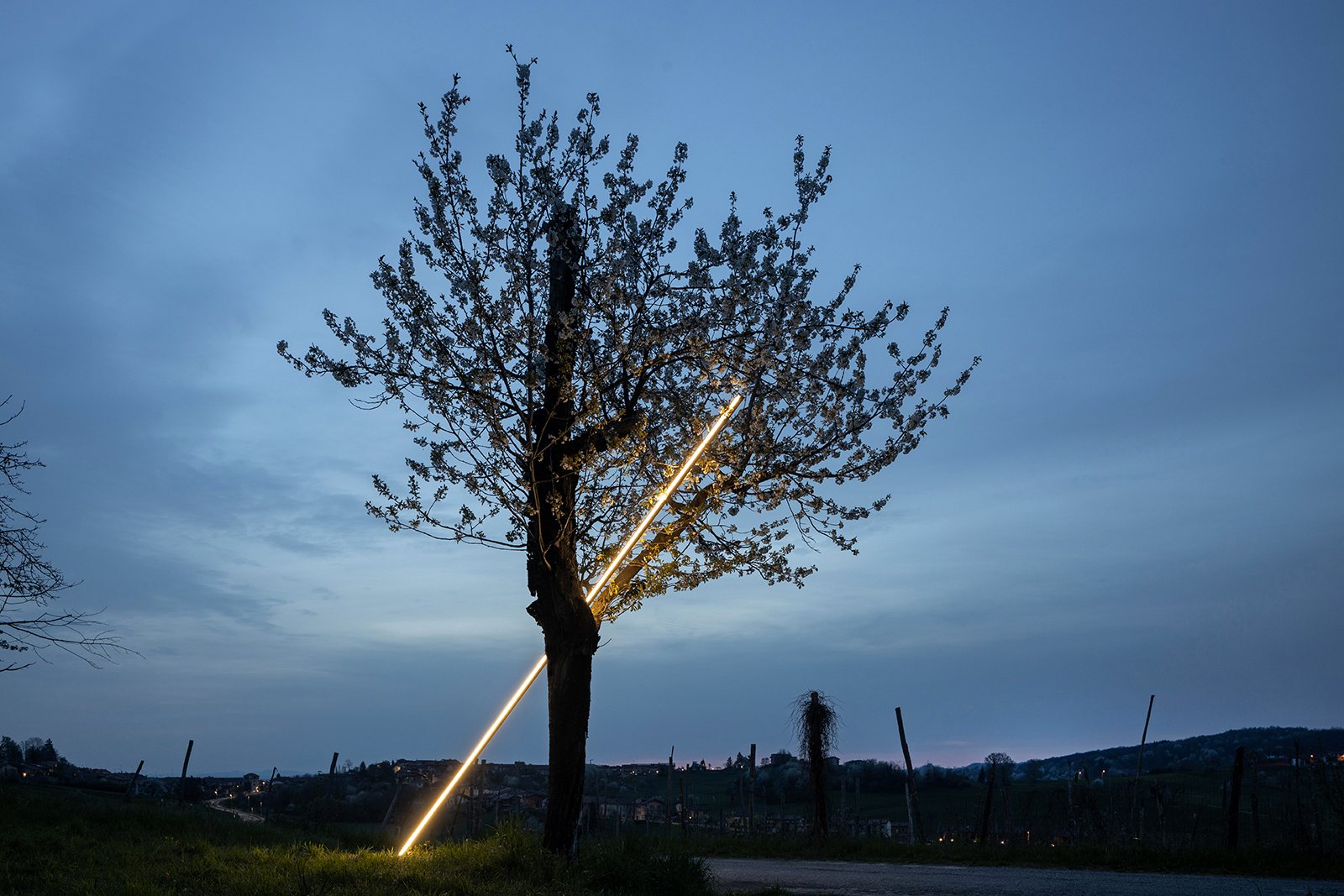
For Miracle, I had imagined a living tree inside the chapel, in relation to the burnt cherry tree outside, which had shown no signs of life for years. As the work developed, that cherry tree unexpectedly began to bud and then blossomed. At that point, I decided not to include the tree I had planned to place inside.
The transformation I had imagined through the relationship between the two trees was already taking place on site. Allowing that event to shape the work changed its balance and meaning. For me, working in relation to a space also means allowing what happens there to alter my intentions.
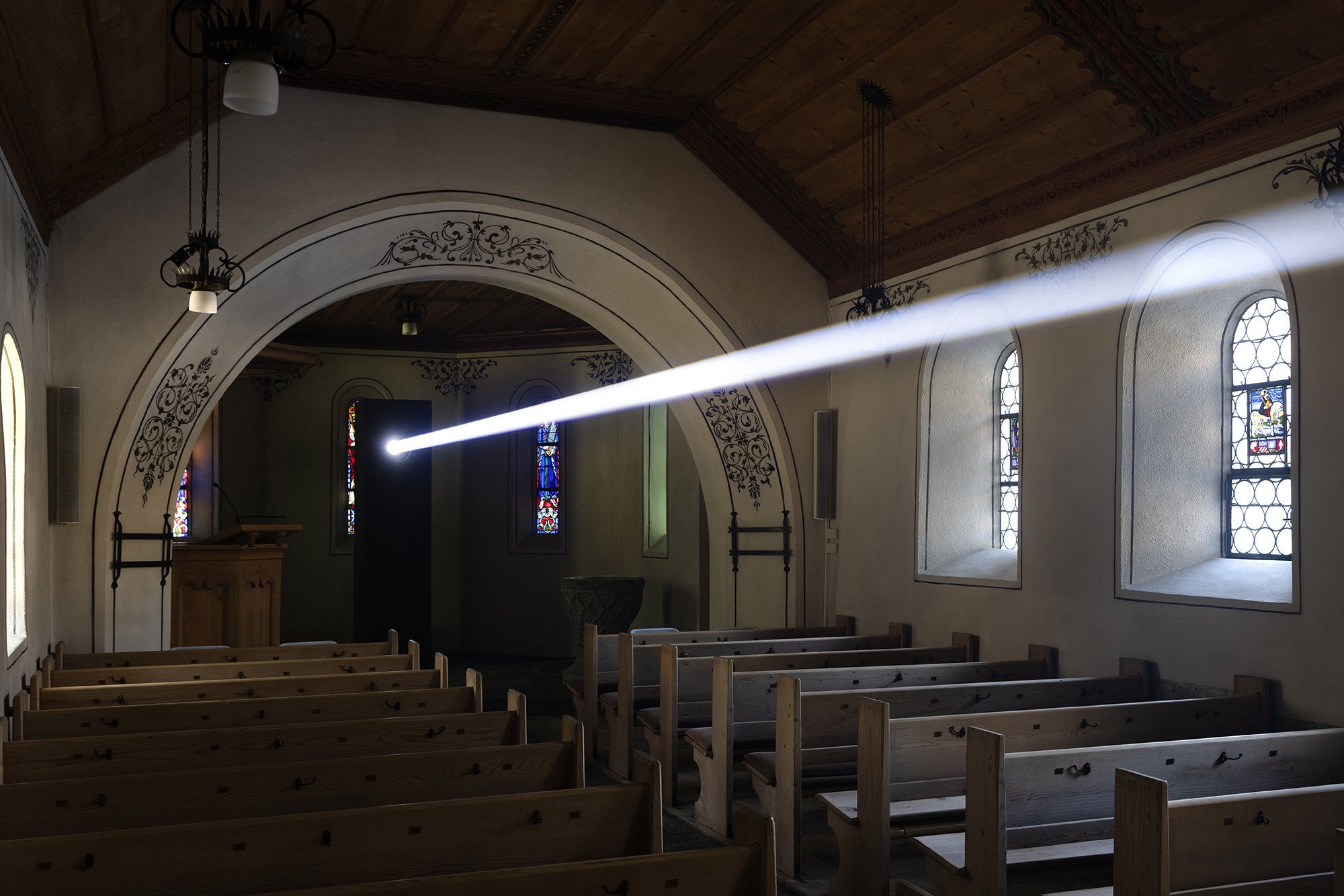
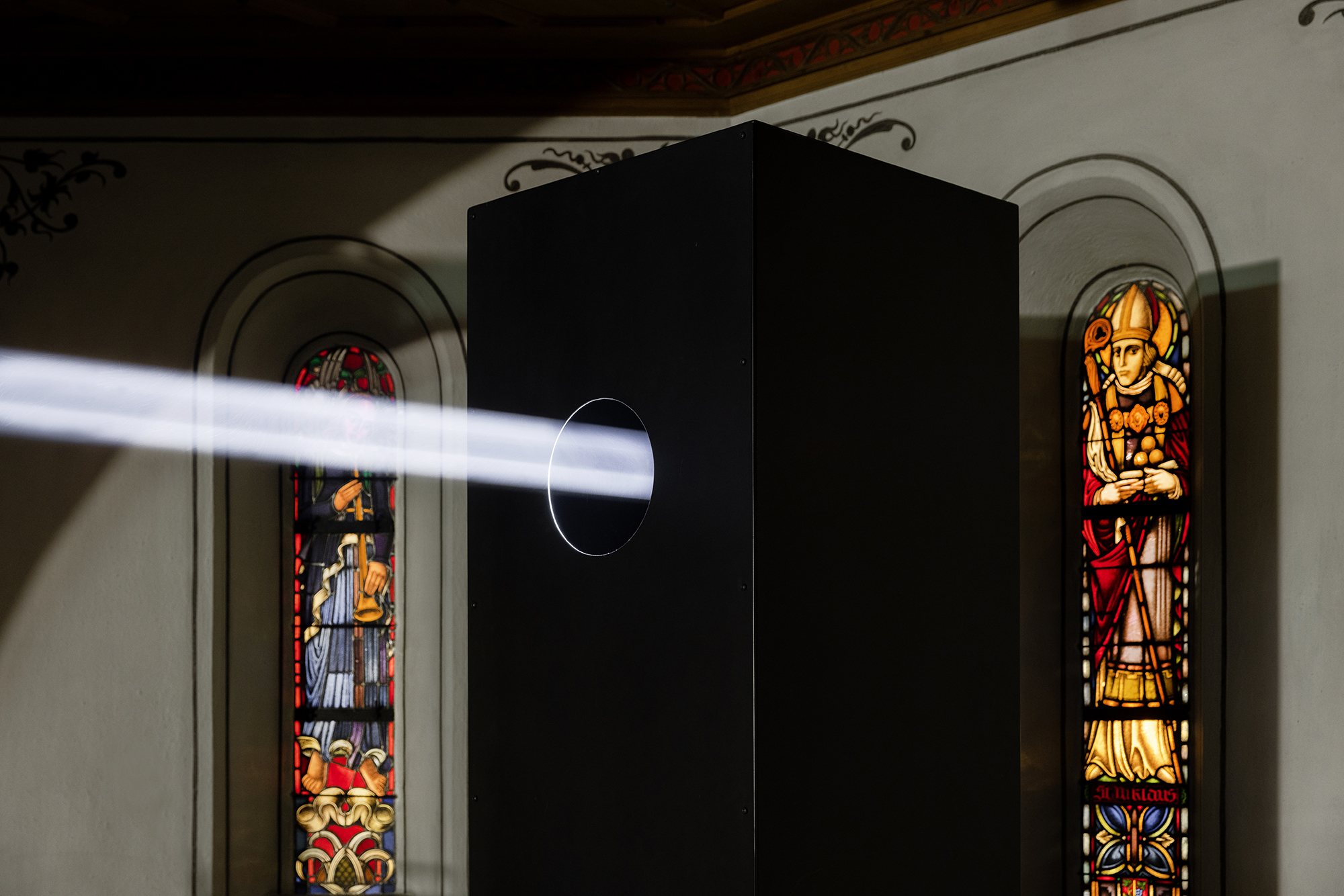
3. For Liminal Journey, you composed sound from local river recordings and electromagnetic recordings made in the chapel. How do listening and field recording influence your decisions about light? Can you recall a moment when something you heard changed what you wanted visitors to see?
In my practice, I associate sound with space: it moves through it, conveys its resonances and makes us feel immersed in an environment. Light is connected with time, with change and with the duration of our gaze. These two dimensions meet in the experience of those who enter the work.
In Liminal Journey, the recordings of water and of the chapel’s electromagnetic fields connect the surrounding landscape with the interior. Listening helps me consider what kind of presence light might have in that environment and what relationship it might establish with the body. The visual and sonic choices develop as part of the same research.
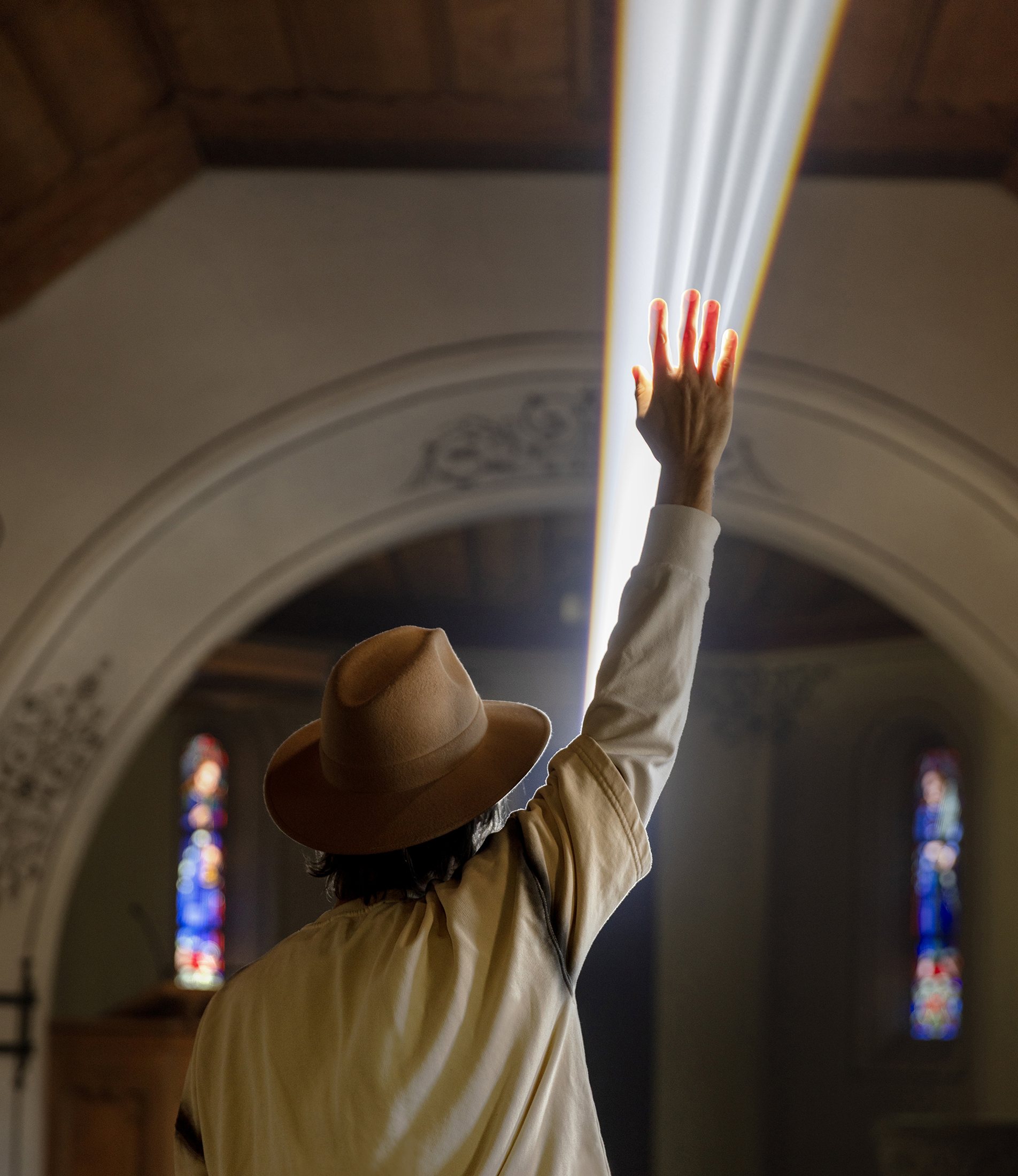
What matters to me is that those who enter can feel present in the moment: being there, in that space and at that time. Light and sound work together to create this state of attention.
4. In Terlo Night Harvest, light supports the practical work of harvesting while also shaping an artistic experience. What did working alongside the harvesters teach you about the relationship between an installation and the people who use a place? Did it change your understanding of who the work is for?
I think of my works as experiences open to everyone who encounters the place. In Terlo Night Harvest, this includes both those who come to see the installation and those taking part in the harvest. Light accompanies a real activity, and the work takes shape through the gestures of harvesting, the movement between the rows of vines and the rhythms of nature.
Here, the relationship with the people working in the vineyard shows how an installation also belongs to the life of a place. Every presence contributes to the work, bringing a different intention and a different kind of attention.
For me, art is about feeling alive: sensing our presence in space, alongside others, listening to what surrounds us.
5. Across these projects, light takes on different roles: marking a passage, connecting places, supporting work and directing attention. What underlying question keeps bringing you back to it, and, ultimately, what would you like people to carry into their everyday lives after encountering your work?
The fundamental question is: what does a place hold, and what happens to those who pass through it when that is revealed?
My work begins with a clear intention: to open a passage between the material and the immaterial within places, so that those who move through it can step outside themselves and feel the world expand. I would like people to experience that moment. If, after encountering a work, someone looks at their everyday life through slightly different eyes, then that passage has taken place.
Project Credits
Interview: Rafael Cunha
Artist: Emilio Ferro / @emilioferroextra
Photography: Roberto Conte / @ilcontephotography