Now Reading: The making of Alex Chinneck’s impossible Dior windows
- 01
The making of Alex Chinneck’s impossible Dior windows

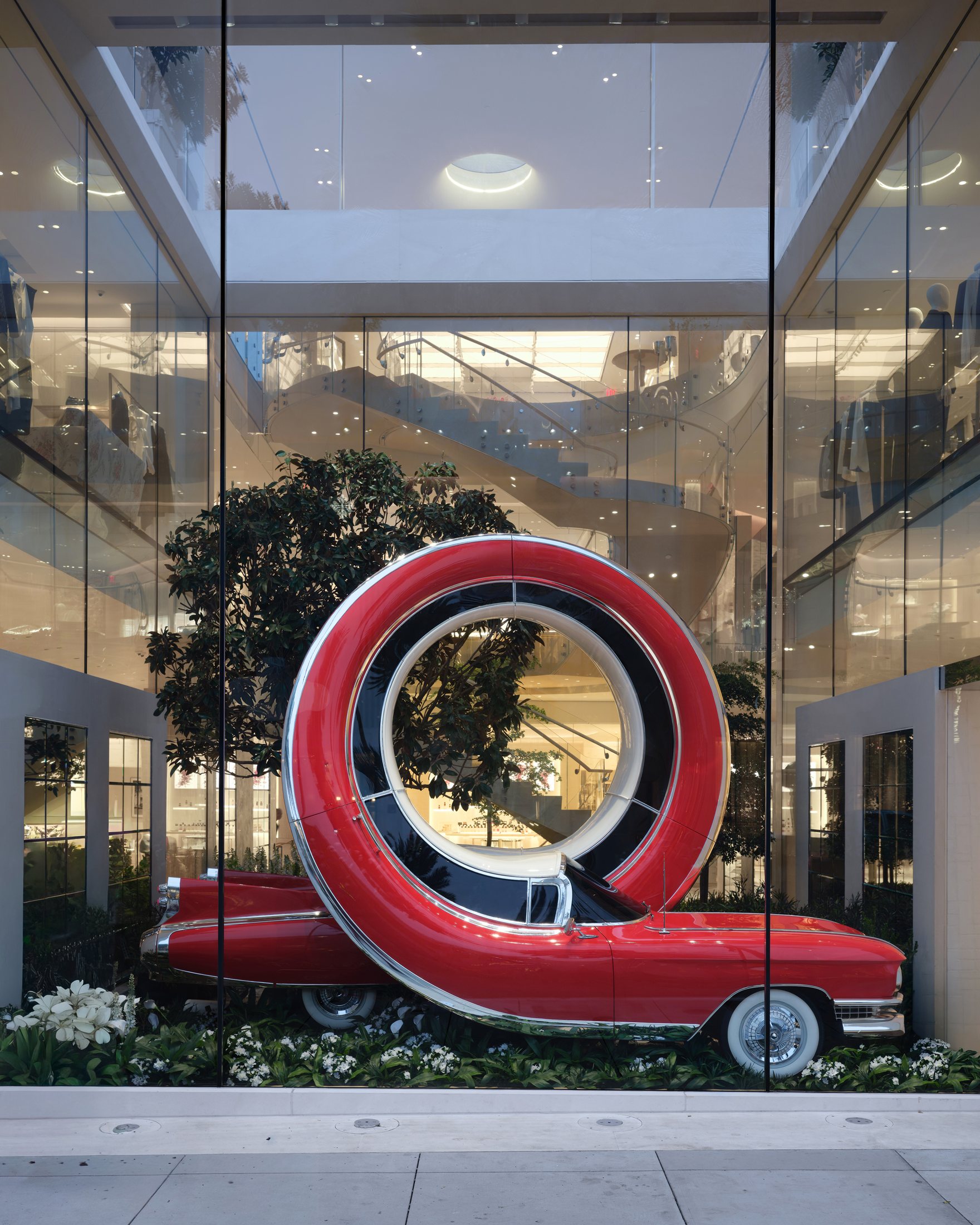

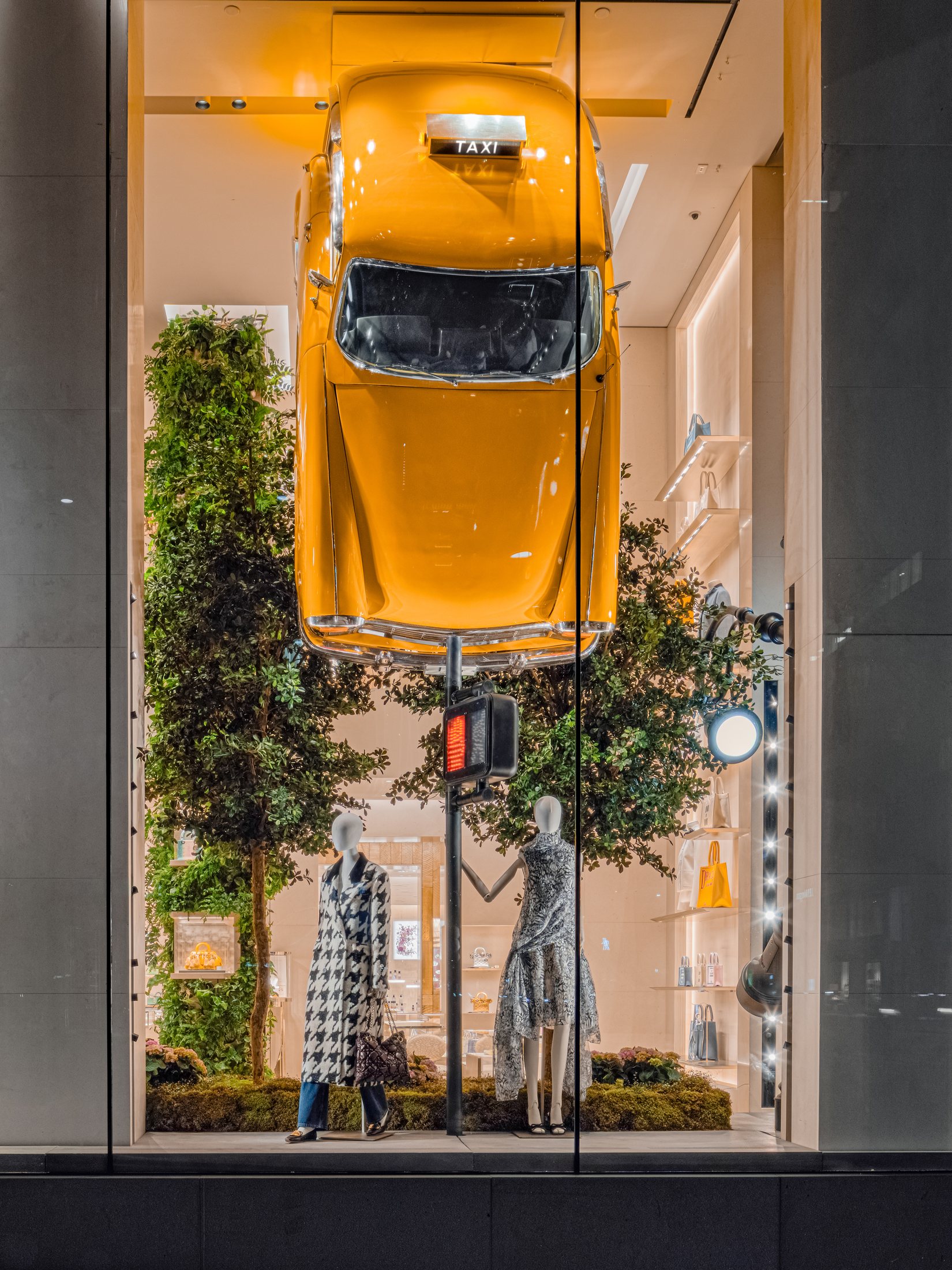
A yellow taxi hangs almost vertically in Manhattan. On Rodeo Drive, a red car curls into a complete loop. For Dior, Alex Chinneck has taken objects associated with movement through the city and made them appear to surrender their usual weight and rigidity.
The collaboration comprises nine sculptures for House of Dior New York on 57th Street and five for House of Dior Beverly Hills. Announced in May 2026, the displays translate local street furniture and vehicles into compositions that draw on ribbons, bows and the drape of clothing. Workshop photographs supplied directly by Chinneck offer another way into the project: through the separate components, unfinished surfaces and assembly work behind the polished installations.
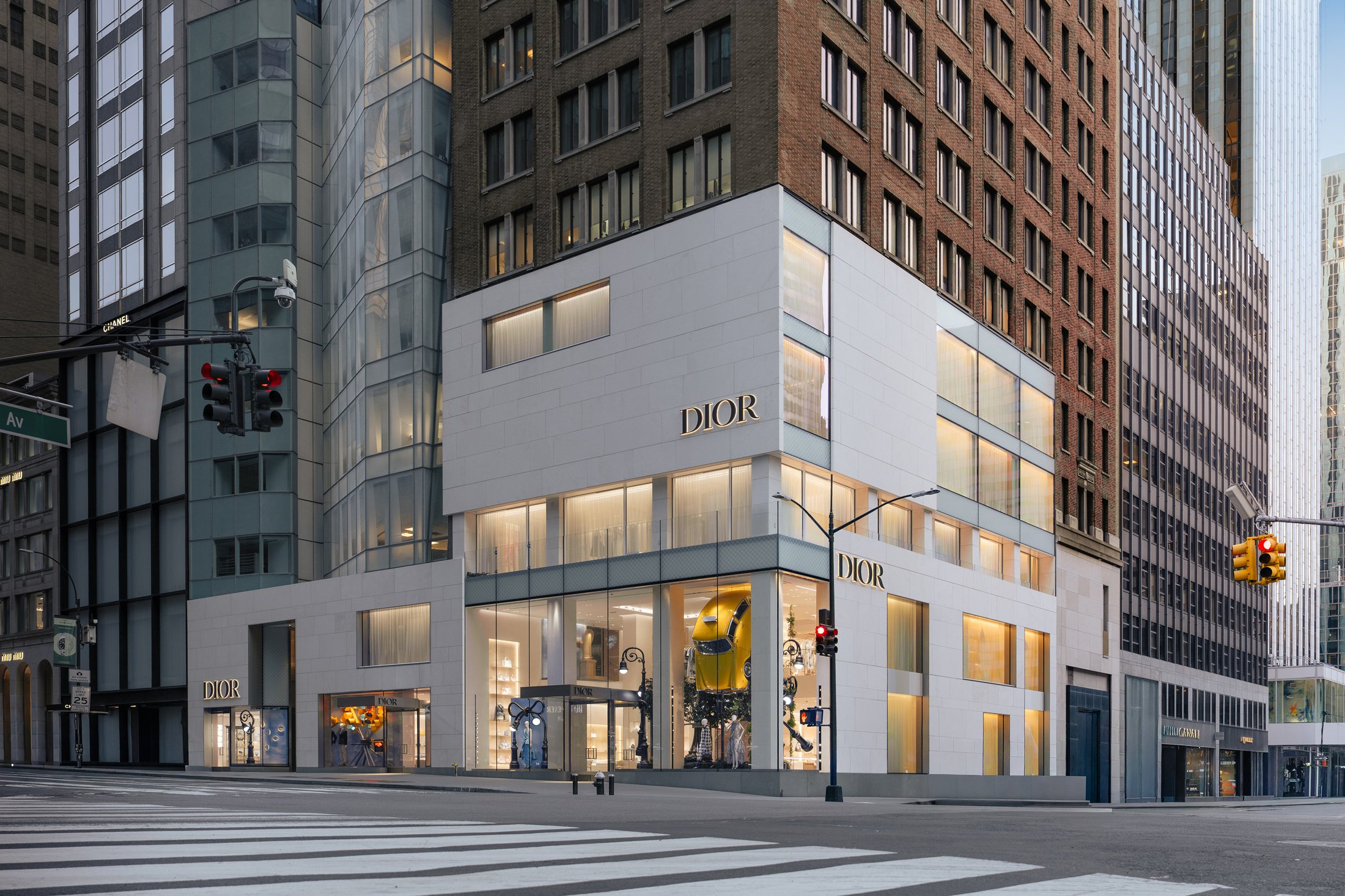
New York, gathered and tangled
In the New York taxi display, the car’s steep orientation unsettles the relationship between vehicle, street and shopfront. Its familiar yellow body remains easy to recognise, while the planting below brings a second, apparently incompatible setting into the scene. Viewed from outside, the taxi becomes an interruption within the otherwise regular geometry of the glazed facade.
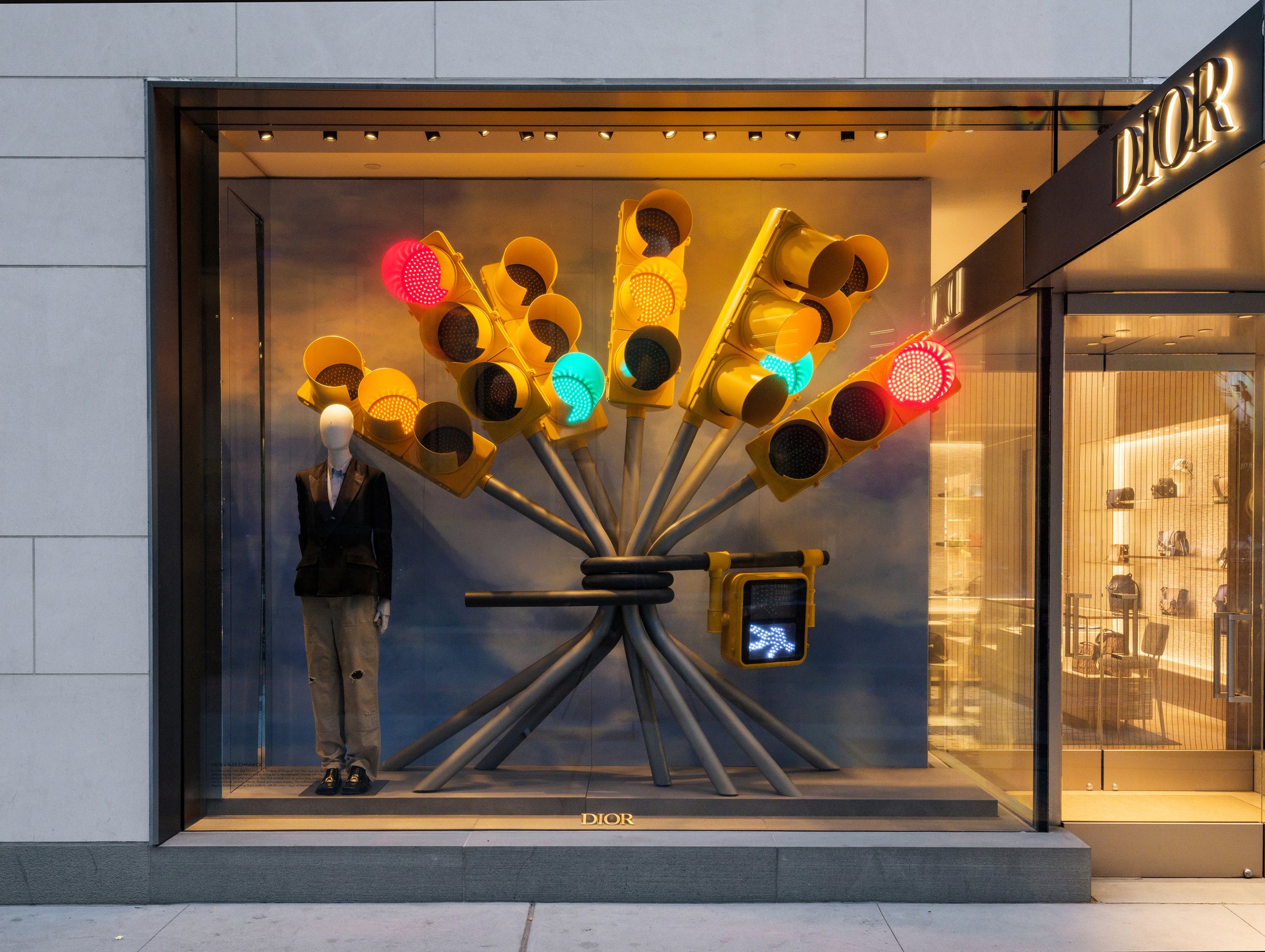
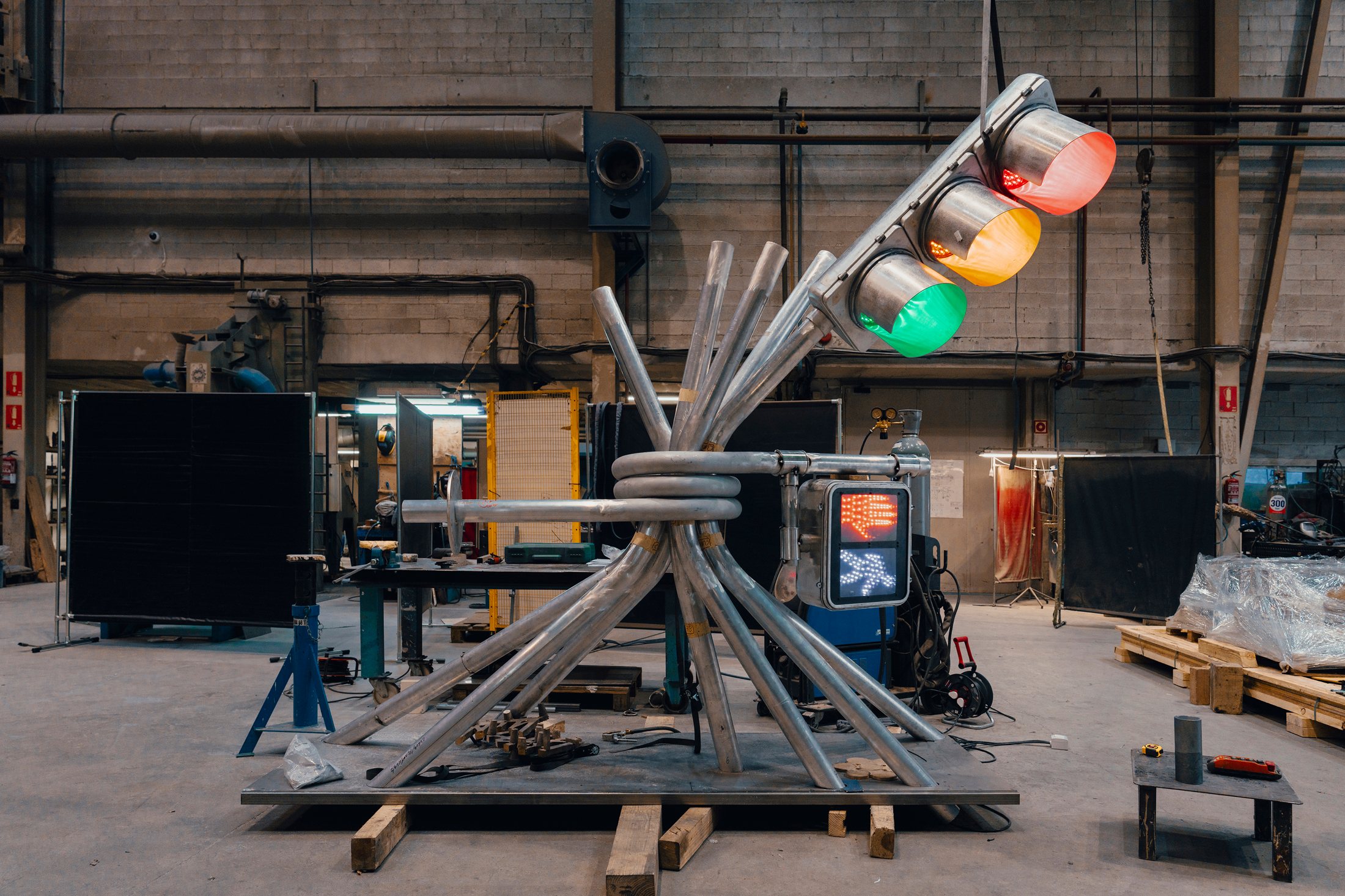
Elsewhere, traffic lights spread like the heads of a bouquet. Their poles converge and appear to bind one another at the base, converting an apparatus for directing movement into a dense, stationary cluster. Red, amber and green lenses retain the visual vocabulary of the street even as their arrangement abandons its practical logic.
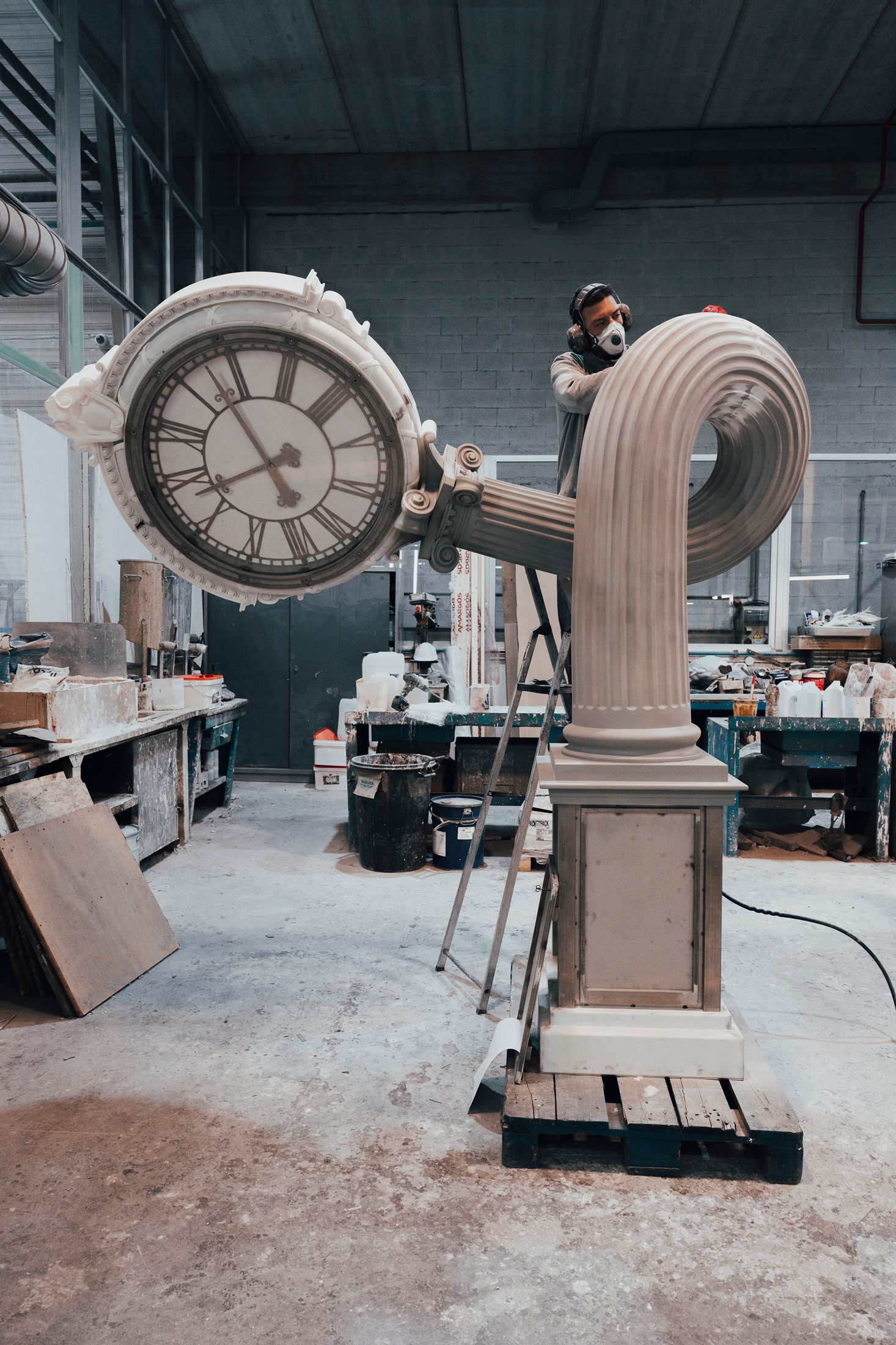
The clocks explore a related transformation through fluted columns. Some supports knot or turn back on themselves; another describes a broad loop beneath the clock face. The repeated grooves are important to the illusion: following the curve, they make the distortion seem to belong to the object’s construction rather than sit on top of it.
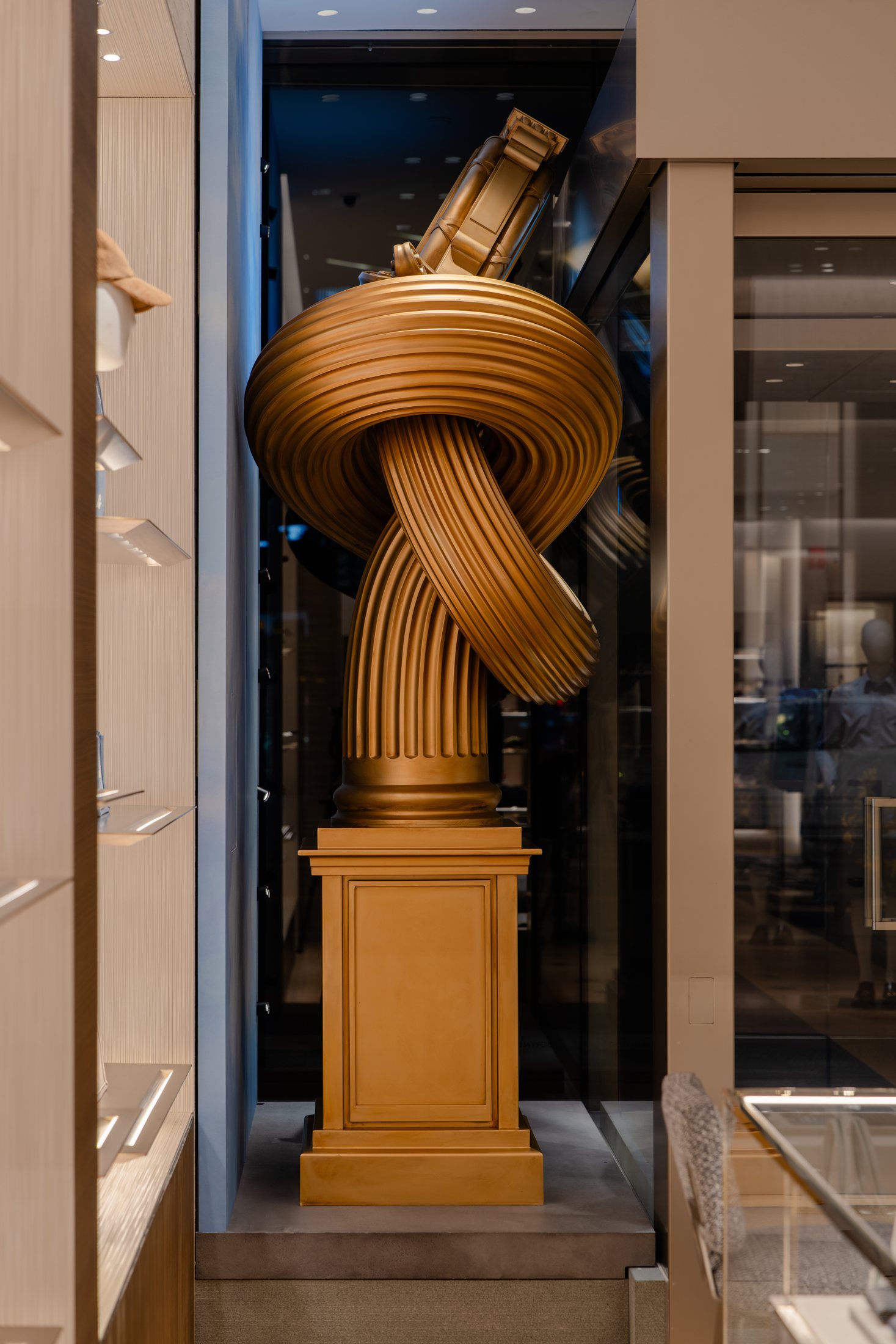
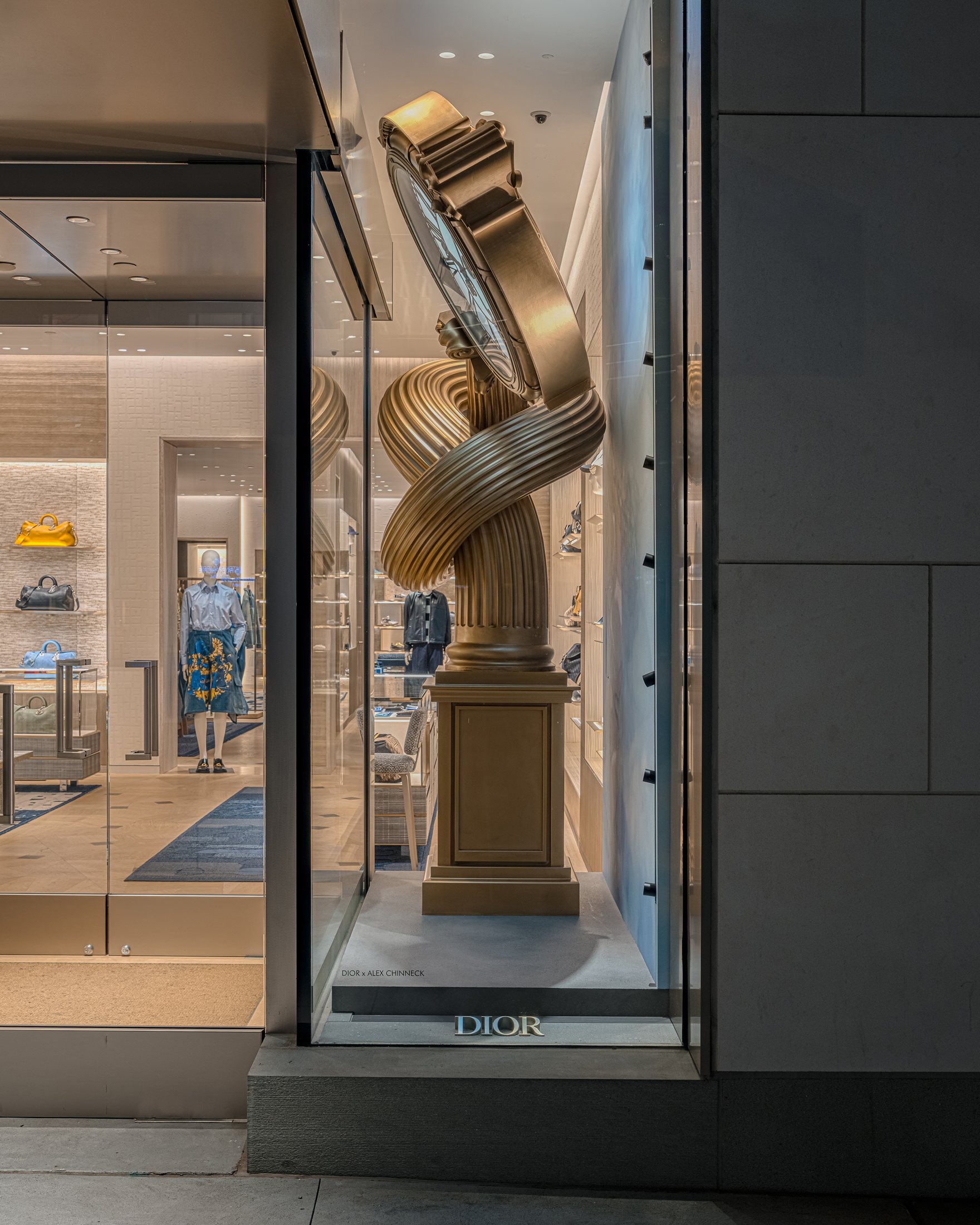
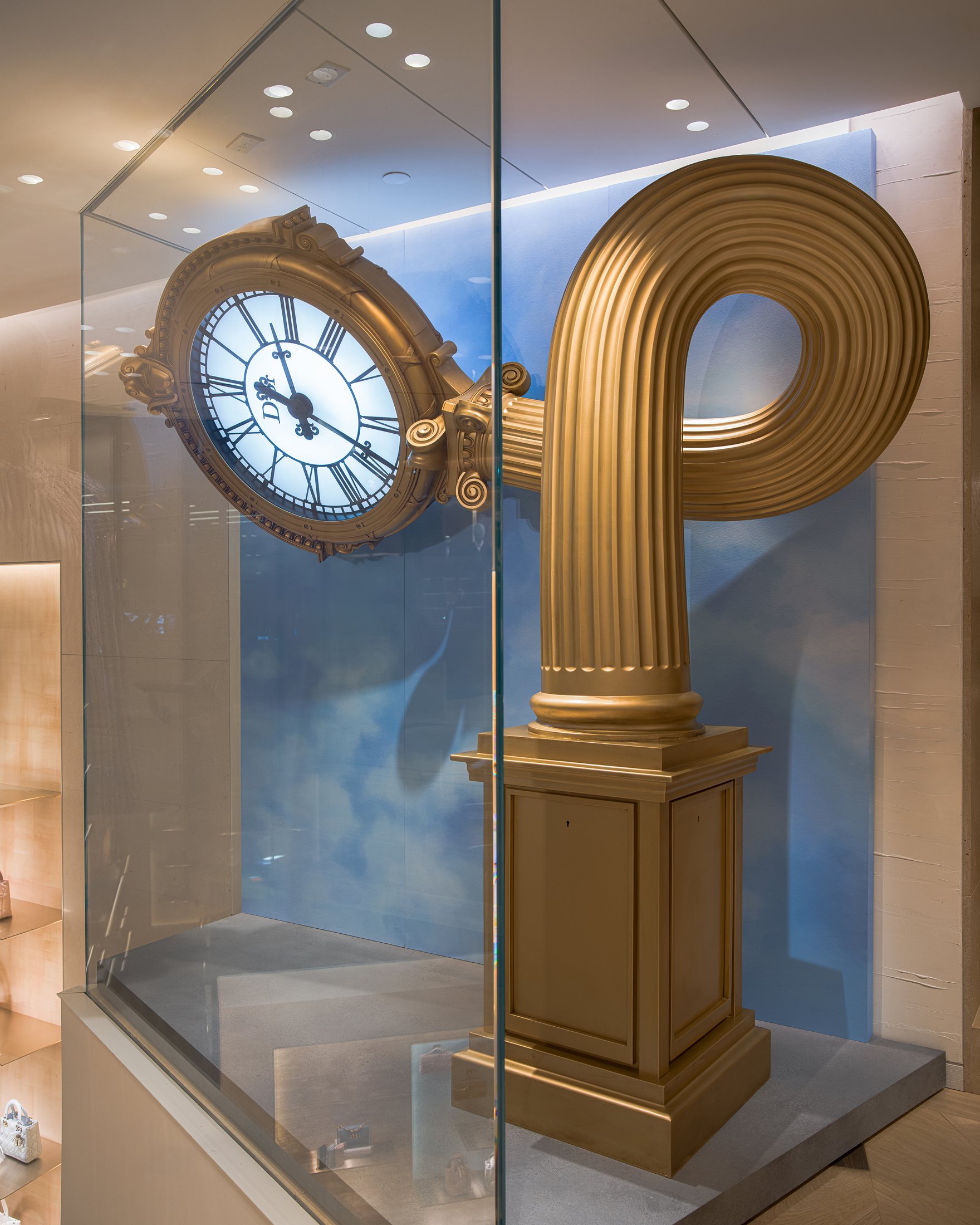
In an interview with 10 Magazine, Chinneck described a design process spanning fifteen months, developed with Dior around each space’s architecture and the placement of dressed mannequins. He connected the New York group’s contrasting personalities to Manhattan’s concentration of strong, overlapping identities.
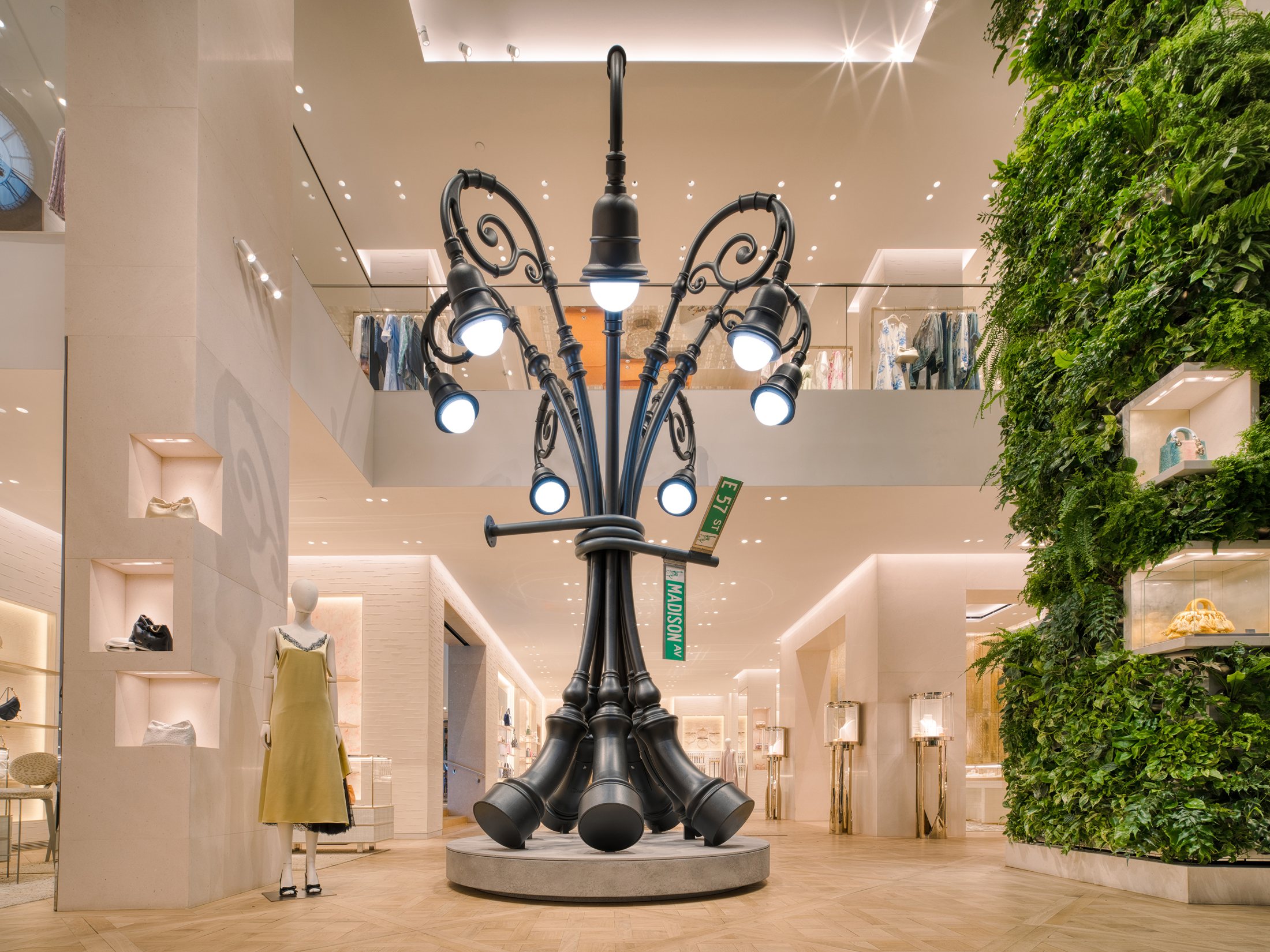
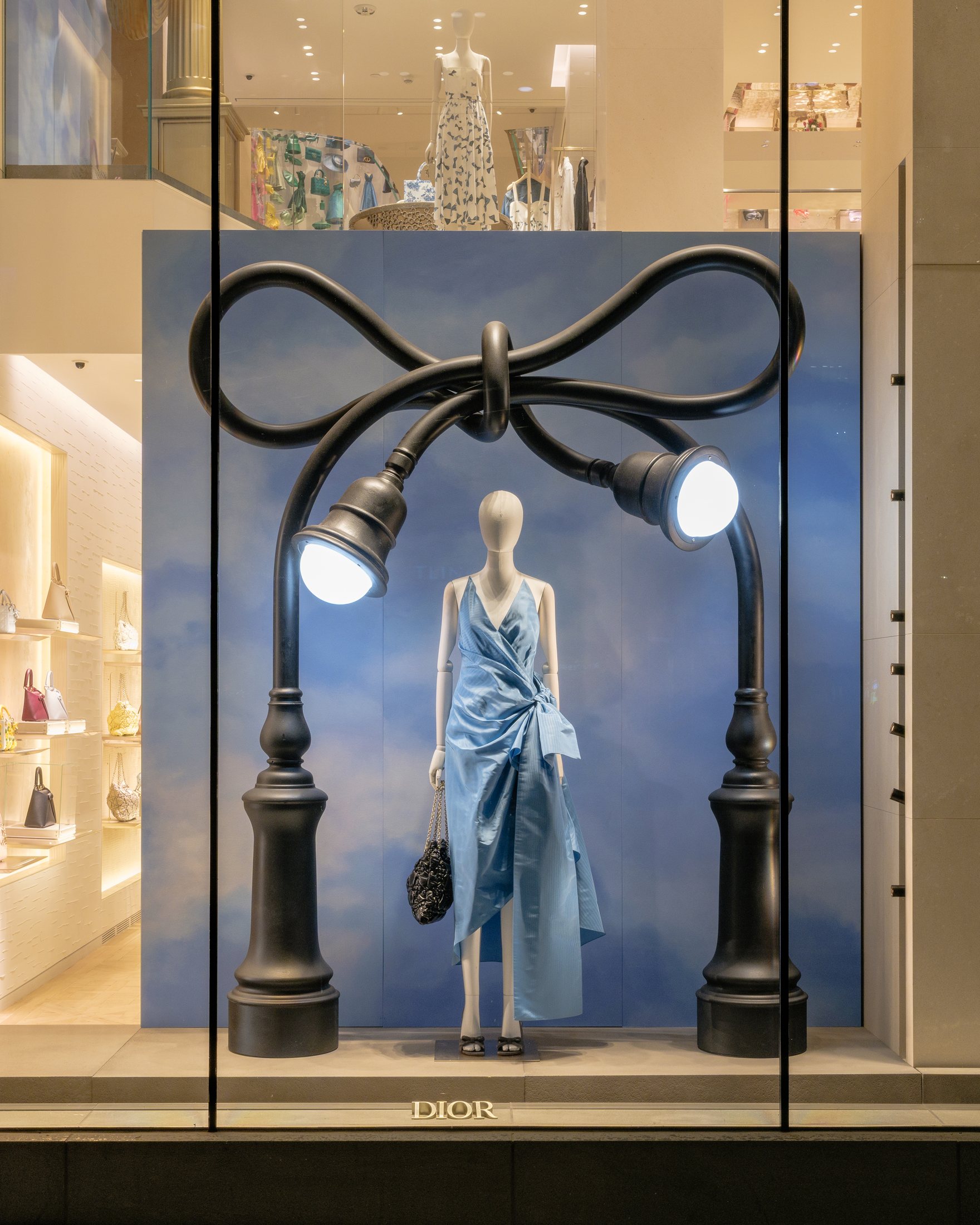
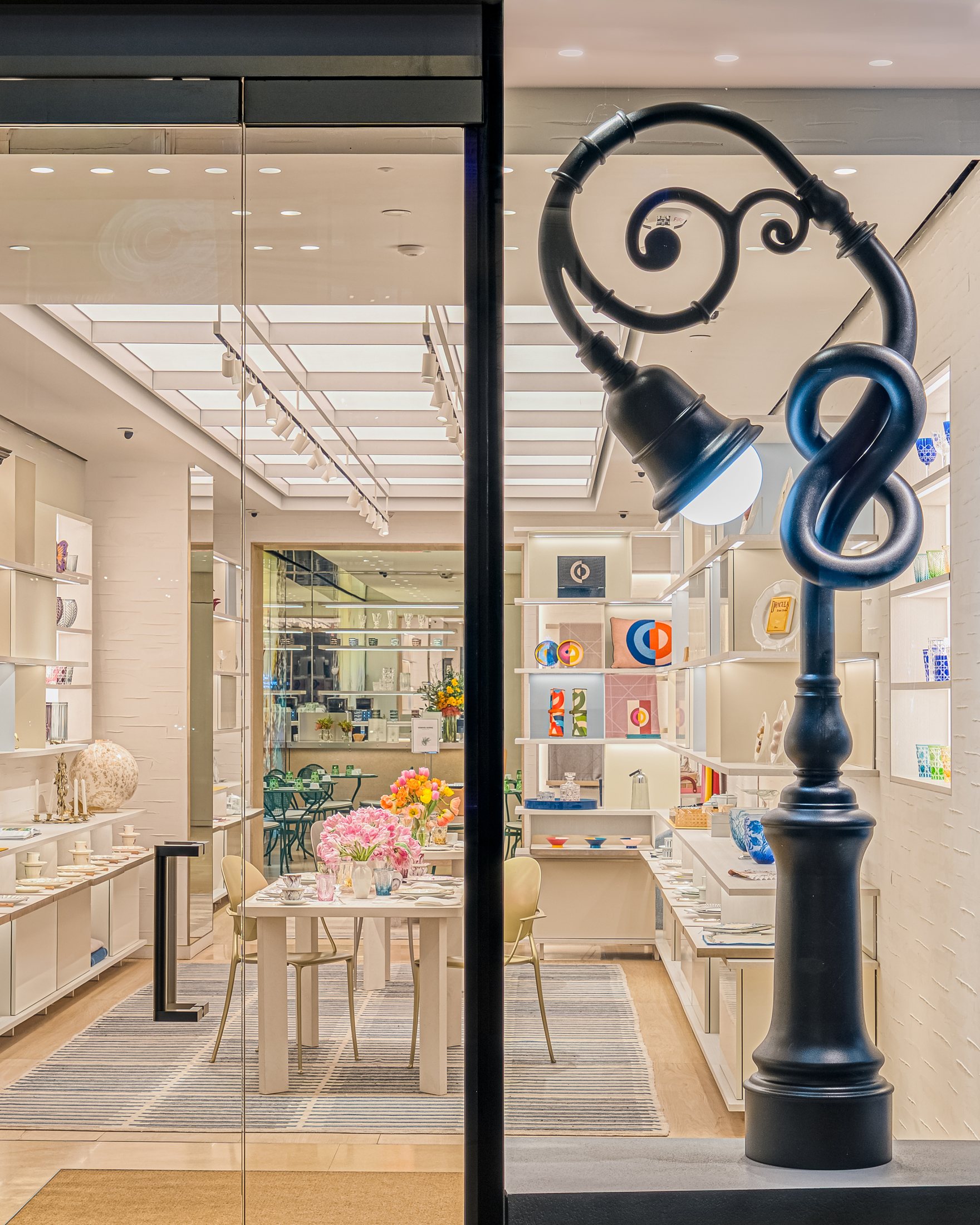
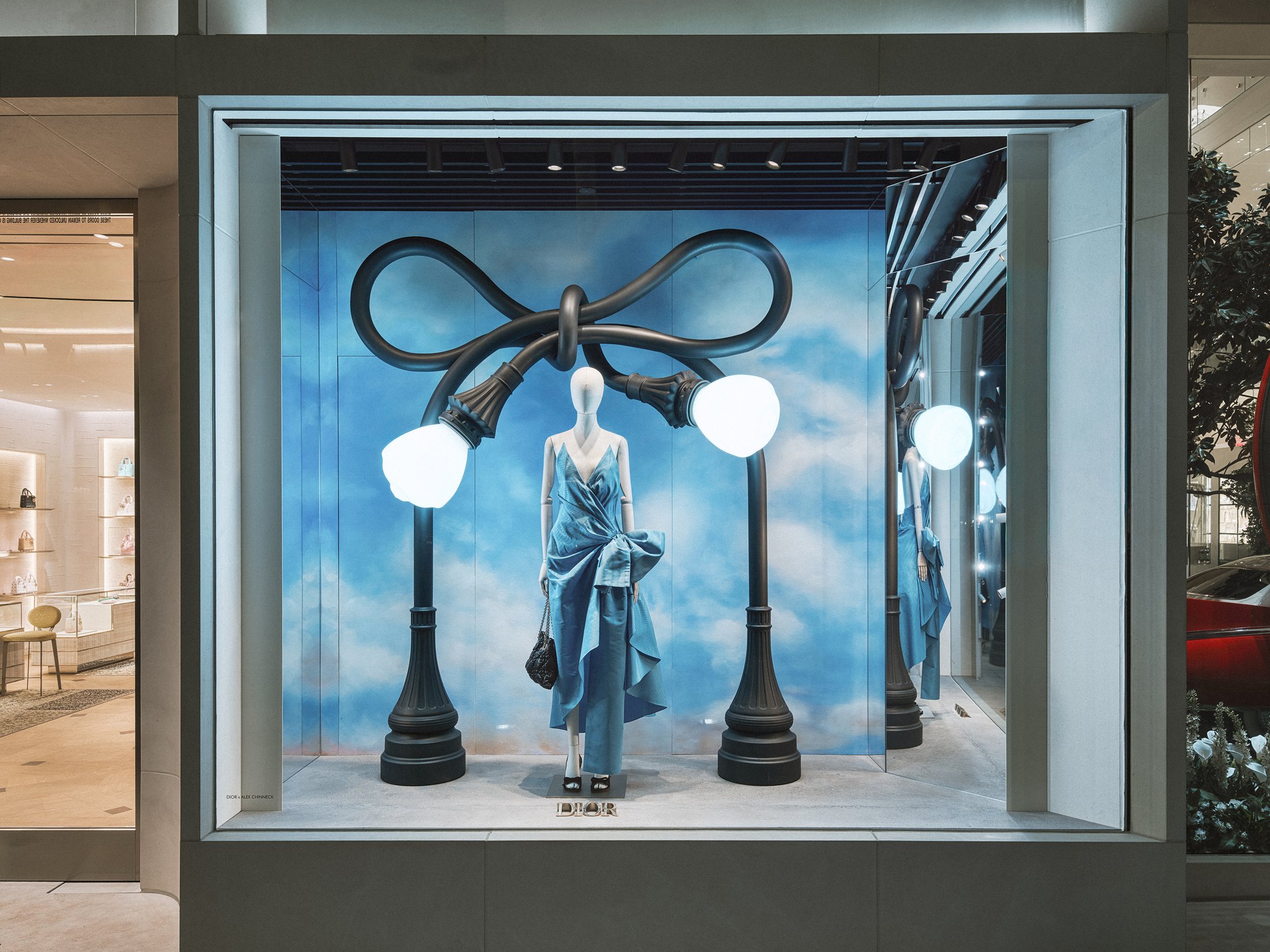
The connection to fashion is particularly direct in the lamps. A pair of stems forms an oversized bow above a dress, while another lamp curls inward around its own light. Chinneck linked the bow to Dior’s visual identity and the clustered lanterns to lily of the valley, a recurring flower in the house’s archive.
Beverly Hills, a different curve
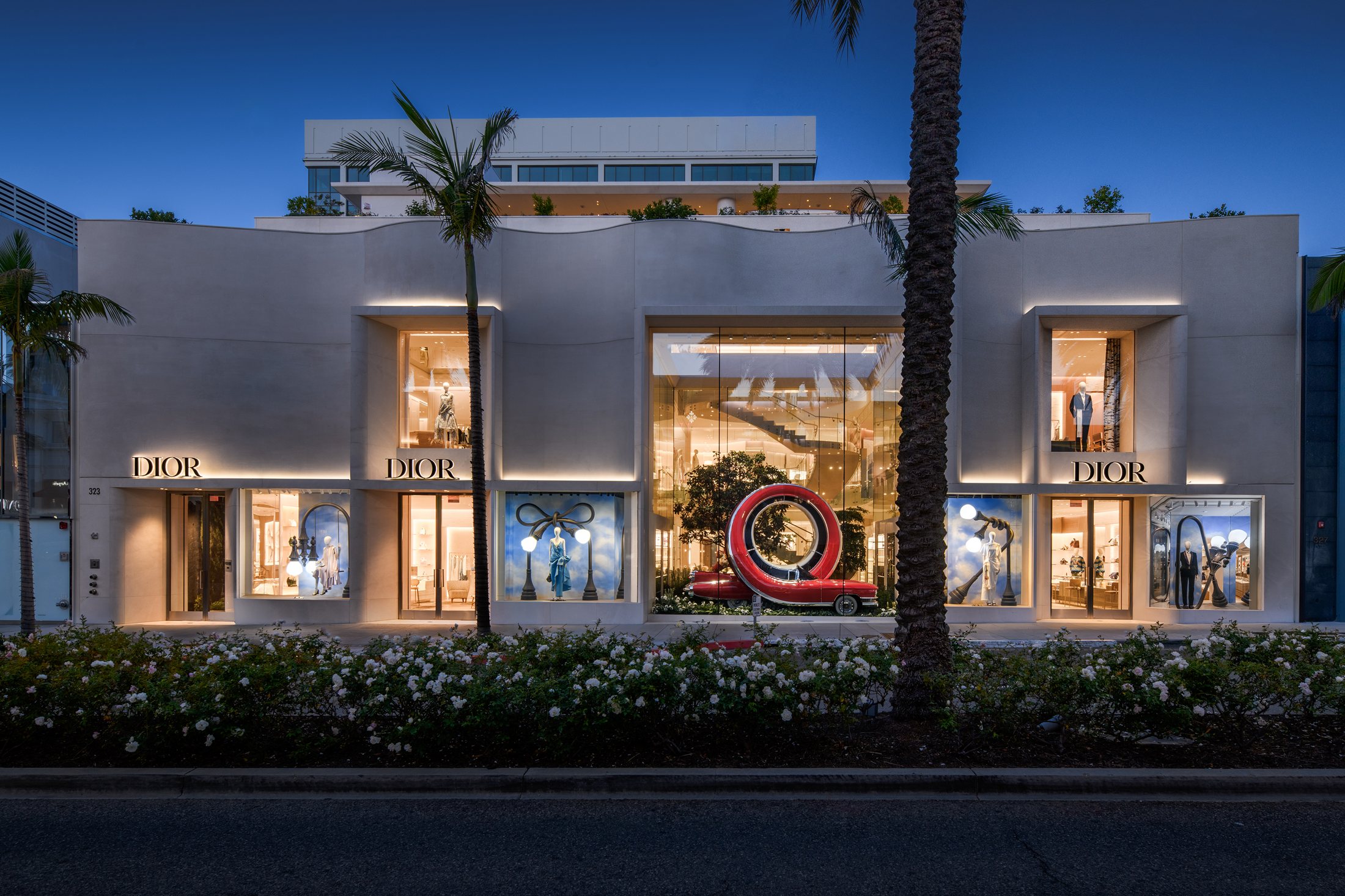
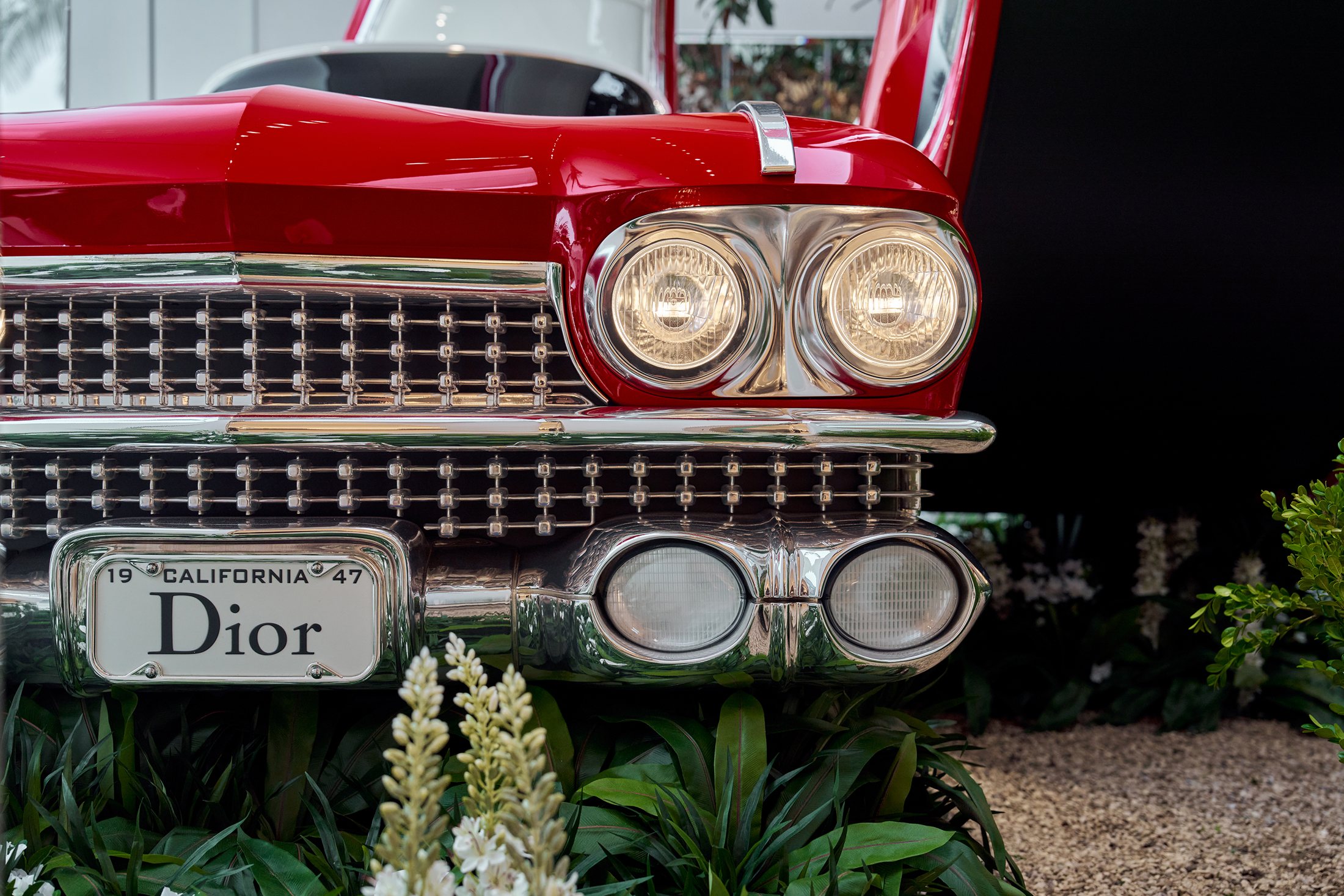
At Beverly Hills, the red car’s vertical circle occupies the central glazed space. Its front and rear still read as parts of a recognisable vehicle, but the elongated body between them rises into a continuous ring. The bright finish gives the sculpture the visual confidence of an automobile on display, even as its geometry makes driving impossible.
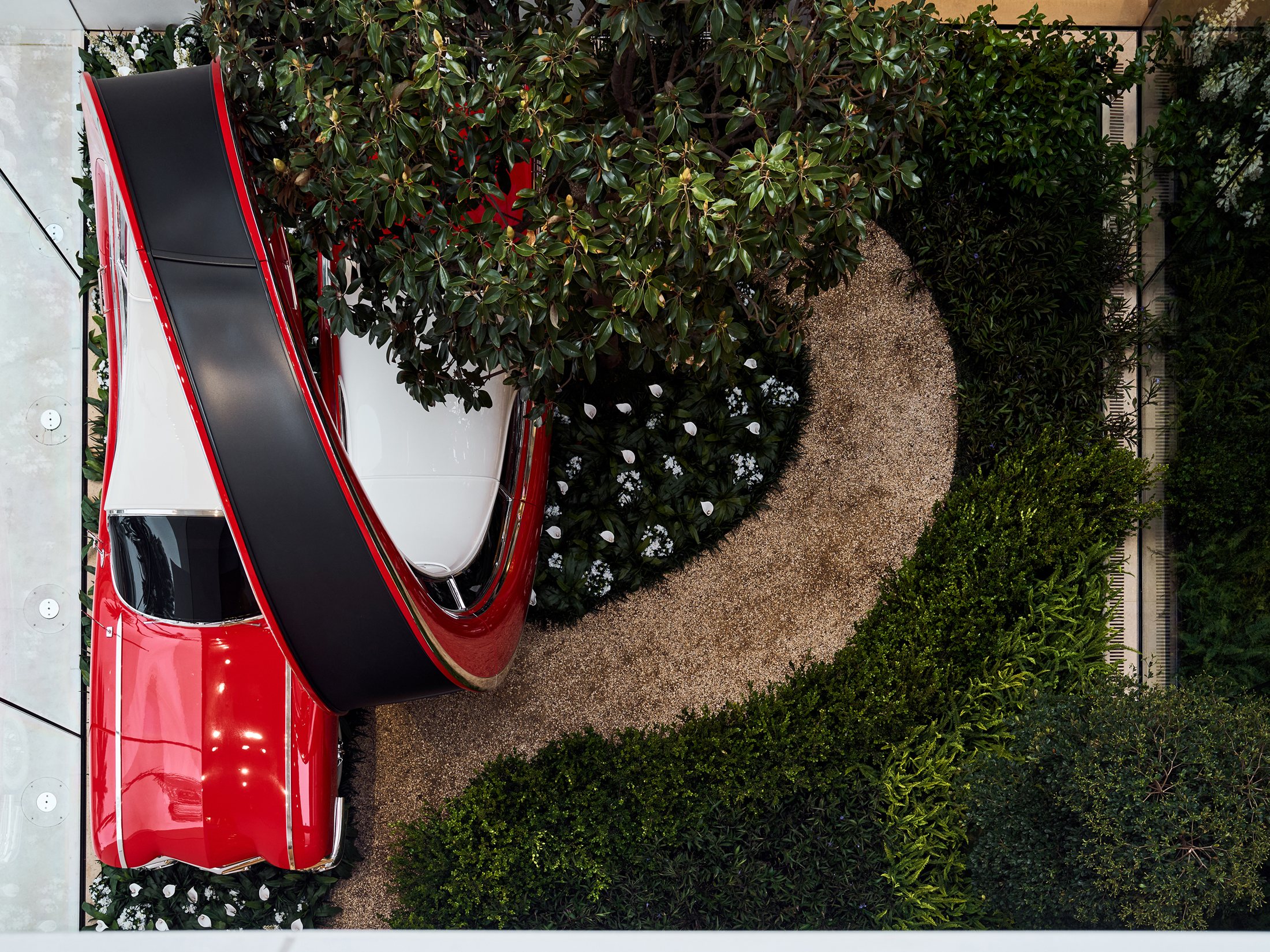
An overhead view reveals how the looping body sits within a planted setting. At close range, the grille, paired headlights and Dior plate preserve the object’s automotive detail. These recognisable features are essential: the transformation remains convincing because so much of the car’s appearance has been carefully retained.
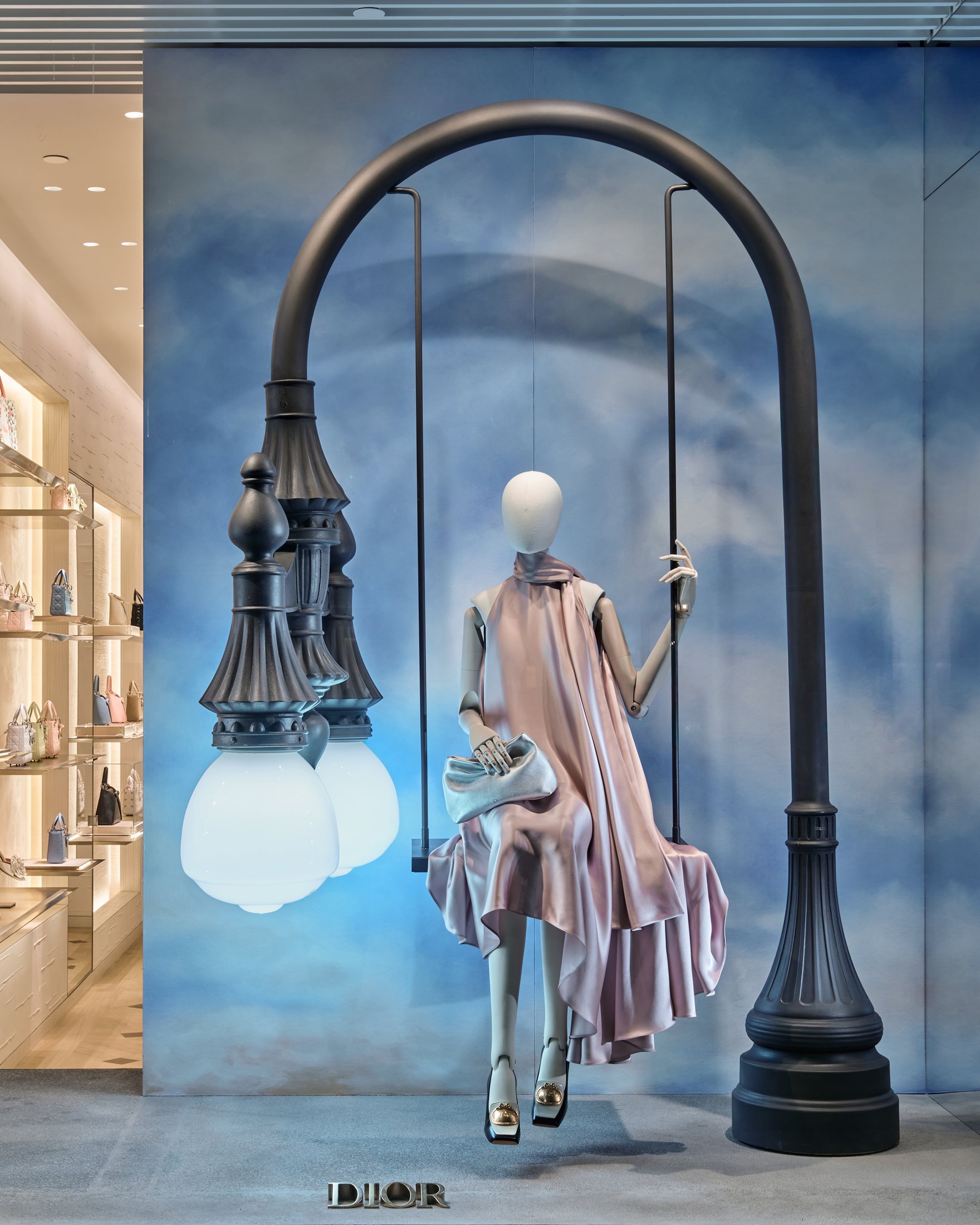
The other windows bring the curve closer to the body. An arched lamp supports a swing occupied by a dressed mannequin, while a separate arrangement ties lamp stems into a bow. Chinneck told 10 Magazine that the Beverly Hills works drew on Rodeo Drive’s nostalgic character, developing a calmer and more fluid atmosphere than their New York counterparts.
Inside the making
The five fabrication photographs shift attention from this effortless appearance to the work needed to produce it. In one image, a craftsperson works on the curved, fluted support of a street clock. The pale surface and surrounding equipment make the column legible as an object under construction, before its finished colour brings the separate details into a unified image.
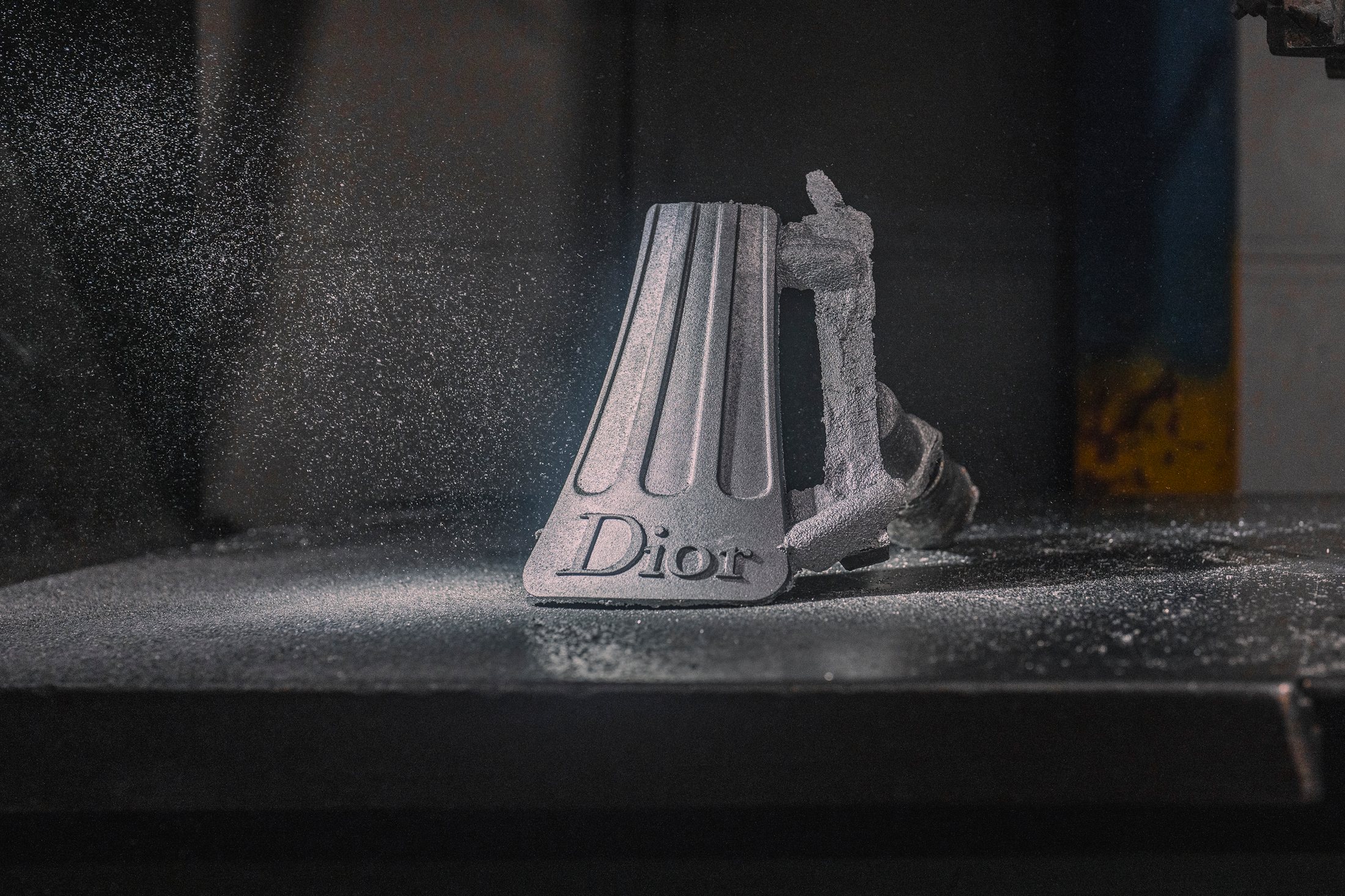
Another photograph isolates a fluted base component carrying the Dior name. It shows how closely the brand is incorporated into the sculptural object itself. Enlarged against the workshop background, the unfinished part draws attention to edges, relief and surface detail that are much less apparent in a full view of the window.
The lamp assemblies can be examined at a larger scale in the workshop images. Ornamental heads, curved stems and substantial bases gather into a freestanding cluster. In the traffic-light photograph, the converging poles sit on pallets among equipment, allowing the viewer to compare their complicated junction with the smooth silhouette of the completed display.
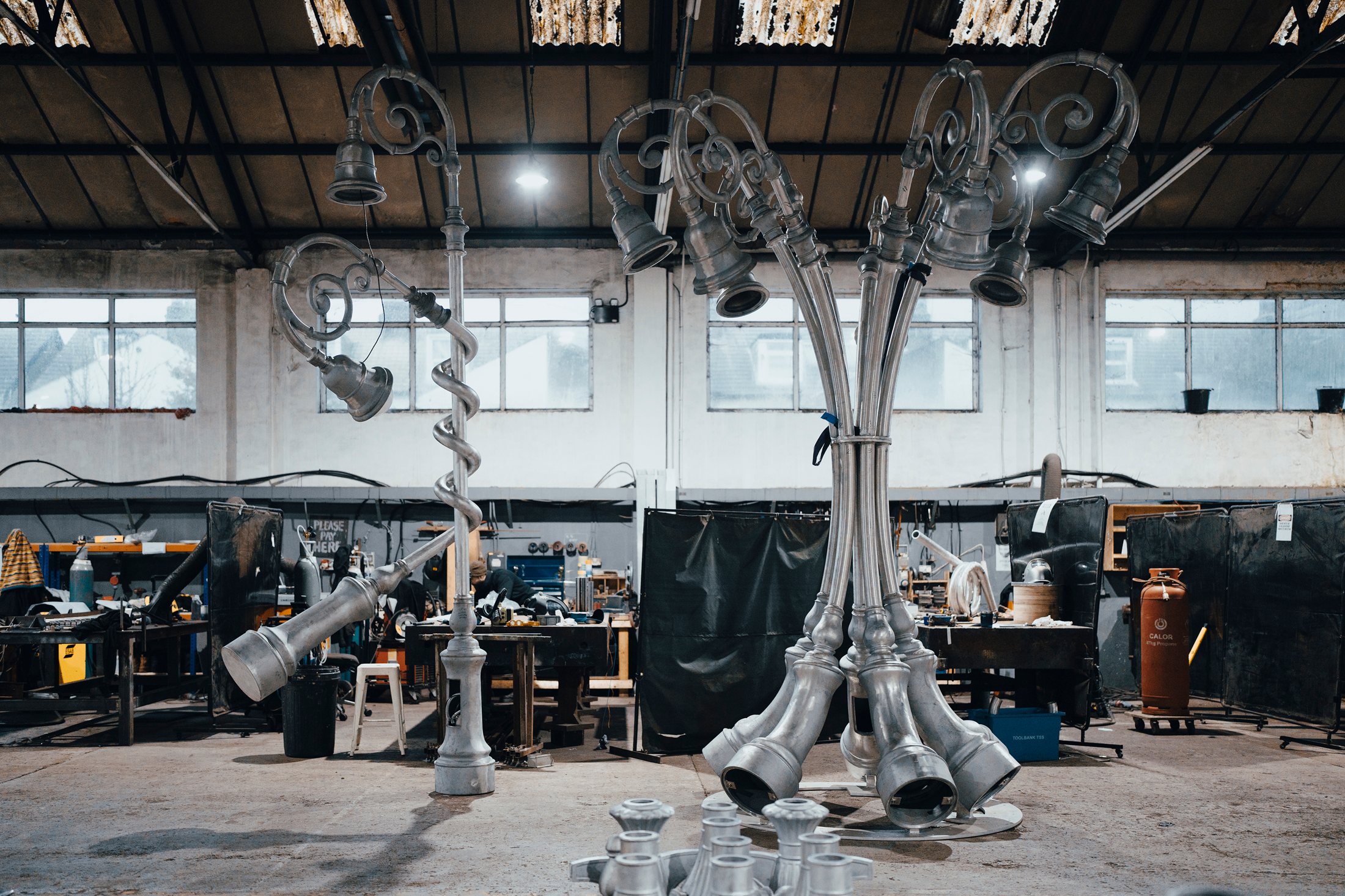
Fabricator millimetre confirms that it produced nine sculptural lamp posts for the two stores. Its account identifies seamless aluminium welding, precision-rolled tube, hand-blown glass lanterns, custom 3D-printed components and bespoke battery-powered systems. The combination brings specialised metalwork, glassmaking and digital fabrication into the same sculptural assembly.
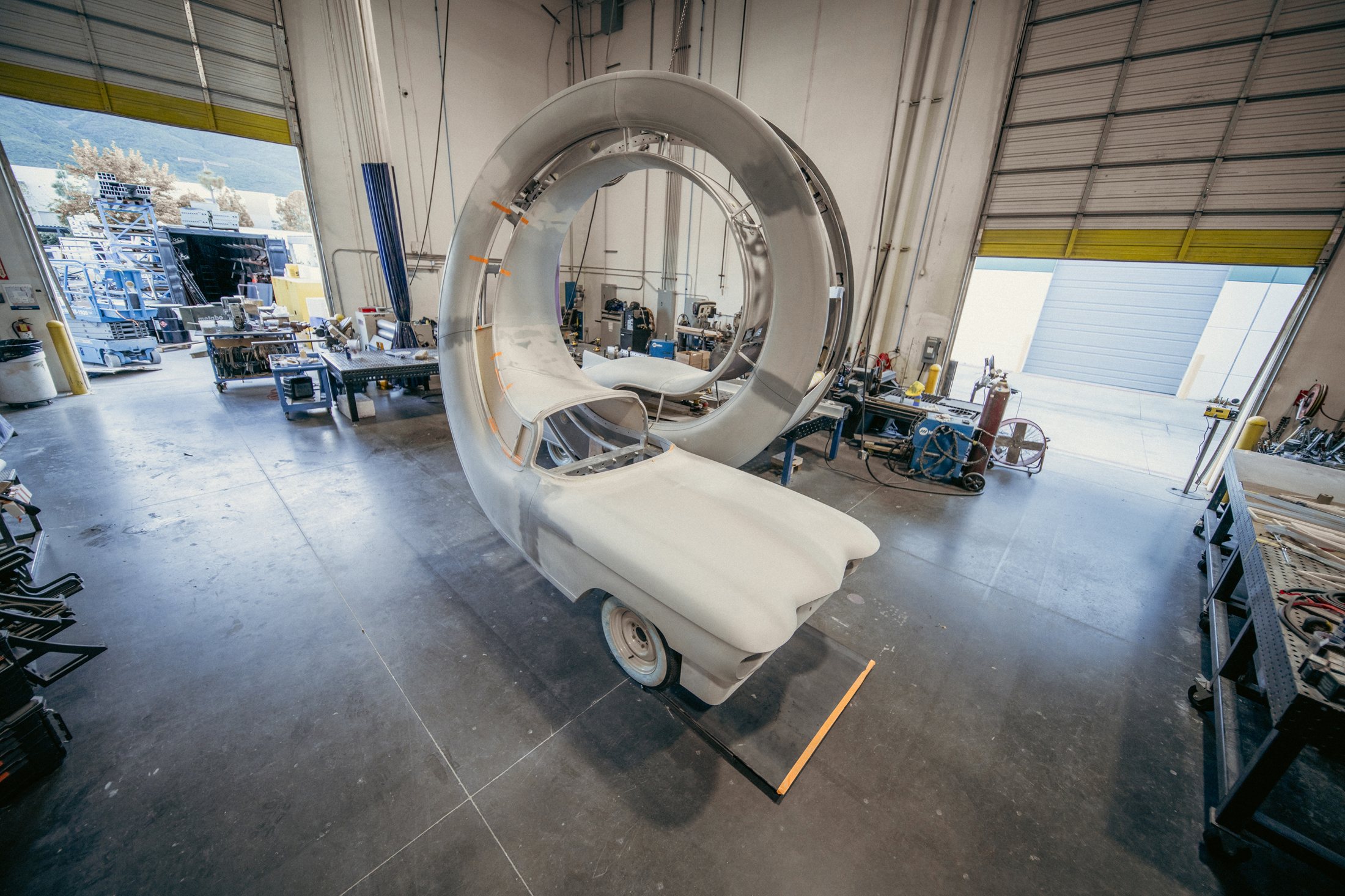
The looping car photograph exposes another stage of the illusion. Before the red finish, its body is pale, with open sections, visible internal supports and workshop tape marking positions on the floor. The large circular form is already present. The photograph makes clear how much of the final effect depends on joining and finishing a complex construction so that it can be read as one continuous surface.
Speaking to Whitewall, Chinneck described taking “complex technical paths to pull off seemingly effortless illusions”. He placed digital modelling, spatial planning, engineering, installation design and logistics alongside the initial act of imagining a work. Seen with the workshop sequence, the finished windows make that distinction tangible: their apparent ease is the result of sustained technical work.
Project Credits
Project: Dior window displays in New York and Beverly Hills
Artist: Alex Chinneck / @alexchinneck
Commissioning house: Dior / @dior
Locations: House of Dior New York, 57th Street, New York; House of Dior Beverly Hills, Rodeo Drive, California, United States
Year: 2026
Works: Nine in New York; five in Beverly Hills
Sculptural lamp-post fabrication: millimetre / @millimetremakes
Photography: Guillaume Barry, courtesy Dior
Project and fabrication imagery supplied by Alex Chinneck