
Now Reading: Studio Deng turns an equestrian monument into two interactive plywood horses
- 01
Studio Deng turns an equestrian monument into two interactive plywood horses

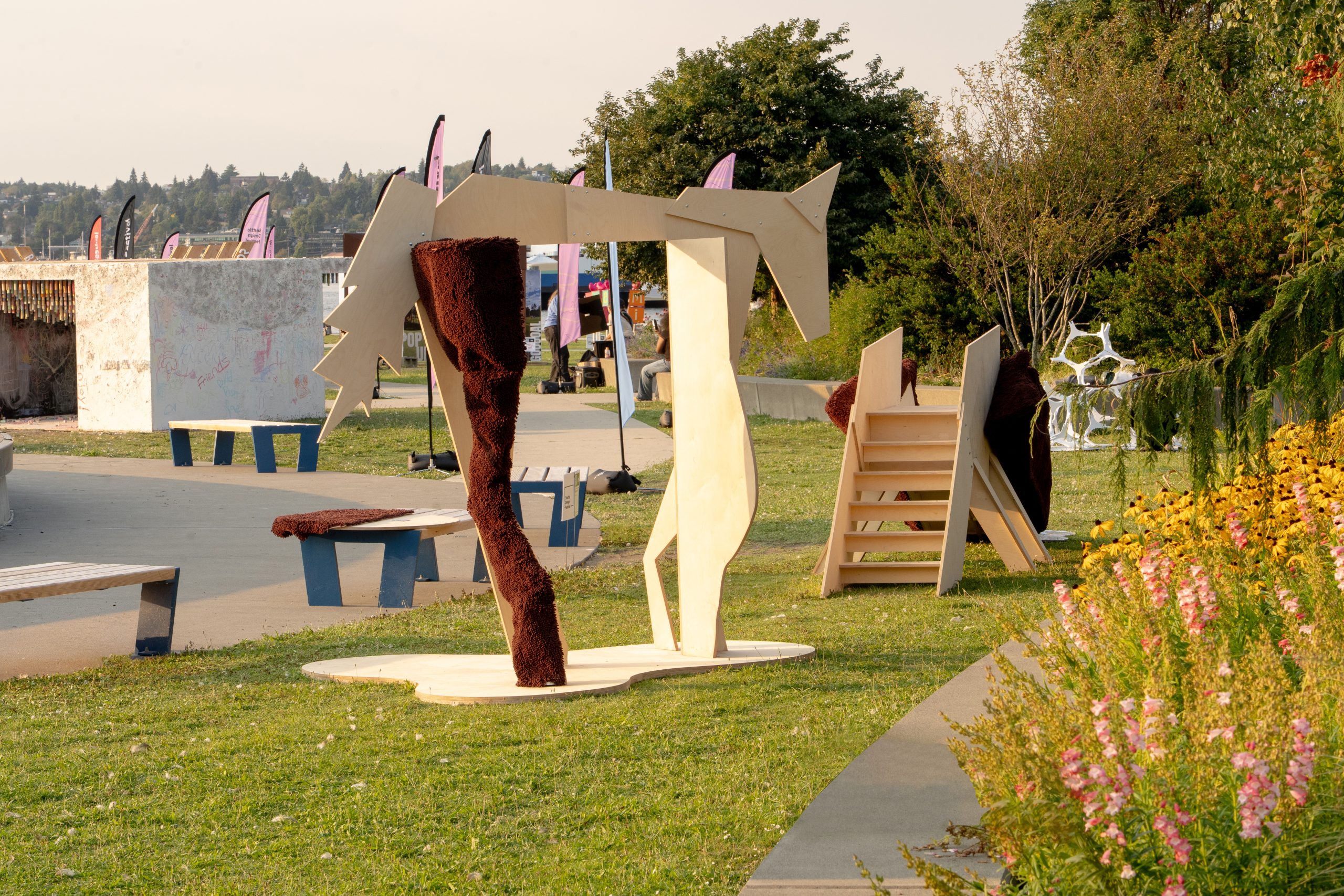

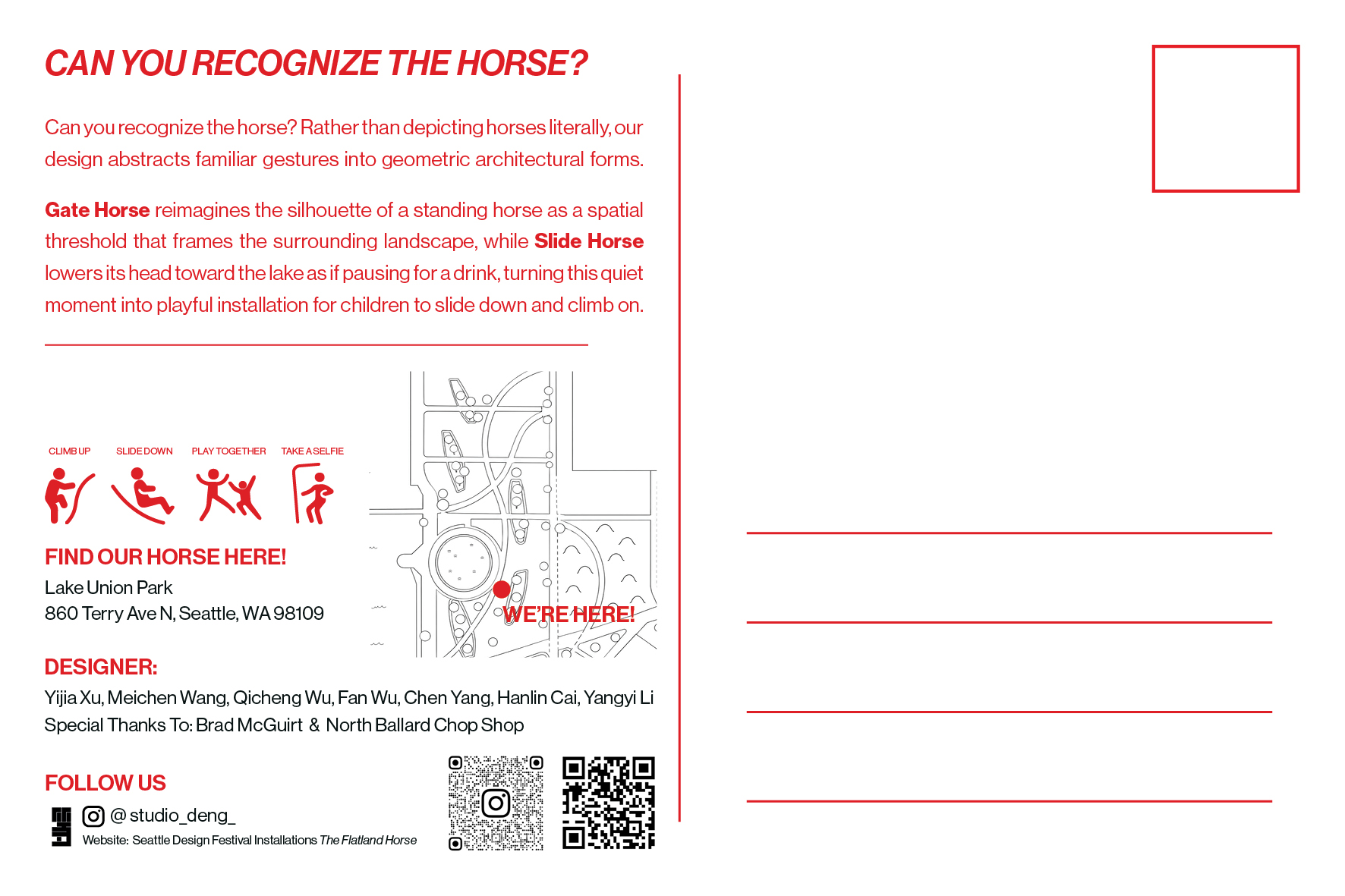
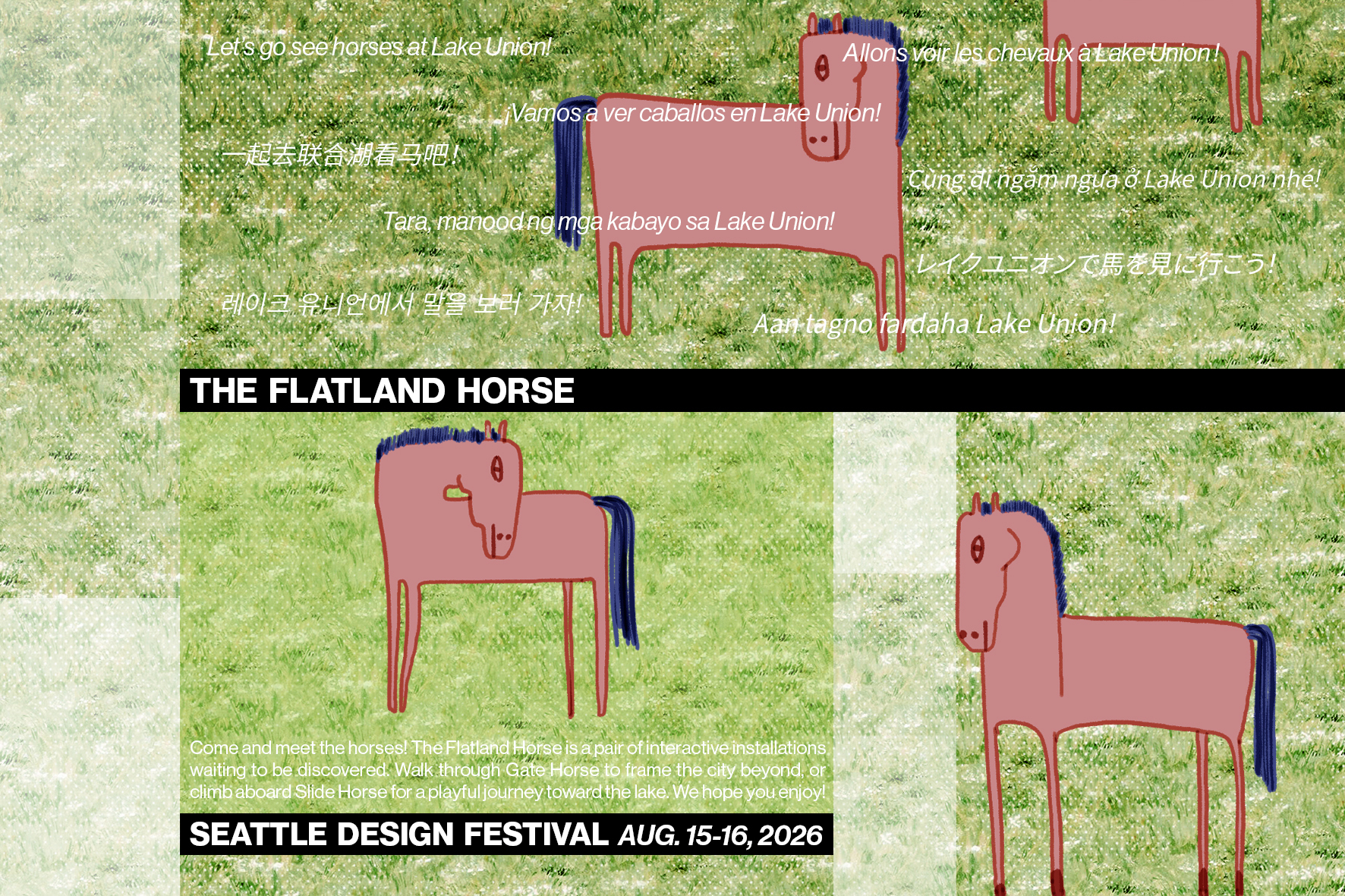
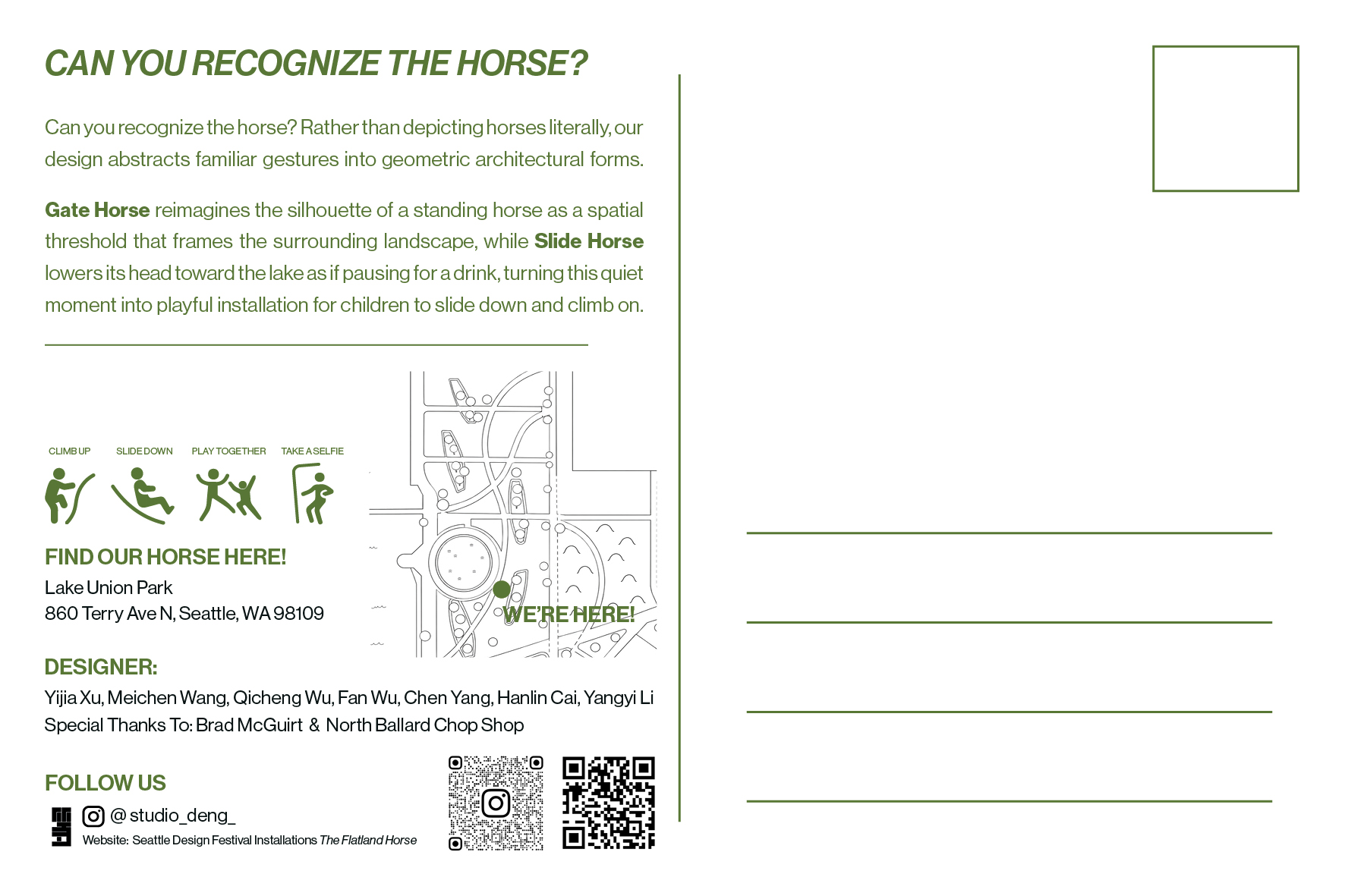
Two plywood horses turned a corner of Seattle’s Lake Union Park into a place to climb, touch and play at the 2026 Seattle Design Festival. Designed by Studio Deng, The Flatland Horse recasts the equestrian monument as a set of figures with their own identities and public uses.
Gate Horse and Slide Horse were presented during the festival’s IN[FLUX] Block Party on 15 and 16 August. The project was one of the selected installations at the Seattle Design Festival, where visitors could pass through one horse and climb or slide on the other.
Eight doubles recast the equestrian monument
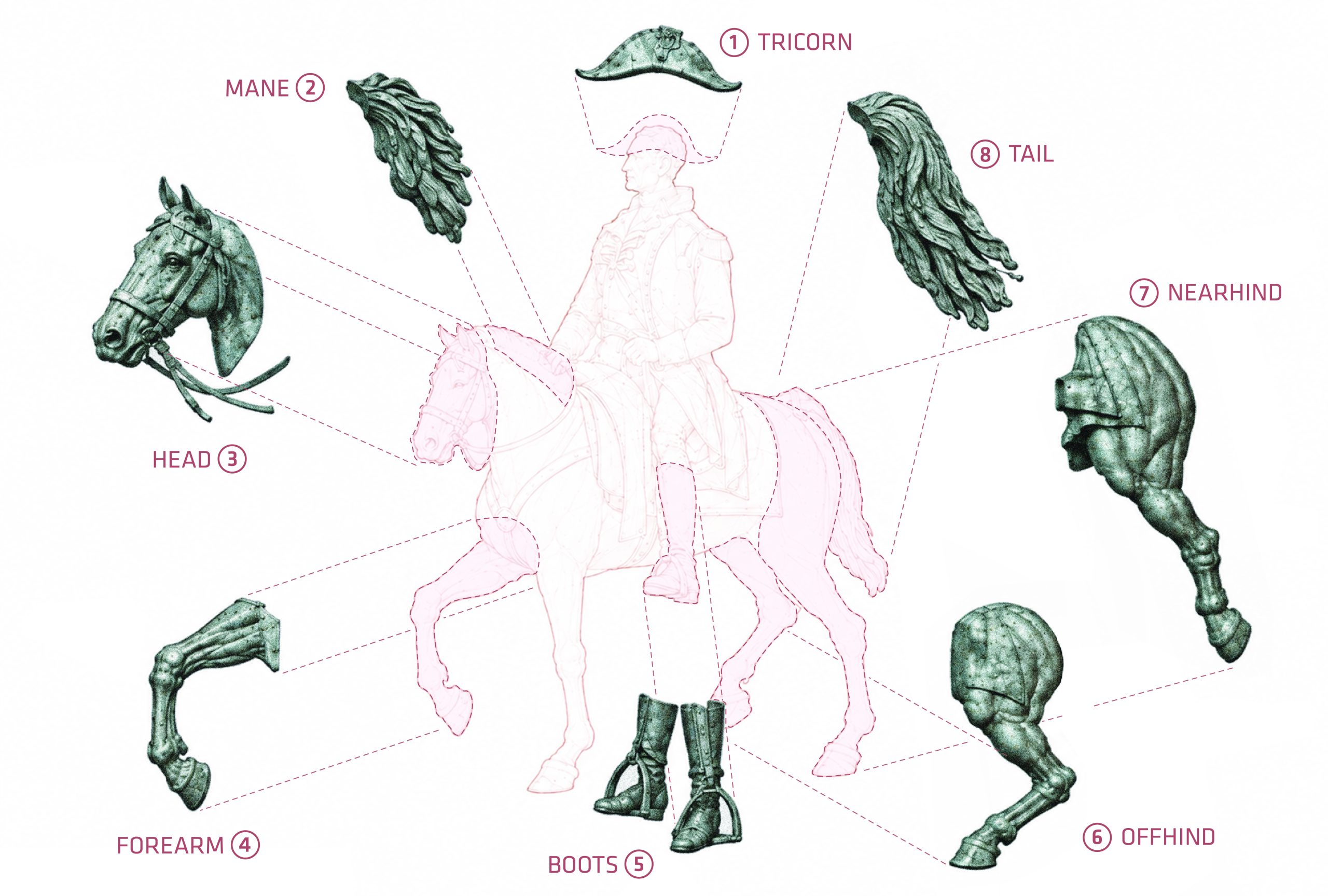
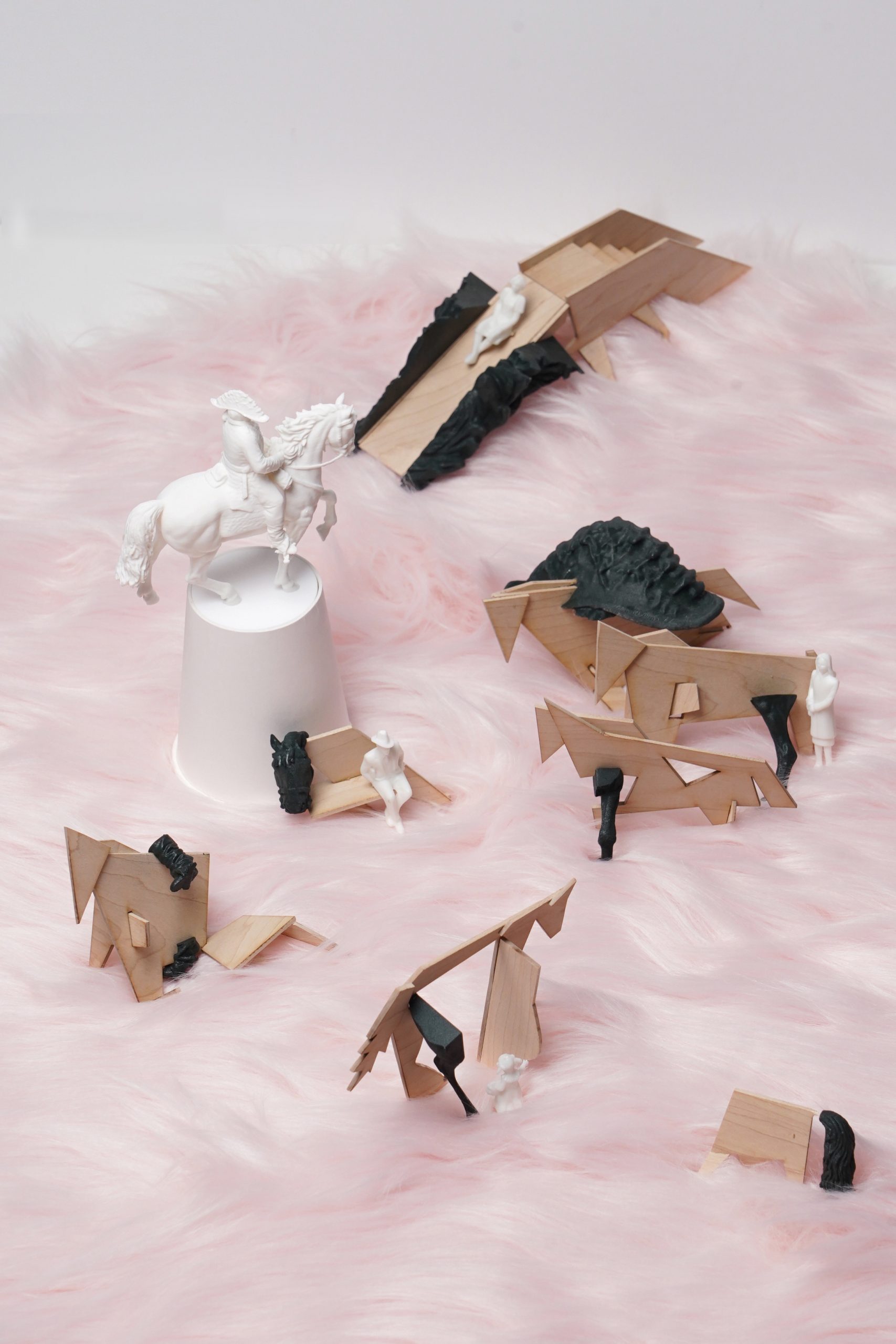
The project begins with a question about the solitary horse and rider cast in bronze as a symbol of civic authority. Studio Deng imagines the figure as an edited composite assembled from many takes: one horse supplies the head, another the tail, another a foreleg. The histories of these unnamed stand-ins disappear when the final monument is made.
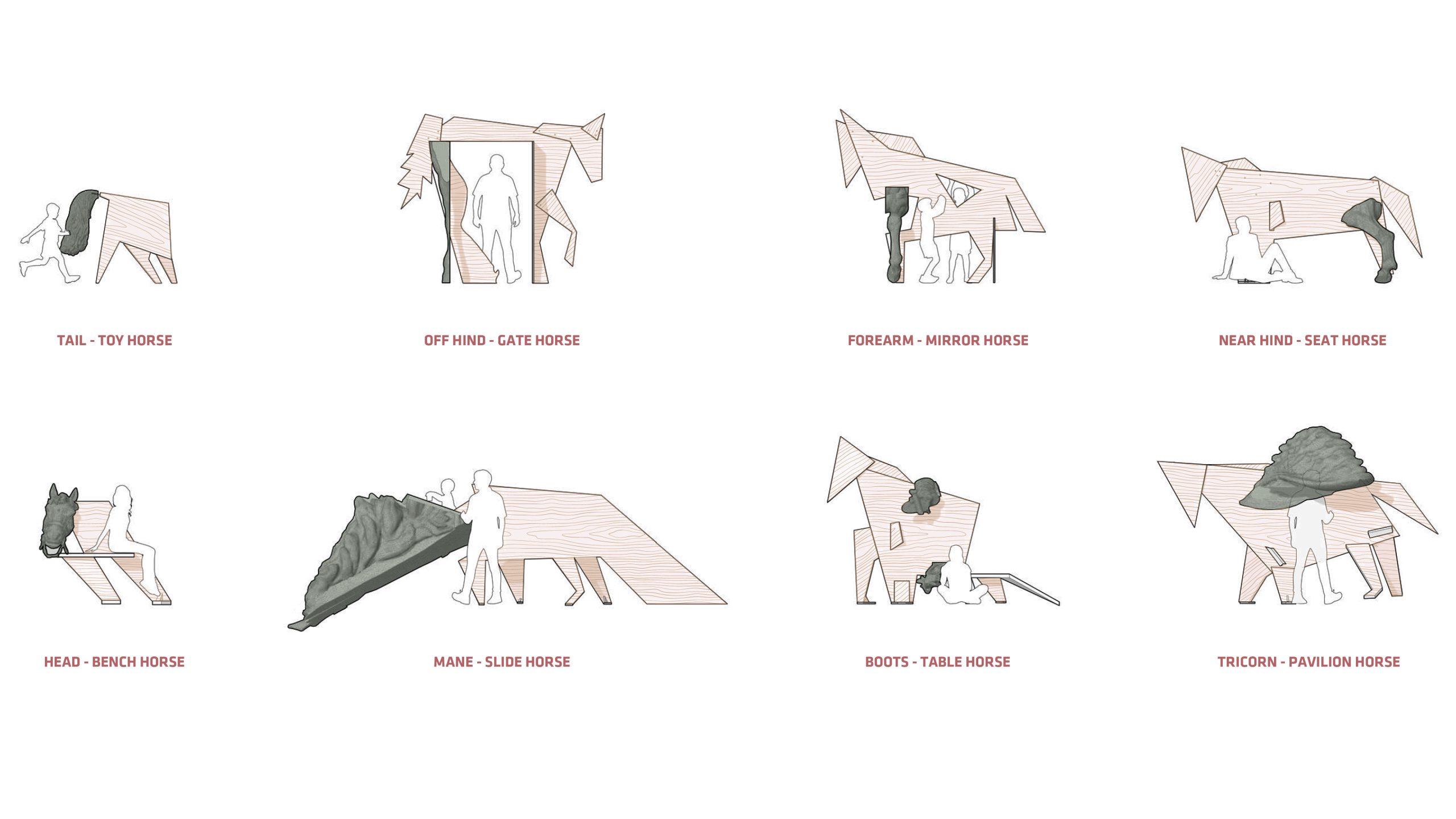
The Flatland Horse makes that hidden process visible by separating the composite into eight flattened plywood silhouettes. Each double preserves one body part in soft volume, from a mane to a leg or head, and takes on an everyday role such as a bench, seat, table, gate, slide, mirror, pavilion or toy.
Gate Horse and Slide Horse invite visitors into the work
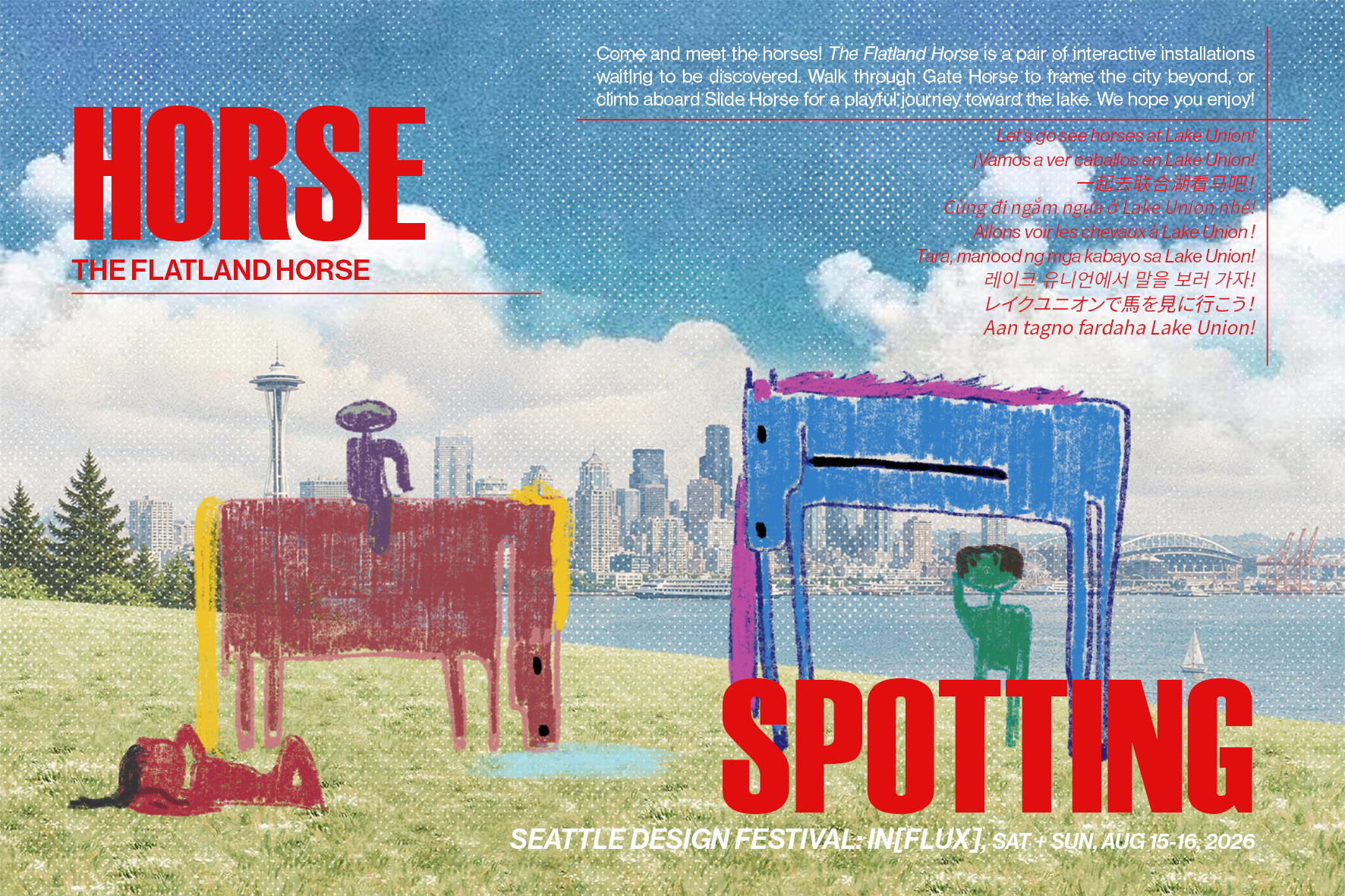
For the festival, Studio Deng built the first two doubles. Gate Horse spreads its legs to form an archway, framing the Seattle skyline in the opening beneath its body. Passing through the structure turns the familiar act of looking up at a monument into a walk beneath the horse’s stride.
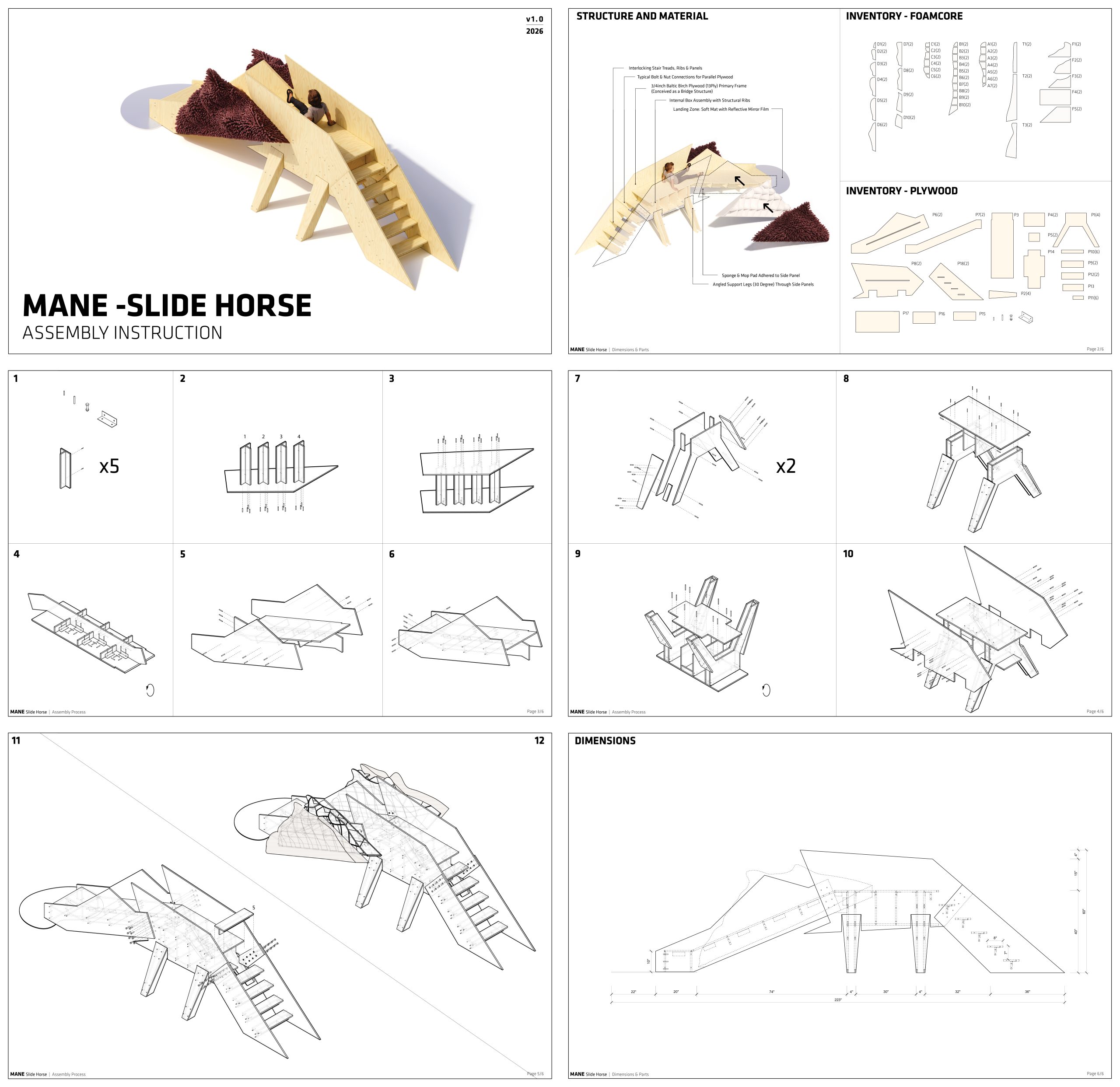
Slide Horse draws on the structural logic of a bridge. A plywood deck spans four leg frames, joining a staircase to a slide. The horse’s lowered head shapes the descent, while its mane forms the side barriers. Seen from a distance, the silhouettes read as horses; up close, their profiles resolve into an abstract assembly of planes.
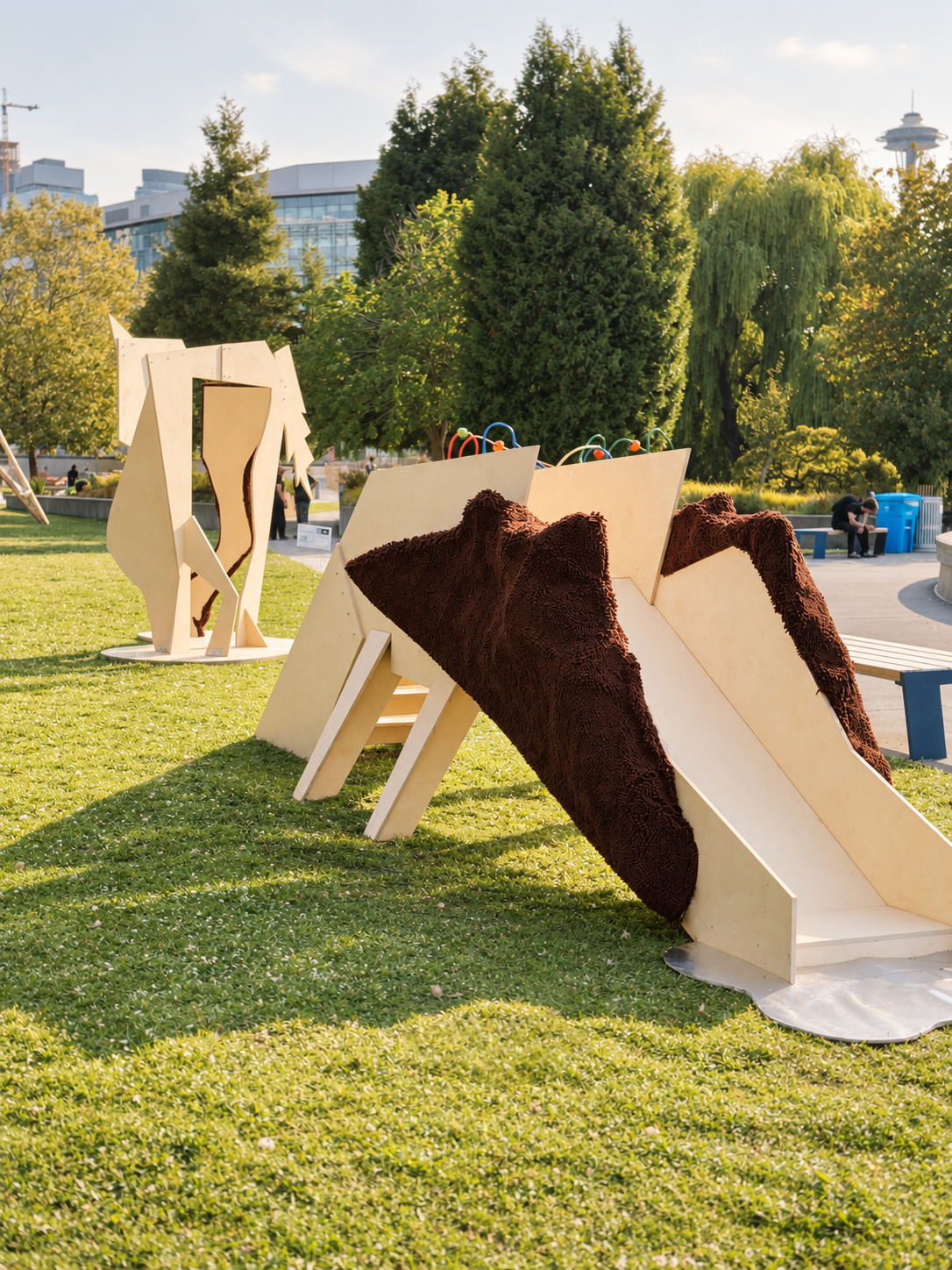
Photo: Chen Yang
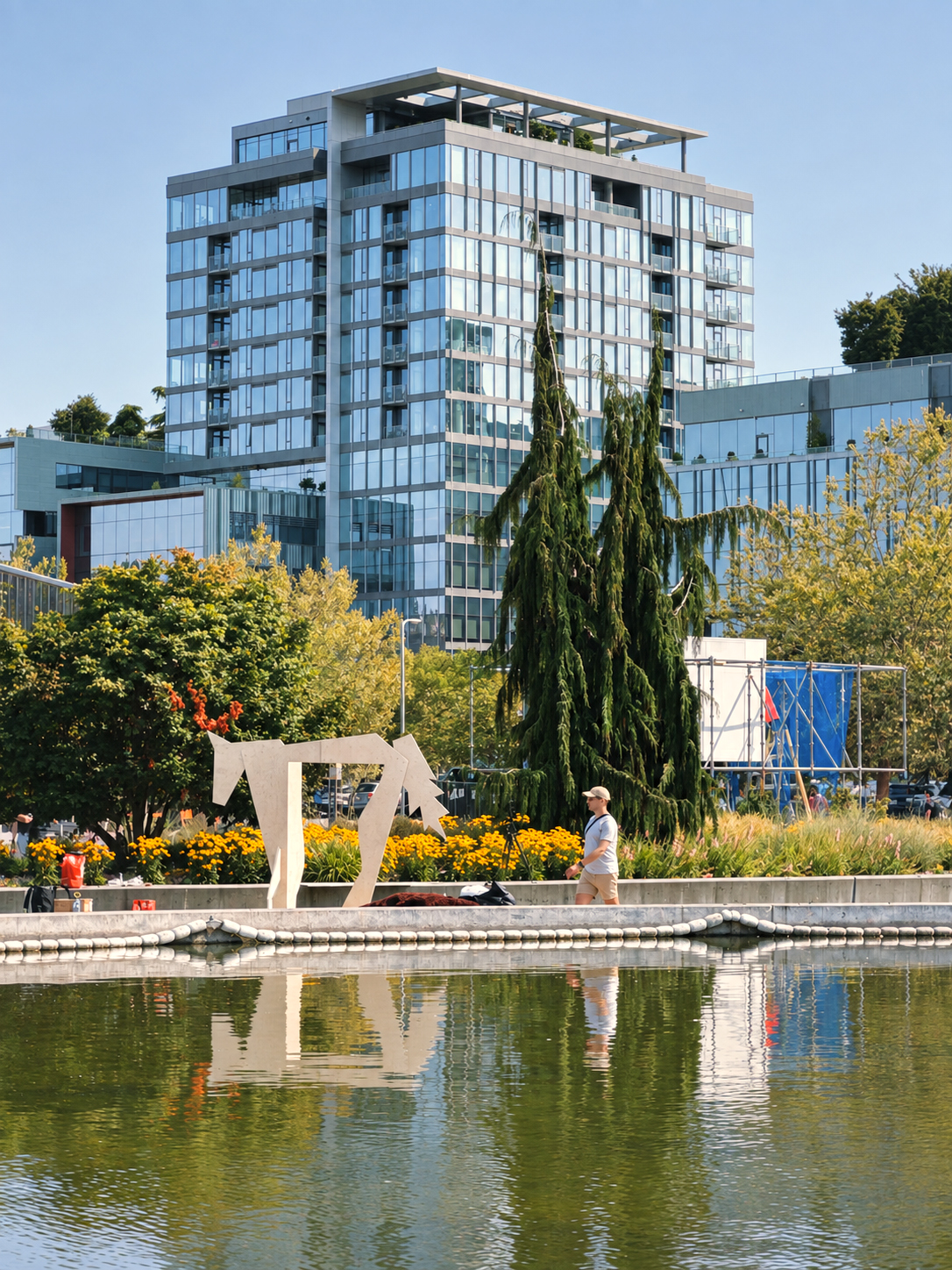
Photo: Chen Yang
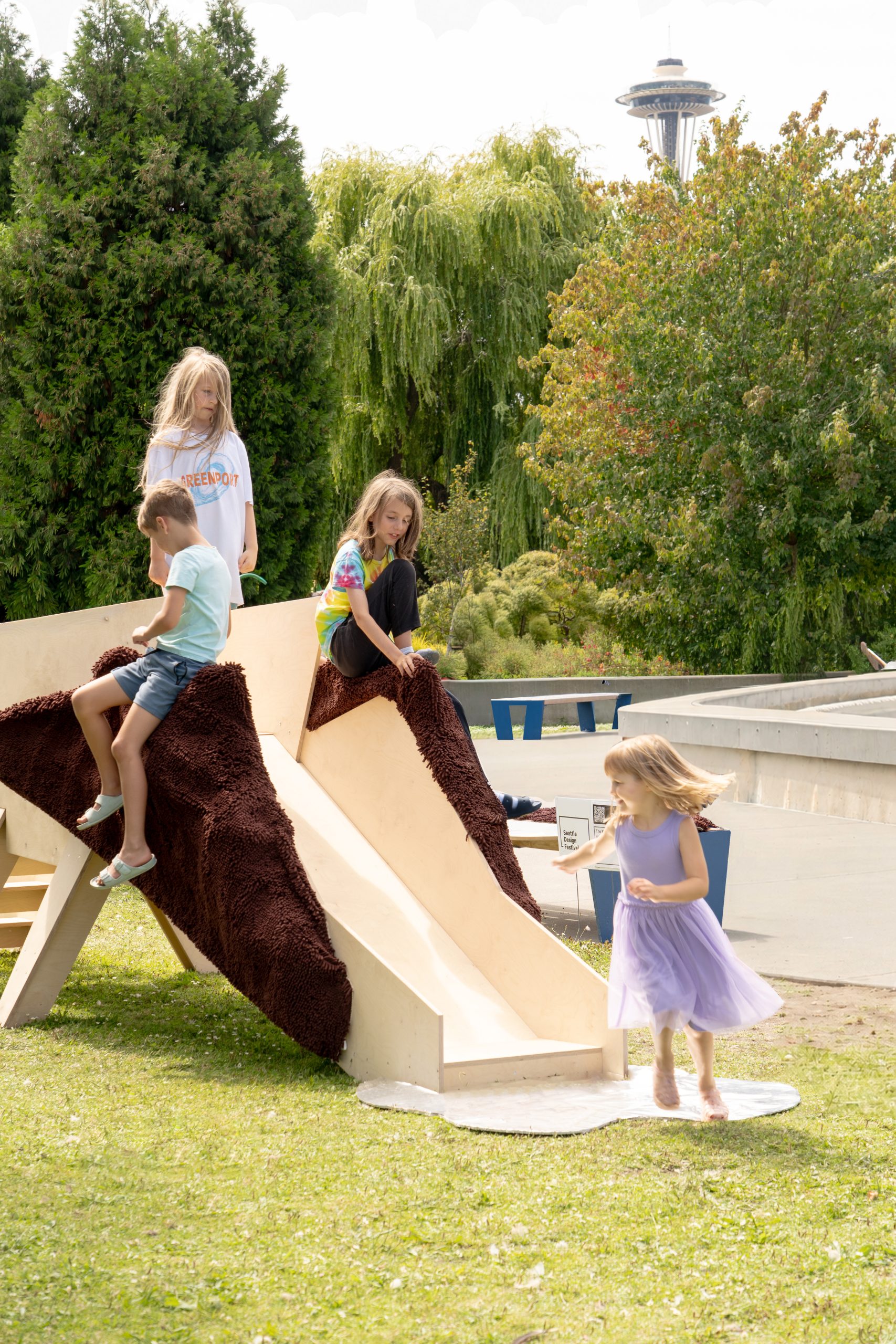
Photo: Studio Deng
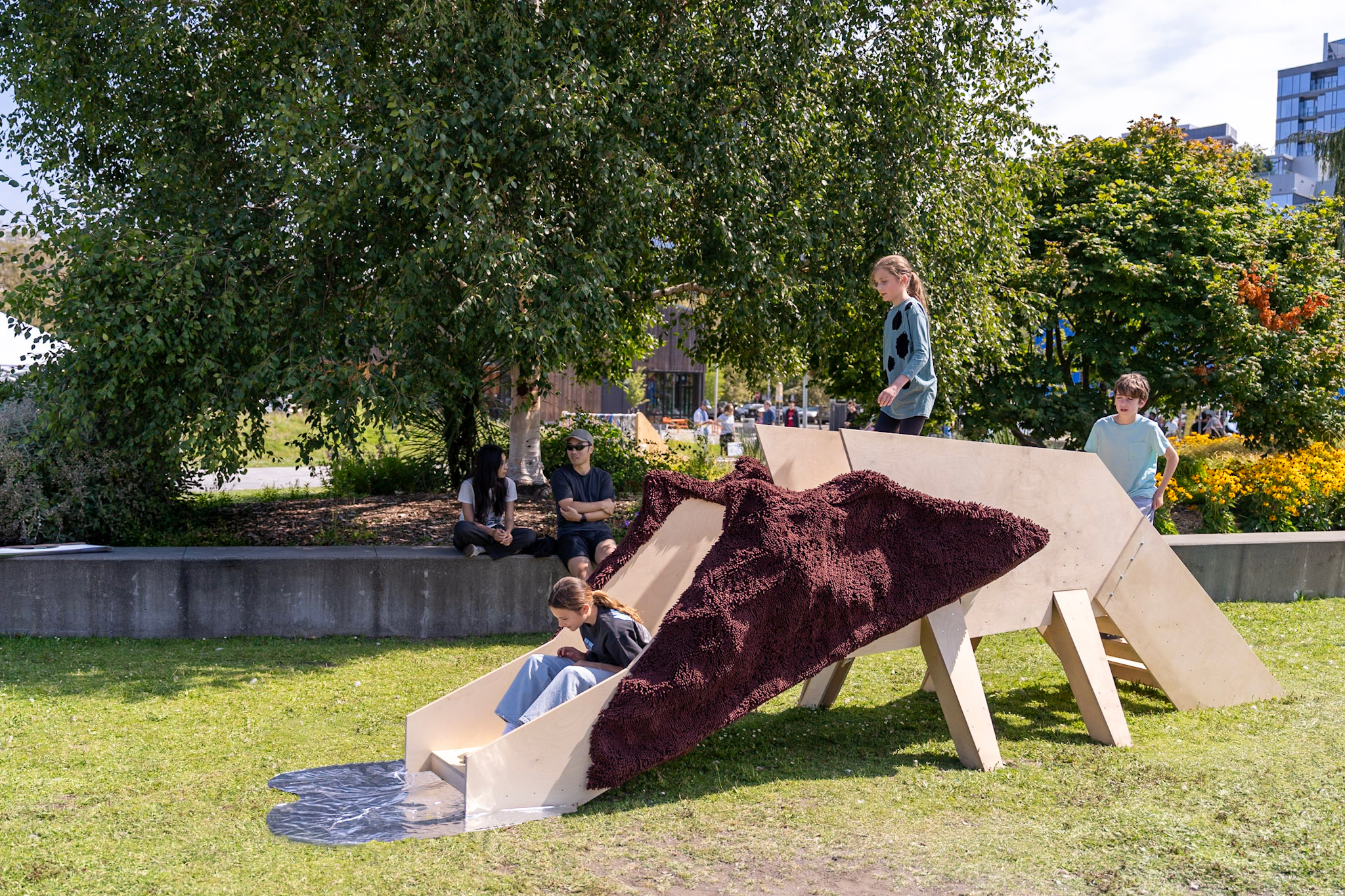
Photo: Trevor Dykstra
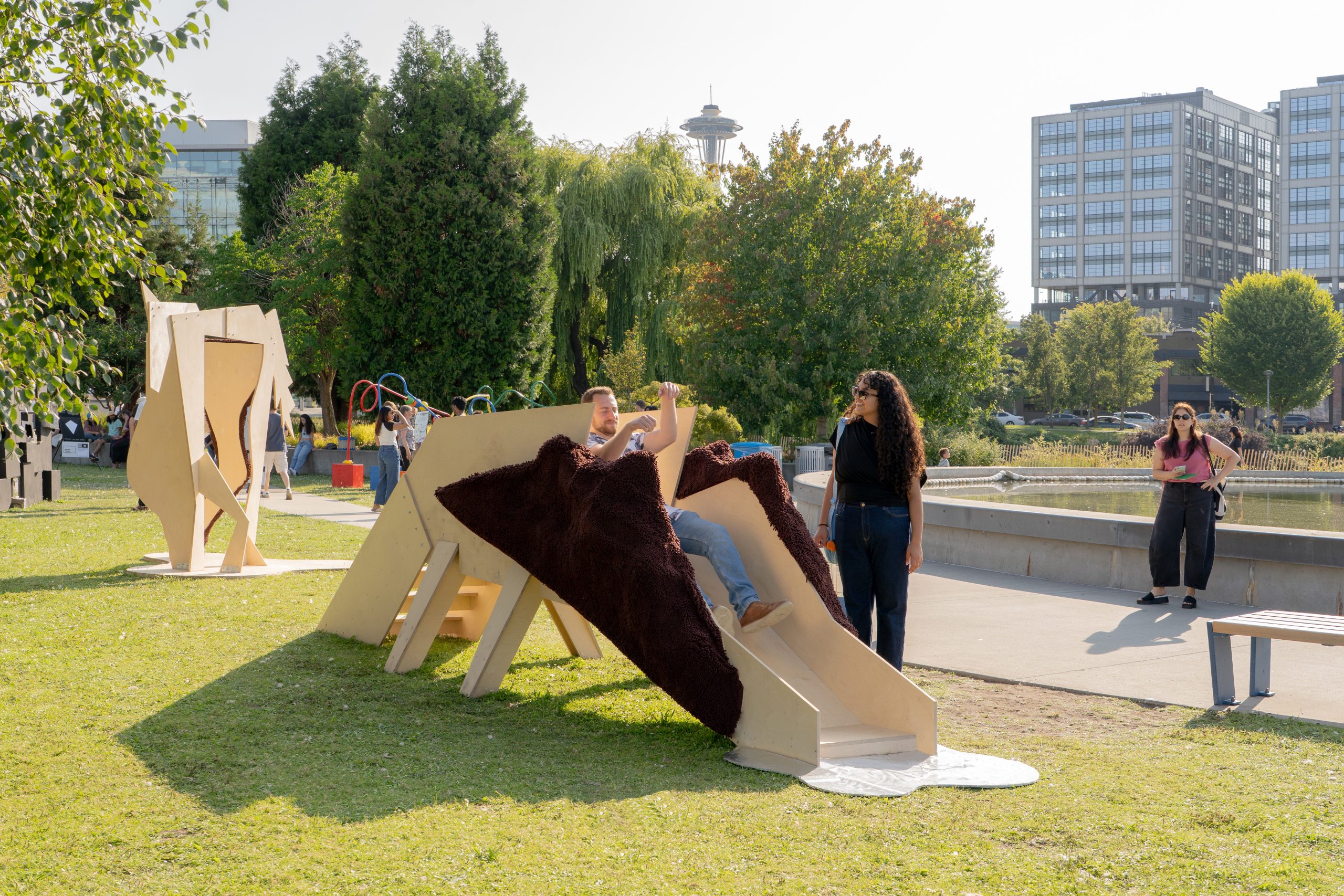
Photo: Studio Deng
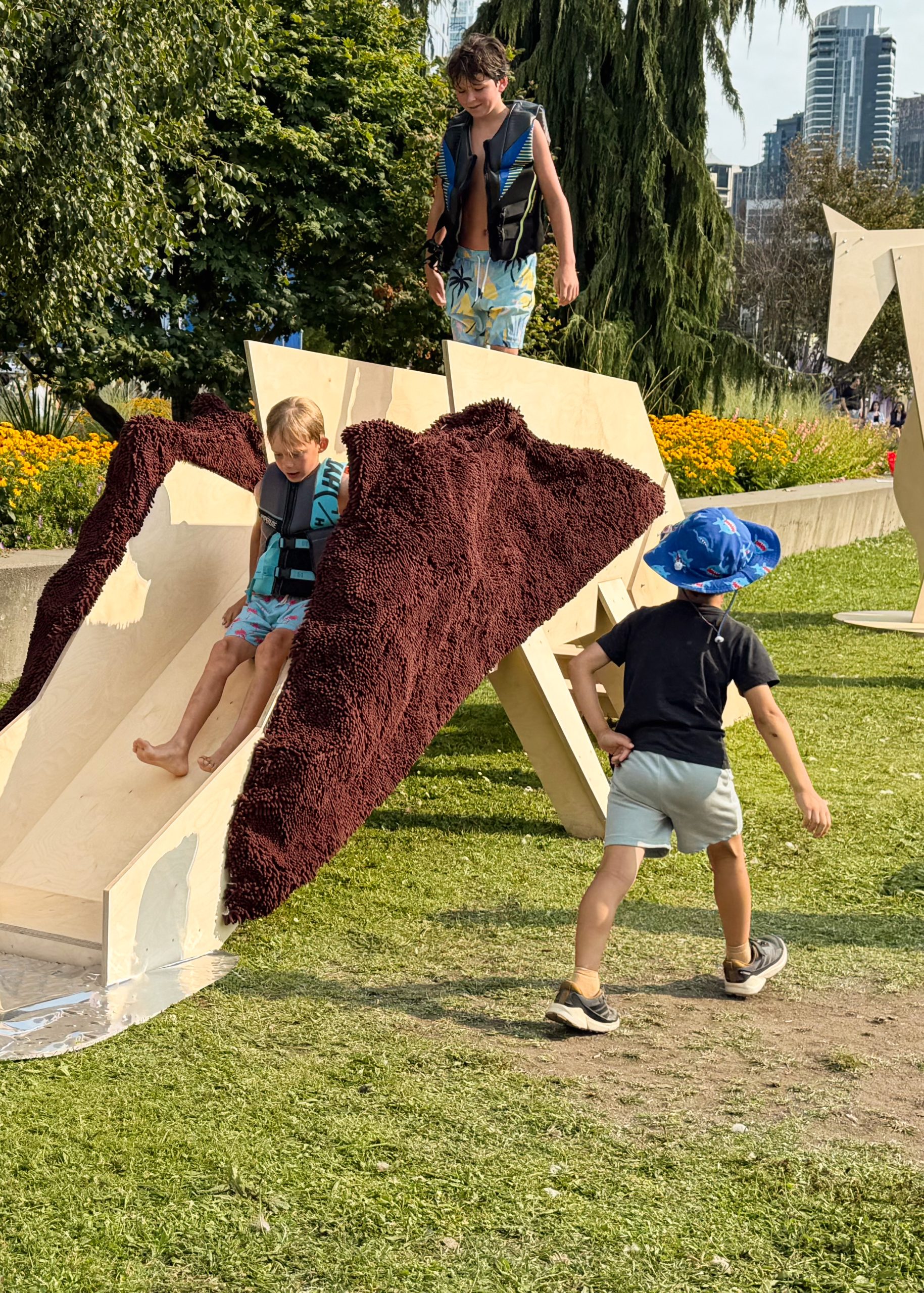
Photo: Studio Deng
Brown chenille gives selected body parts a soft, shaggy surface against the pale plywood. Over two festival days, thousands of visitors used the installations: children climbed Slide Horse and slid down to its reflective landing pad, while adults sat in the shade beneath it. At Gate Horse, visitors walked through the arch and touched the chenille lining its legs, turning the space between the two structures into a shared play area.
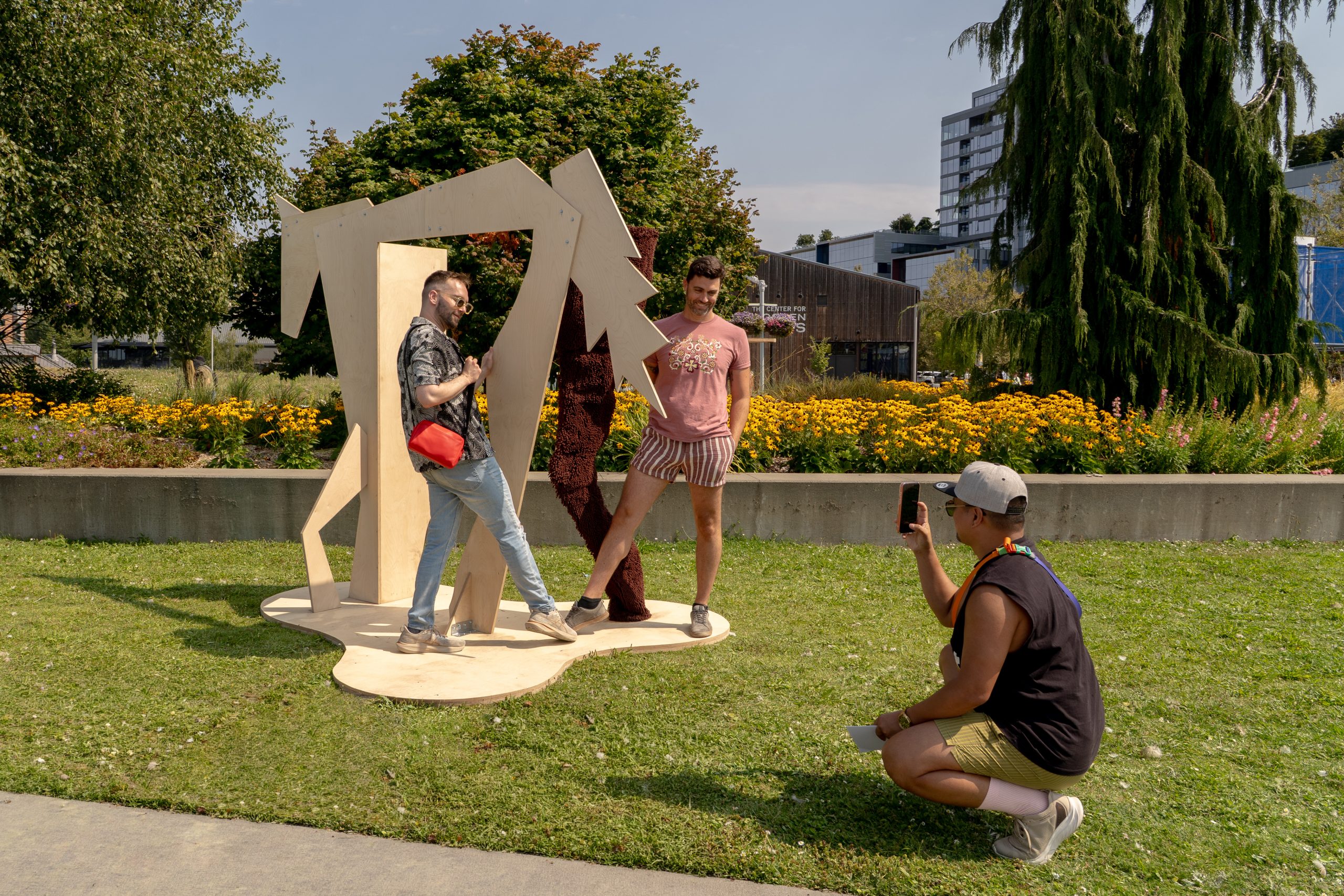
Photo: Studio Deng
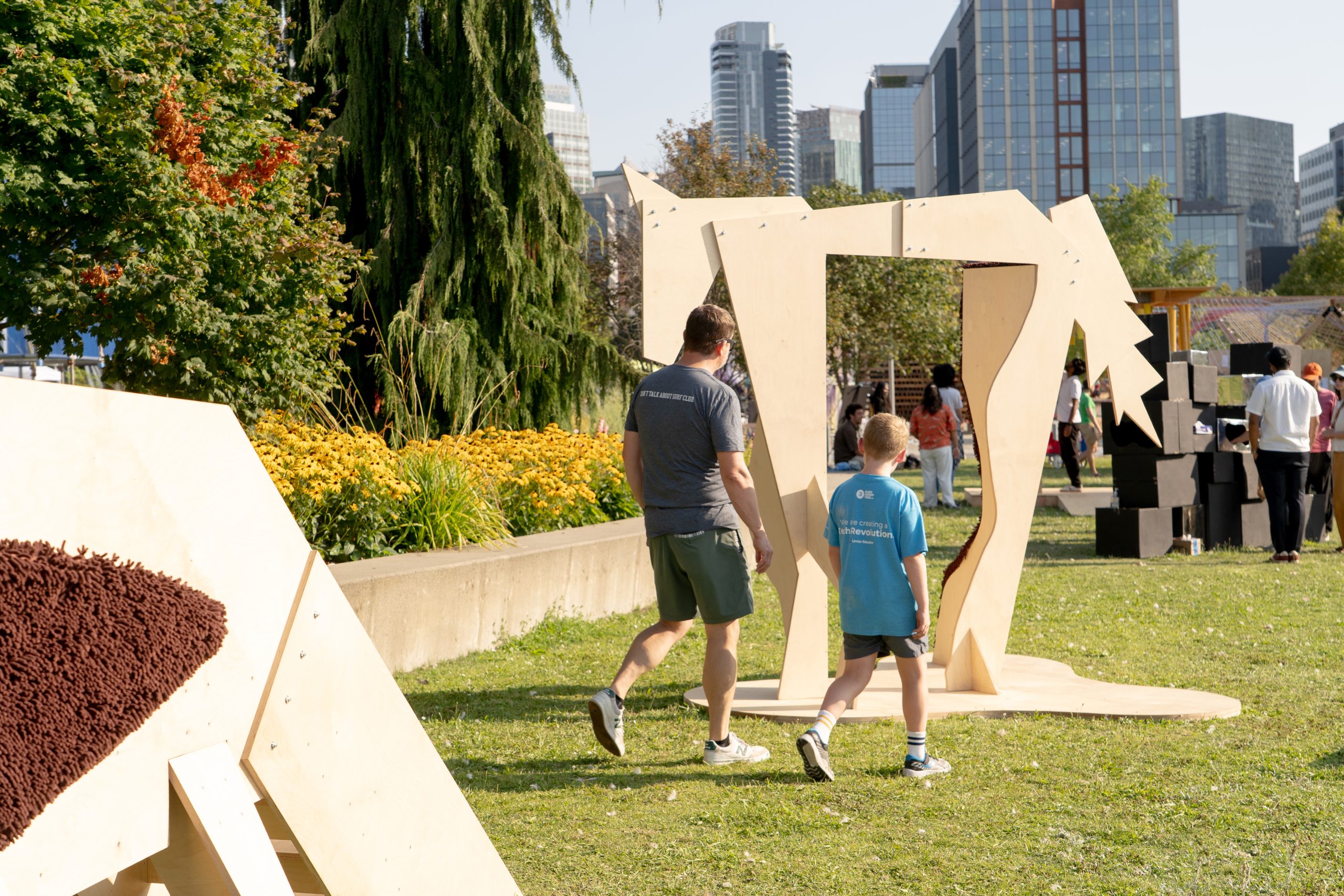
Photo: Studio Deng
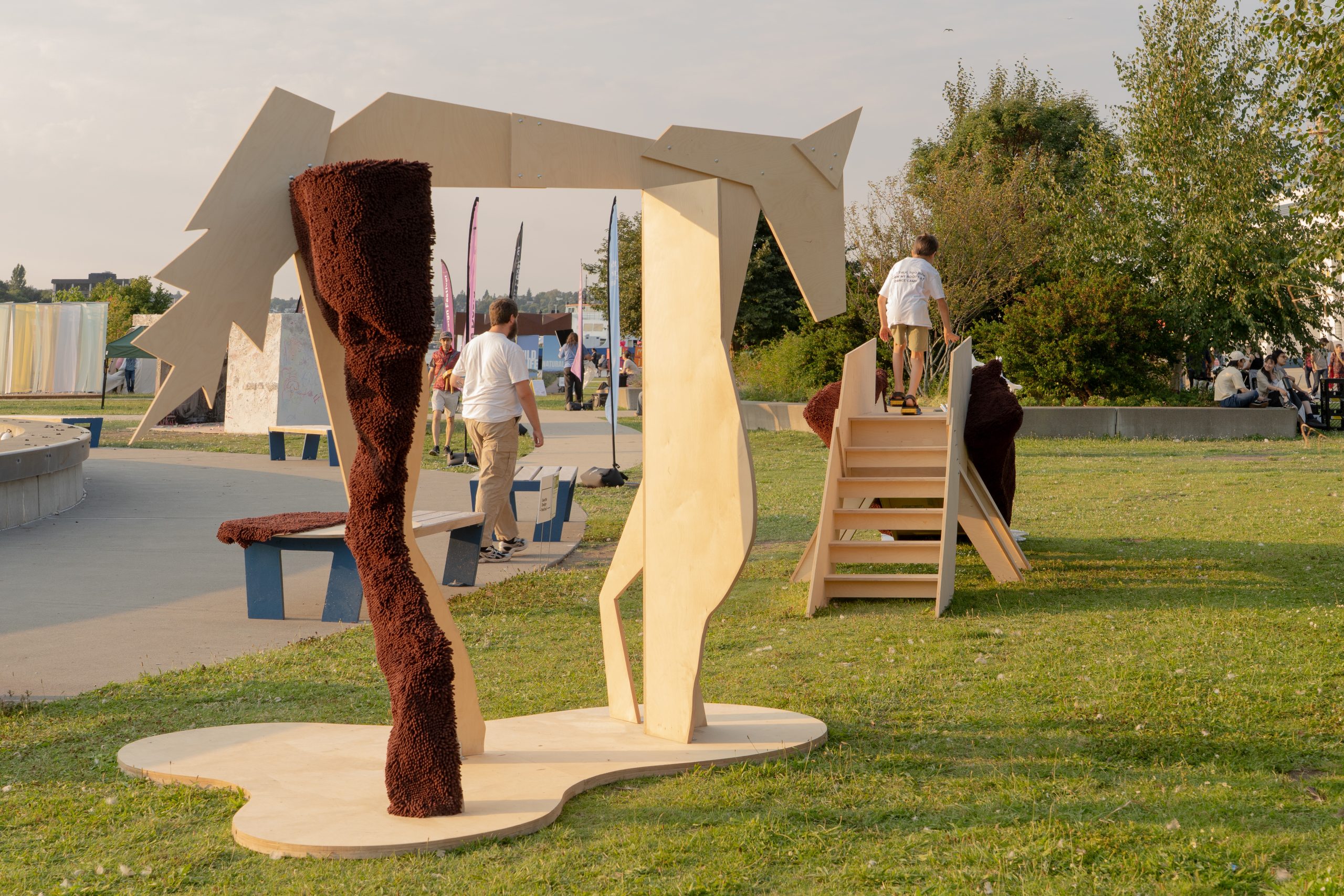
Photo: Studio Deng
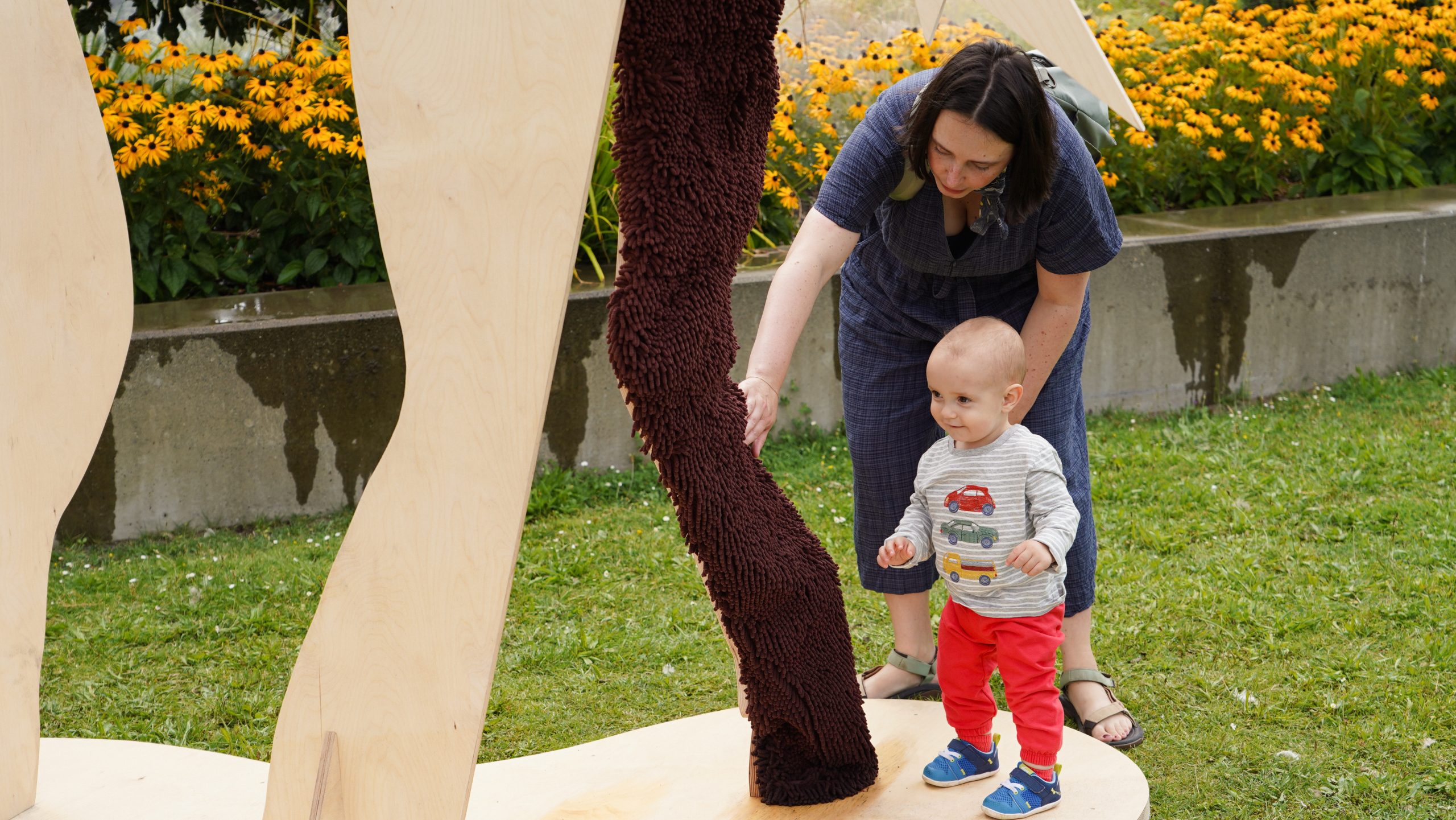
Photo: Studio Deng
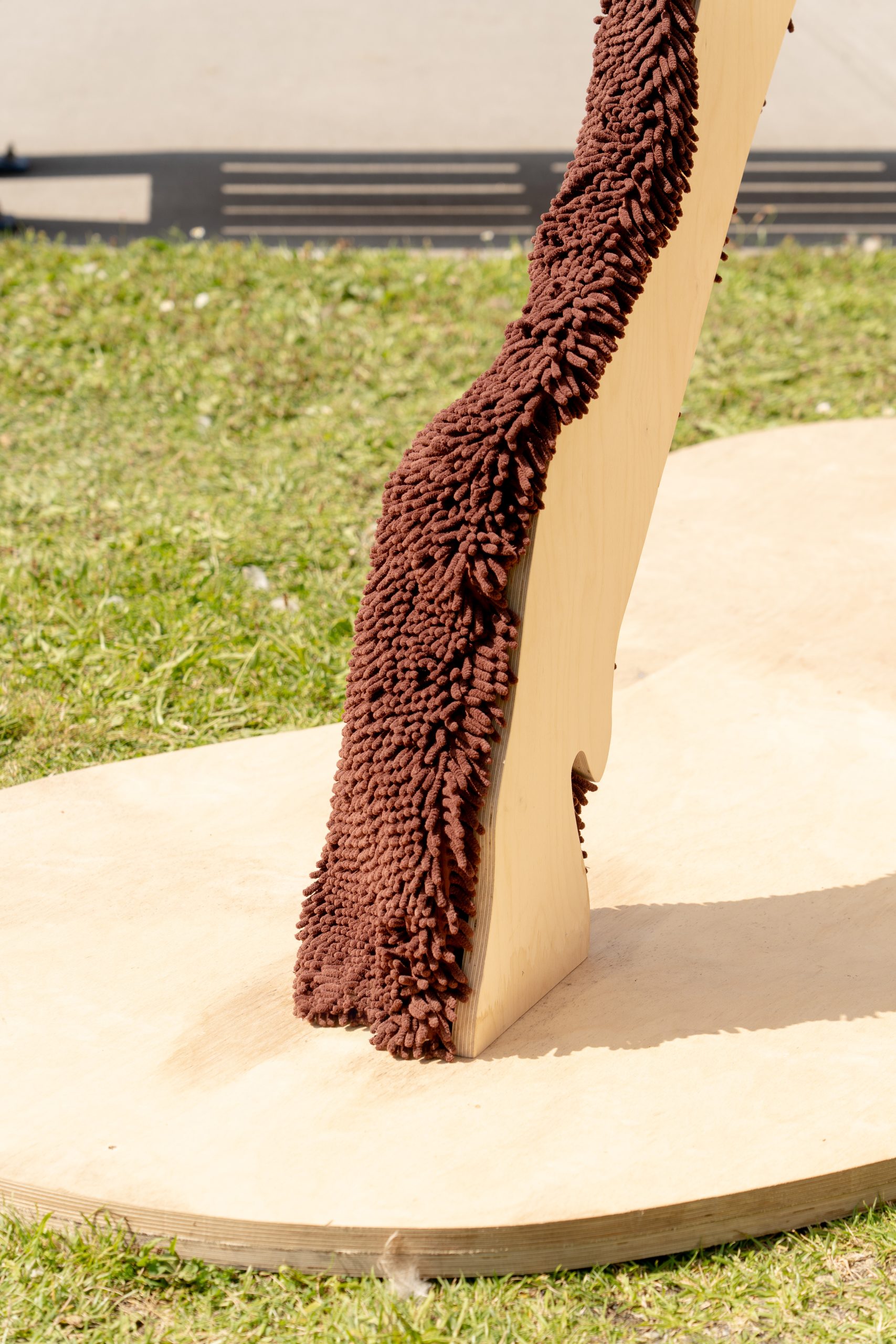
Photo: Studio Deng
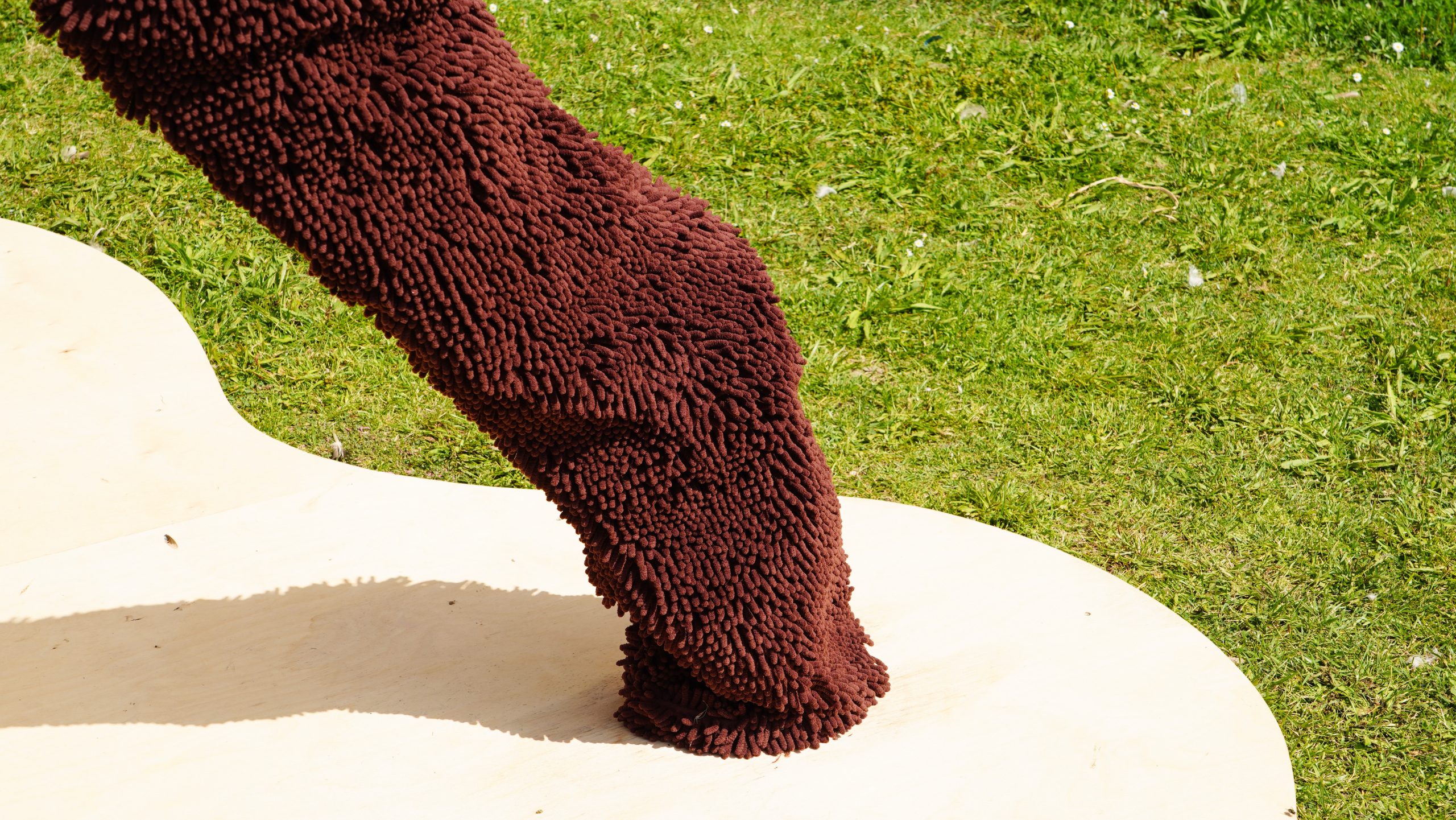
Photo: Studio Deng
Birch plywood construction lets the horses travel
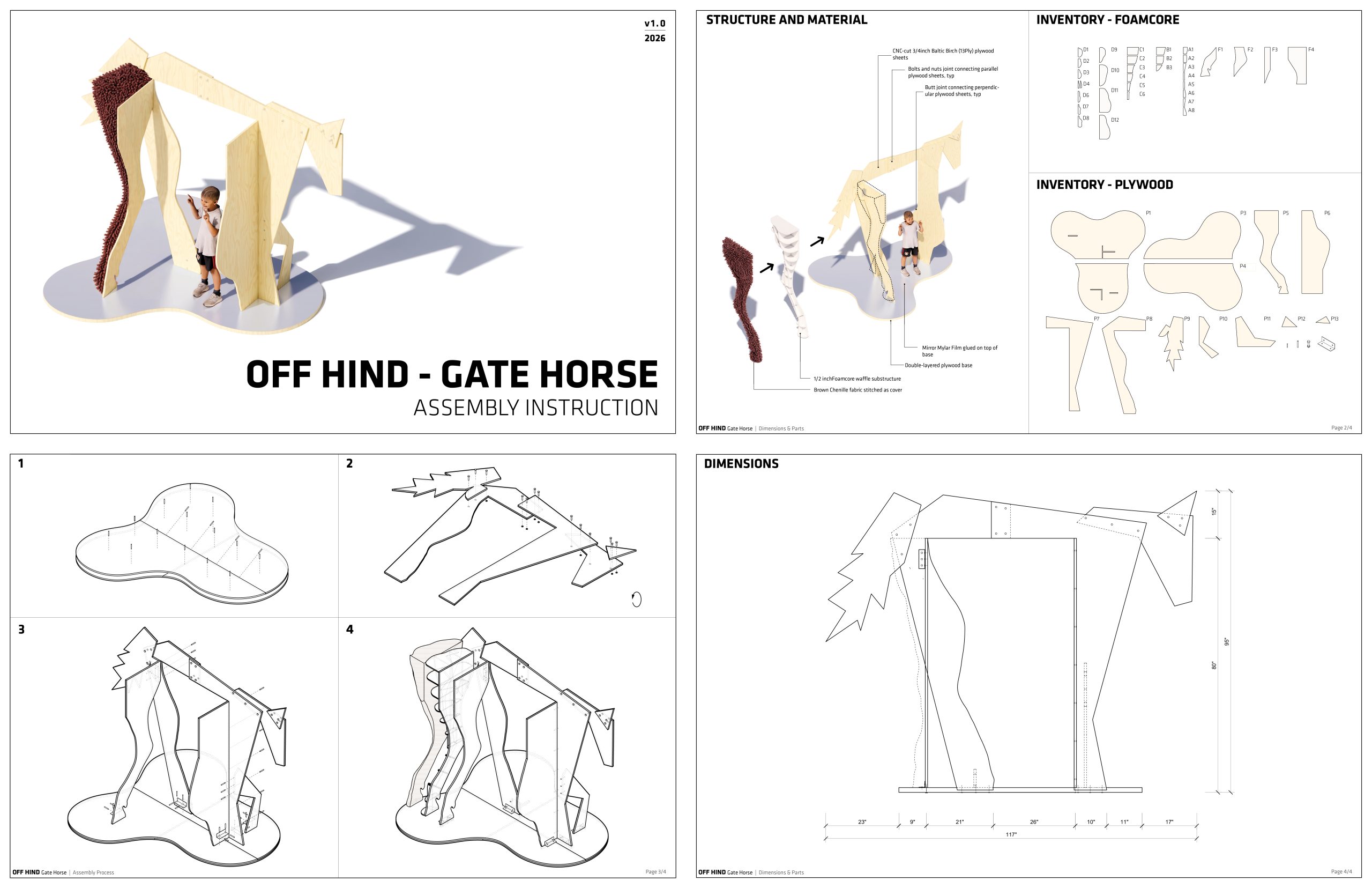
The two installations were made from 19-millimetre, 13-ply birch plywood cut and sanded by the team. Slide Horse was assembled from three parts—the slide, central section and stairs—using nails, bolts and L-brackets to speed installation. Chenille was stretched across a waffle-like framework of 13-millimetre foamcore panels attached to the plywood, adding a washable, low-cost layer of softness.
After the festival, the horses were unbolted, flat-packed and reassembled in a courtyard in Issaquah, east of Seattle. The move extends the project’s idea of the monument as something that can be handled, used and carried onward.
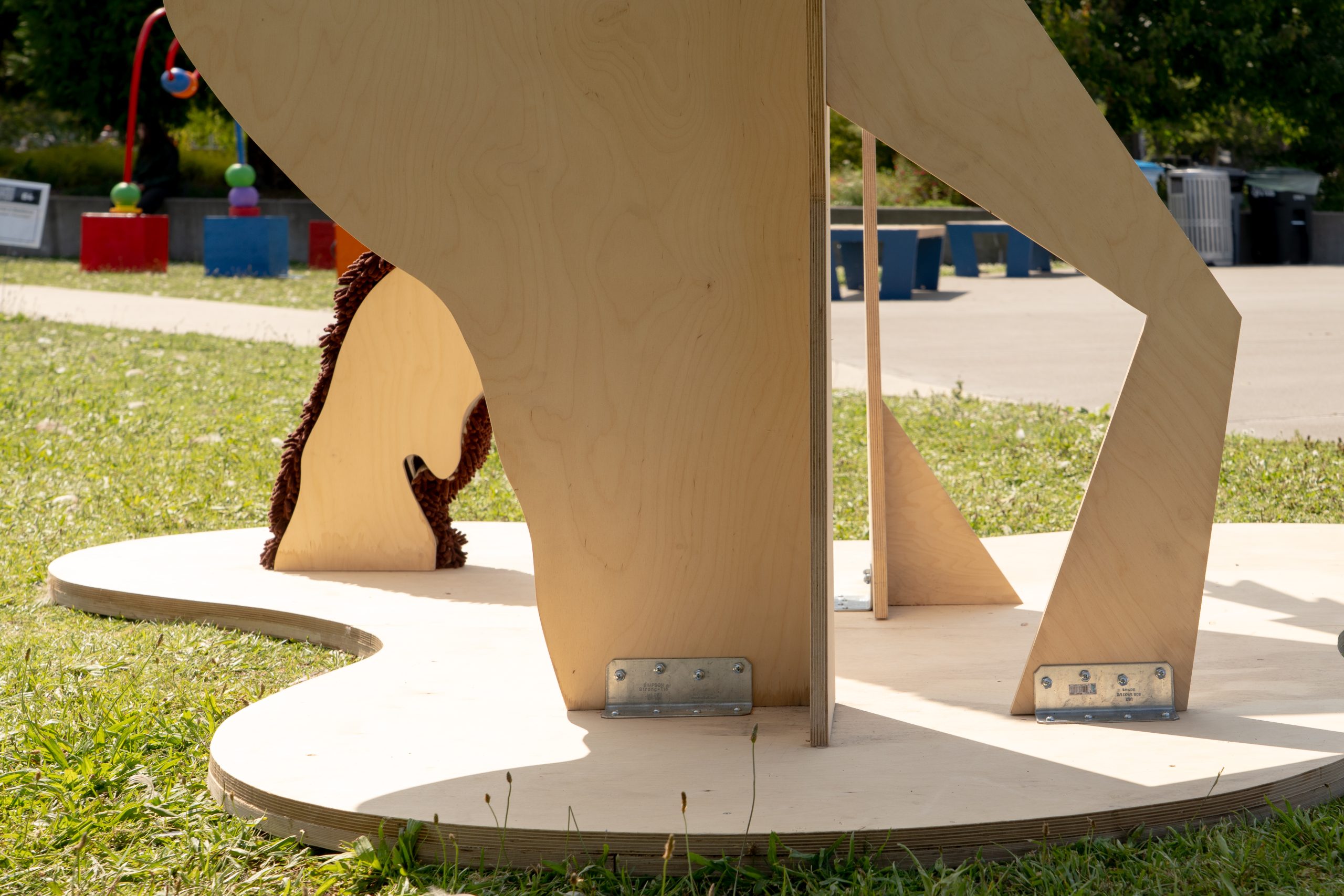
Photo: Studio Deng
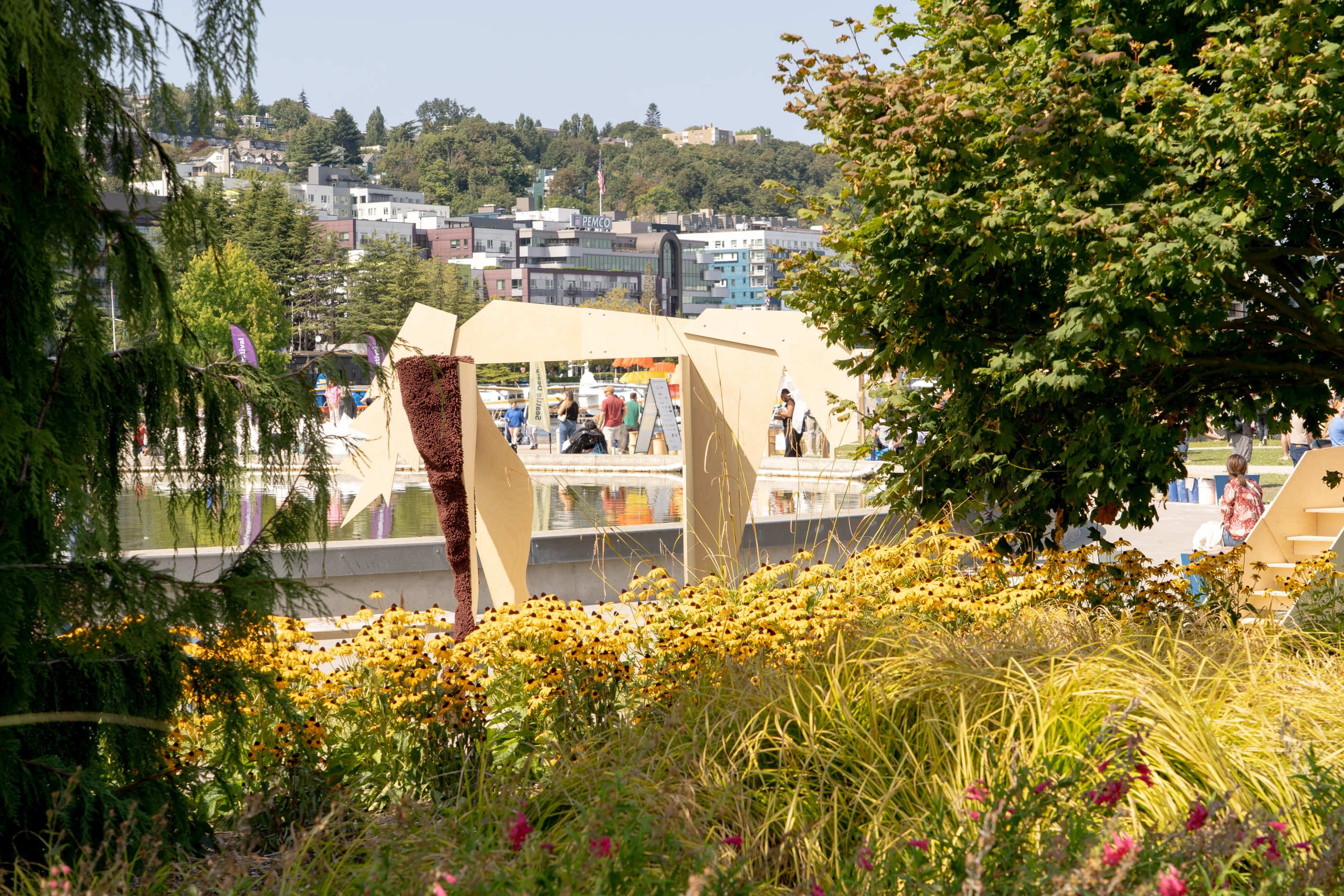
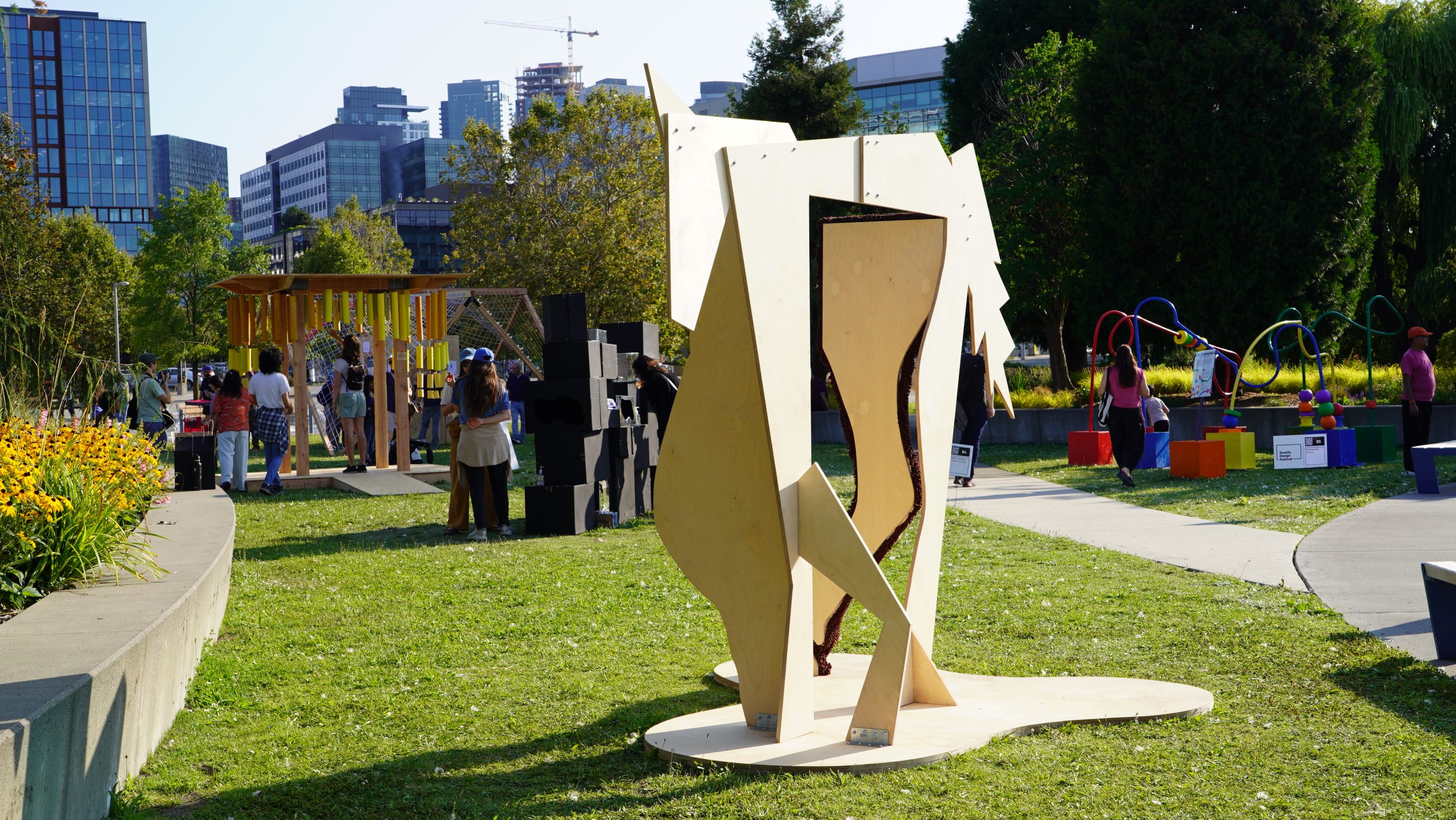
Photo: Studio Deng
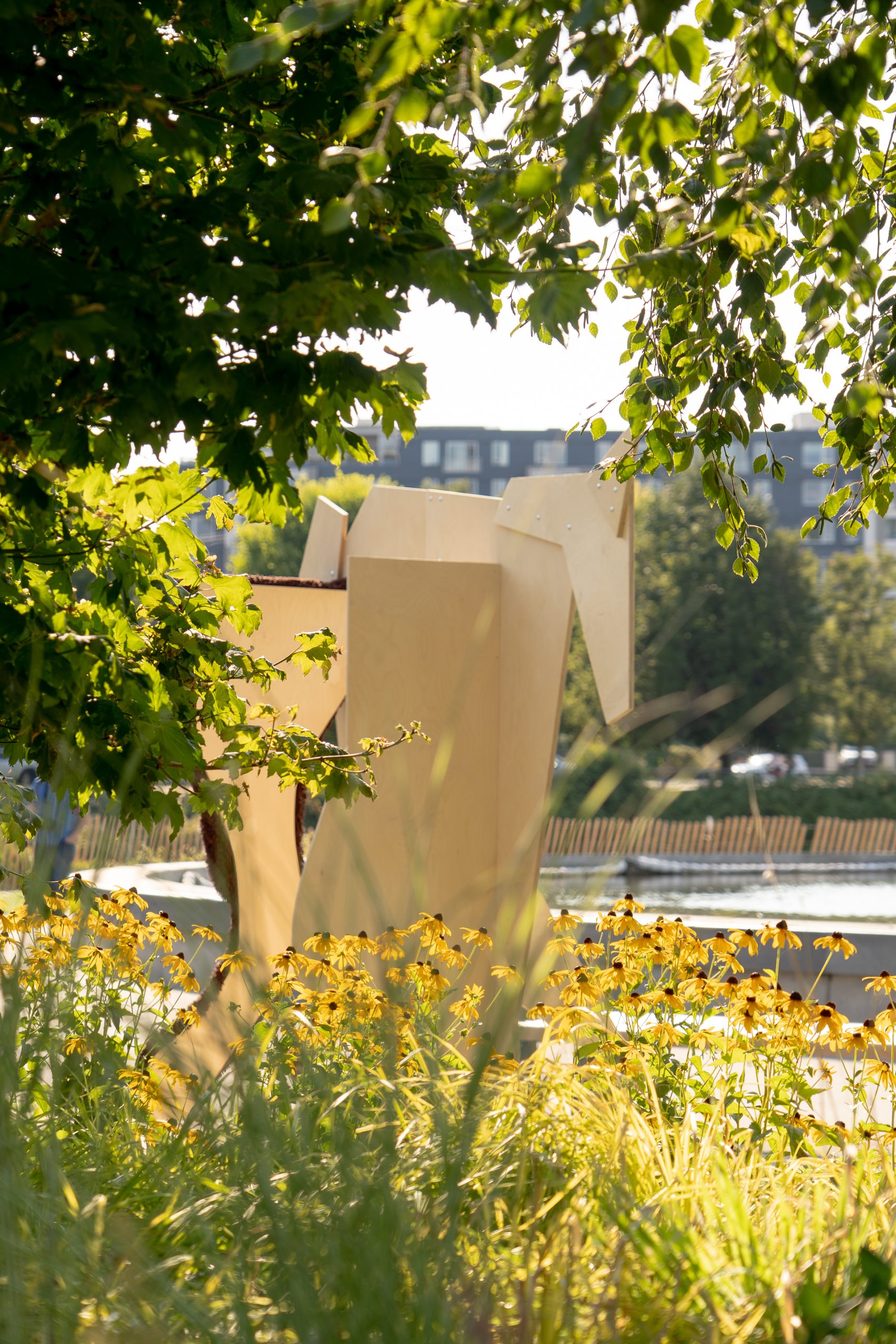
Photo: Studio Deng
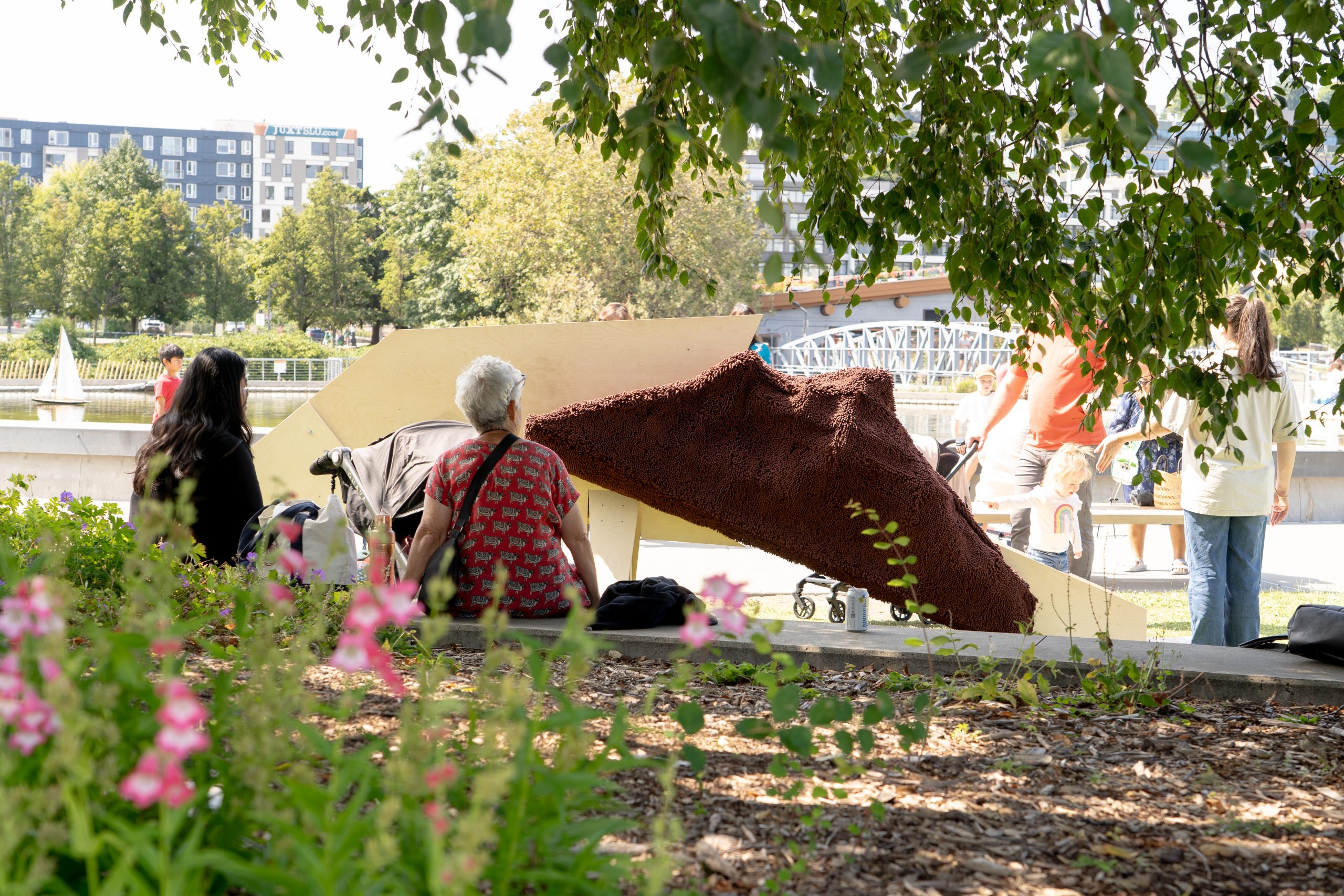
Photo: Studio Deng
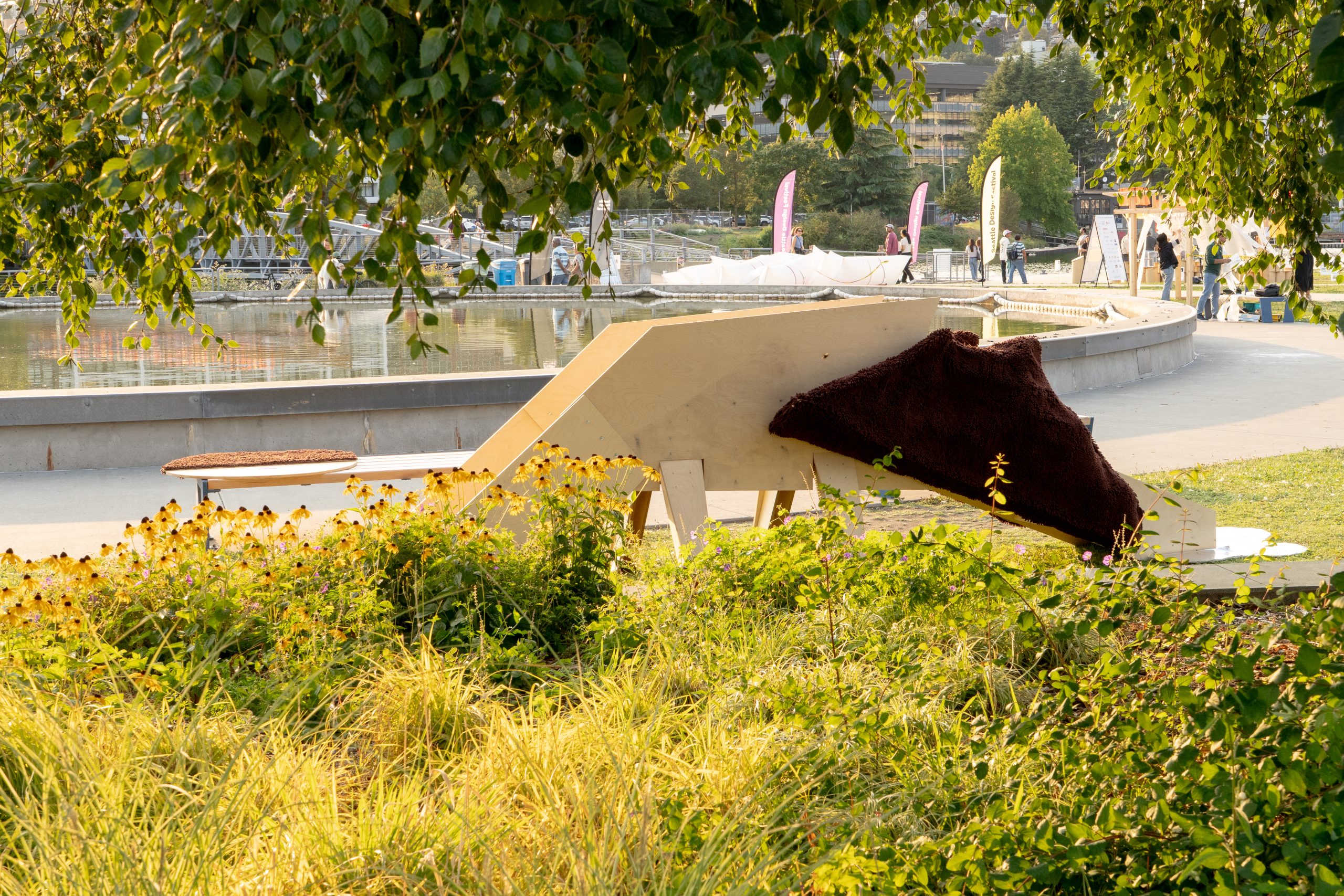
Photo: Studio Deng
Project Credits
Project: The Flatland Horse
Designer: Studio Deng – Meichen Wang, Yijia Xu, Qicheng Wu, Chen Yang, Fan Wu, Yangyi Li, and Hanlin Cai
Fabrication support: Brad McGuirt & North Ballard Chop Shop
Event: Seattle Design Festival 2026: IN[FLUX]
Location: Lake Union Park, Seattle, Washington, United States
Dates: 15–16 August 2026
Materials: 13-ply birch plywood, chenille and foamcore
Photography: Studio Deng; Chen Yang / @chenchenchenchenchen; Trevor Dykstra / @architecturegeek