Now Reading: Arba creates curved roof house in Murat informed by local slate structures
- 01
Arba creates curved roof house in Murat informed by local slate structures

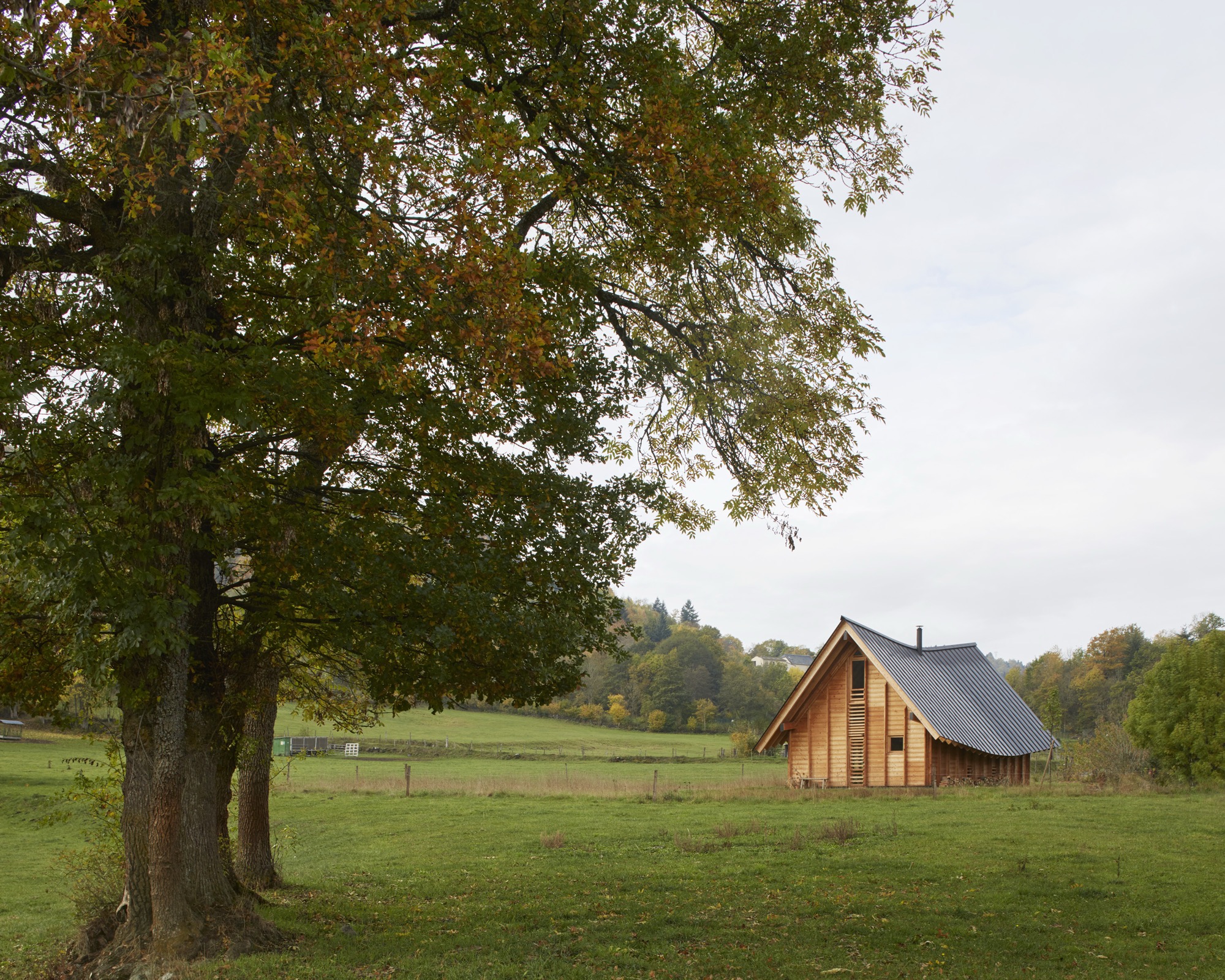

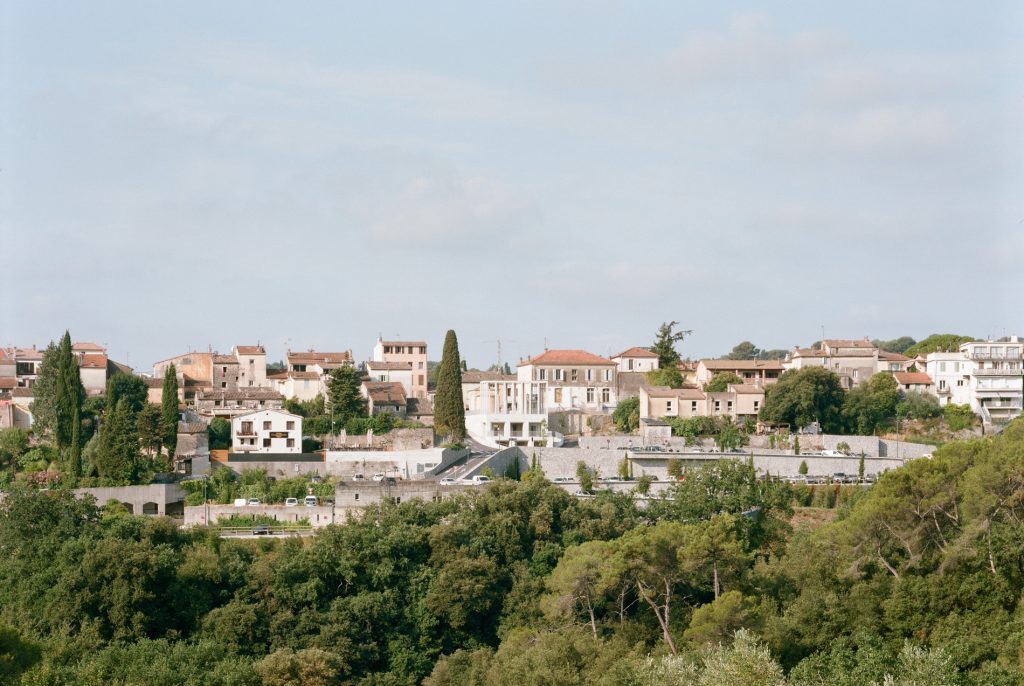
Set within the rural landscape of Murat in France, this 75 square metre house by arba, led by Jean Baptiste Barache and Sihem Lamine, begins with a re reading of local building traditions. The project draws from the heavy slate roofs of the region, whose curved silhouettes often emerged not from intention but from the gradual deformation of timber rafters under weight, or from the imprecision of hand built frameworks.

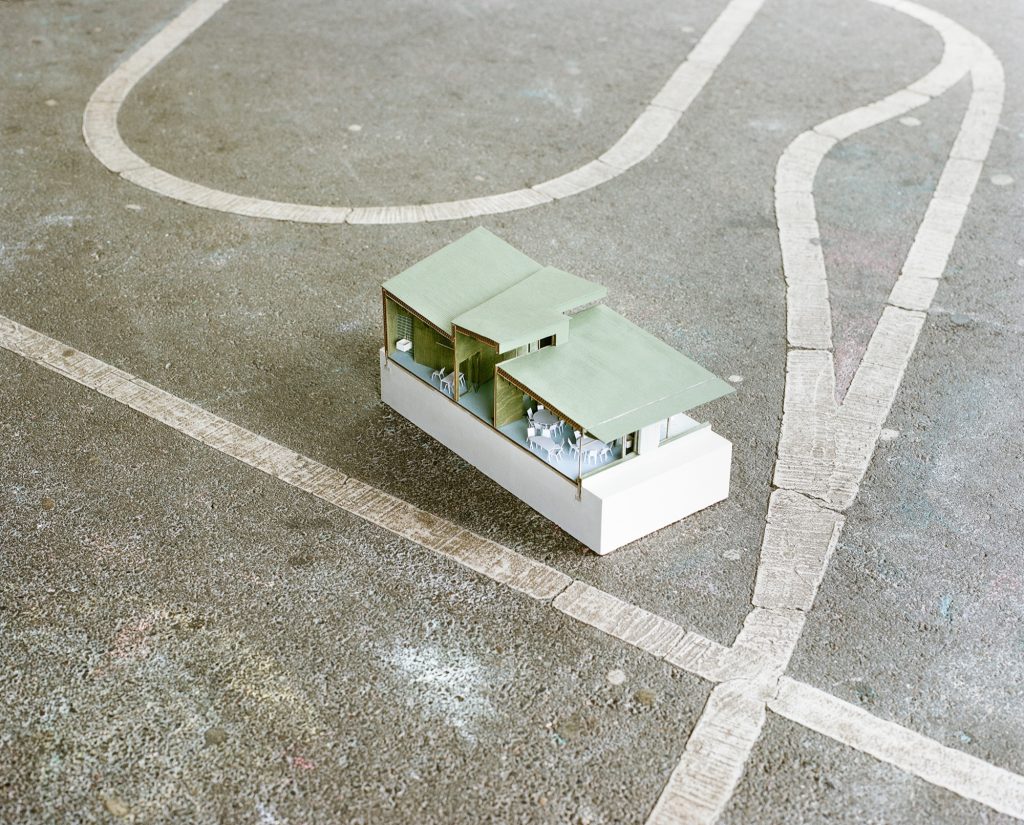
Rather than restoring this language through literal replication, the architects translate it into a contemporary gesture. The roof becomes a continuous, pliable surface that bends across the volume, convex on one side and concave on the other. In doing so, it positions itself against the rigidity of flat modernist roofs, proposing instead a form that is responsive, irregular, and grounded in material behaviour.


This geometry is not purely formal. The roof opens toward the south to capture low winter sunlight, while its northern edge remains closed, forming a protective barrier against prevailing winds. Climate, structure, and memory converge into a single architectural element that defines both the house’s silhouette and its environmental logic.


Beneath this expansive roof, the enclosure is conceived as a timber shell composed of larch modules. These elements alternate between solid and glazed panels, with fixed and operable openings that introduce variation across the façade. The system fragments the perimeter into a sequence of parts that resonate with the scale of the human body, avoiding the abstraction of a continuous wall.


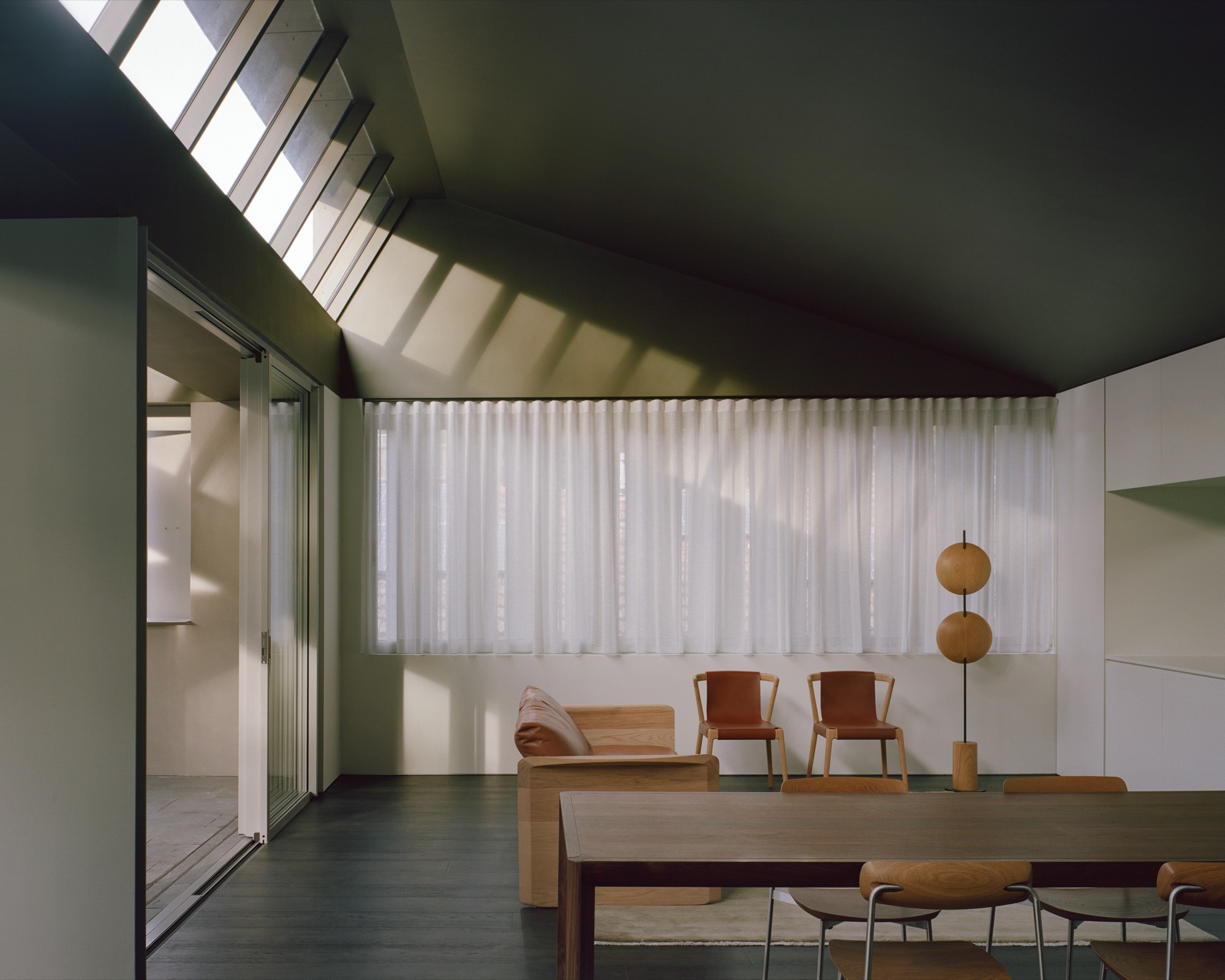
The interior unfolds as a single volume structured by the visible framework. While the full spatial extent is never grasped at once, the shifting perspectives allow for degrees of openness and retreat. Privacy is achieved not through partitions but through the subtle modulation of views and overlaps within the shell. The result is an interior that remains cohesive yet never entirely exposed, balancing intimacy with spatial continuity.

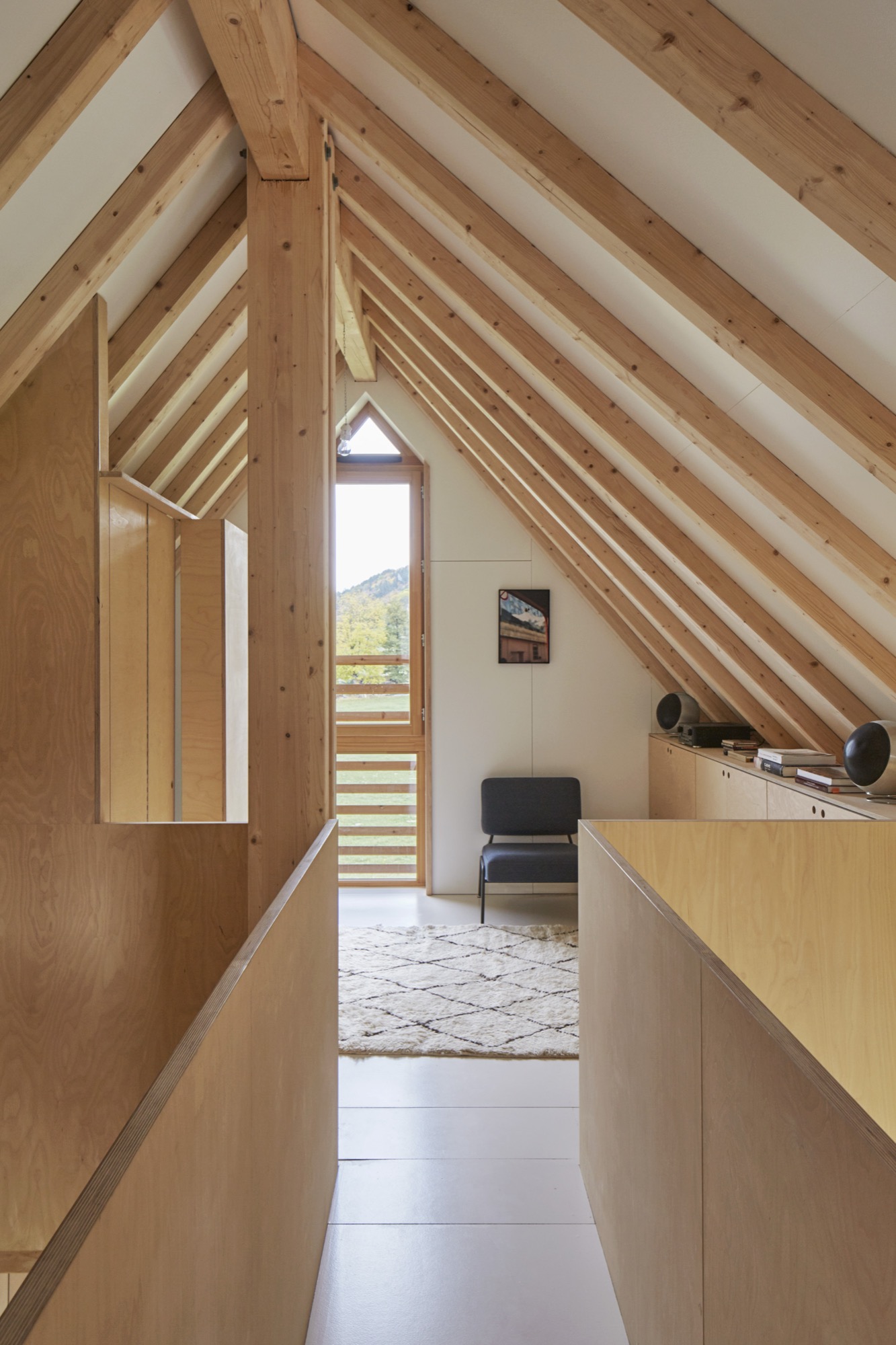
The project foregrounds the act of building as an integral part of its architectural expression. Rather than concealing construction, the house reveals the contributions of the craftsmen involved. The concrete slab, shaped by the mason, is left untreated, retaining its raw texture. The timber frame remains fully visible, asserting its structural presence throughout the space. Electrical cables run along the structural members without concealment, and the secondary elements are executed entirely in birch plywood.


Through this deliberate exposure, the house becomes a record of its own making. Materials are not neutral finishes but carriers of labour and process, each element articulating the hand that produced it. The architecture thus resists polish in favour of clarity, where construction, use, and perception are tightly interwoven.


Project Credit
Architects: arba
Location: Murat, France
Area: 75 square metres
Year: 2019
Photo: Jérémie Léon / @jeremieleon
More Photos