Now Reading: Wang Shu and Lu Wenyu: Curating the Venice Architecture Biennale 2027
- 01
Wang Shu and Lu Wenyu: Curating the Venice Architecture Biennale 2027

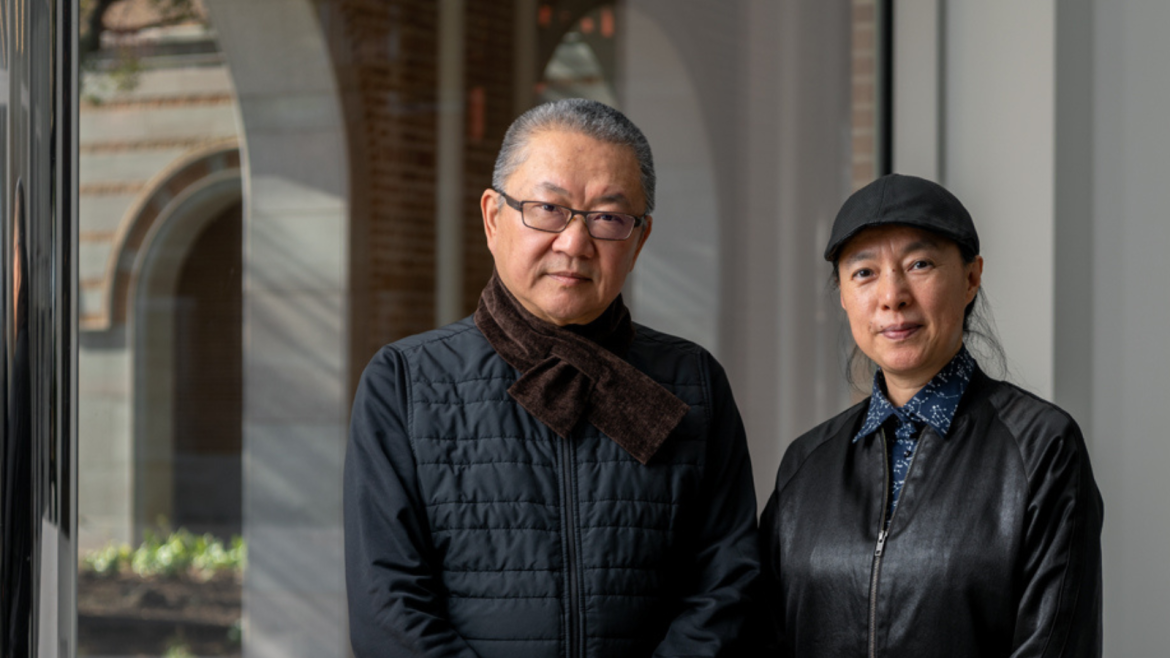

The appointment of Wang Shu and Lu Wenyu as curators of the 20th International Architecture Exhibition of the Venice Biennale, scheduled to open in 2027, brings a clearly defined architectural position into the centre of global discourse. It is a position that places construction, material memory, and cultural continuity at the core of architectural thinking.
Rather than pointing toward technological spectacle or curatorial novelty, their selection foregrounds an architecture rooted in making. This approach has been shaped by craft traditions, vernacular knowledge, and a sustained resistance to the homogenising forces of global urbanisation. It is a position formed over decades of practice at Amateur Architecture Studio, a studio that has consistently remained at the margins of professional orthodoxy while staying deeply engaged with the social and material realities of contemporary China.
FORMED THROUGH CONSTRUCTION
Wang Shu’s architectural education was never confined to the academy. Born in Urumqi in 1963 and trained at the Nanjing Institute of Technology before completing graduate studies at Tongji University, he spent his formative years working directly on construction sites. Through close engagement with masonry, carpentry, and on-site improvisation, Wang developed an understanding of architecture not as an abstract formal discipline, but as a lived practice shaped by labour, material, and time.
Lu Wenyu, educated within the same institutional framework, developed a parallel yet complementary trajectory. Her work has consistently focused on experimental construction methods rooted in vernacular logics, approaching sustainability as a cultural condition rather than a technological layer. Together, their partnership has resisted hierarchical authorship in favour of a shared, iterative process in which design, making, and teaching remain inseparable.
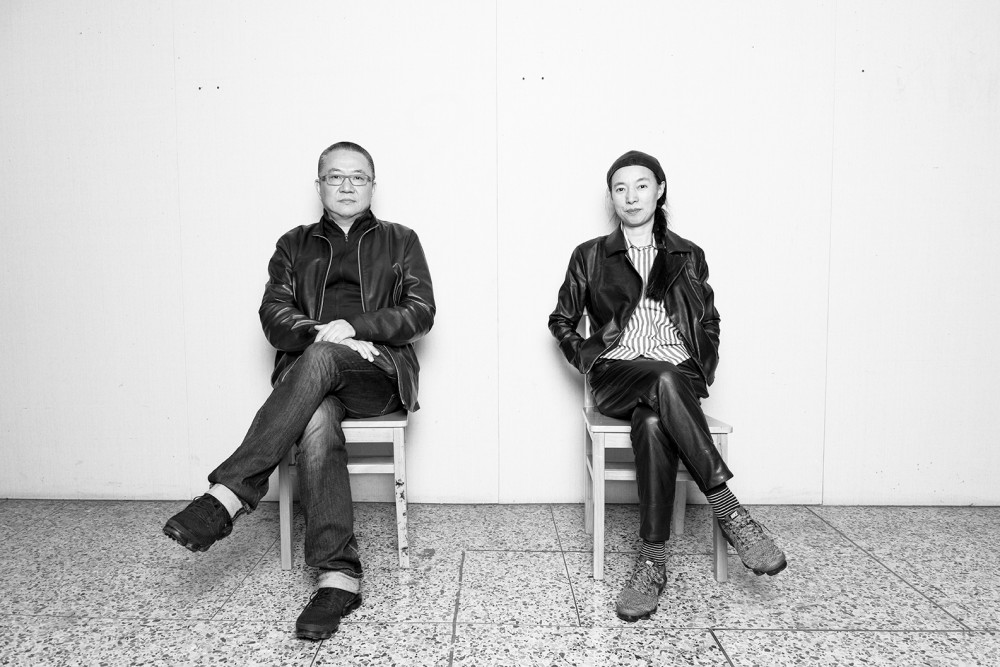
In 1997, they formalised this position by founding Amateur Architecture Studio in Hangzhou. The name itself functioned as a manifesto. At a moment when architectural practice in China was rapidly professionalising and increasingly aligned with speed, efficiency, and image-driven development, the term “amateur” was reclaimed to describe a mode of working guided by intuition, local knowledge, and direct engagement with materials and craftsmen.
ARCHITECTURE AGAINST ERASURE
The studio emerged during a period of unprecedented urban transformation. From the late 1990s onward, Chinese cities expanded at extraordinary speed, often through large-scale demolition that erased historic neighbourhoods, rural settlements, and layered urban fabrics. Against this backdrop, Wang Shu and Lu Wenyu articulated an alternative architectural ethic, one that treats architecture as a repository of memory rather than a vehicle for replacement.


This position found its most explicit expression in the Ningbo History Museum, completed in 2008. Constructed using tens of thousands of reclaimed bricks and tiles salvaged from demolished villages, the building transforms debris into structure. Rather than concealing the origins of its materials, the museum exposes them, embedding fragments of lost environments directly into its walls. The result is not a nostalgic reconstruction, but a tectonic assemblage in which memory is materialised rather than represented.

The museum’s mass and rough surfaces resist easy consumption. Its presence insists on duration, weight, and continuity, qualities largely absent from much contemporary development. In this sense, the building operates simultaneously as architecture and critique, questioning the cultural cost of rapid modernisation while proposing reuse as an ethical and architectural strategy.

A SHARED GENERATION
The appointment of Wang Shu and Lu Wenyu as curators of the Venice Architecture Biennale can also be read as recognition of a broader architectural generation that emerged in China during the late 1980s and 1990s. This generation was shaped by accelerated urbanisation, widespread demolition, and the rapid erosion of traditional built environments.
Within this context, the work of Liu Jiakun forms a parallel and revealing counterpoint. While Wang Shu and Lu Wenyu have articulated their resistance to homogenisation through material reuse, landscape logic, and the reconstruction of memory, Liu Jiakun has approached modernity from another angle, treating architecture as a form of social infrastructure embedded in everyday life rather than as an object of spectacle.
Born in Chengdu in 1956, Liu Jiakun graduated from the Chongqing Institute of Architecture and Engineering in 1982. Disenchanted with the profession in its early years, he spent an extended period working in Tibet under harsh environmental conditions, while simultaneously pursuing writing and meditation. This formative experience, marked by isolation, scarcity, and direct engagement with place, shaped an architectural attitude grounded in restraint, adaptability, and ethical pragmatism.

After founding Jiakun Architects in 1999, Liu developed a practice characterised by what he has often described as appropriate architecture. His projects negotiate between history and infrastructure, communal life and urban density. Works such as West Village in Chengdu, completed in 2015, transform high-density programmes into layered public landscapes, where ramps, courtyards, and roof promenades create spaces for encounter and collective use. Here, architecture functions less as formal expression than as a framework for social coexistence.

Despite differences in formal language, Wang Shu, Lu Wenyu, and Liu Jiakun share a fundamental position. None of them treats tradition as an image to be replicated. Instead, tradition is approached as a transferable logic capable of reinterpretation and contemporary relevance. Wang’s work often draws from the spatial intelligence of gardens and landscape painting, translated through reclaimed materials and tectonic assemblage. Liu’s architecture privileges subtle adaptation, civic permeability, and the everyday rituals of urban life.

The temporal distance between Wang Shu’s Pritzker Prize in 2012 and Liu Jiakun’s in 2025 further clarifies this generational arc. Wang’s award was widely understood as a critique of China’s icon-driven construction boom, elevating material reuse and cultural memory as ethical alternatives to spectacle. By 2025, slower growth, environmental pressure, and social concerns had redirected architectural attention toward precision, responsibility, and human-centred design, values reflected in the recognition of Liu Jiakun’s work.

Fuyang Cultual Complex, Fuyang, China / Wang Shu. Photo: Iwan Baan Fuyang Cultual Complex, Fuyang, China / Wang Shu. Photo: Iwan Baan Fuyang Cultual Complex, Fuyang, China / Wang Shu. Photo: Iwan Baan Fuyang Cultual Complex, Fuyang, China / Wang Shu. Photo: Iwan Baan Fuyang Cultual Complex, Fuyang, China / Wang Shu. Photo: Iwan Baan


Read together, these trajectories suggest not a stylistic movement, but a shared architectural ethic that resists speed, rejects abstraction detached from lived reality, and insists on architecture’s capacity to mediate between aspiration and everyday life.
COURTYARD, LANDSCAPE, AND SOCIAL FORM
Across a body of work that spans institutional, residential, and cultural programmes, Wang Shu and Lu Wenyu have repeatedly returned to spatial archetypes drawn from Chinese architectural history. Courtyards, terraces, layered paths, and permeable thresholds recur not as stylistic references, but as social and environmental devices capable of adaptation.

The Xiangshan Campus of the China Academy of Art, developed in multiple phases between 2001 and 2007, exemplifies this approach at an institutional scale. Buildings follow the contours of the landscape, forming a porous ensemble that dissolves the boundary between architecture and terrain. Recycled bricks and tiles are reassembled into walls and roofs, while circulation unfolds through courtyards, ramps, and outdoor rooms that recall Jiangnan garden traditions. The campus reads not as a unified object, but as a constructed landscape shaped by movement, light, and seasonal change.

In the Vertical Courtyard Apartments in Hangzhou, completed in 2007, the logic of the traditional courtyard is translated into a dense urban housing typology. Six residential towers are organised around shared vertical voids, introducing communal space into the vertical dimension of high-rise living. This configuration challenges the anonymity typical of contemporary housing blocks, proposing instead a model in which density and social proximity coexist.
The Fuyang Cultural Complex, completed in 2018 along the Fuchun River, extends these ideas into a civic context. Inspired by Huang Gongwang’s fourteenth-century scroll Dwelling in the Fuchun Mountains, the project unfolds as a sequence of terraced volumes, courtyards, and paths. Architecture becomes a spatial narrative, shaped through movement and perception rather than image.
SCALE, MATERIAL, AND SENSORY EXPERIENCE
Even in smaller works, the studio’s concerns remain consistent. The Ceramic House at Jinhua Architecture Park, a modest pavilion of approximately 120 square metres, celebrates regional ceramic traditions through form and surface. Clad entirely in ceramic tiles, the structure responds to wind, rain, and light, creating an interior where shadow and reflection shift throughout the day. The project distils the studio’s approach into a compact sensory experience, demonstrating how material specificity can generate architectural meaning independent of scale.


More recent works, including the Lin’an History Museum completed in 2022, continue this trajectory. Across these projects, construction is treated not as a neutral means to an end, but as a cultural act through which time, labour, and memory are inscribed into space.
FROM PRITZKER TO VENICE
Wang Shu’s receipt of the Pritzker Architecture Prize in 2012 marked a significant moment in the international recognition of Chinese architecture. Awarded at a time when global attention focused heavily on spectacle and scale, the jury’s decision was widely read as an endorsement of an alternative architectural ethic attentive to context, craft, and continuity.
More than a decade later, the appointment of Wang Shu and Lu Wenyu as curators of the Venice Architecture Biennale extends this position into a global curatorial framework. While the themes of the 2027 exhibition have yet to be announced, their body of work suggests a Biennale concerned less with novelty than with fundamental questions of making, memory, and mediation between past and present.
In an era marked by ecological urgency and cultural homogenisation, their curatorship frames architecture as a cultural process rather than a visual product. It suggests that sustainability cannot be separated from memory, and that meaningful modernity emerges through continuity, reuse, and care.
As Venice prepares for the 2027 exhibition, Wang Shu and Lu Wenyu bring with them an architecture shaped from the ground up. It is an architecture that insists on the intelligence of materials, the dignity of labour, and the enduring value of building slowly, attentively, and in dialogue with place.