Now Reading: Lachlan Seegers Architect reinterprets sawtooth roof for Lane Cove House
- 01
Lachlan Seegers Architect reinterprets sawtooth roof for Lane Cove House


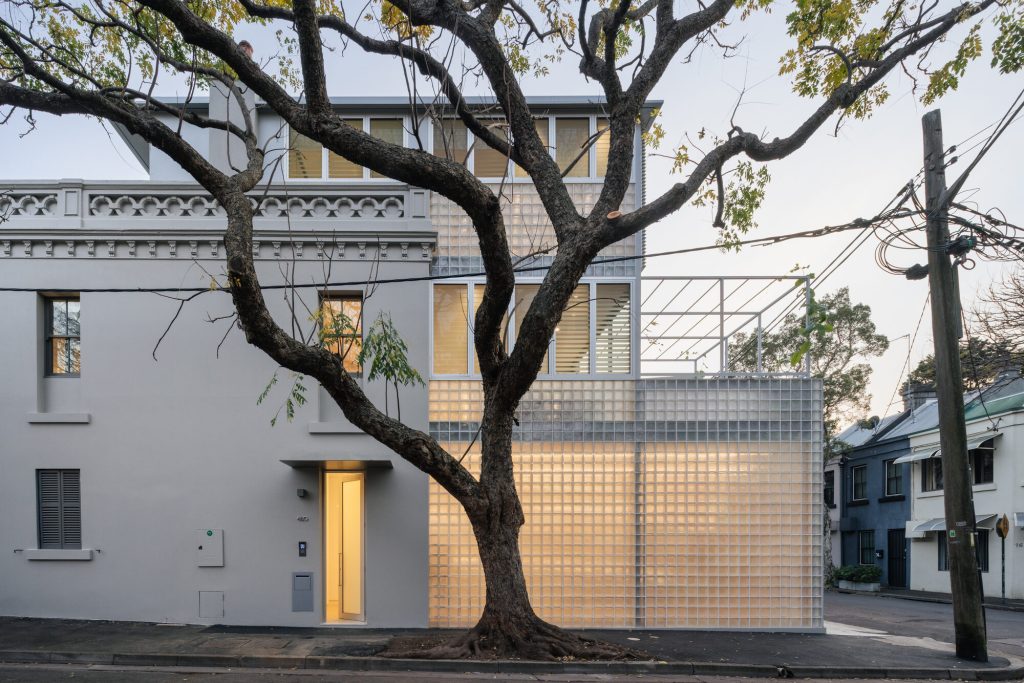
Set within the leafy suburb of Lane Cove in Sydney, this residence by Lachlan Seegers Architect unfolds as a quiet yet deliberate response to place, where traces of industrial heritage and the rhythms of the natural environment converge. Rather than treating the site as a neutral ground for domestic occupation, the project situates itself within a longer territorial narrative shaped by agriculture, early land grants, and later industrial transformation.
Lane Cove’s proximity to the harbour once positioned it as a productive corridor for logging and shipping, a condition that left behind a distinct architectural vocabulary. Among its most recognisable remnants are factory buildings defined by sawtooth roofs, a typology developed to optimise daylight and ventilation. These industrial structures, still scattered across the area, form a latent memory embedded within the suburban fabric.
The house draws from this lineage not as a literal reference, but as a generative framework through which history is reinterpreted and reactivated.

ROOF AS INSTRUMENT OF LIGHT
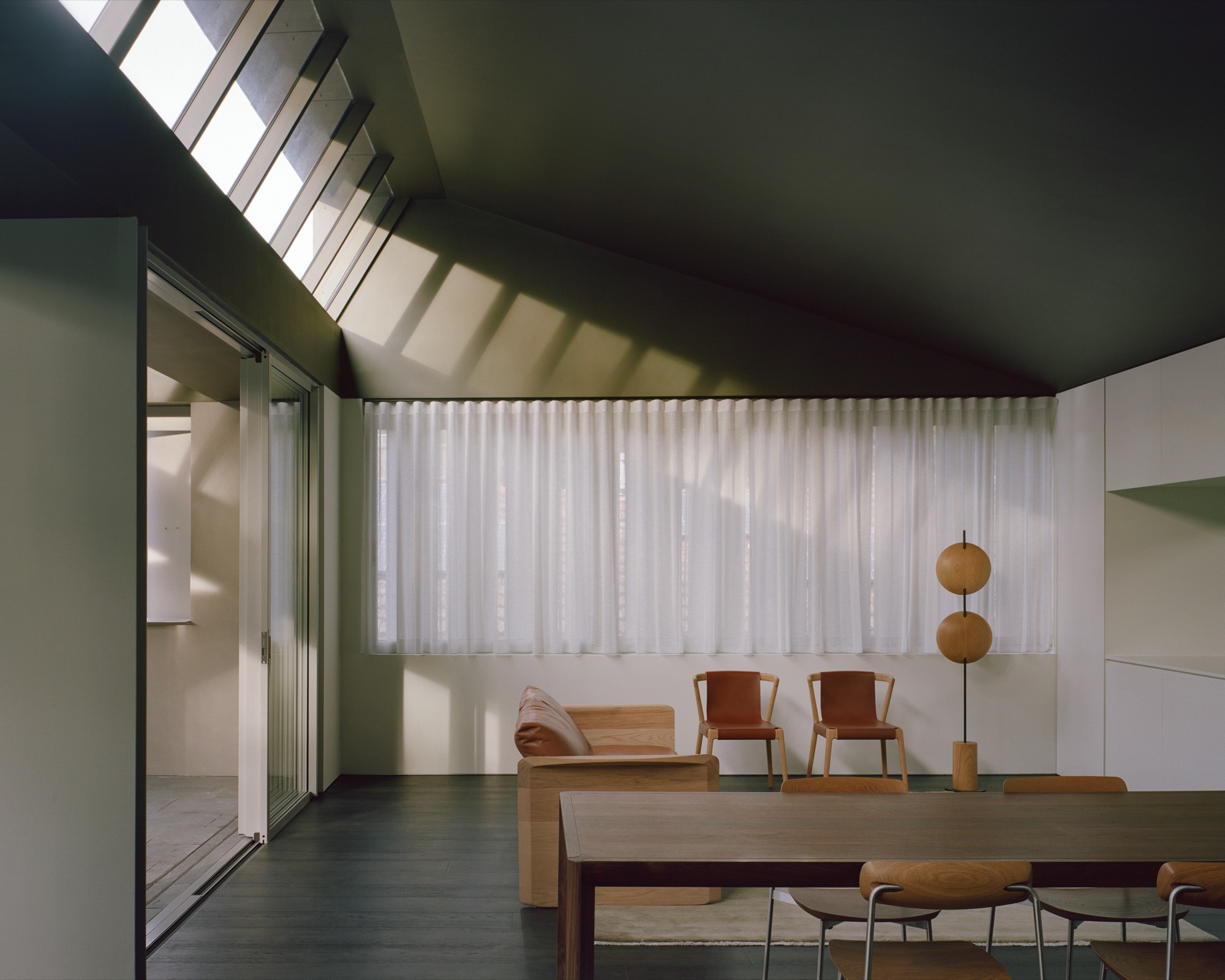
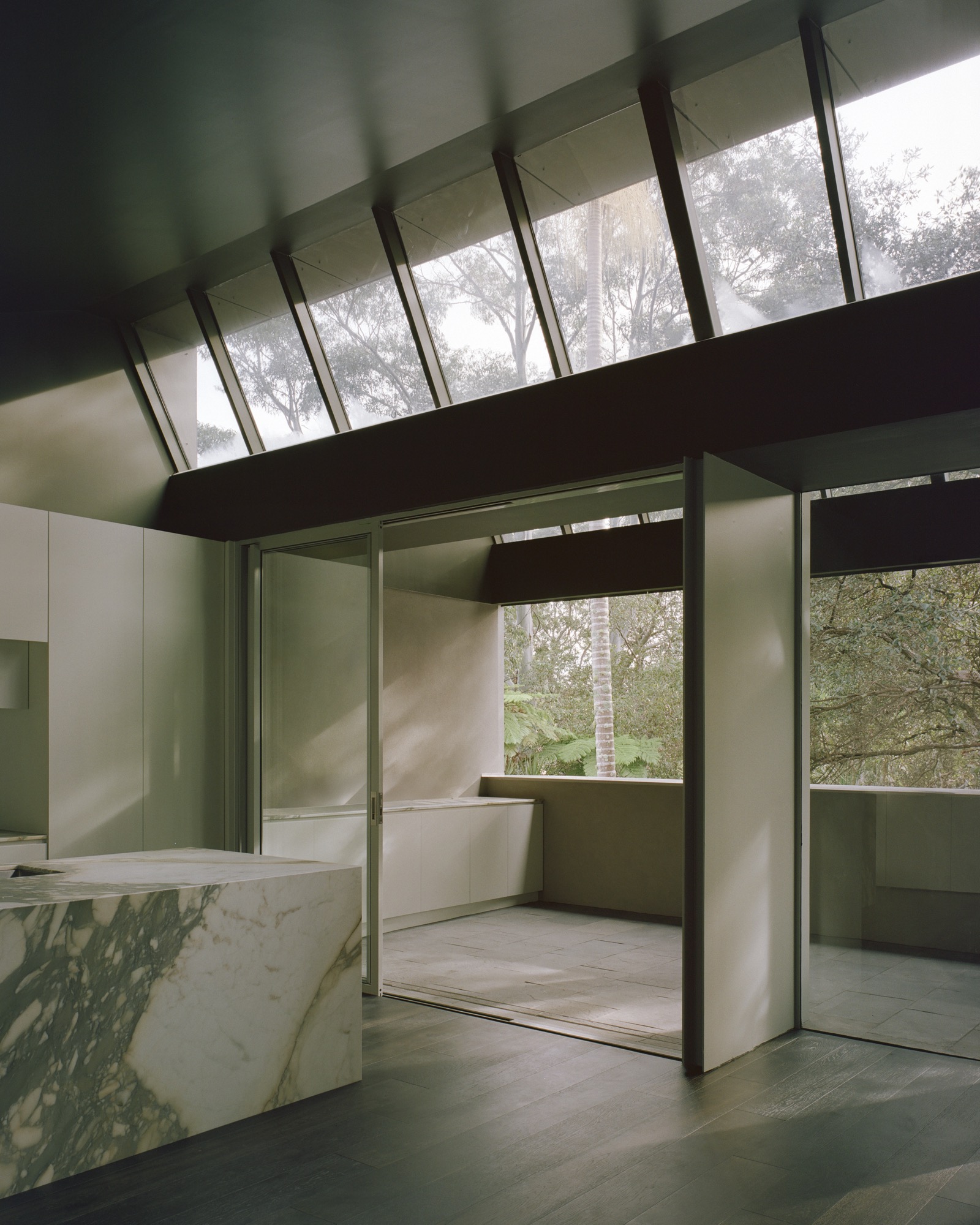
At the core of the project is a contemporary reworking of the sawtooth roof, deployed as both spatial device and atmospheric mediator. The roof is not simply a formal gesture, but an operative system that orchestrates light across the interior.


Each room is positioned to receive controlled daylight from above, producing a sequence of spaces that shift in character throughout the day. Light enters obliquely, grazing surfaces and opening upward views toward the sky, reinforcing a constant awareness of time and season. This calibrated relationship between enclosure and exposure transforms the domestic interior into a register of environmental change.


The reinterpretation of the sawtooth form thus extends beyond homage. It becomes a mechanism through which the house establishes a dialogue with its climatic context while embedding memory within its geometry.


HOUSE WITHIN A GARDEN
Equally central to the project is its dissolution into the surrounding landscape. The house is conceived less as an object placed in a garden than as a spatial sequence immersed within it. Architecture and landscape are interwoven through a series of thresholds, openings, and courtyards that draw the exterior inward.
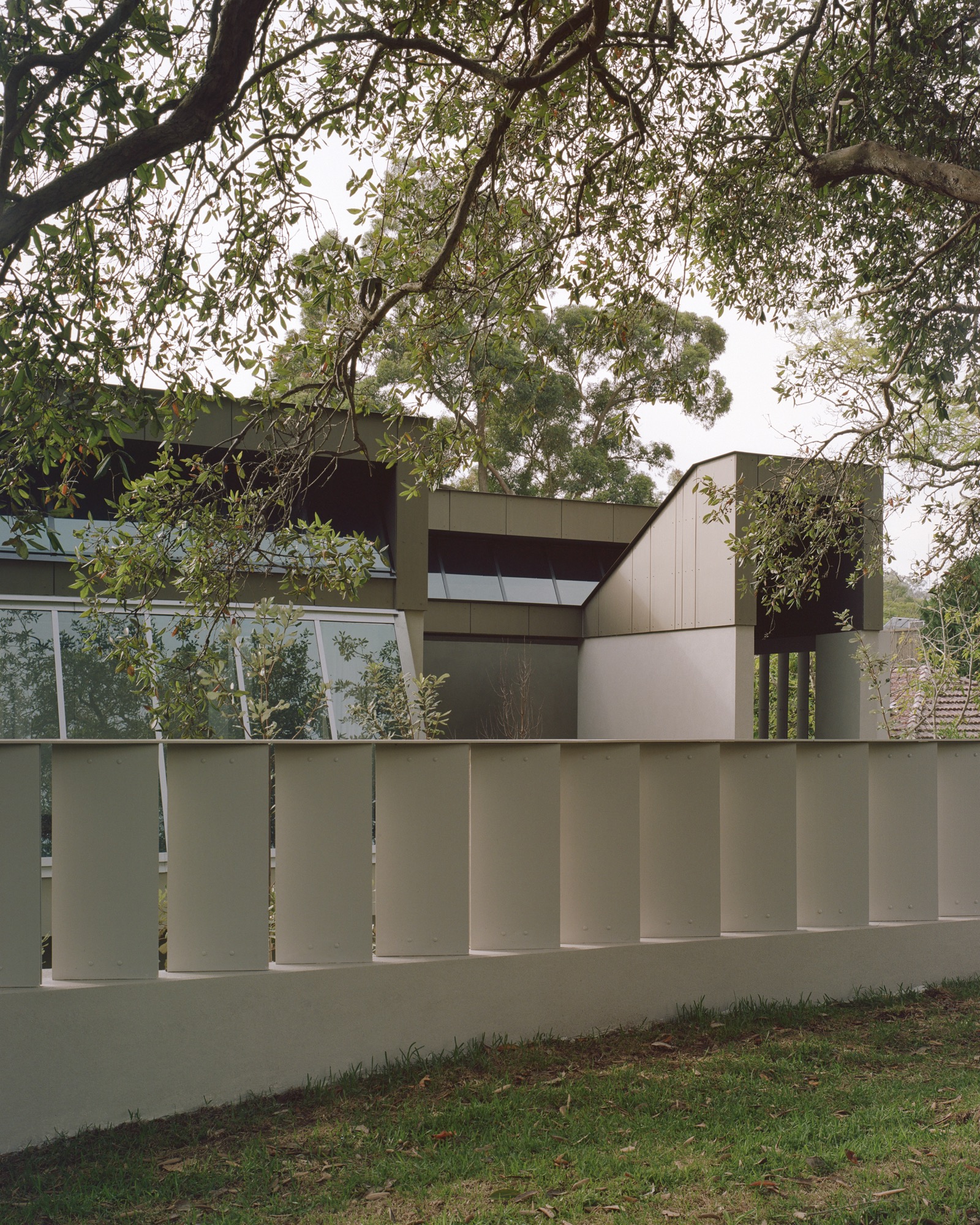
Large apertures frame the mature tree canopy, while carefully positioned voids allow the garden to penetrate deep into the plan. These moments generate what can be understood as garden rooms, spaces where interior and exterior conditions overlap to create zones of retreat and quiet contemplation.
This approach resists the conventional boundary between house and site. Instead, it constructs a layered environment in which inhabitation unfolds through movement between light, vegetation, and enclosure.
MATERIAL TONE AND VISUAL IDENTITY
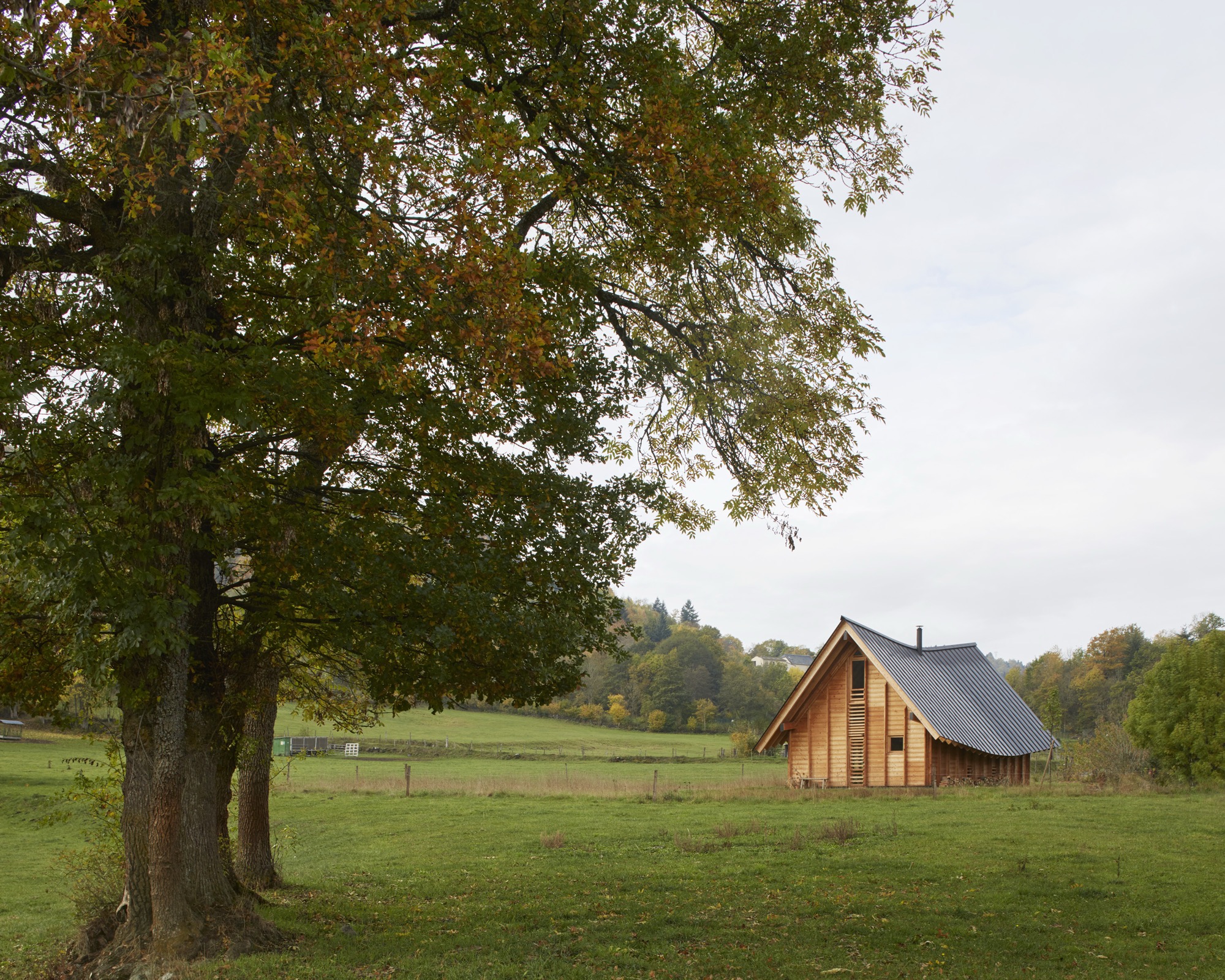
The project’s material and chromatic strategy further anchors it within its context. A dark green roof establishes a visual continuity with the surrounding canopy, allowing the building to recede into the landscape when viewed from a distance. In contrast, the neutral base reflects the tonal softness of the harbour, introducing a subtle dialogue between ground and horizon.
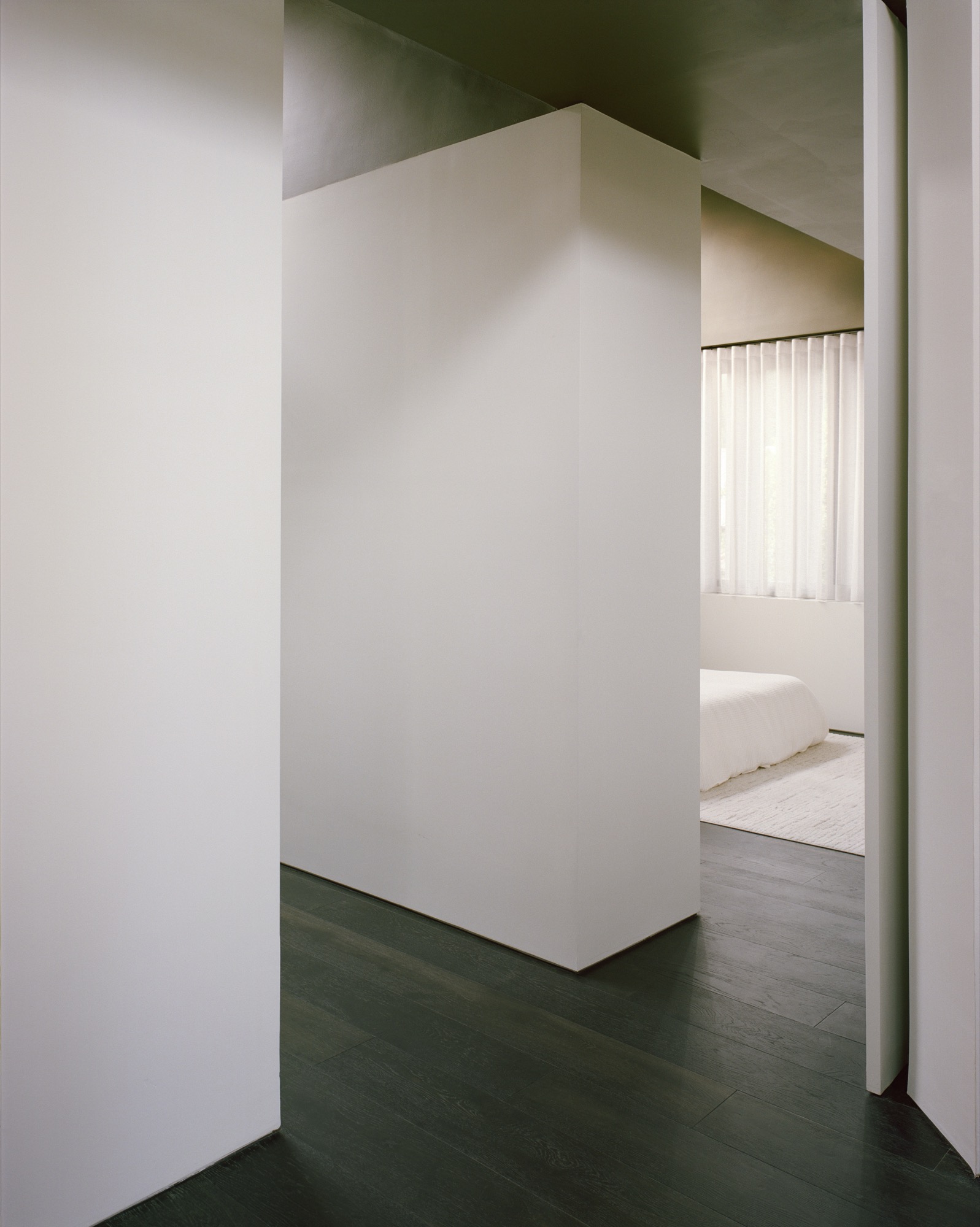
Internally, this palette is extended through restrained material choices and muted textures. The atmosphere remains cohesive, avoiding contrast in favour of gradual tonal shifts that reinforce the house’s embeddedness within its environment.


Furnishings introduce a seasonal register, drawing from the hues of deciduous maple trees visible from within the house and dispersed across the suburb. These elements operate not as decorative accents, but as extensions of the external landscape into the domestic interior.
Project Credit
Project name: Lane Cove House
Design firm: Lachlan Seegers Architect / @lachlanseegersarchitect
Location: Lane Cove, Sydney, Australia
Photo: Rory Gardiner / @arorygardiner