Now Reading: Caronte restoration by Margine transforms Salento farmhouse into a restaurant
- 01
Caronte restoration by Margine transforms Salento farmhouse into a restaurant

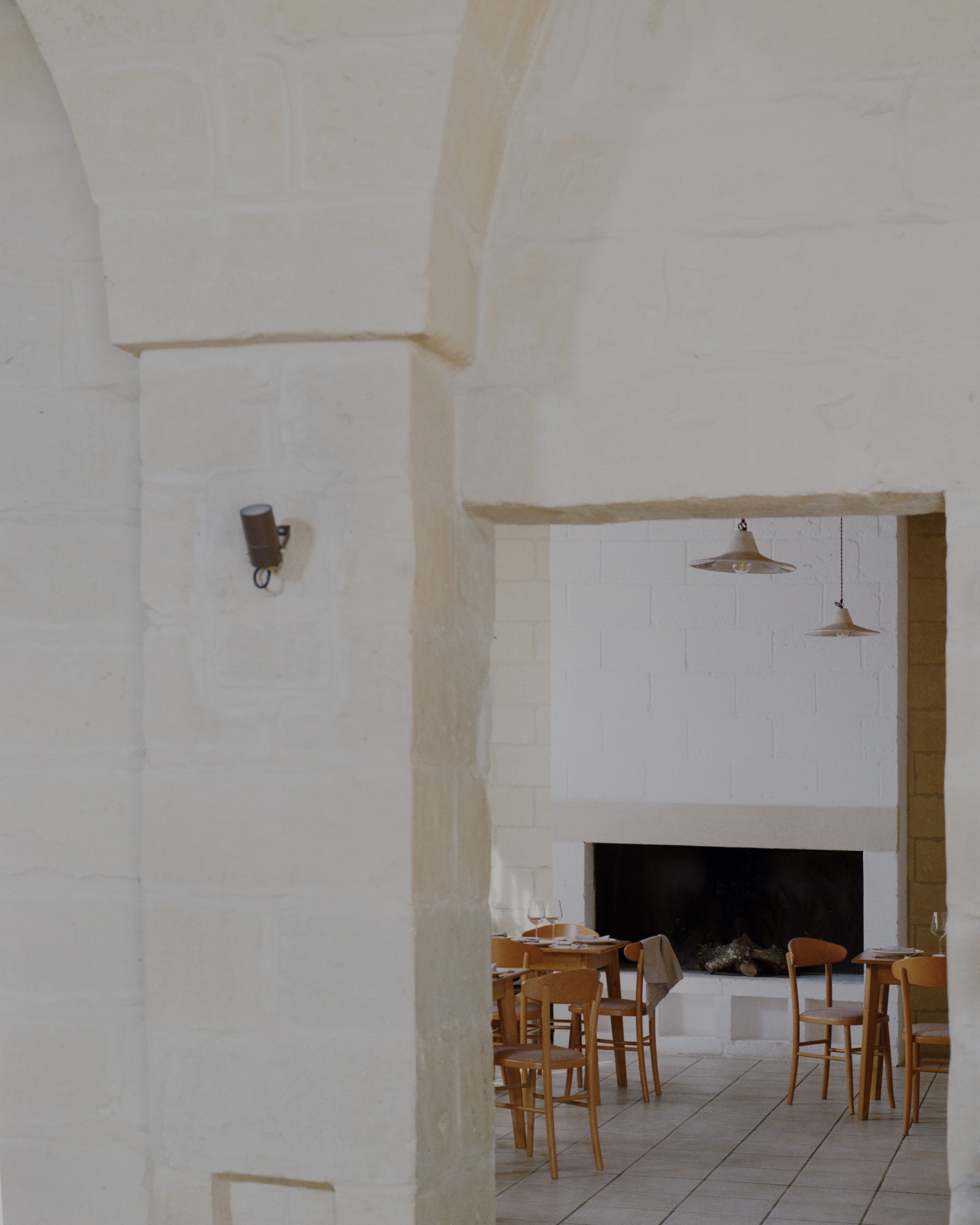

Located in the countryside between Lecce and Vernole, Masseria Caronte is a former rural complex restored by Margine and converted into a restaurant. The intervention focuses on recovering the original spatial structure while adapting the building to a new use with minimal architectural gestures.

The masseria is organised around a square courtyard enclosed by Lecce stone walls, with a sequence of vaulted rooms forming the main built volume. Over time, multiple additions altered this configuration, including service blocks, reconstructed attics, and a continuous roof covering the courtyard. These interventions disrupted both the spatial clarity and the material consistency of the complex.

The project removes these later layers to reveal the original structure. False roofs and non-original finishes are eliminated, allowing the courtyard to be reopened and the stone surfaces to regain their presence. This process restores the relationship between the open central space and the enclosed rooms.


New functions are introduced through a limited number of insertions. A counter, a fireplace, and a partition are added to organise the program without modifying the existing layout. Built in tuff stone and finished with limewash, these elements are clearly distinguishable from the original fabric while remaining materially coherent. The counter integrates reception and service functions, the fireplace defines one of the main rooms, and the partition separates service areas from the vaulted spaces.


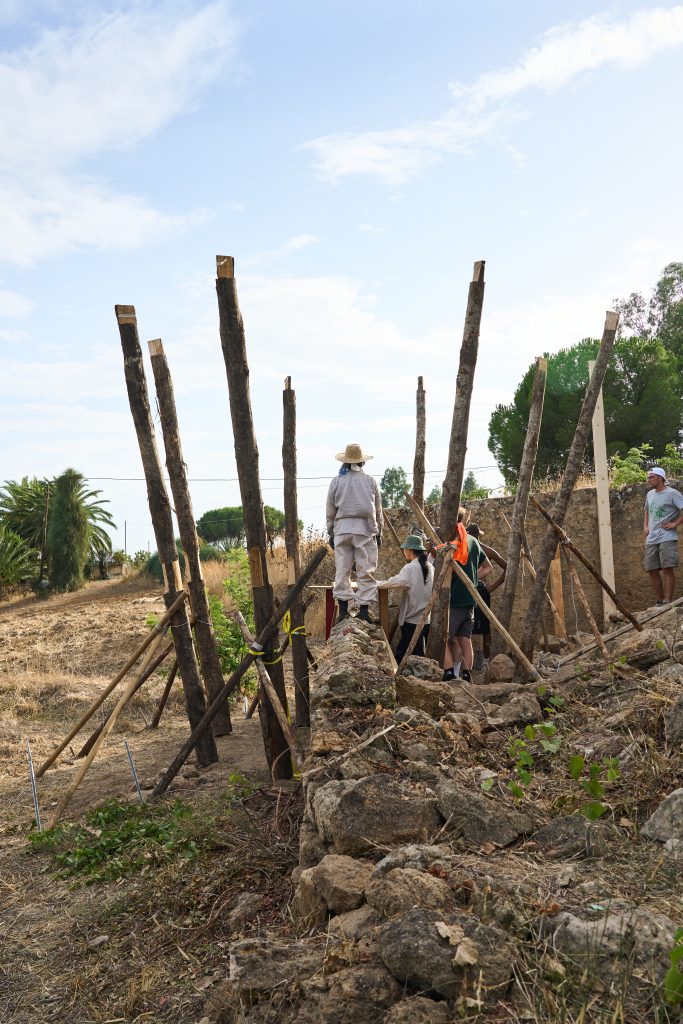
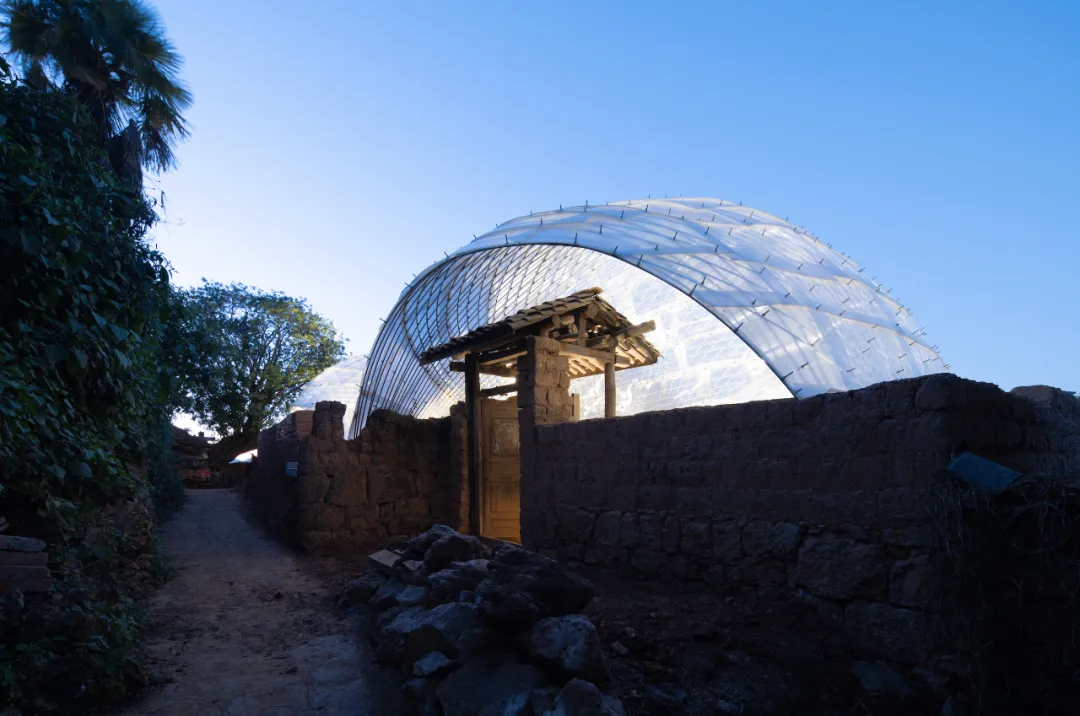
The courtyard is partially sheltered by a lightweight Corten steel structure with reed cladding, providing shade while maintaining openness. Furniture and secondary elements are made from steel, stone, and wood, following a restrained material palette. The project operates through subtraction and precise additions, preserving the original spatial qualities of the masseria while enabling its contemporary use.


Masseria Caronte had undergone multiple transformations across decades, each layer reflecting shifting uses and informal adaptations. The original configuration centred on a square courtyard enclosed by thick Lecce stone walls, with a sequence of vaulted rooms forming the primary built edge. Later additions introduced adjacent volumes, reconstructed attics in brick and concrete, and auxiliary service blocks, gradually fragmenting the architectural language. A continuous wooden roof once covered the courtyard, further obscuring the clarity of the enclosed space.


Project Credits
Project name: Caronte (Masseria Caronte)
Architecture Firm: Margine / @marginestudio
Location: Salento, between Lecce and Vernole, Italy
Completion Year: 2025
Existing Structure: Historic rural masseria in Lecce stone
Key Materials: Lecce stone, tuff stone, limewash, Corten steel, reed, wood, terracotta
Photo: Marcello Mariana / @marcellomariana