Now Reading: The life beneath the surface of Veronika Csonka’s family garden
- 01
The life beneath the surface of Veronika Csonka’s family garden

The life beneath the surface of Veronika Csonka’s family garden
For generations, Veronika Csonka’s family garden in Zamárdi was a place of sustenance and care. For the Budapest-based artist, it has also become a repository of memory, and a place from which to reconsider her relationship with the living world. Before her exhibition at Ani Molnár Gallery, Csonka installed a sensor-based object in the garden to record environmental conditions. A familiar place could now be encountered through changes that ordinary observation might miss.
That shift in attention runs through What has been here all along, her solo exhibition in Budapest. Paintings, objects, microscopic observations and biological processes bring different kinds of looking into the same space. The question is how a relationship with nature changes when its less visible structures and activities begin to register.
The garden as a changing system
The garden’s personal history gives the use of sensors a particular purpose. Measurements offer another way of staying attentive to a physically distant place, extending a connection already formed through family life and care. The device recorded environmental parameters during the period before the exhibition, making processes accessible beyond the limits of a passing glance.
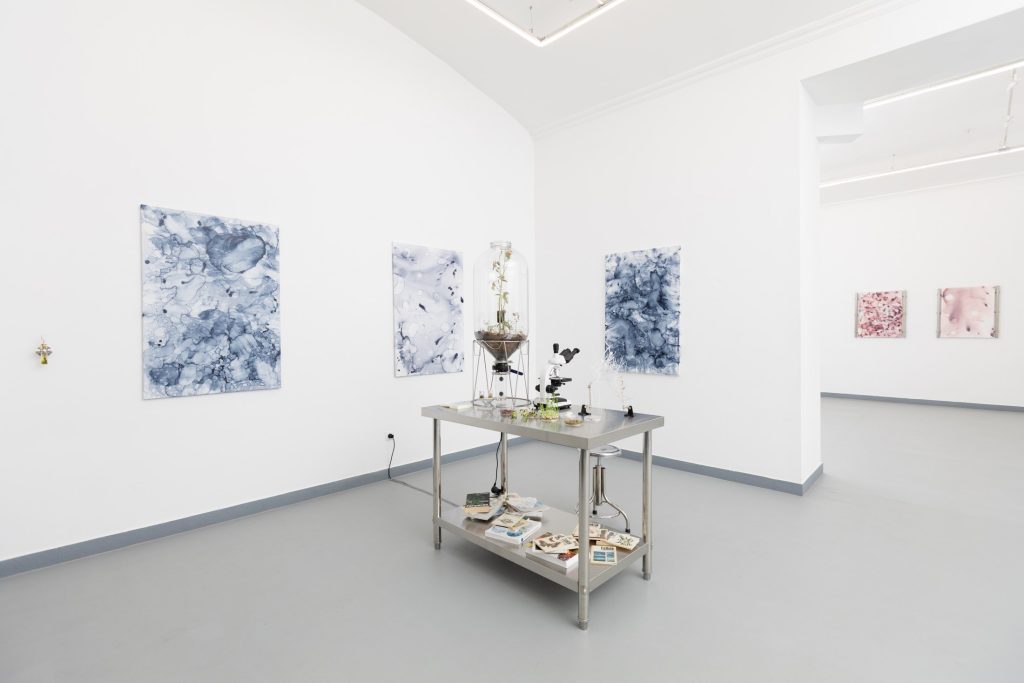
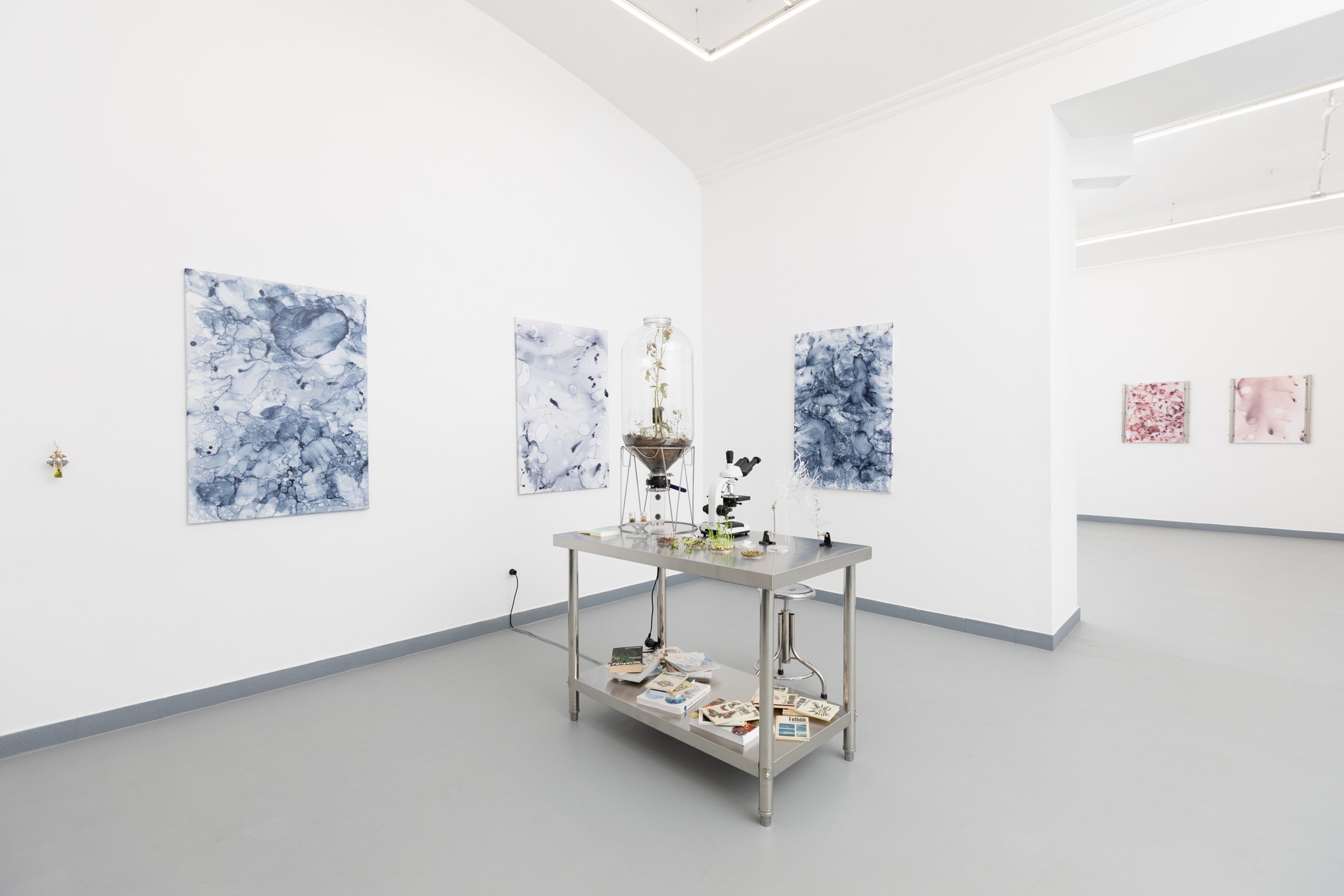
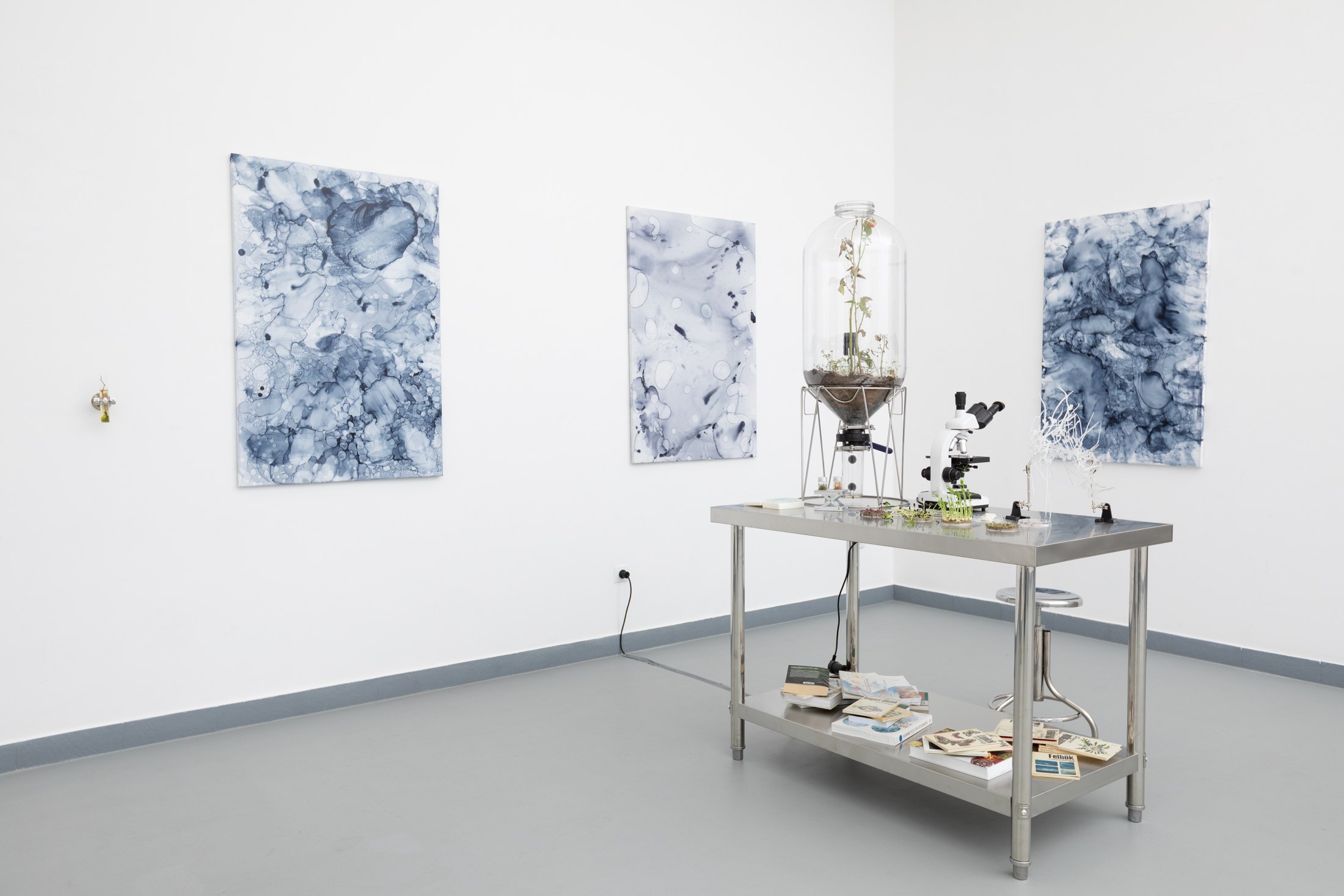
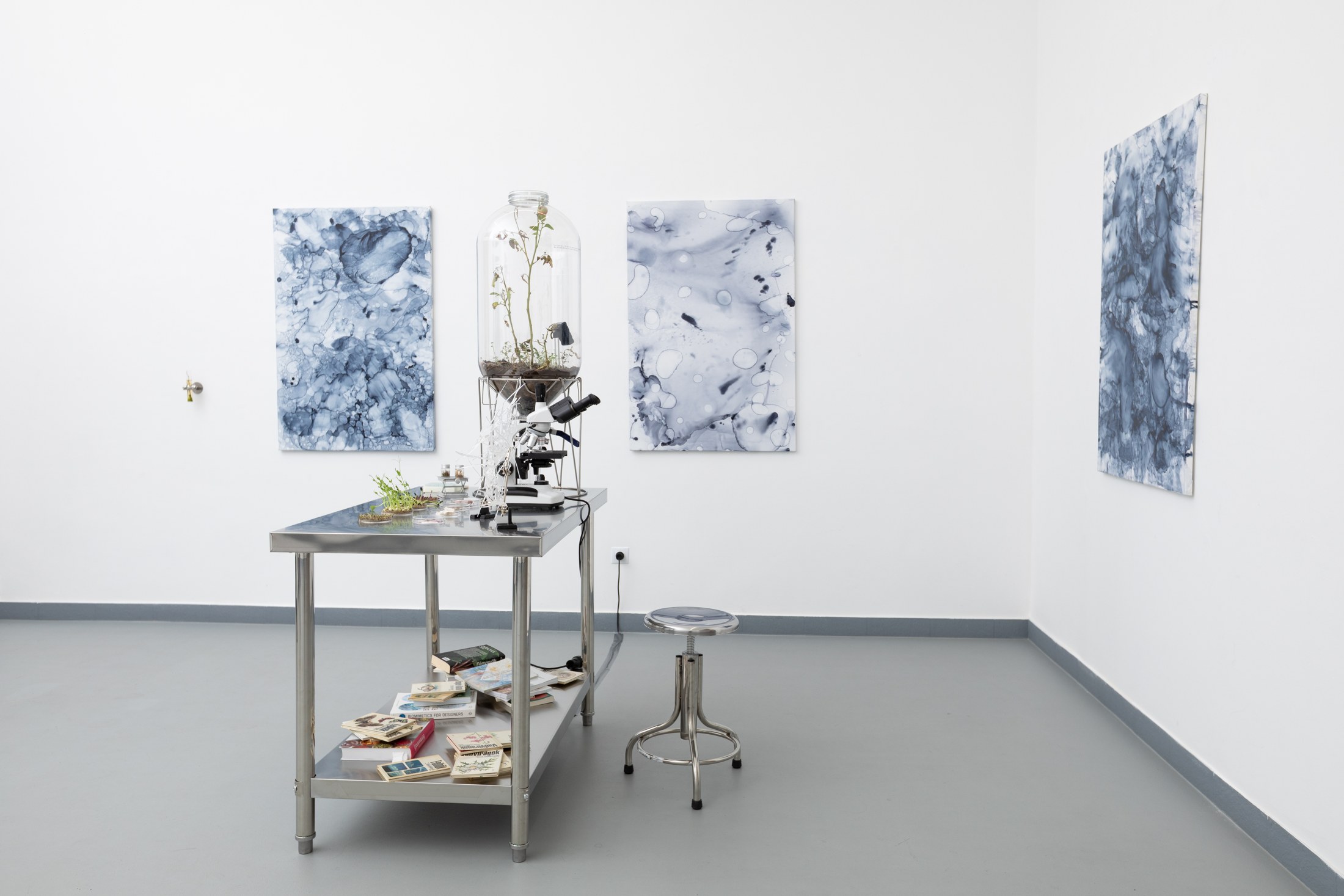
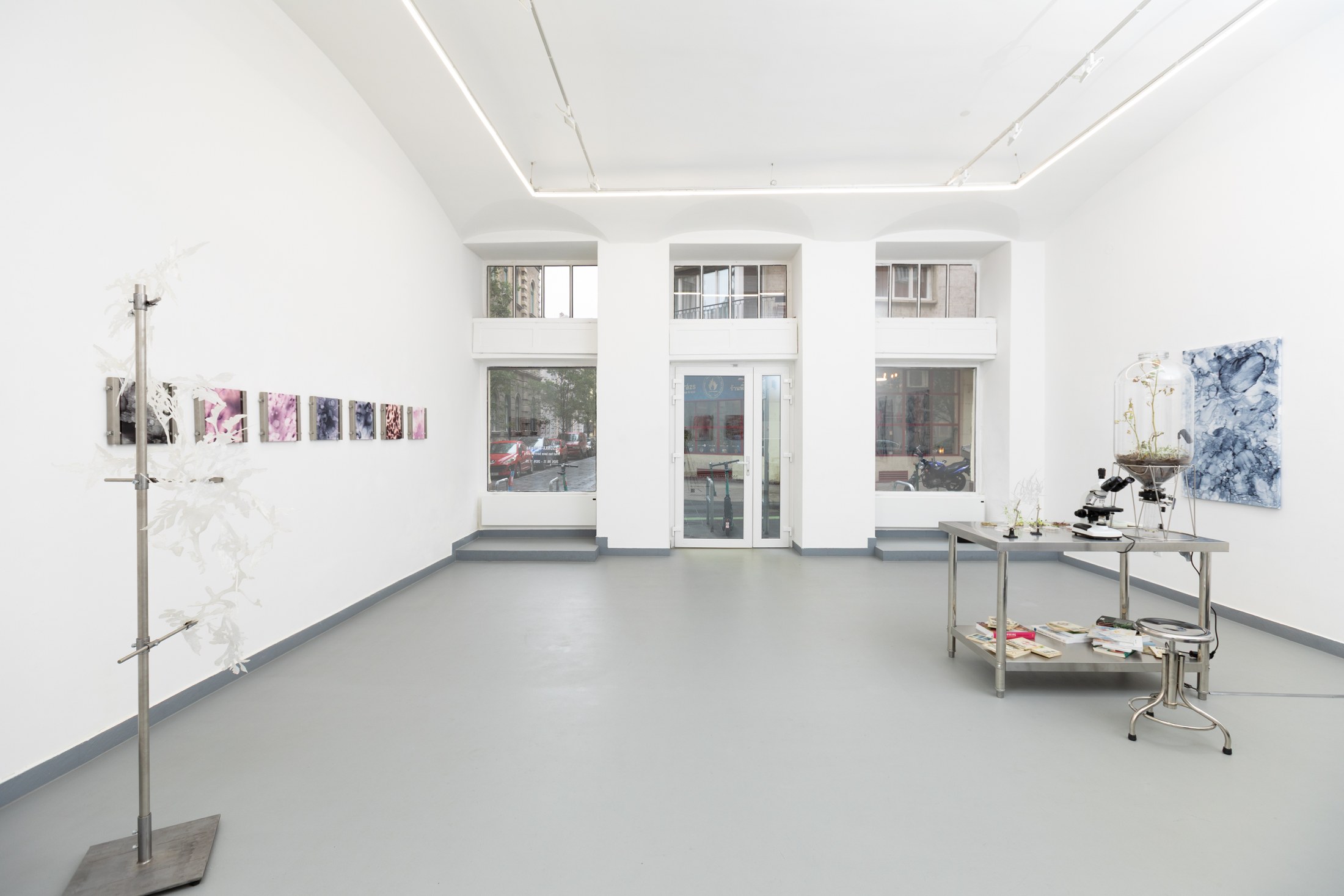
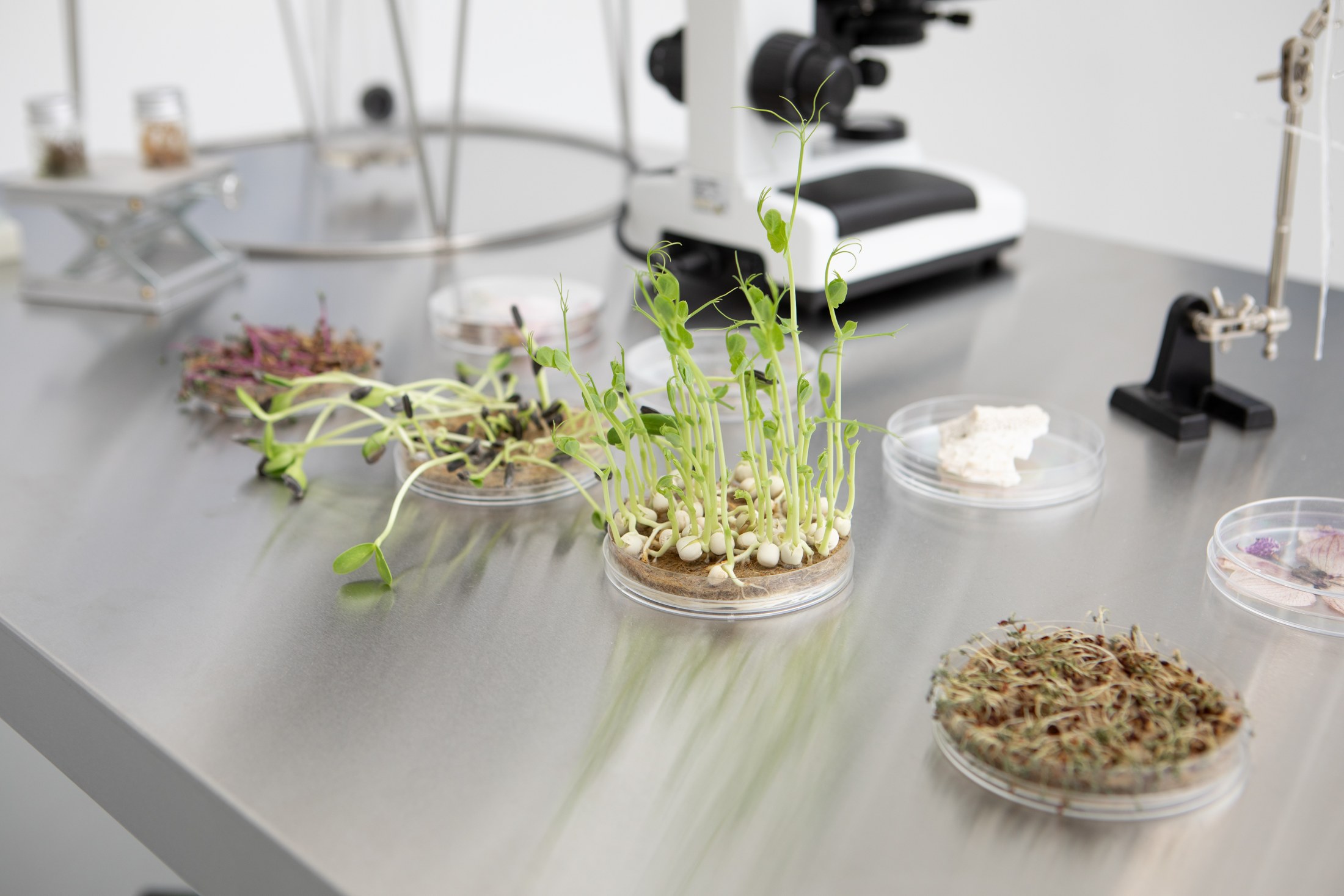
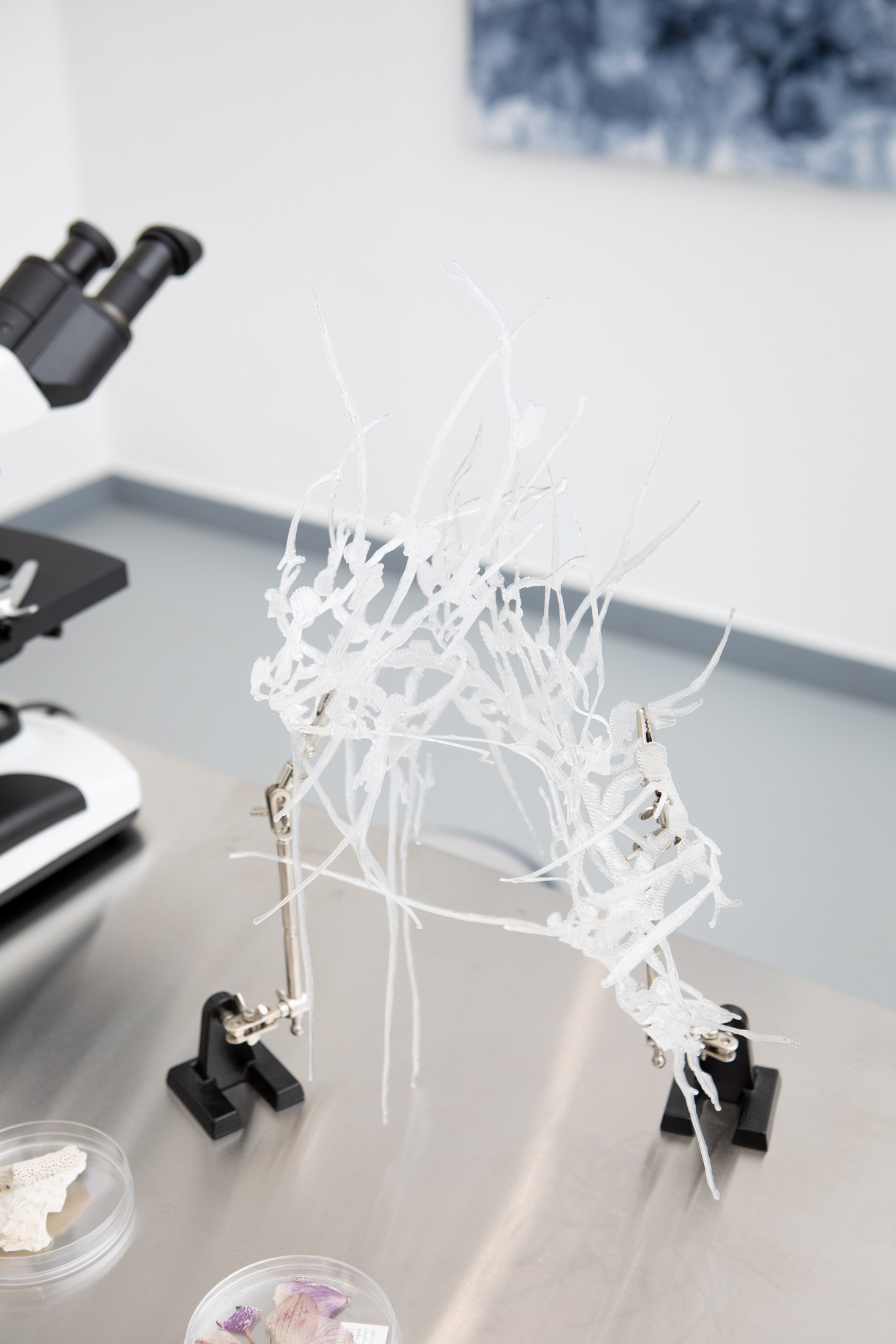
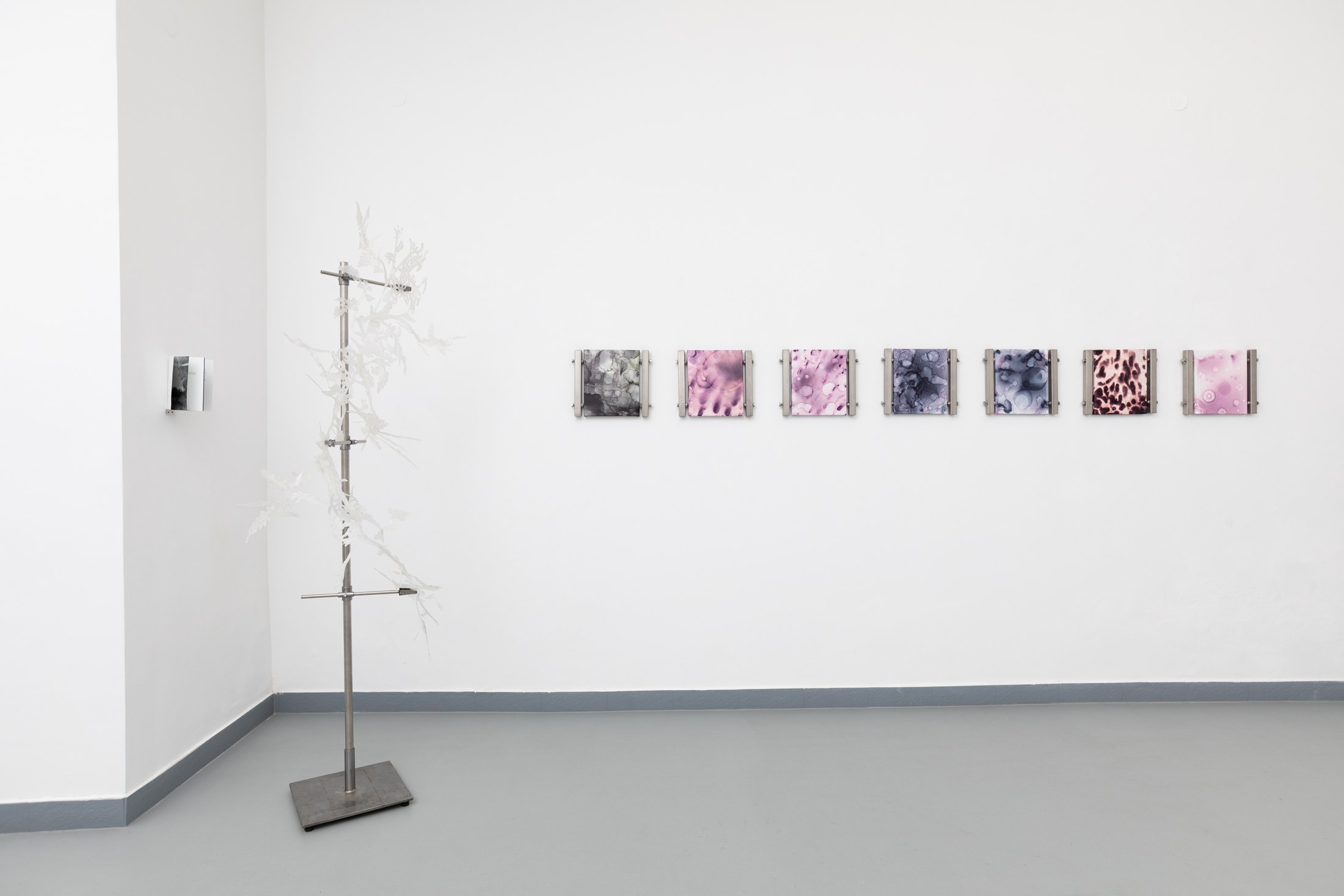
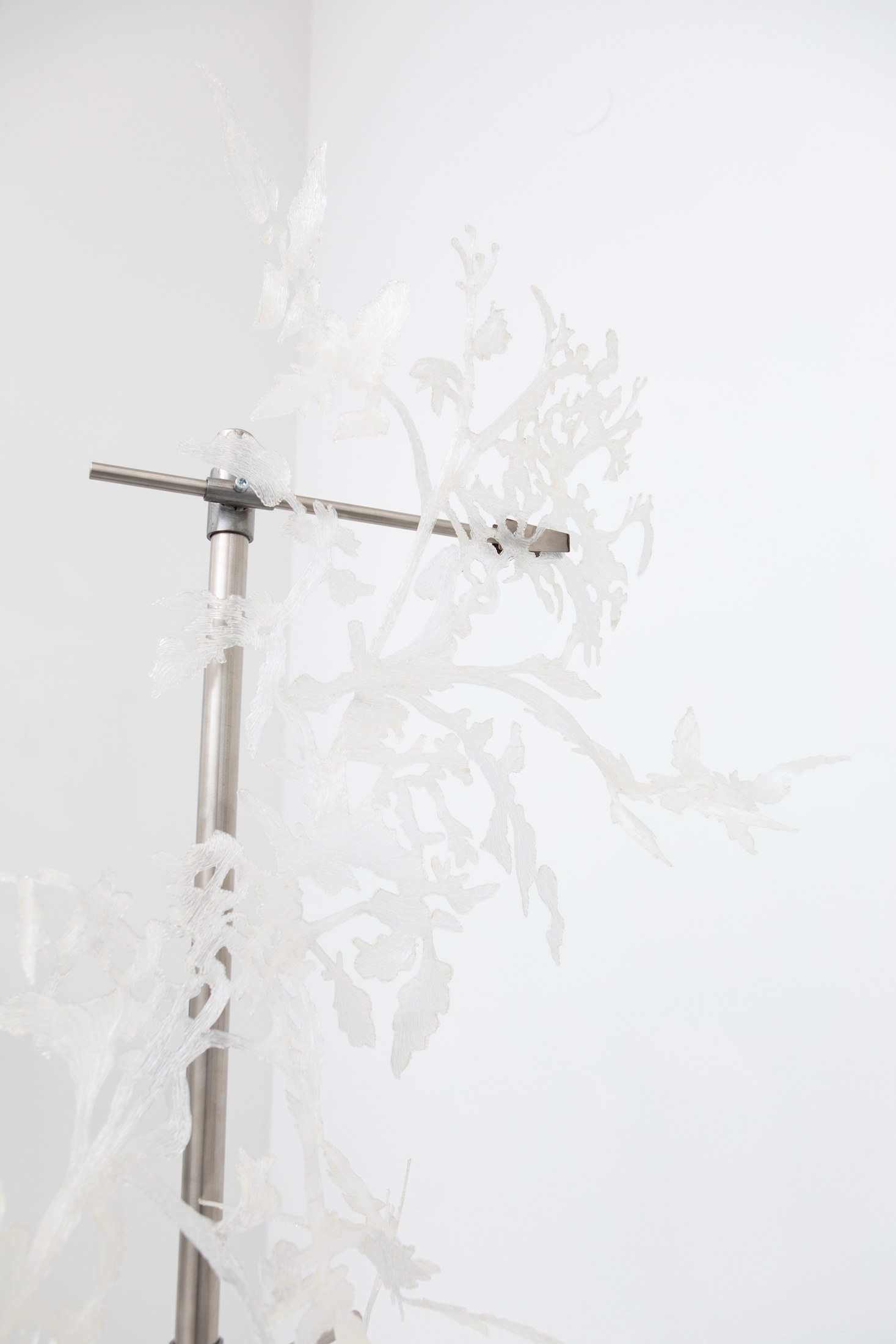
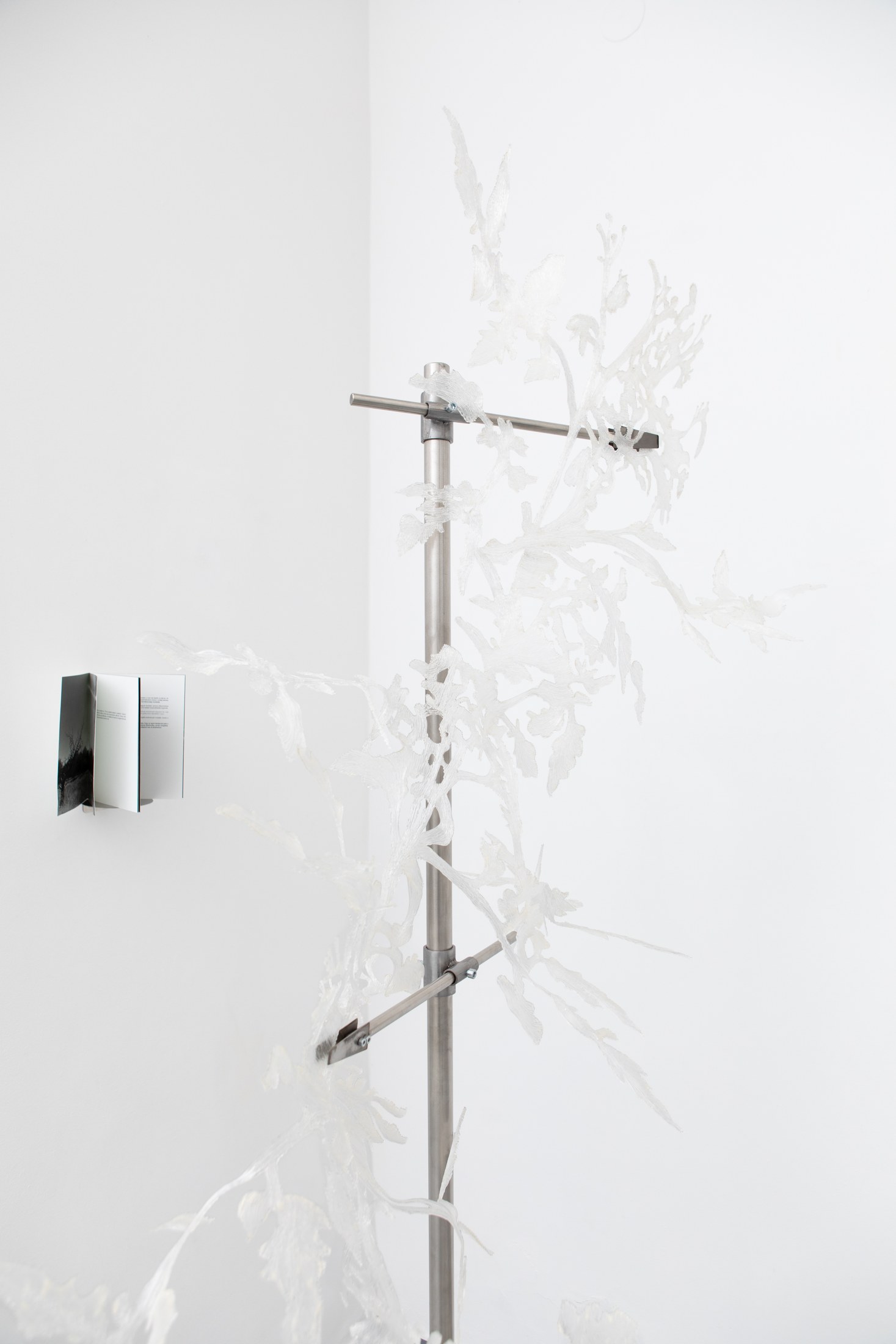
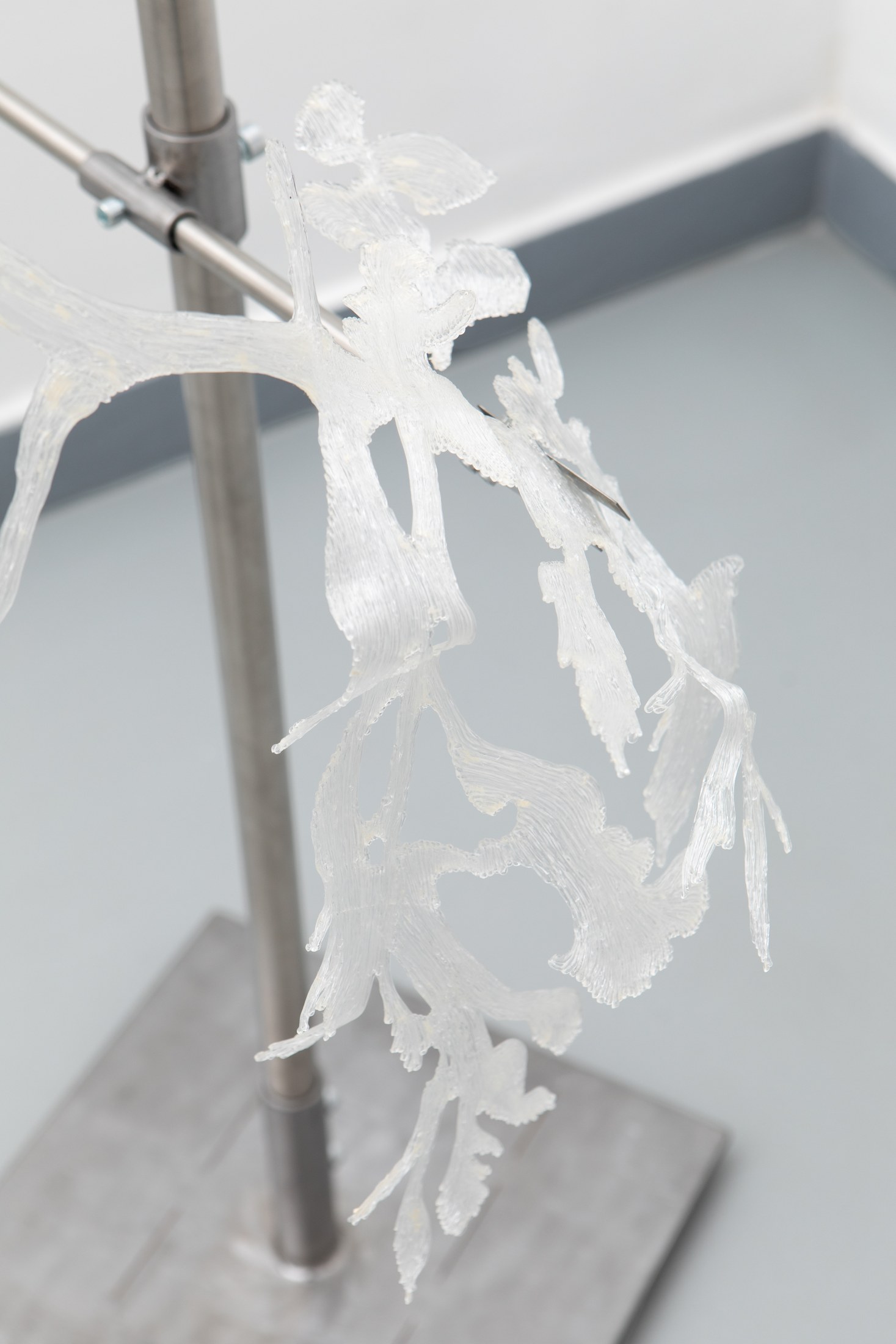
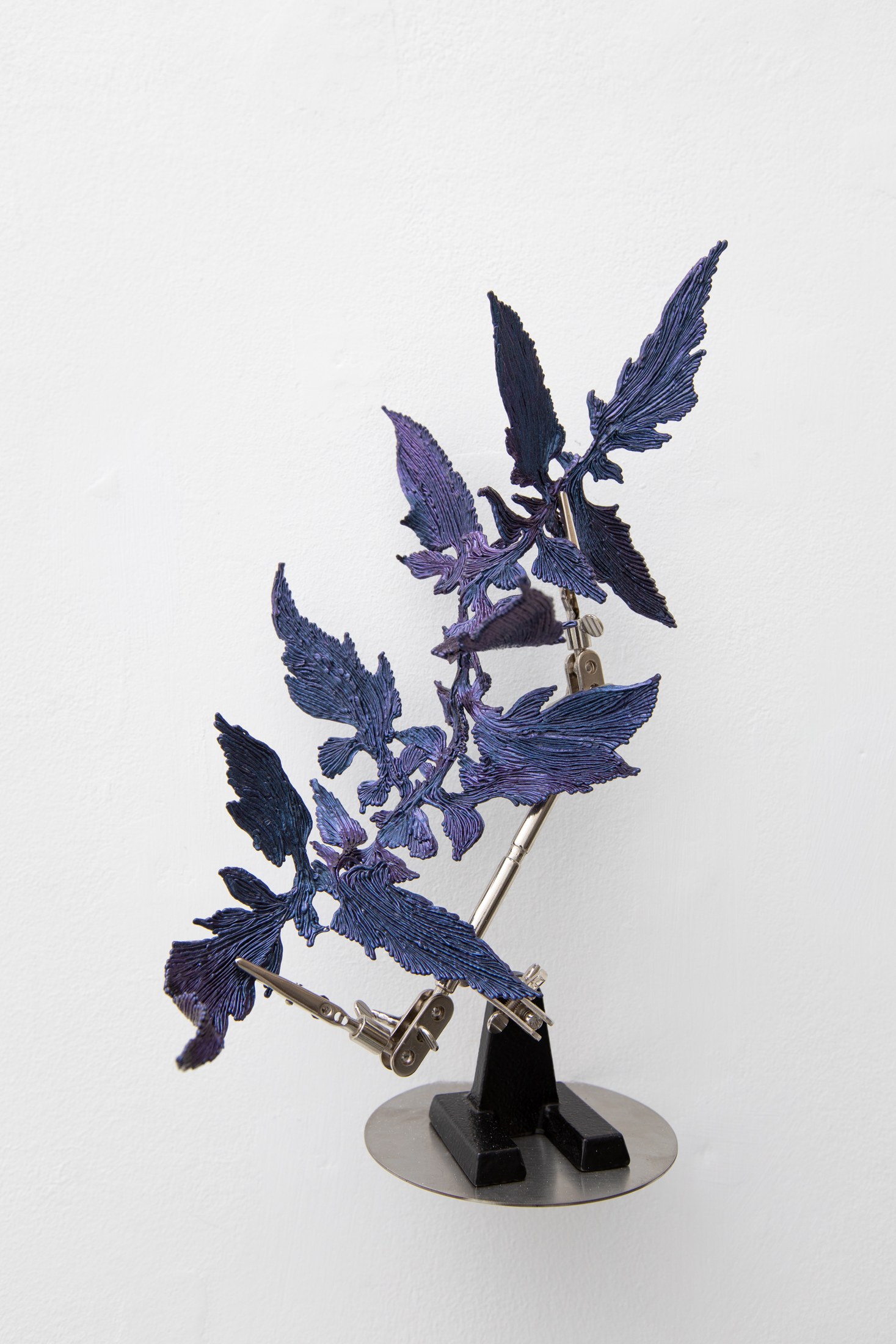
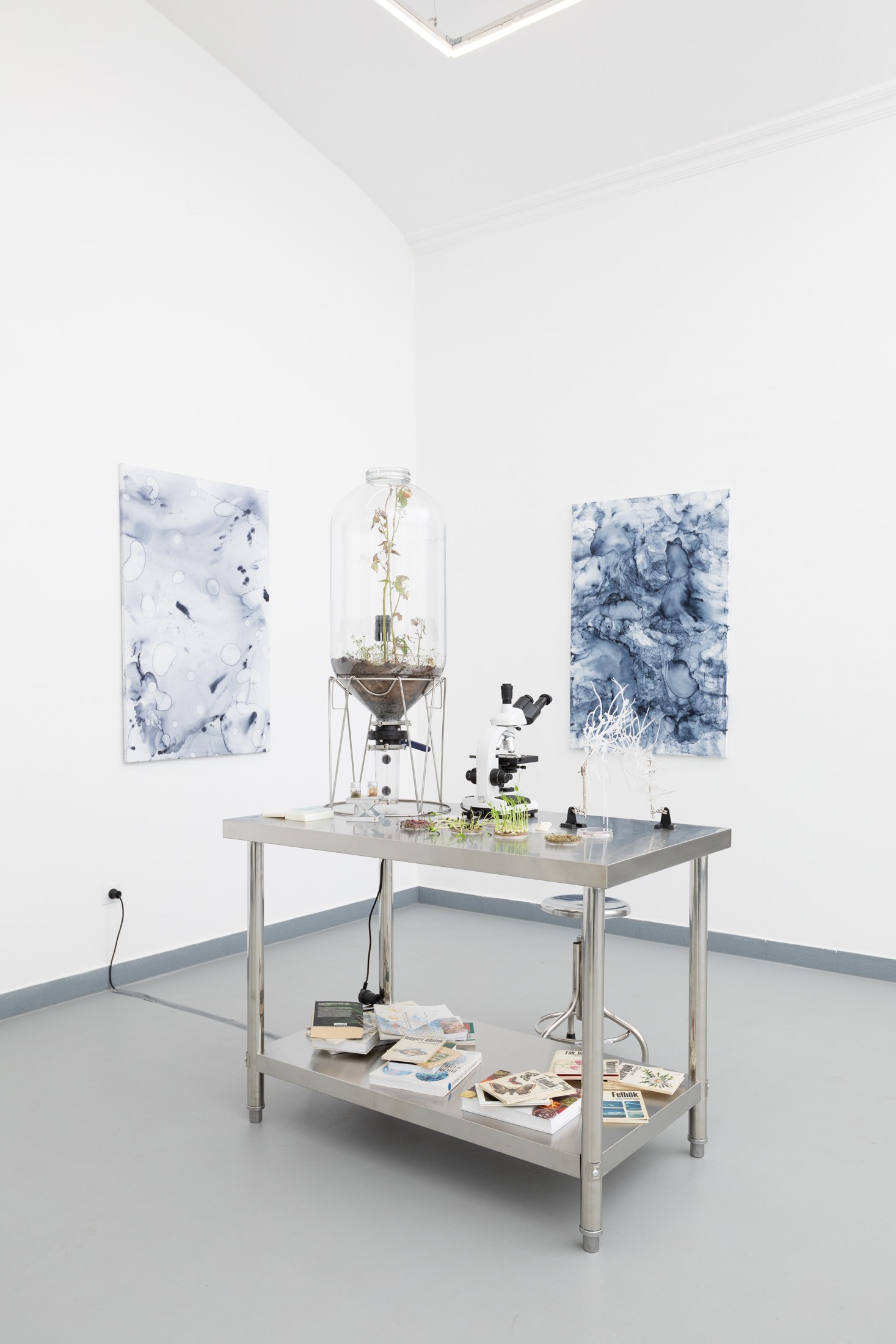
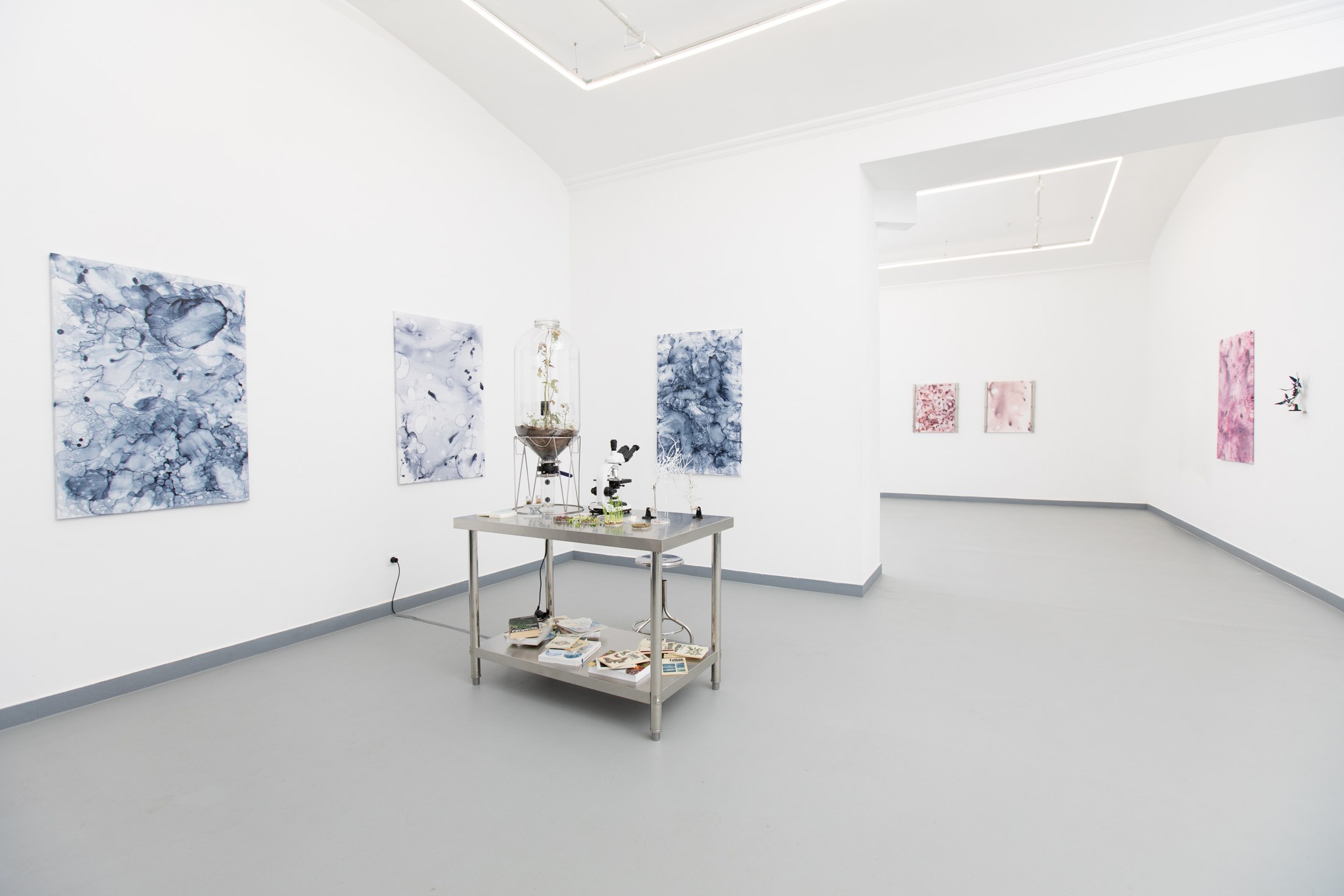
Csonka carries this approach into a gallery arranged with the equipment and visual language of a laboratory. A metal table holds a microscope, dishes and sprouting plants; books and working materials occupy its lower shelf. Nearby, transparent vessels, supported stems and delicate branching forms invite the eye to move between living material and constructed objects. These elements make observation feel like an activity with tools, surfaces and routines.
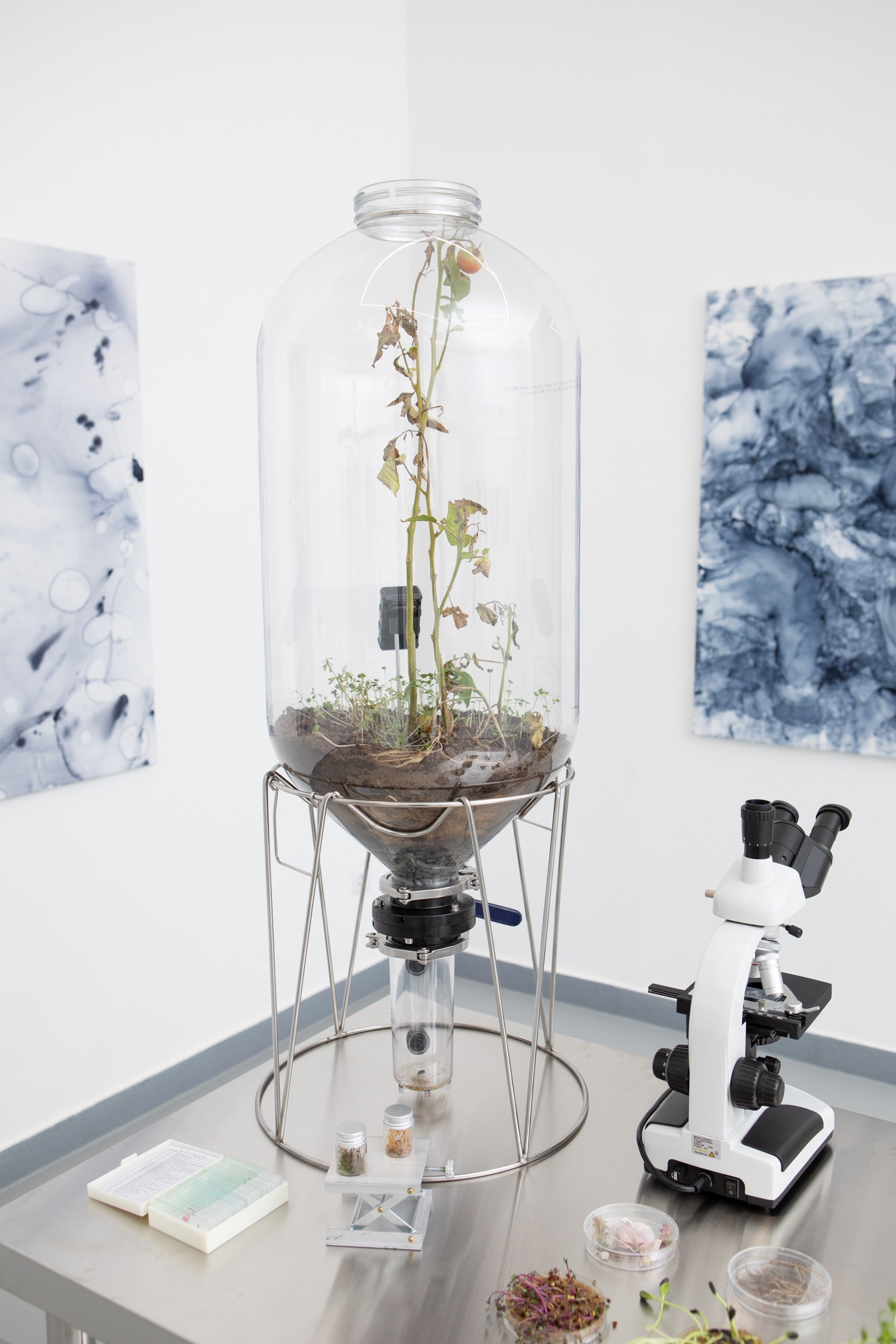
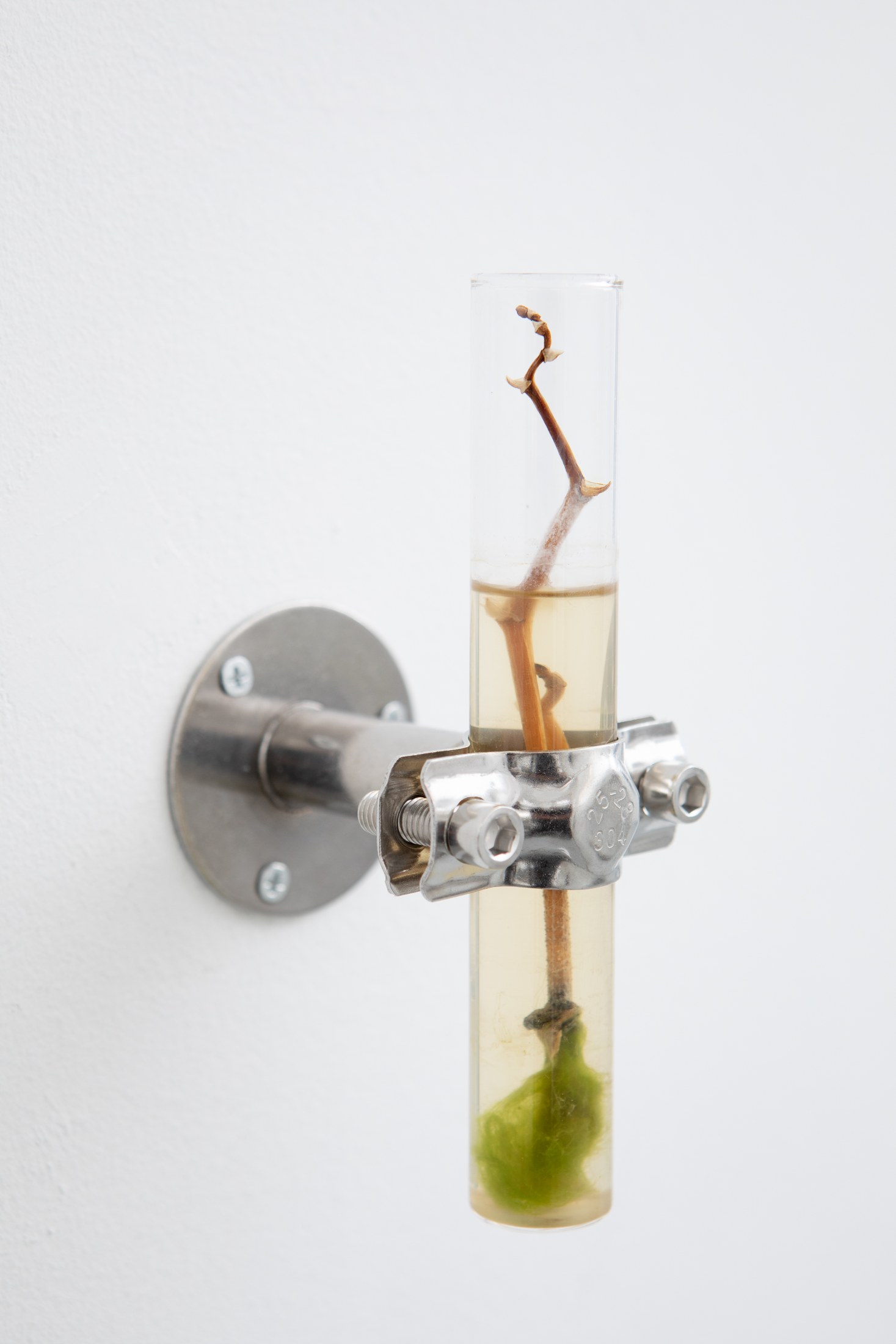
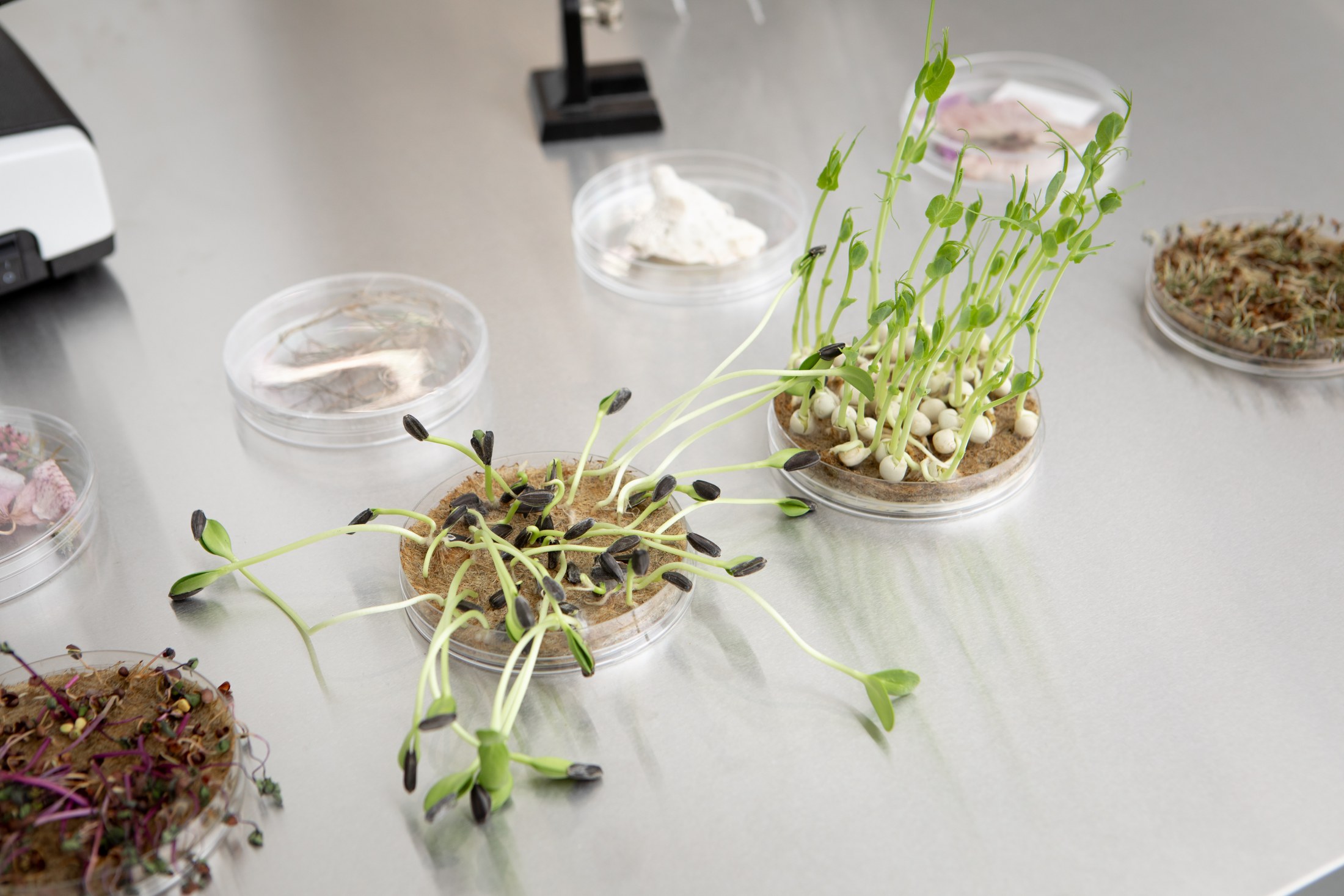
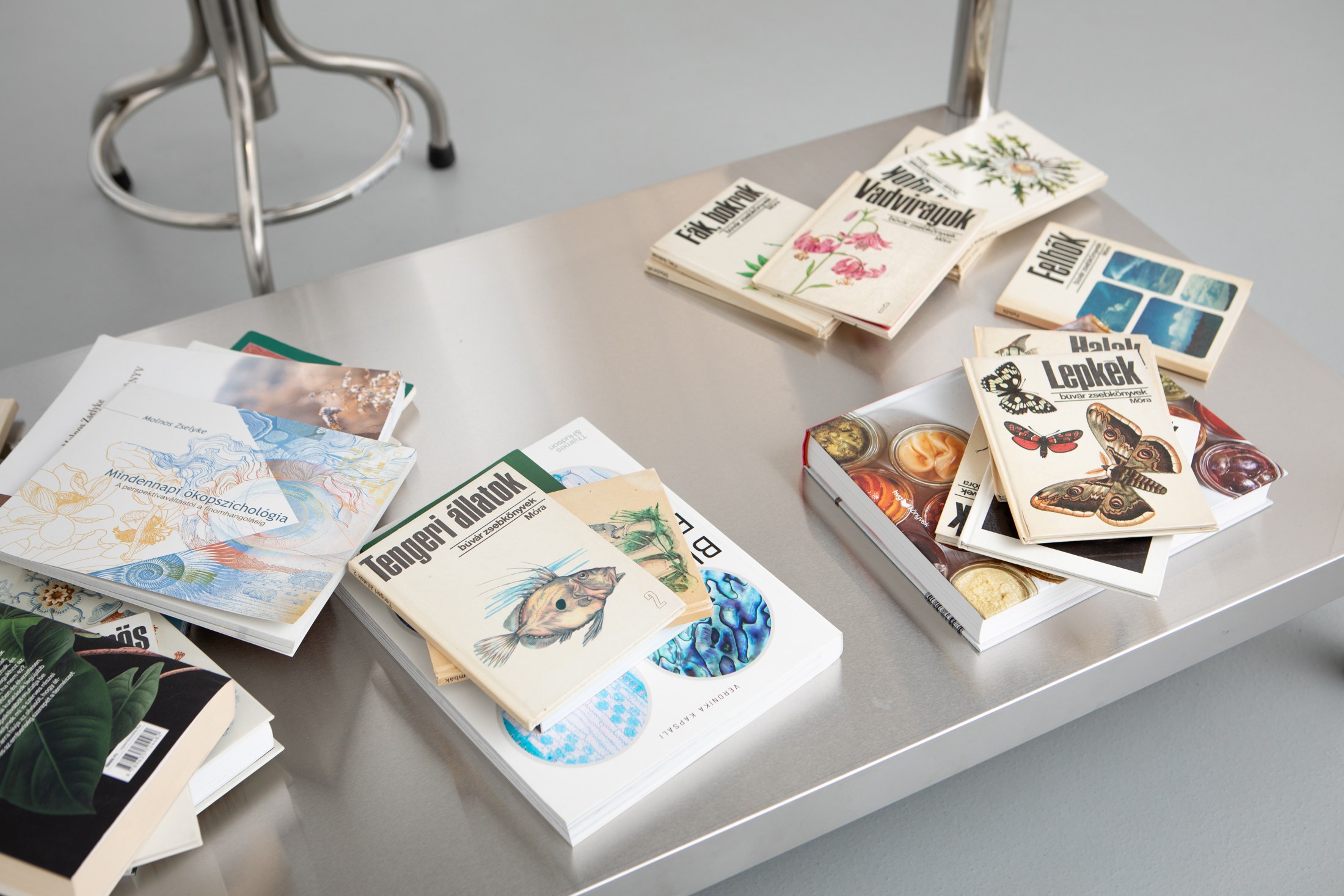
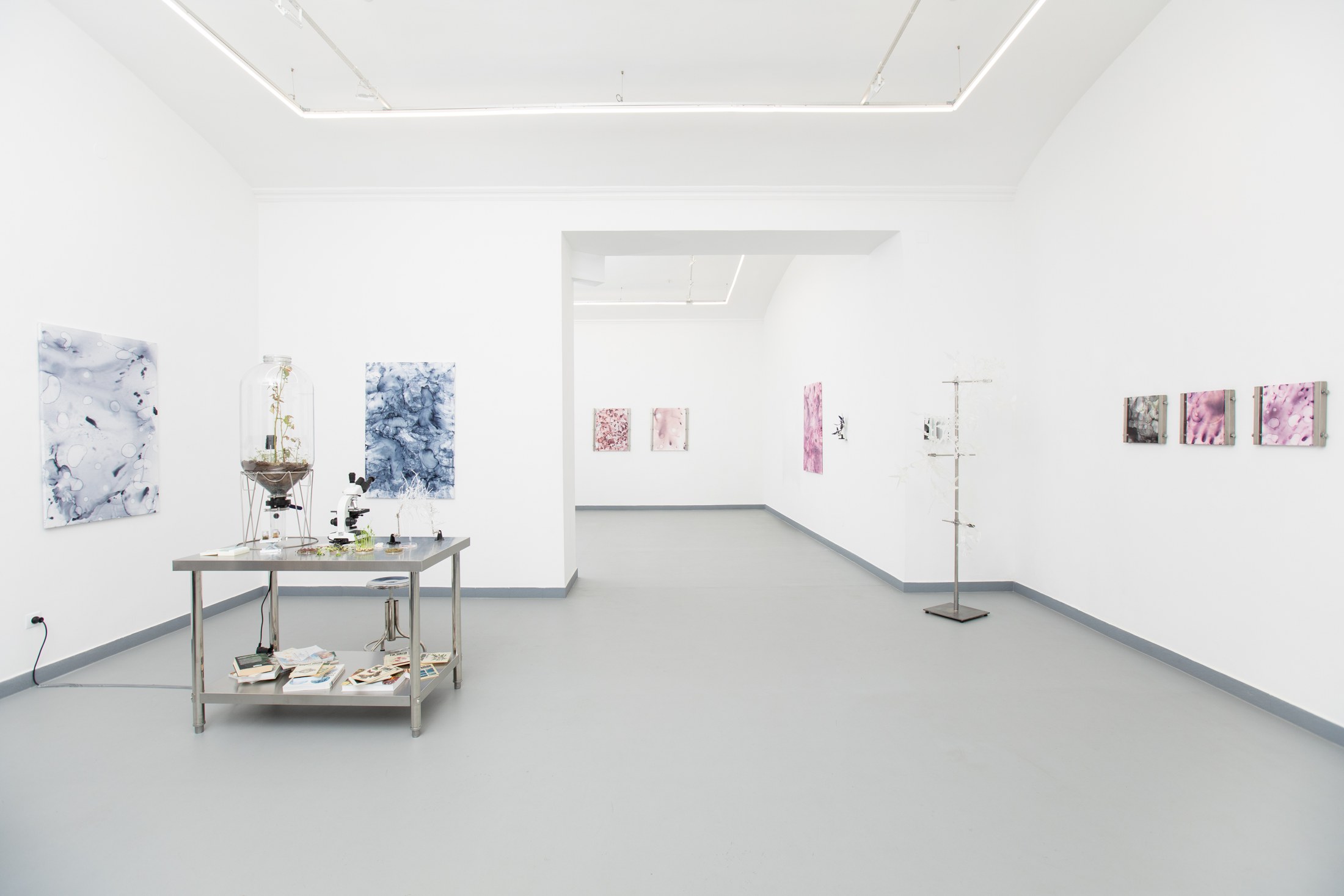
The photographs show how this working area sits among paintings hung across otherwise spare white walls. The table provides a point of concentration within the room, while the surrounding works extend the act of looking outwards. Small things placed under scrutiny find counterparts in images large enough to be encountered across the gallery.
Between specimen and painting
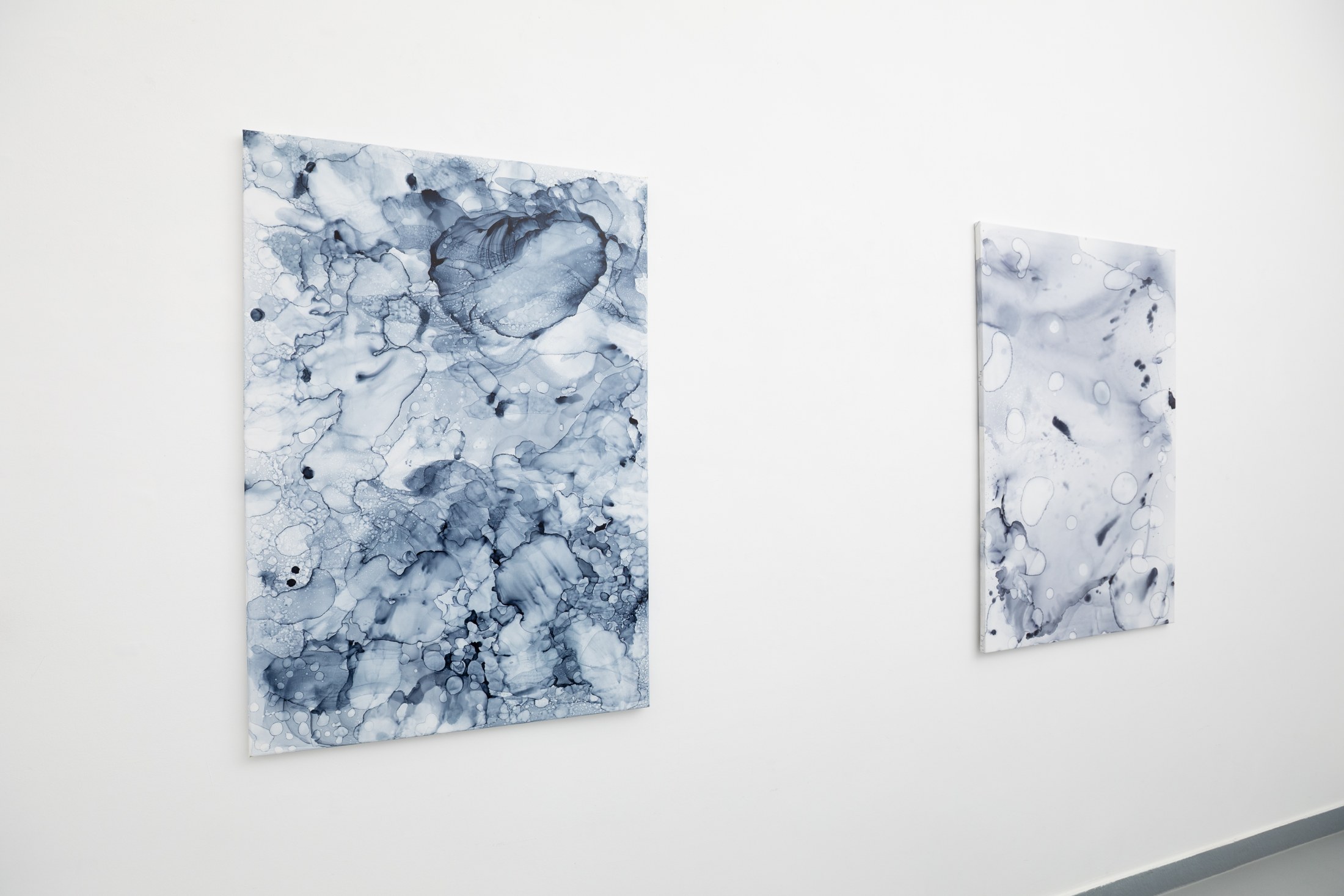
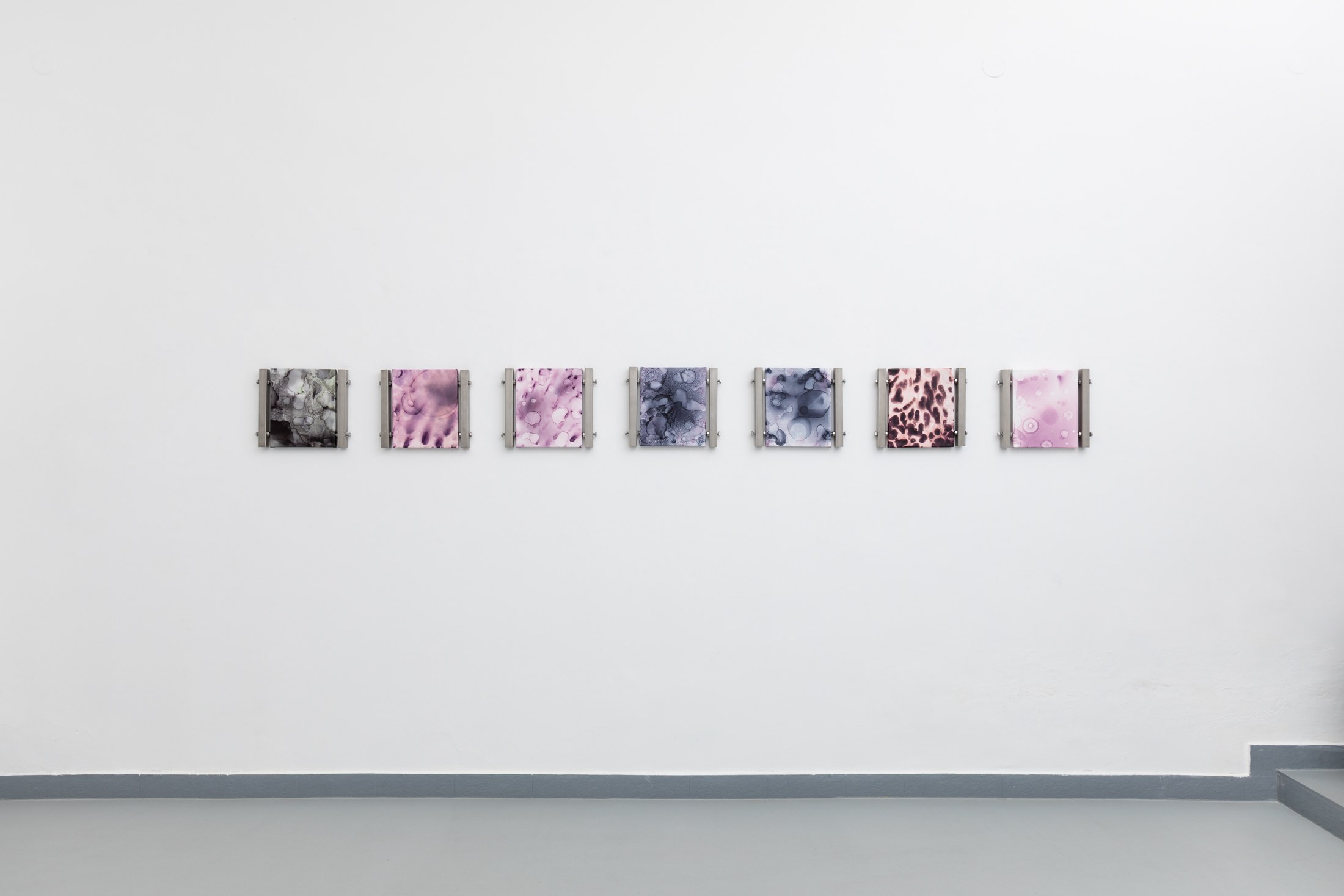
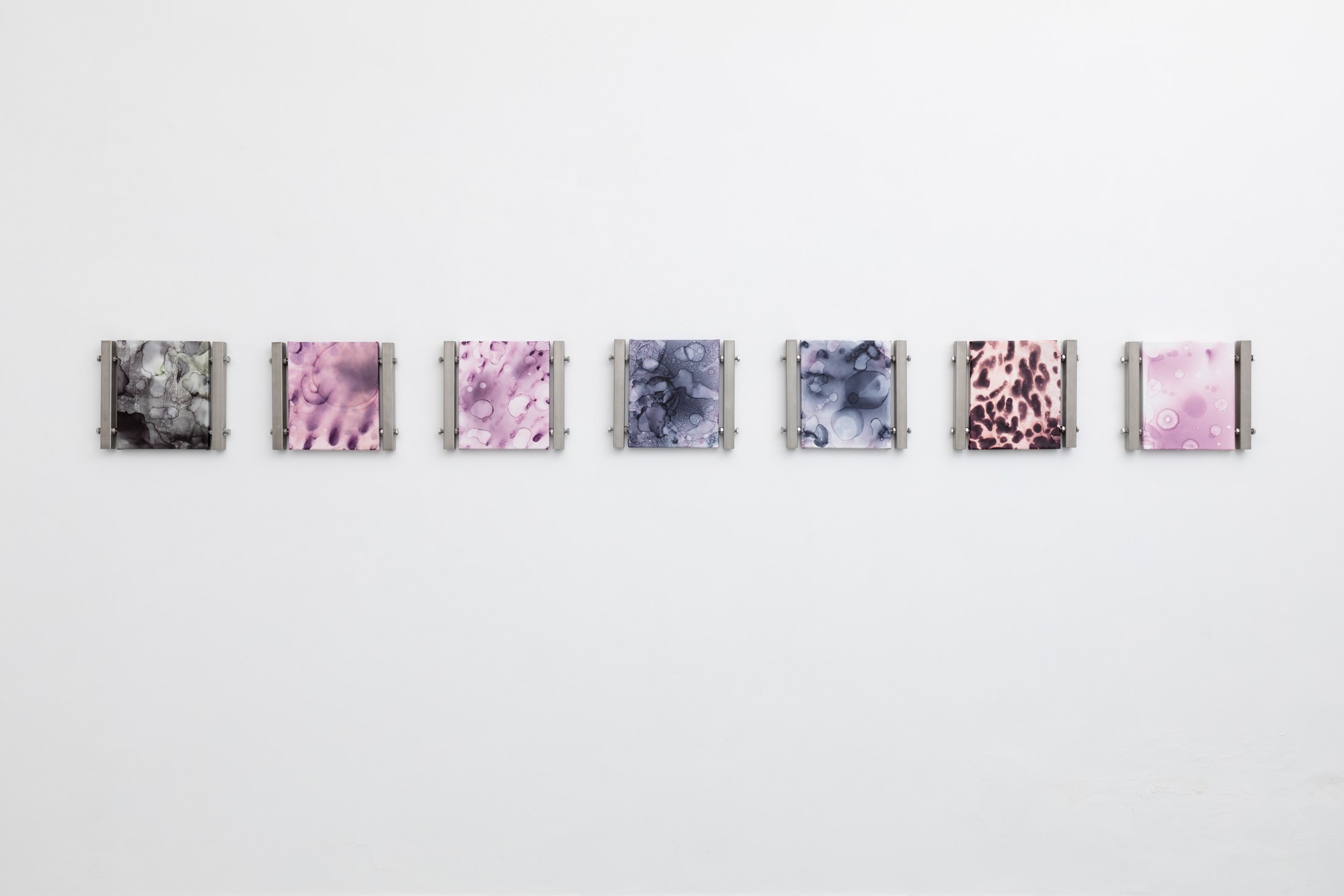
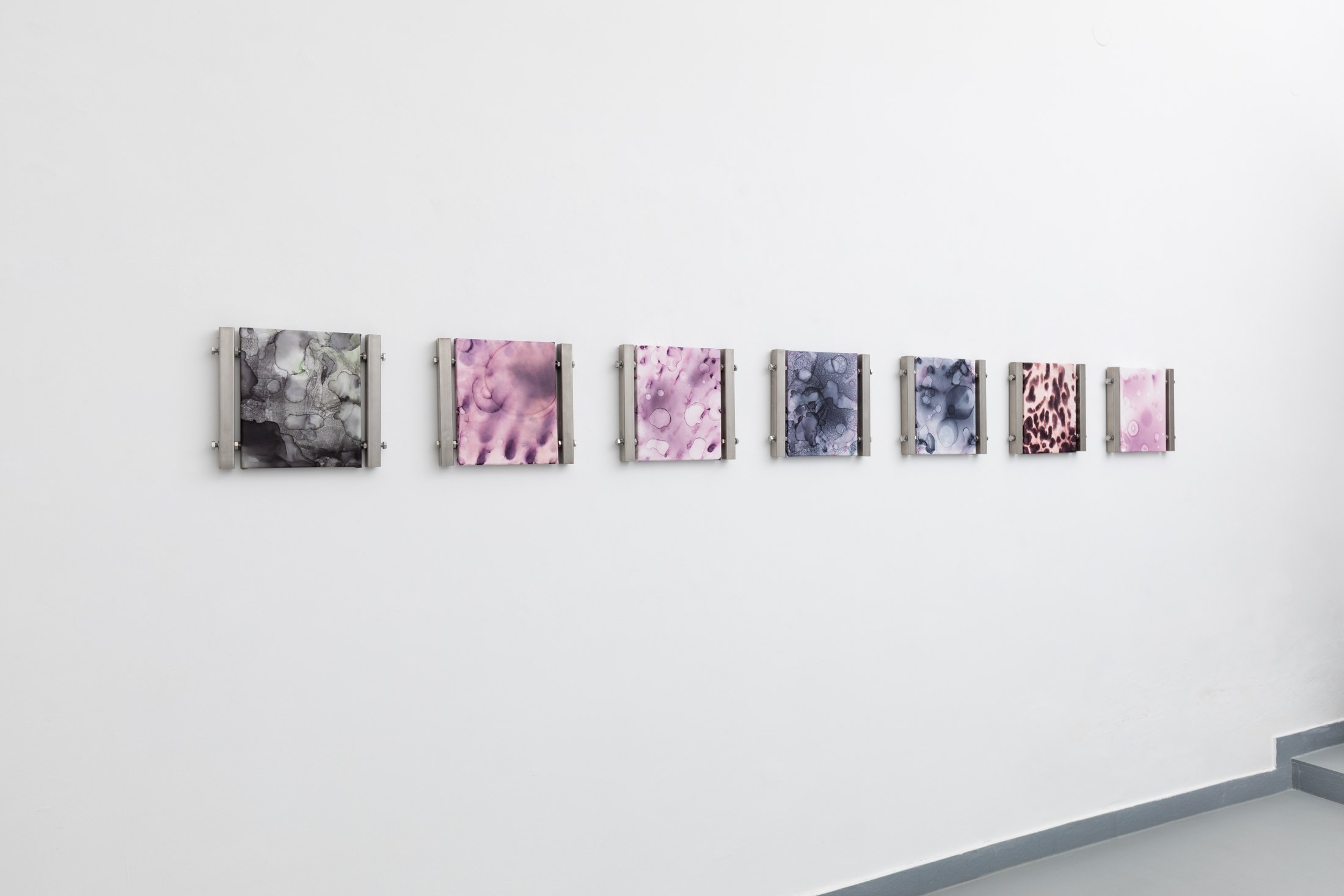
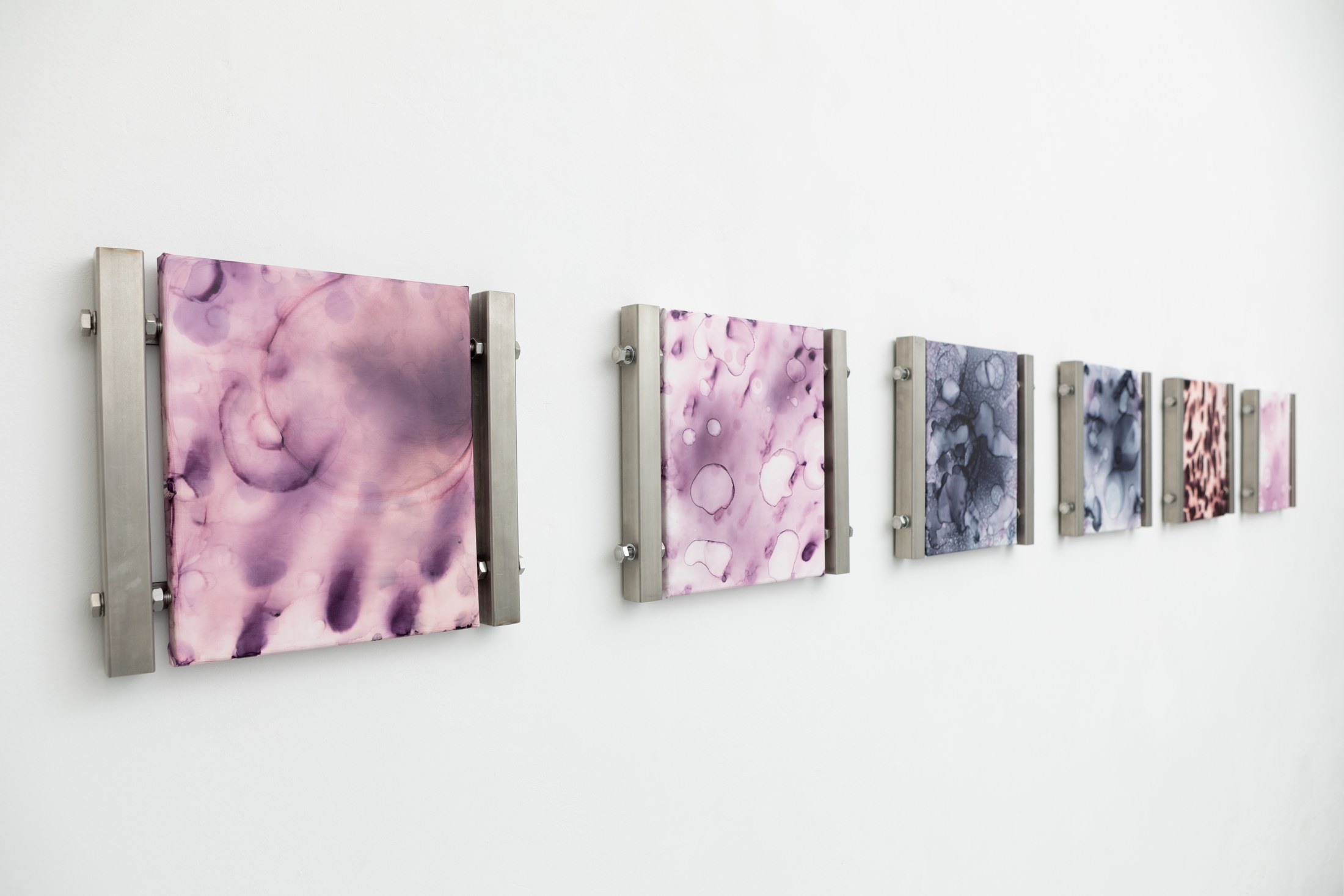
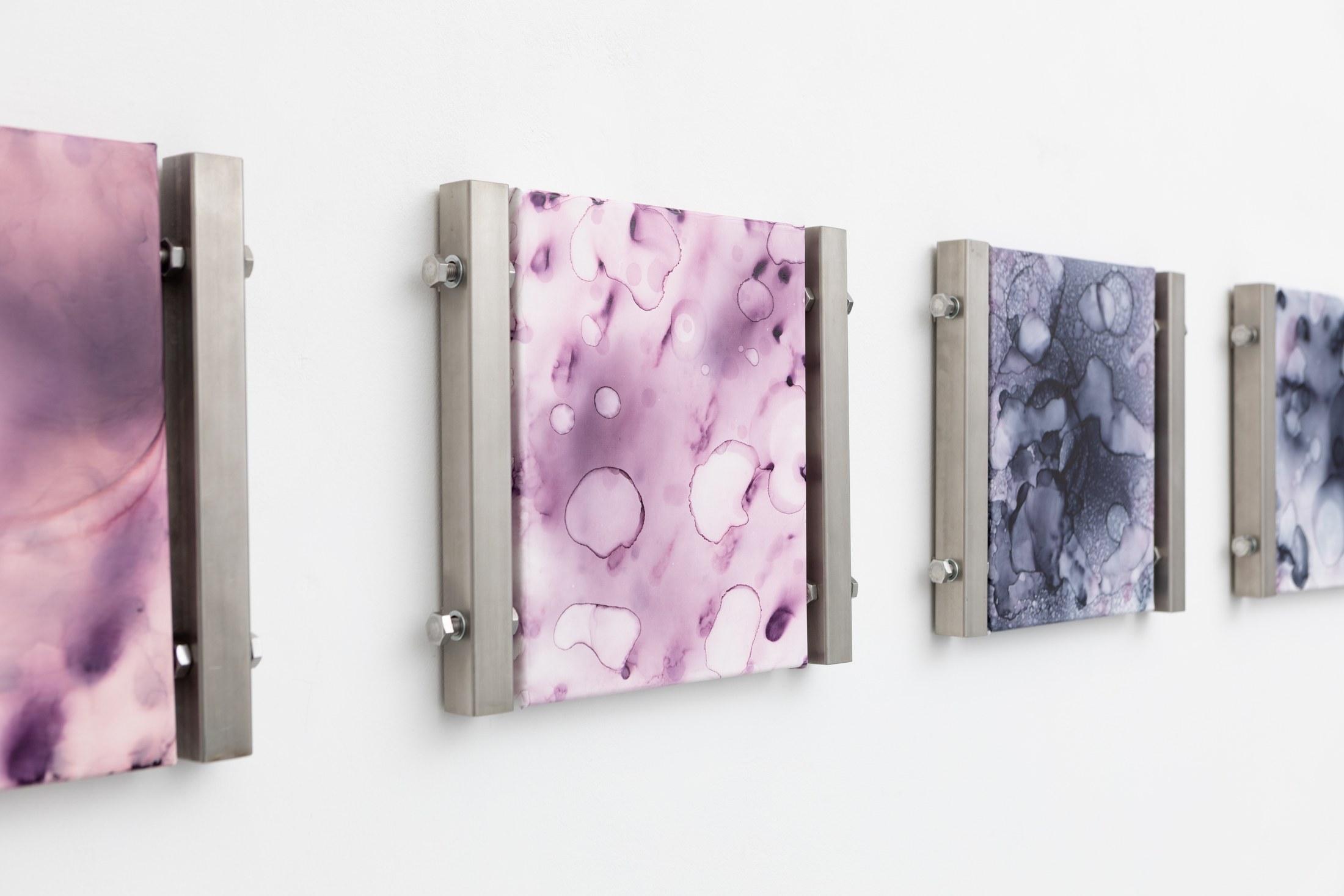
Microscopic observation informs both Csonka’s paintings and her objects. Her materials evoke preparations and sections examined in laboratory settings, while the abstract forms retain an uncertainty that resists a single identification. Rounded membranes, branching networks and irregular clusters suggest organic structures without resolving into an illustrated account of a particular organism.
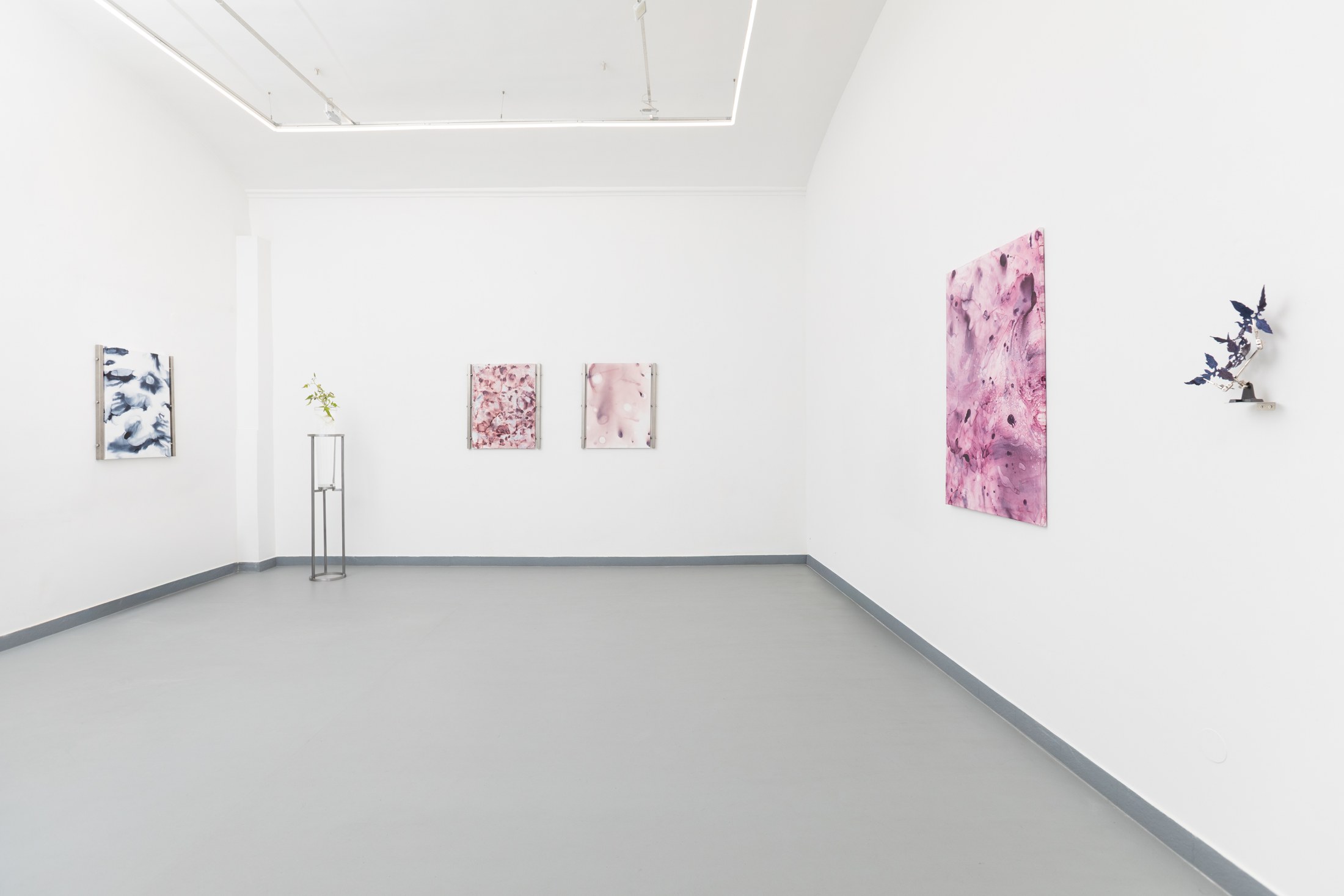
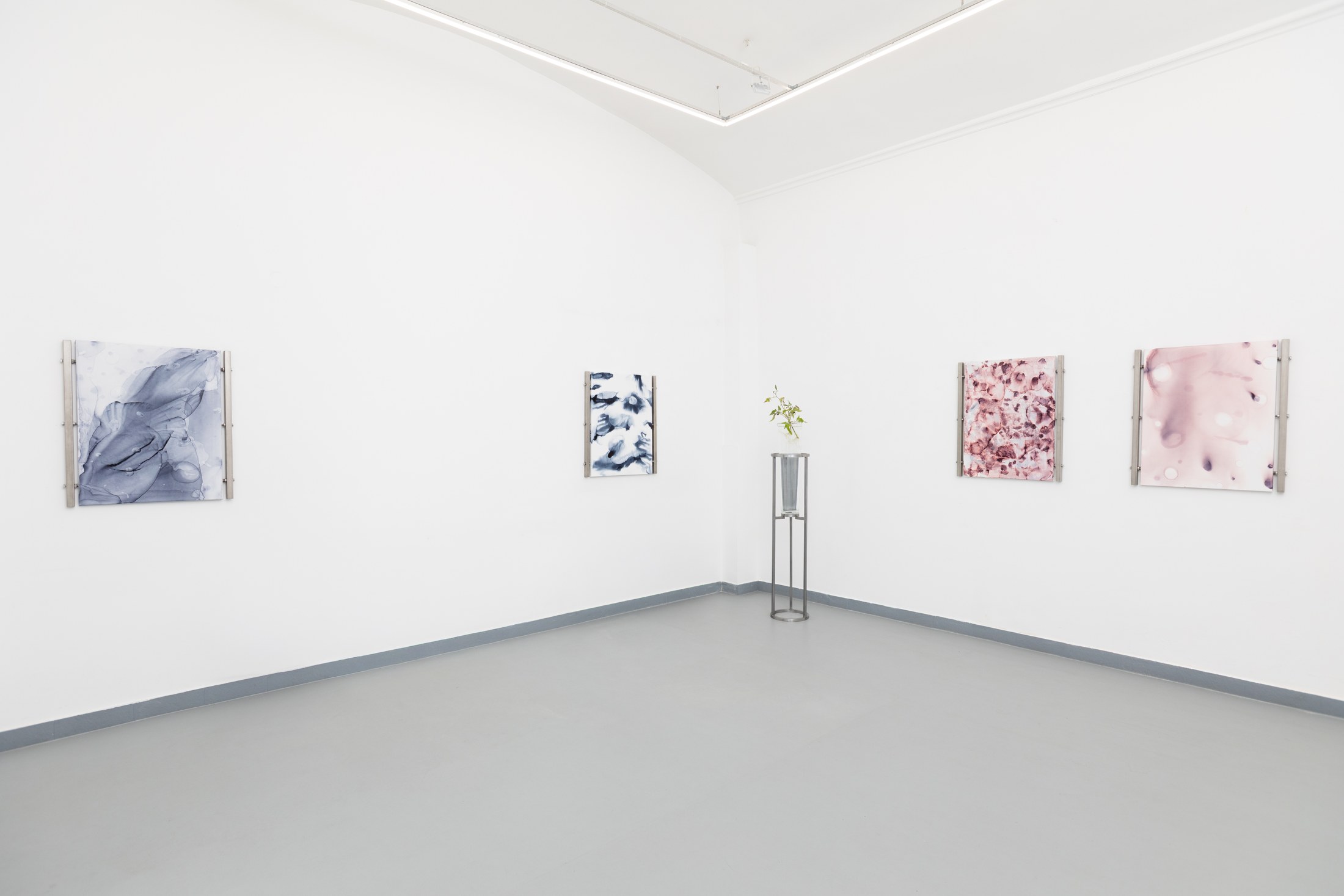
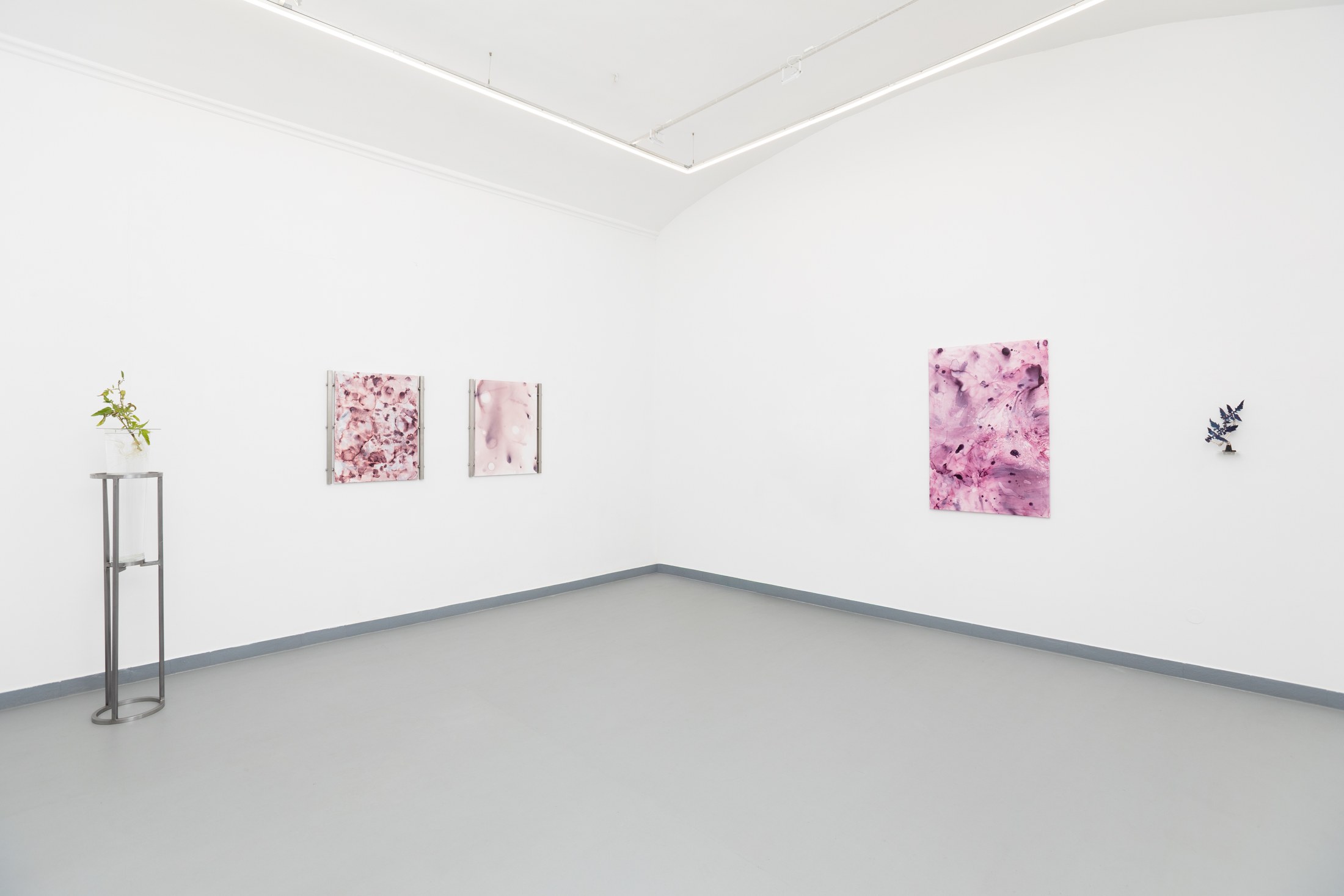
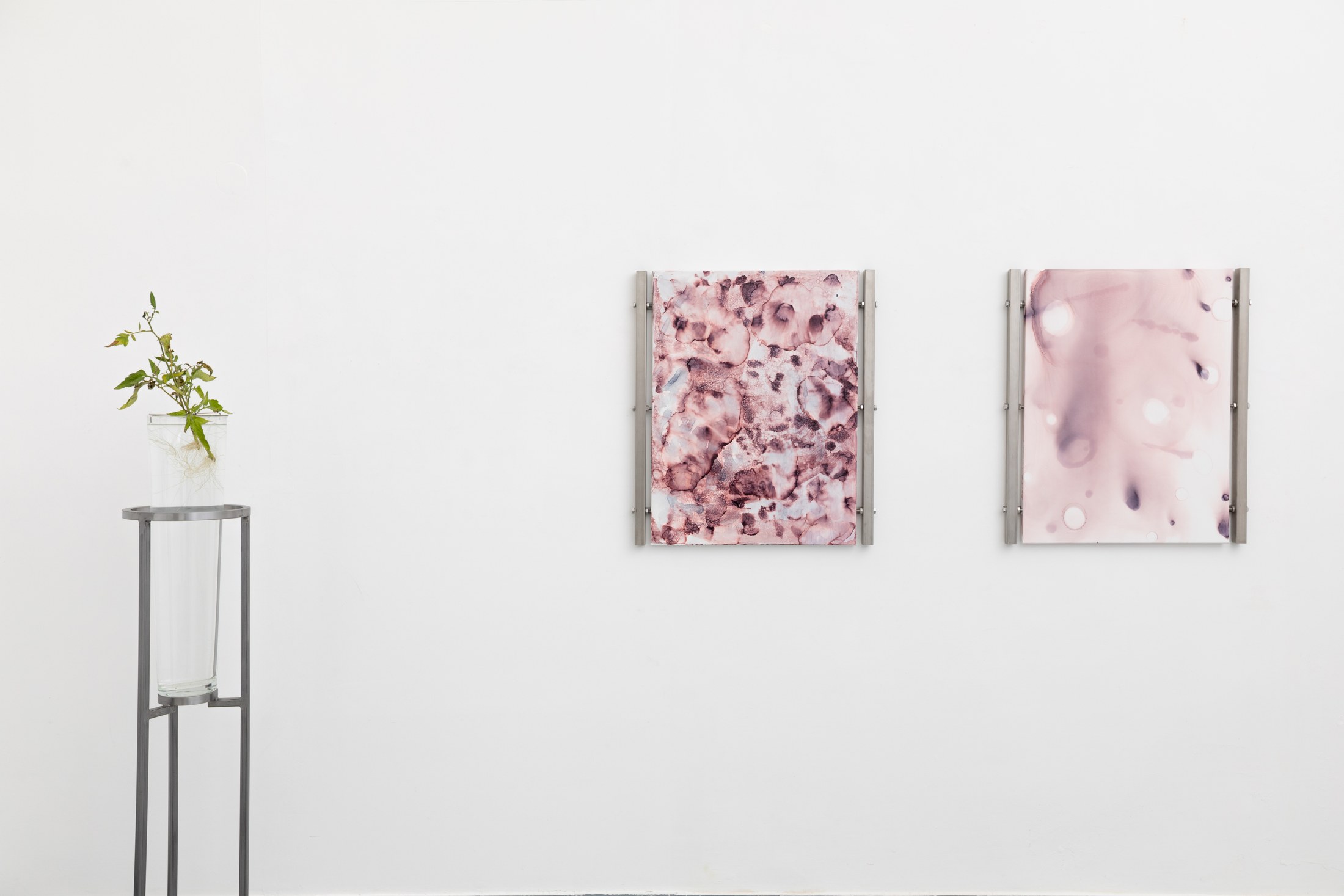
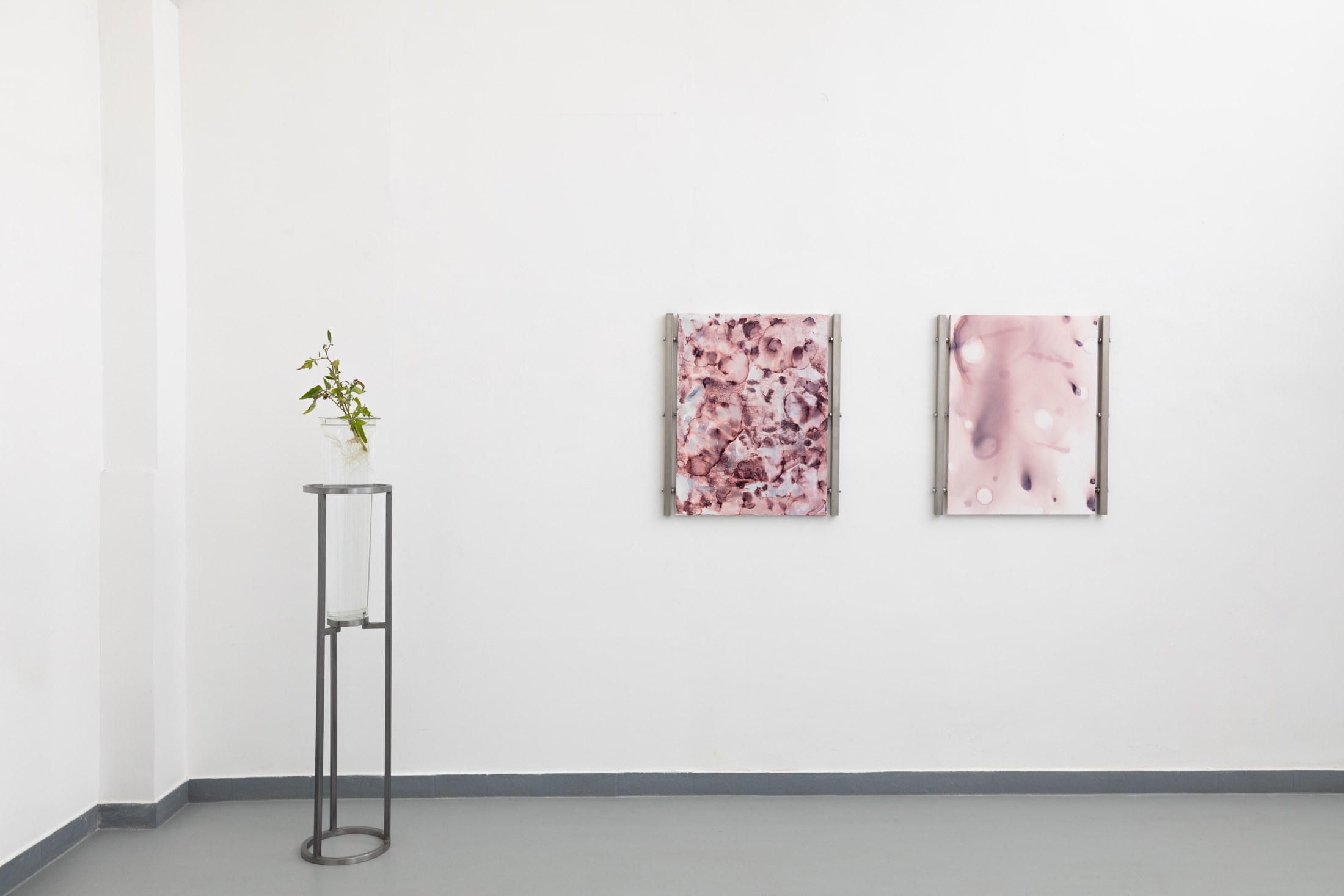
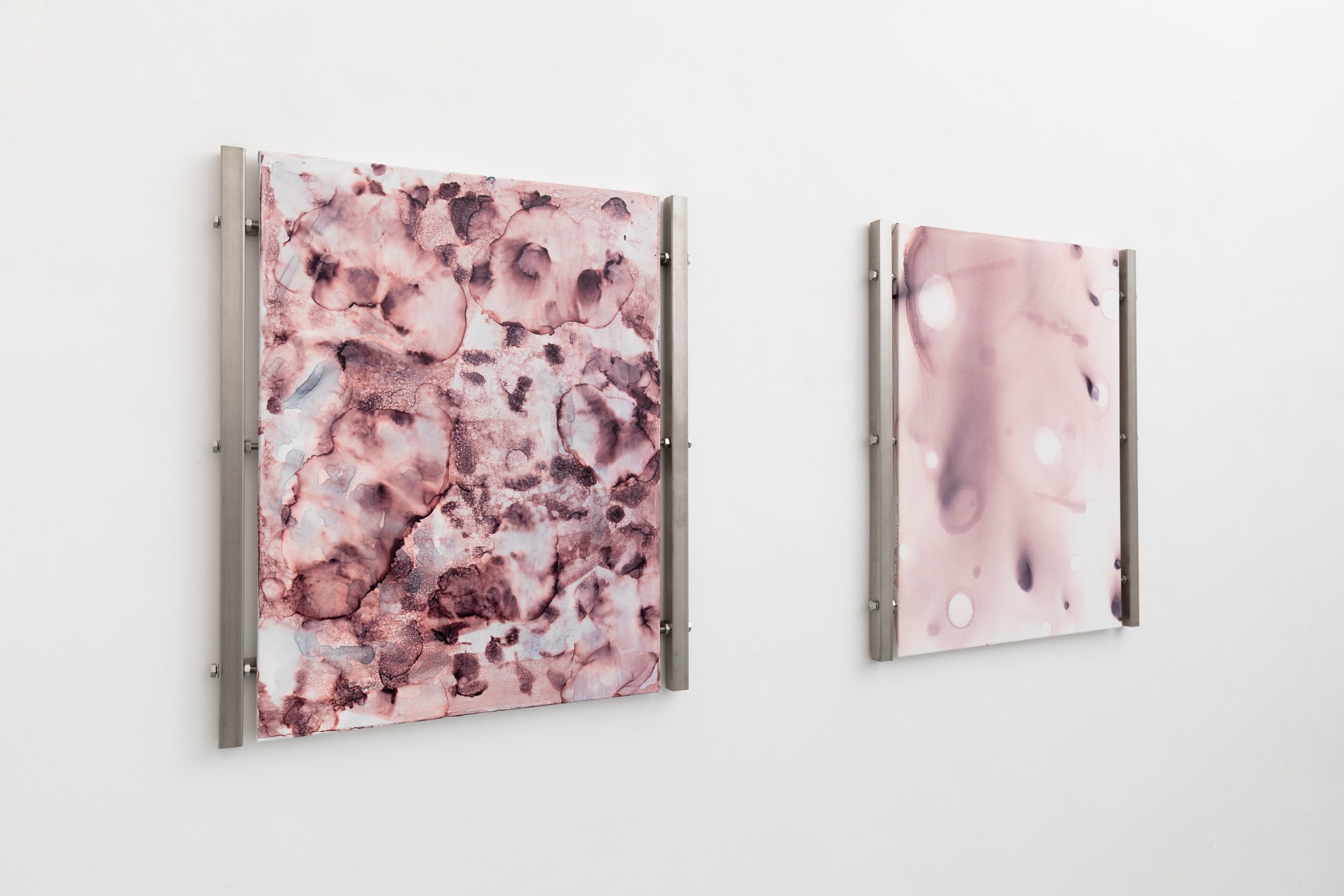
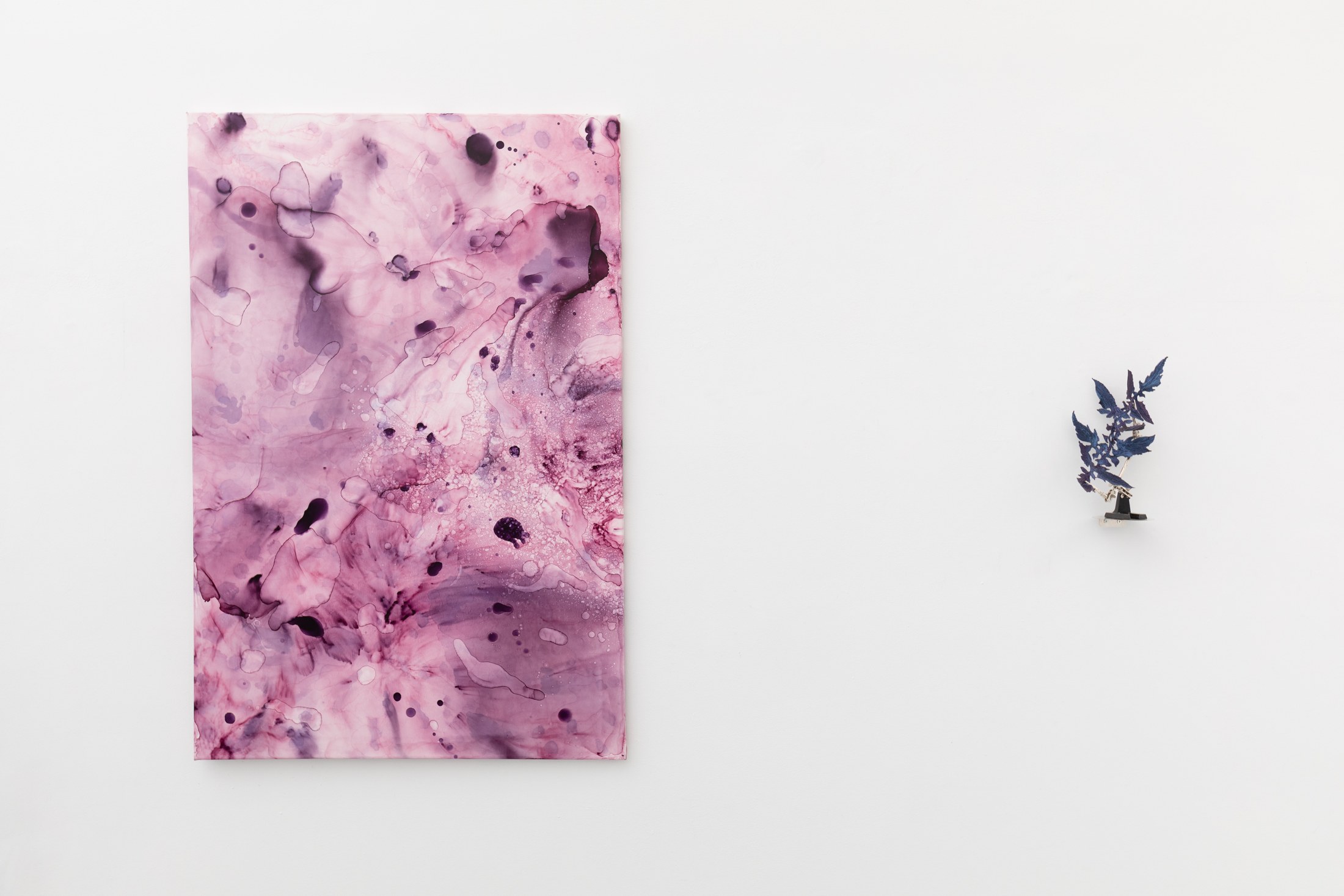
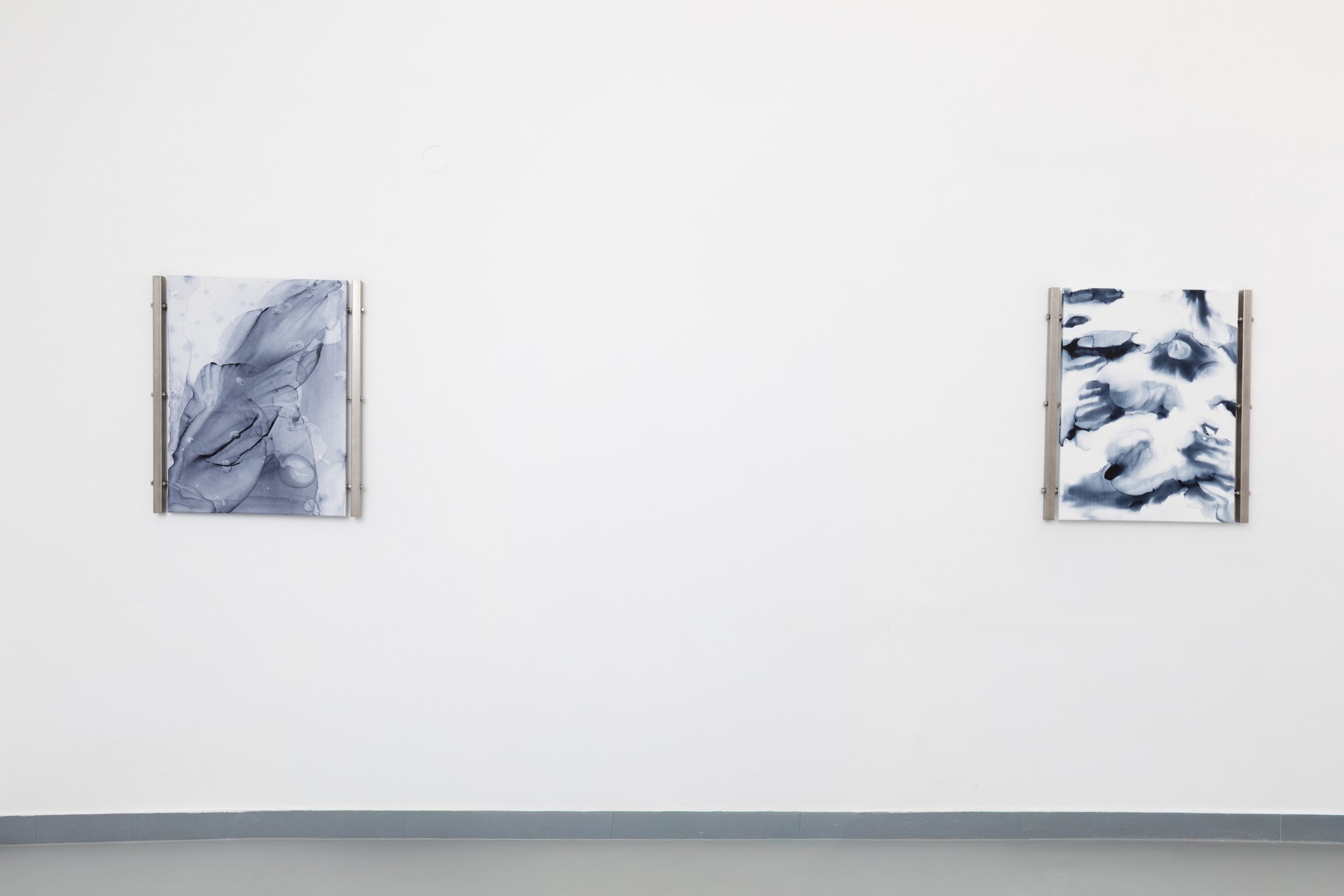
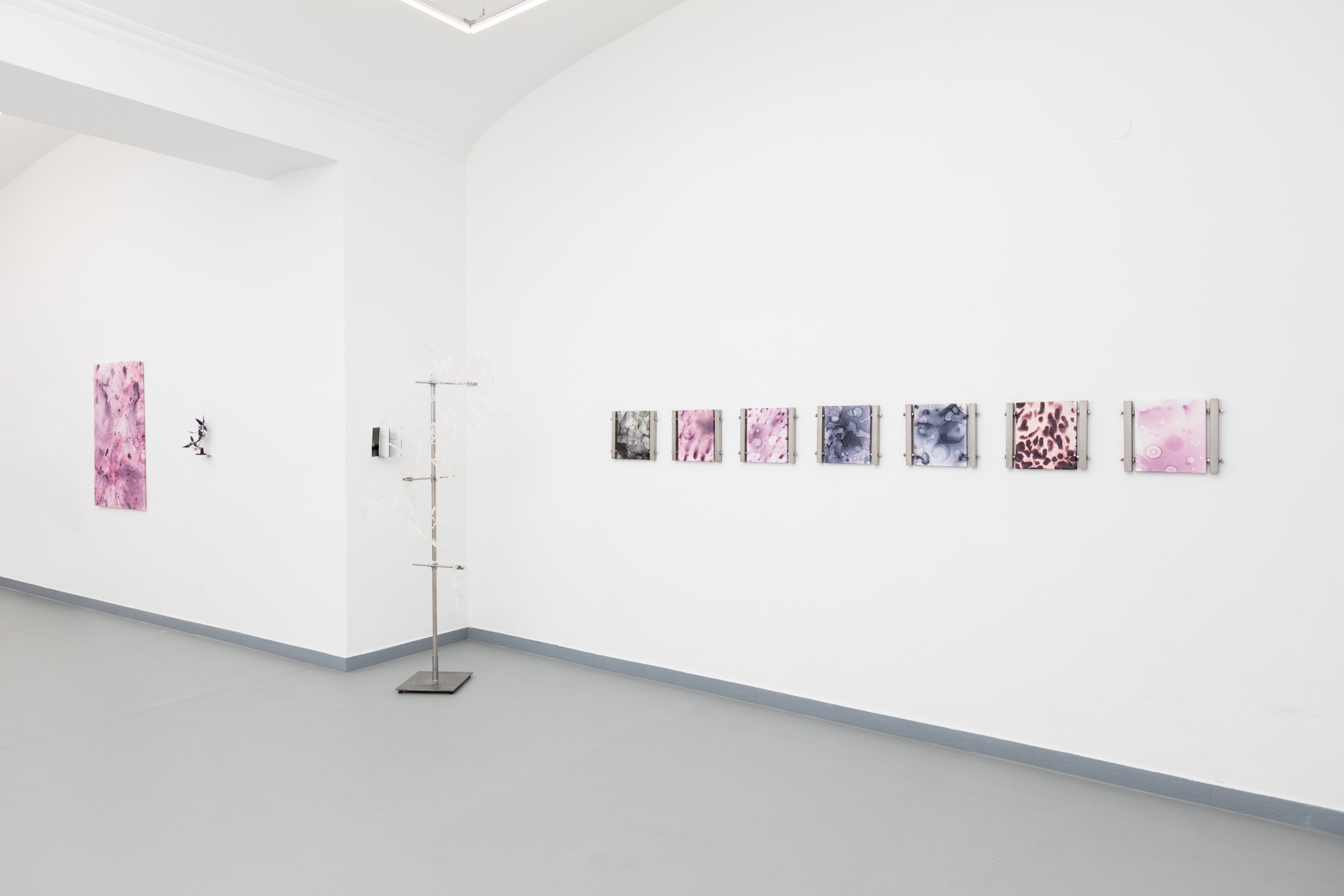
The blue and pink works in the installation photographs give these structures different degrees of clarity. Some gather into dense, textured fields; others appear suspended within pale areas. Along one wall, a horizontal sequence of smaller images draws attention to variation from one frame to the next. Elsewhere, larger paintings allow a single field of marks and forms to occupy the viewer’s attention.
The exhibition text describes an interest in the simultaneous presence of order and decay, familiarity and strangeness. This tension keeps the imagery from becoming a reassuring picture of nature. Looking more closely can make something recognisable feel unfamiliar, especially when the scale or structure through which it is normally understood has shifted.
Attention beyond the laboratory
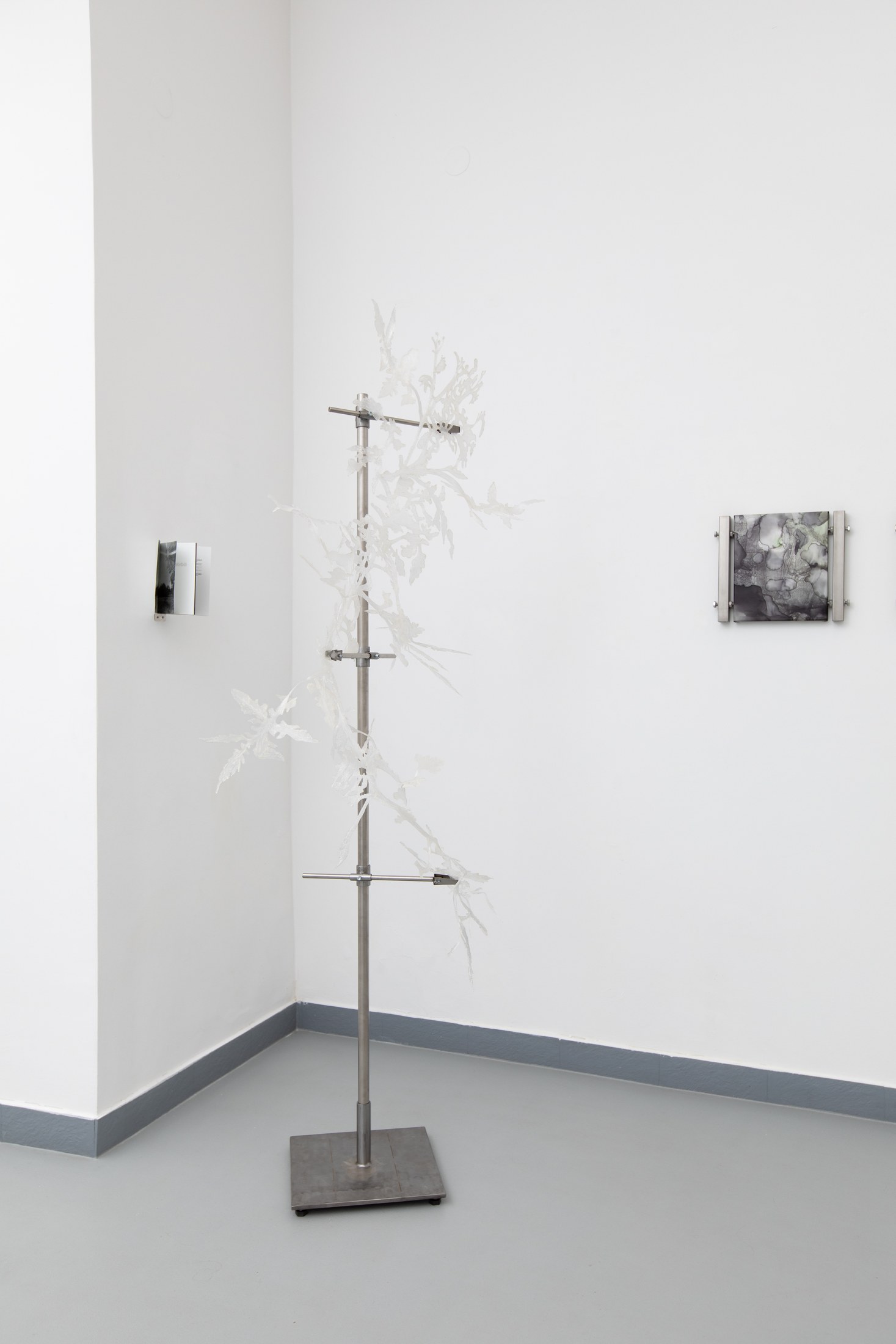
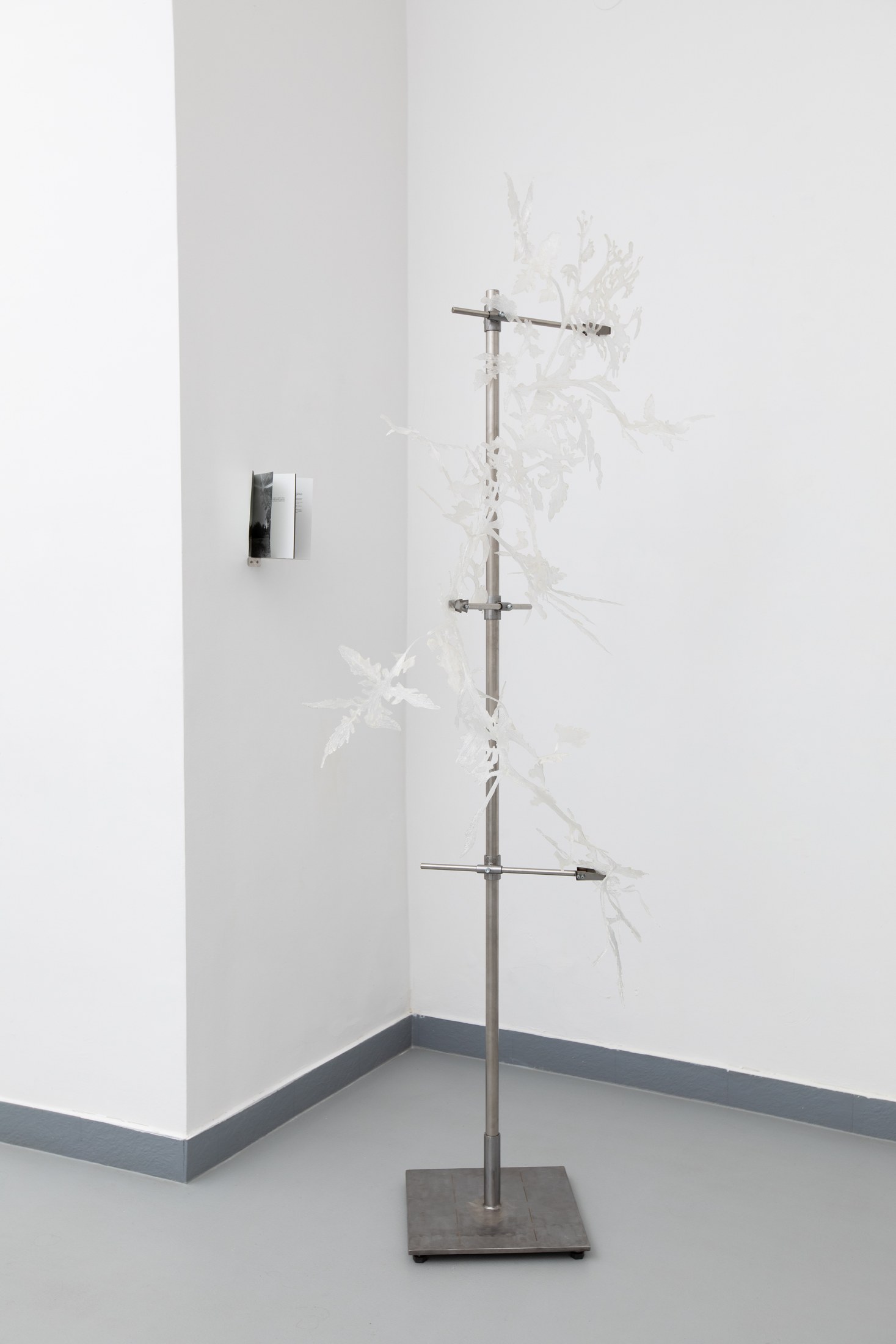
Scientific instruments are one route into the exhibition’s concerns, but Csonka also locates participation in ordinary acts. Tending plants, watching a closed ecosystem or attending to biological transformations in the kitchen all involve relationships with living systems. Care takes place over time, through repeated contact with something that continues to change.
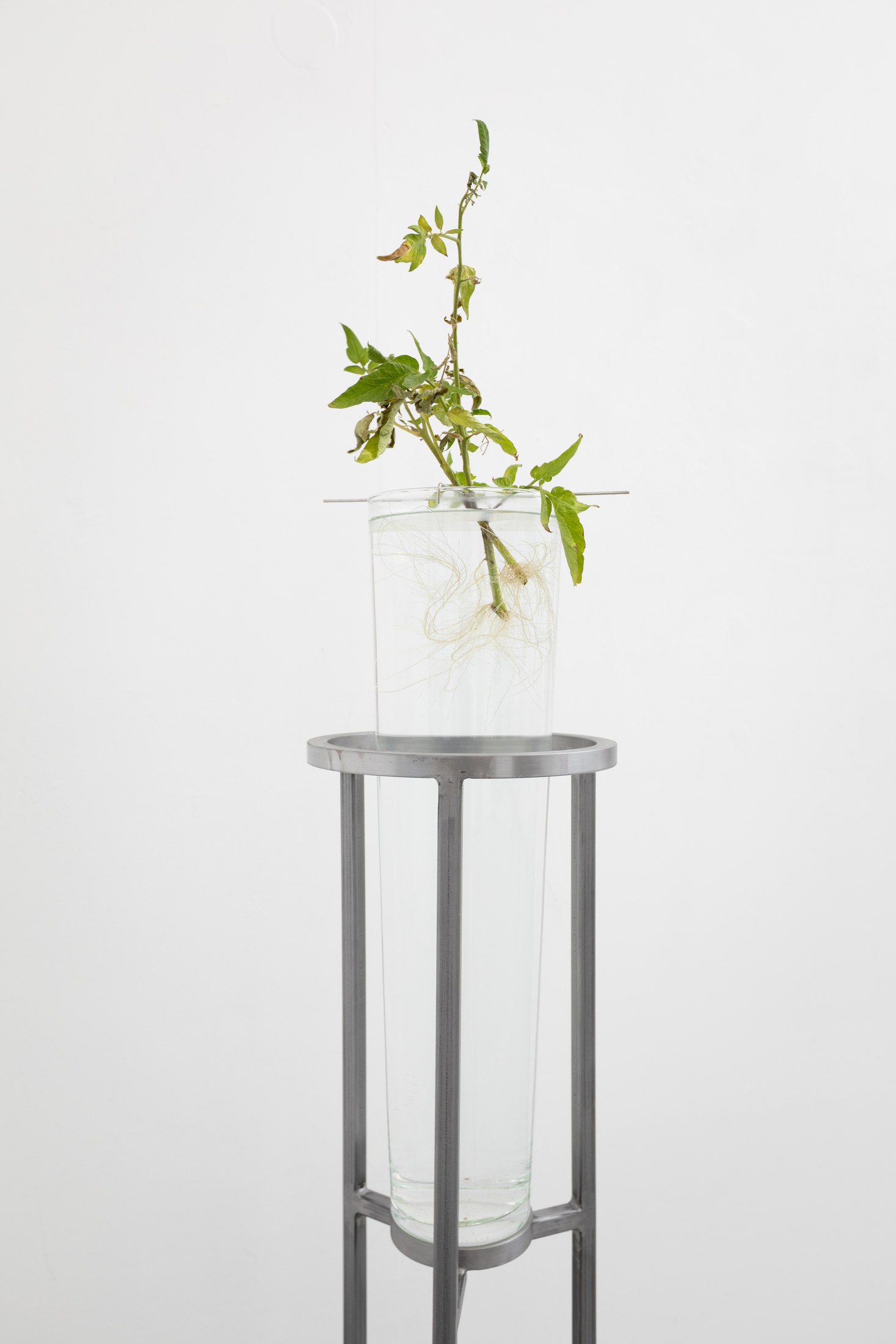
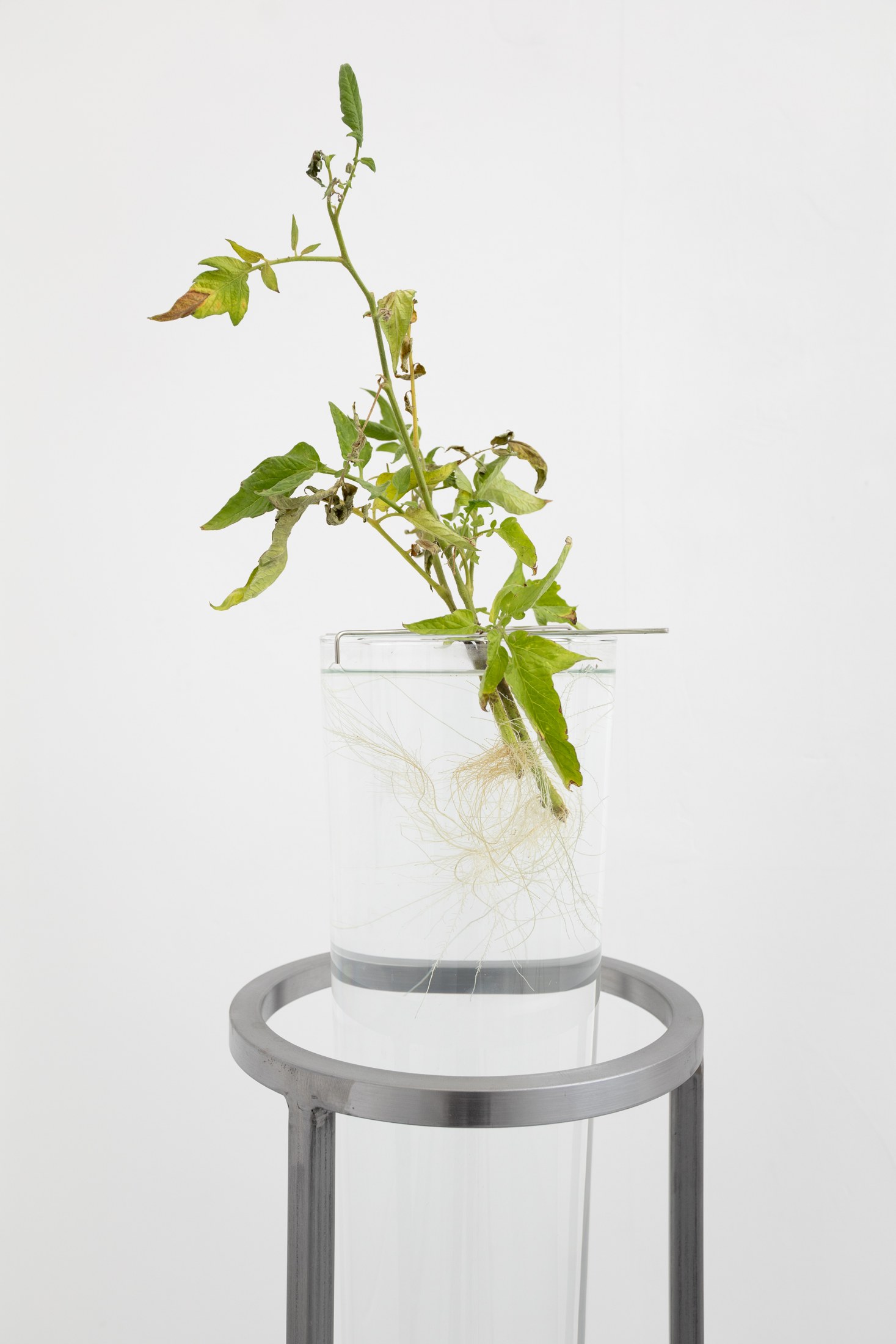
Her wider practice moves between painting and objects drawn with a 3D pen, using different materials and scales to explore biological structures. Born in Siófok in 1992, Csonka graduated from the Painting Department of the Hungarian University of Fine Arts in 2019 and lives and works in Budapest. Her first solo exhibition, Biotic Mechanism, was presented at am projects in 2024.
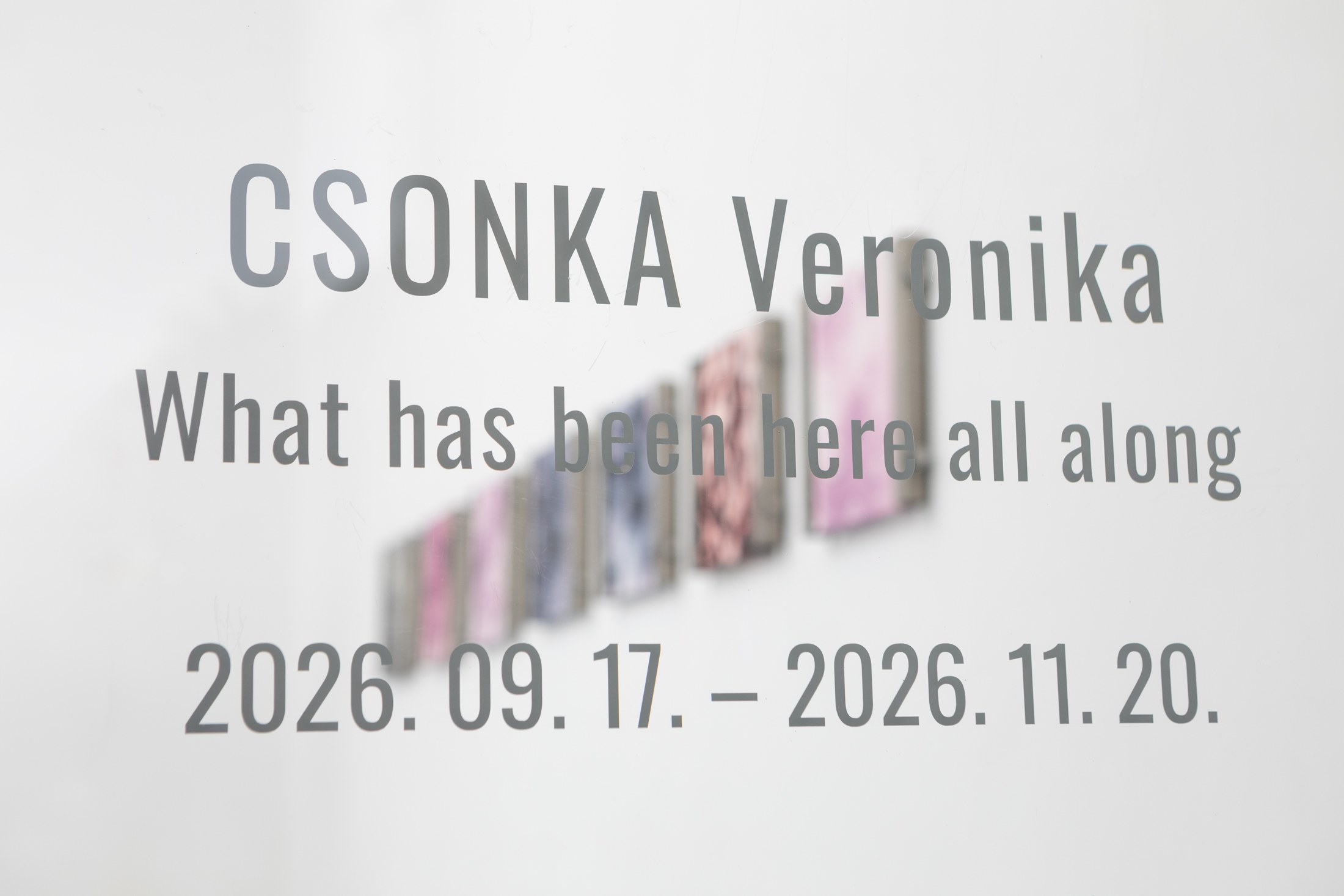
In What has been here all along, the family garden, the microscope and the gallery become connected settings for this ongoing practice. Each offers a different degree of proximity to processes already taking place. The exhibition asks what becomes perceptible when those processes are given sustained attention, and how that attention might alter the care we bring to them.
What has been here all along is on view at Ani Molnár Gallery, Budapest, from 18 September to 20 November 2026, following its opening on 17 September.
Project Credits
Exhibition: What has been here all along / Ami eddig is itt volt
Artist: Veronika Csonka / @veronikacsonka
Gallery: Ani Molnár Gallery / @animolnargallery
Location: Bródy Sándor utca 36, Budapest, Hungary
Exhibition dates: 18 September–20 November 2026
Opening: 17 September 2026
Opening remarks: Zselyke Molnos, co-founder and director of the Hungarian Ecopsychology Institute
Photography: Mátyás Gyuricza
Related Posts
Previous Post
Next Post
- TAC! 2026 brings two temporary pavilions to Sestao and Barcelona

- Fala gives a narrow Porto house room to play with geometry

- The life beneath the surface of Veronika Csonka’s family garden
- A wave of LEGO flowers spills into Shanghai, one small creation at a time

- 6:AM turns the glass stool into a study of colour and repetition

- Three curtains give YU Ting’s Shanghai café a world of its own